
News
Wrong Information! Tourist shares ‘Exceptional Circumstances’ to escape 12 Years for Gun and Ammo


Wilkie Arthur
Freelance Court Reporter
Unusual Proceeding
#TurksandCaicos, August 14, 2023 – Alex Nash, the 36-year-old American man who last Friday appeared before The Hon. Justice Chris Selochan with intention to plead guilty to an alleged firearm and ammunition found in his possession while leaving the country on July 17th 2023, at the Providenciale/Howard Hamilton International Airport, Turks and Caicos Islands. However, before being arraigned and pleading guilty, the learned the judge in a practice that is not customarily seen in the Turks and Caicos, begun by asking the accused a few questions directly and not through his lawyer.
He asked him about being advised concerning the matter he intends to plead to. He asked him about his awareness regarding the consequences of the matter he intends to plead. Do you understand the possible punishment you can receive as it relates to these offenses? The accused answered yes to all questions, he was advised by his attorney Ms. Sheena Mair. “He knows the consequence and he accepts responsibility and he’s doing this on his own free will.”
Pleading Guilty
The judge then went on to have the charges read to him. Nash pleaded guilty to possession of a firearm and illegal possession of 20 rounds of ammunition for a gray and black TP 9mm firearm and 20 rounds of ammunition for that firearm.
Exceptional Circumstance
Having pleaded guilty, the judge invited Sheena Mair, Nash’s Human Rights attorney to go straight into her submission. She did and had filed a written submission pertaining to exceptional circumstances.
Ms. Mair proceeded to explain to the judge what amount to “exceptional circumstances” in this case to enable him to depart from the mandatory minimum sentence of 12 years imprisonment for the visiting tourist.
One of the judge’s main expressed concerns were, that, it was legal for her client to have a firearm in his house in the state of Kentucky but if he was moving the firearm, he was supposed to have some sort of permit or permission to you to carry it.
It was mentioned that Alec Nash did not have this permit or permission, but the defendant explained to the judge through his counsel, that he would only need that permit or permission if he was carrying it on him, in his pocket, pants or on a holster but not to carry it from one spot to the next.
It was explained it had to be in a locked box with the magazine outside the gun. This is how it was transported from his house through the airport to the Turks and Caicos Islands. The firearm was properly secured in a locked box.
Ms. Mair explained to the judge that her client was told, when he contacted the airlines that he could travel to the TCI with his gun. They further told him when he reached the Turks and Caicos Islands there will become a special area for him to pick up this gun. He checked when he arrived in TCI. He inquired of the agents here in TCI on where he can pick up his firearm that’s in his luggage. The agents told him all luggage were on the belt, so he then proceeded to the belt and found his luggage there, picked it up and proceeded to the hotel at Rock House where he lived along with his girlfriend.
Ms. Mair told the court that he has no previous conviction in the United States. He did not try to conceal the firearm when travelling to the Turks and Caicos nor on his departure, he made inquiries and was given wrong information.
Ms. Mair submitted a number of case s in support of why the judge should find that there are ‘exceptional circumstances’ to depart from the mandatory minimum sentence of 12 years imprisonment including three local case authorities, two of them being very recent as of this year.
Precedent Set
One from November of 2019 where the then Hon. Chief Justice Mrs. Margaret Ramsey-Hale sentenced a 73 years old retired, disabled, decorated American war veteran, who served as a Navy Seal to $20,000 or one year imprisonment.
The defendant, Aloysius Ebner who was injured in combat, ran his boat aground near an uninhibited Cay namely Big Sand Cay close Salt Cay. He had a number of guns and ammunition in his boat until he admitted to disposing about some seven rifles in deep water when he realized his boat was having problems. A cache of seven pistols, a shotgun and 8,000 rounds of ammunition were confiscated.
The man was heading back home to the US from the Dominican Republic; he did no jail time in the Turks and Caicos for the major offence which at the time carried a mandatory 7-year prison term.
In a second case, from March 2023, David Carrol O’Connor was found with 44 rounds of ammunition at the Providenciales International Airport, and he entered a guilty plea around two months later. Justice Tayna Lobban Jackson sentenced him on May 16 to a fine of $6,670.00 or 90 days imprisonment.
Again, no jail time for the visitor to the British overseas territory, despite strict gun laws and high gun crime.
In the case of Alex Guzman, he was found with a firearm and ammunition once again at the airport in Providenciales. Guzman also pleaded guilty before same judge Jackson on June 2, 2023, and was sentenced on three days later to a fine of $3,500.00 or 60 days imprisonment.
About the Defendant
Counsel for Alec Nash submitted that he had been a legal gun owner in his native USA for 2 to 3 years that he has never had to use it. It was also expressed that Nash lost his sister to gun violence, and his brother was a survivor of a gun attack. These incidents were cited as the reasons Nash felt the need to get a gun.
It was also presented by the attorney, that Nash lived at the Rock House with the firearm from July 13-17, 2023. The firearm was kept in a safe whilst living there.
The court also learned Alec Nash is a father of three and legally separated from his wife and that he is responsible for half their maintenance.
Why Alec Nash must Go to Jail
The learned judge Mr. Chris Selochan in hearing the submissions by Principal Public Prosecutor Clement Joseph as he explained in the court this past Friday August 11, 2023, that there are no exceptional circumstances and that all persons charge with firearms and ammo must do jail time.
He said, a gun license in the United States is not exceptional circumstances because it is illegal to possess an unregistered firearm in the TCI.
Joseph said there’s nothing exceptional about these gun cases involving tourists any longer, it’s becoming a norm and everyone saying the same thing. There’s nothing exceptional about these cases any more they must go to prison.
The public prosecutor reminded the judge of the disparity of treatment between a local found with an illegal gun and a tourist found with the same.
Joseph said when locals are found with a firearm, they hardly ever get bail and we imprisoned them for whatever the mandatory minimum is, be it five years, seven years and now 12 years imprisonment.
The same must apply to all individuals found offending no matter the circumstances or where they come from. They must go to jail too.
In the end, the learned Justice found that Sheena Mair made a good and convincing case of exceptional circumstances and he accepted that there were exceptional circumstances to enable him to depart from the mandatory minimum sentence of 12 years.
The judge pointed out that with two very recent cases where a lesser sentence was conveyed upon the defendant, it would be unfair and unjust to treat this defendant any differently.
He therefore sentenced ALEC NASH to a fine of $5,000.00 or 60 days imprisonment. The fine was paid, and Nash has since left the country.












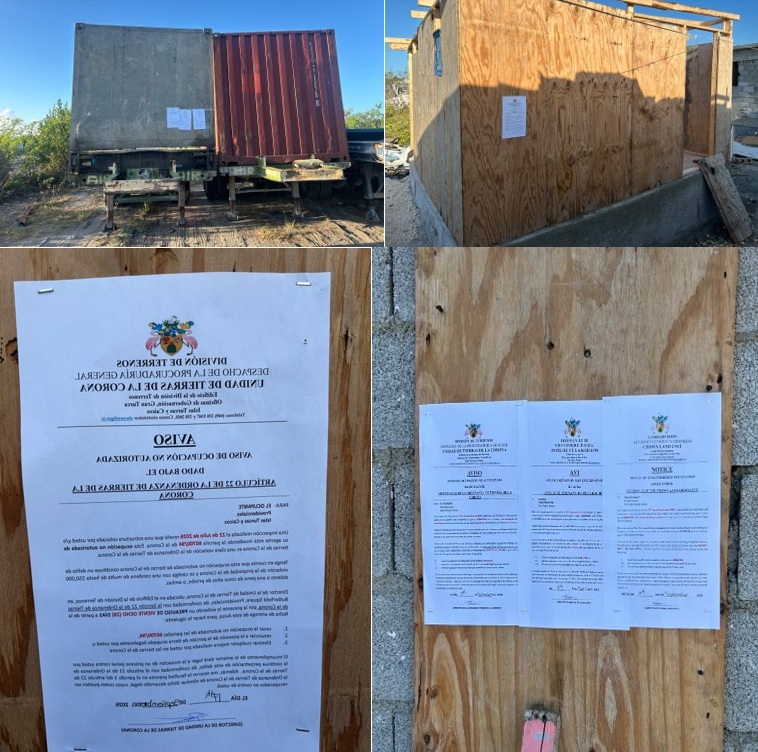
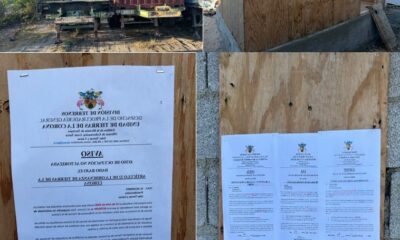
Providenciales, Turks and Caicos Islands: The Crown Land Unit, with coordination and support from the Informal Settlements Unit (ISU), conducted a multi-agency enforcement exercise in the Five Cays area on Thursday, September 17, 2026, as part of ongoing efforts to address the illegal occupation and unauthorised use of Crown land.
The exercise brought together representatives from the Crown Land Unit, ISU and the Turks and Caicos Islands Border Force. Security for the exercise was provided by the Royal Turks and Caicos Islands Police Force. Inspections were conducted across several parcels of Crown land throughout Five Cays, where instances of illegal occupation and unauthorised use had been identified.
During the exercise, a total of forty (40) Section 22 Notices of Unauthorised Occupation were served in accordance with the provisions of the Crown Land Ordinance. The notices related to various forms of unauthorised occupation and use of Crown land, including incomplete structures, shipping containers, derelict vehicles, trailer chassis, building materials and other items.
Where persons were not present, notices were affixed to the relevant structures or items. The exercise forms part of the Crown Land Unit’s continuing efforts to prevent squatting and encroachment on Crown land and to ensure that identified instances of unauthorised occupation are appropriately addressed.
The Government of the Turks and Caicos Islands reminds the public that Crown land must not be occupied, developed or otherwise used without lawful authority.
The Crown Land Unit, supported by the ISU and its other partner agencies, will continue to identify and address instances of illegal occupation of Crown land across the Turks and Caicos Islands. Persons affected by notices issued during enforcement exercises are encouraged to comply with the requirements outlined and to seek guidance from the relevant authorities where necessary.
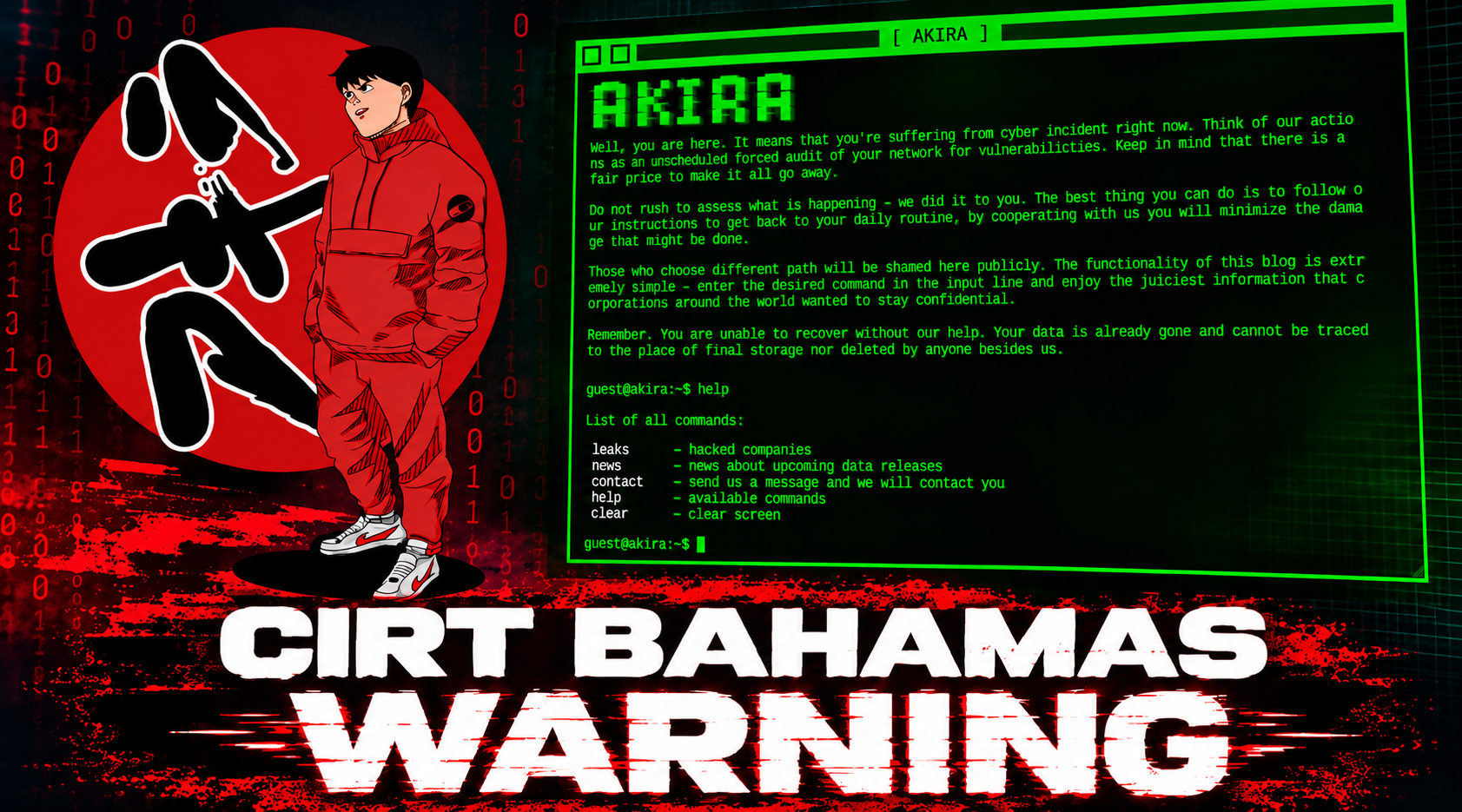
Nassau, The Bahamas, October 22, 2026 — The National Computer Incident Response Team of The Bahamas (CIRT-BS) has issued a cybersecurity advisory warning businesses, government institutions and other organisations about the growing threat posed by Akira ransomware, a cybercriminal operation capable of stealing sensitive information, disrupting networks and demanding ransom payments.
Active since March 2023, Akira operates through a Ransomware-as-a-Service model, with affiliates exploiting weaknesses in computer networks to gain unauthorised access.
Once inside, attackers can steal confidential data, disable recovery systems and encrypt files, preventing organisations from accessing critical information.
Particularly concerning is Akira’s use of double extortion, threatening to publish stolen information unless victims pay. Some attacks involve data theft without encryption.
The October 22 advisory identifies vulnerabilities involving Cisco and SonicWall firewalls, VPN services, Microsoft Remote Desktop Protocol, Veeam backup systems and outdated Windows and Linux operating systems. VMware ESXi and Nutanix AHV environments are also potential targets.
Attackers may exploit unpatched software, stolen login credentials and inadequately secured remote-access applications, including AnyDesk and RustDesk.
Warning signs include unexpected administrator accounts, unusual remote logins, unauthorised software installations, suspicious backup activity, mass file changes and ransom notes.
CIRT-BS recommends immediate security updates, multifactor authentication, restricted remote access, stronger network monitoring and secure backups maintained separately from operational systems.
Organisations should also remove unnecessary internet exposure of remote desktop services, limit administrative privileges and regularly test backup restoration.
The advisory does not identify any confirmed Akira attack against a Bahamian organisation but highlights vulnerabilities that could expose institutions to serious financial and operational disruption.
Cybersecurity incidents can be reported to CIRT-BS at soc@cirt.bs or through its official website.
News
BermudAir Launches Service to the Turks and Caicos Islands on October 26th, Expanding Air Connectivity Ahead of Winter Season
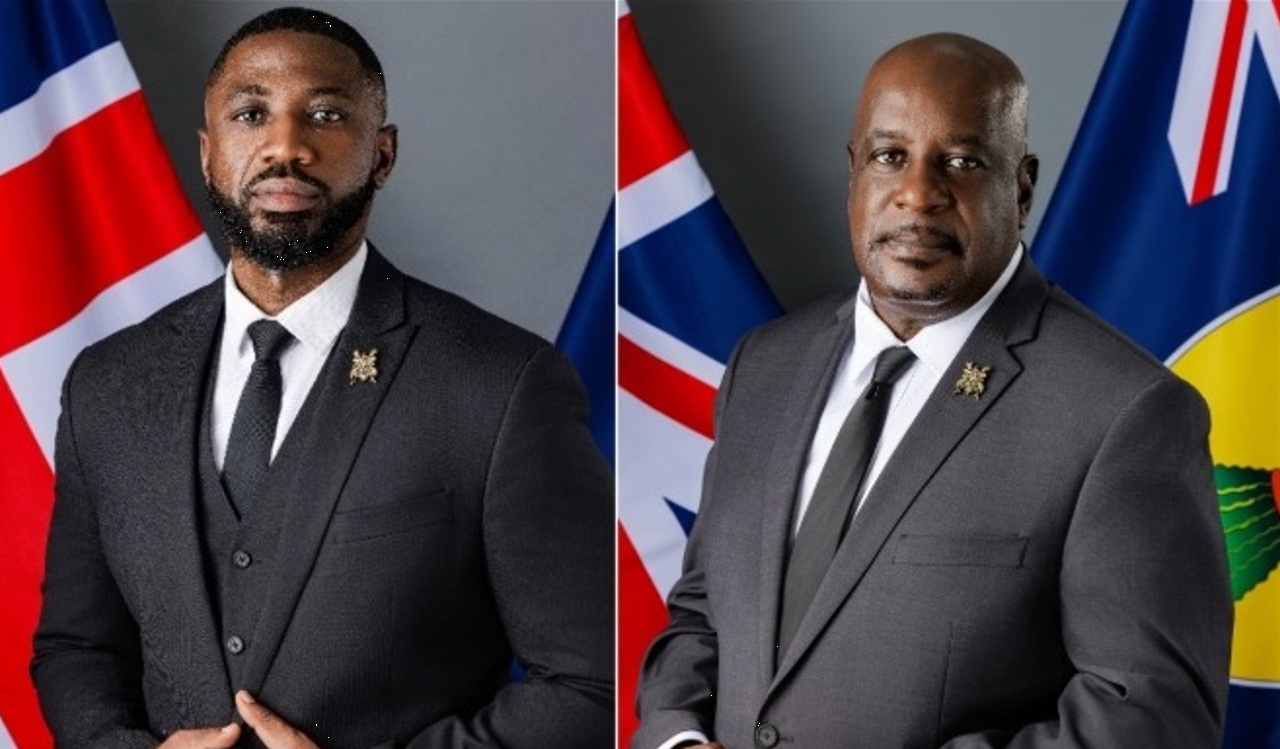
Providenciales, Turks and Caicos Islands (October 22nd, 2026) – The Turks and Caicos Islands welcomes BermudAir as the airline begins its service to the destination on Monday, October 26th, marking the start of a wider expansion that will connect us with additional cities across the United States, Canada and the Caribbean.
BermudAir’s service will begin with a new nonstop service between Fort Lauderdale, Florida, and Providenciales. The flight will depart from the Howard Hamilton International Airport at 8 am on Monday morning and arrives at 7.40 pm. Aboard the inaugural flight will be a delegation from the Turks and Caicos Islands led by Experience Turks and Caicos and the Turks and Caicos Islands Airports Authority (TCIAA), and will include Deputy Governor, Her Excellency Anya Williams, Minister of Tourism, Hon. Zhavargo Jolly, as well s representatives of the Turks and Caicos Hotel and Tourism Association (TCHTA), the board of the Turks and Caicos Islands Tourism Authority, Invest TC and local media.
BermudAir will operate the Fort Lauderdale–Providenciales route three times weekly, on Mondays, Wednesdays and Fridays, through May 3rd, 2027. making it easier for business travellers with the schedule offering the potential for same-day return trips. The airline is also launching nonstop service between Fort Lauderdale and Belize City, Belize, on the same schedule, offering travellers in South Florida direct access to both destinations.
The new service introduces BermudAir’s premium leisure inflight experience to the Turks and Caicos Islands. Flights will operate on Embraer E190 aircraft configured without middle seats, giving every passenger a window or aisle seat, alongside complimentary snacks and beverages.
Minister of Tourism, the Honourable Zhavargo Jolly, welcomed the airline’s arrival, noting the importance of expanding airlift to support the continued development of the destination’s tourism industry.
“Air connectivity remains one of the most important factors in the continued development of our tourism industry. BermudAir’s expansion represents an opportunity to strengthen our connections with key international markets while opening new doors for our sister islands. I am particularly encouraged by the planned direct service between Newark and South Caicos, which speaks directly to our vision of expanding tourism opportunities across the Turks and Caicos Islands. Our objective is to ensure that improved connectivity translates into greater economic activity, stronger local businesses and more opportunities for Turks and Caicos Islanders to participate in and benefit from tourism.” said Minister Jolly.
Commenting on the significance of the new route for the country’s development, the Honourable Arlington Musgrove, Minister of Physical Planning and Infrastructure Development (PPID), stated: “The introduction of BermudAir’s new service is a testament to the continued growth and development of our aviation sector. The Ministry of Physical Planning and Infrastructure Development, alongside the Turks and Caicos Islands Airports Authority, remains dedicated to enhancing our airport infrastructure to accommodate increased airlift. We are committed to working to ensure that our facilities provide a seamless, world-class experience for all incoming passengers and we warmly welcome BermudAir to our shores.”
The Fort Lauderdale launch is the first of several new services BermudAir plans to introduce to the Turks and Caicos Islands for the 2026– 2027 winter season. Additional connections to Providenciales are scheduled from:
- Bermuda to TCI and Grand Cayman: Beginning December 18th, 2026
- Anguilla: Beginning December 19th, 2026
- Boston, Massachusetts: Beginning December 19th, 2026
- Toronto, Canada: Beginning December 19th, 2026
- Raleigh-Durham, North Carolina: Beginning December 20th, 2026
- Newark, New Jersey to South Caicos: Beginning December 20th, 2026
- St. Petersburg/Tampa, Florida: Beginning December 21st, 2026
- Baltimore-Washington: Beginning December 24th, 2026
The expansion will give travellers more options for reaching the destination during the winter travel season, while broadening access from established and developing source markets. The additional routes also create opportunities for tourism stakeholders to reach new audiences and encourage visitors to explore more of the islands.
For flight schedules and bookings, visit www.flybermudair.com.





-

 News5 days ago
Imagine Turks & Caicos Represented in UK Parliament; New Report Favours It
-

 News1 week ago
Invest TCI Strengthens Regional Investment Connections at Caribbean Investment Forum 2026 in Barbados
-
 Bahamas News5 days ago
Bahamas Issues Cybersecurity Alert Over Akira Ransomware Threat
-

 Bahamas News1 week ago
Rosewood Exuma: A precedent-setting case for environmental law and future development in The Bahamas
-

 Bahamas News1 week ago
Energy Minister Delivers Electrifying Keynote Opening Address at CAREC 2026
-

 News5 days ago
BermudAir Launches Service to the Turks and Caicos Islands on October 26th, Expanding Air Connectivity Ahead of Winter Season
-

 News6 days ago
Crown Land Unit Leads Multi-Agency Enforcement Exercise in Five Cays
-
 News2 days ago
Multi-Agency Enforcement Exercise Targets Illegal Occupation of Crown Land in Five Cays