
Caribbean News
Caring Entrepreneurship: A Model For Sustainable Community-based Tourism in St. Lucia

Submitted by Kirk Elliott
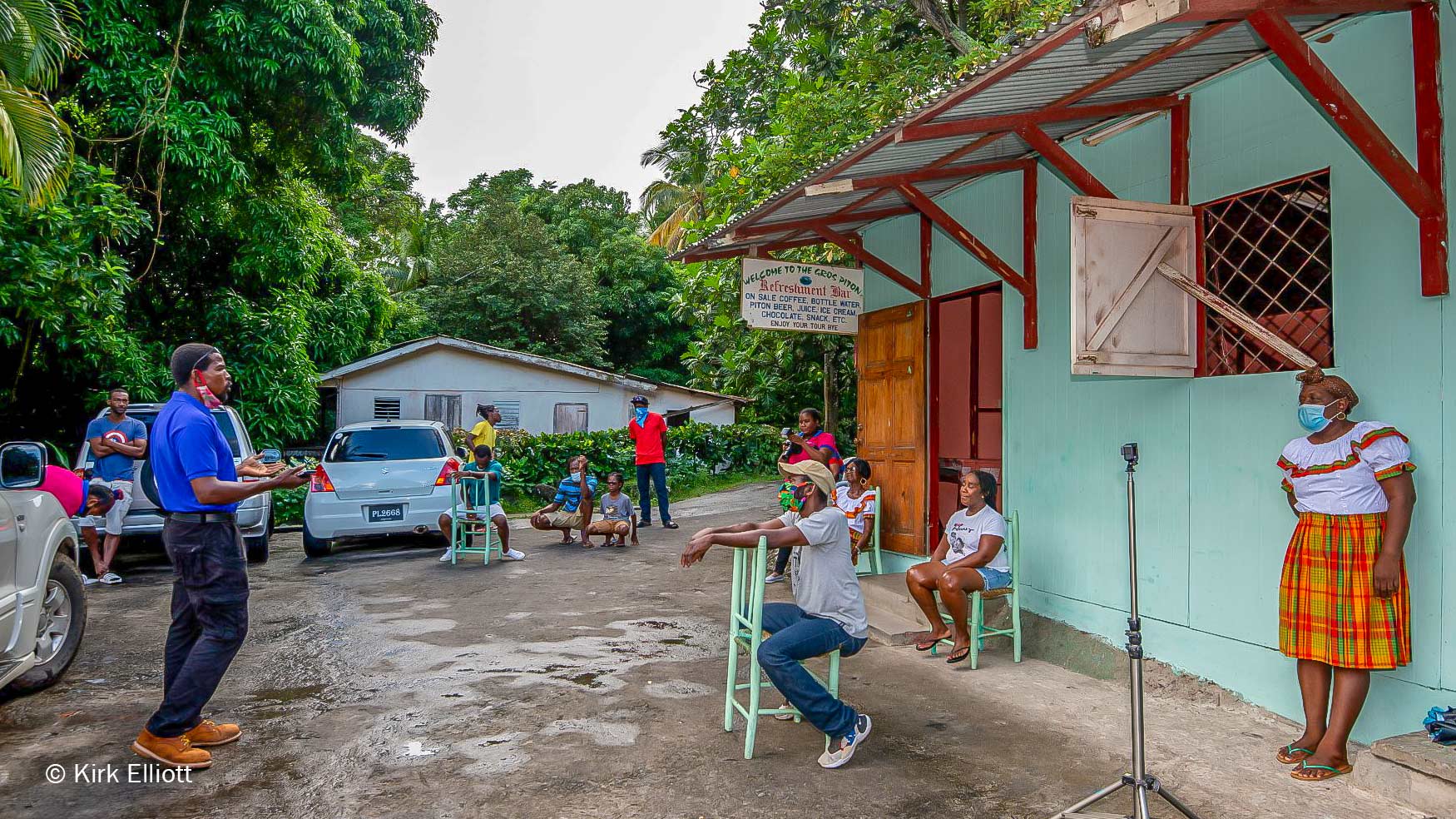
August 11, 2023 – A few years ago award winning St Lucia photographer ( https://StLuciaPhotoTours.com/Hello ) Kirk Elliott got invited to a rural community deep in the heart of Saint Lucia to help it develop a sense of excellence in its tourism offering after his St Lucia Photo Tour won its first TripAdvisor Certificate of Excellence. Elliott was blown away by the tremendous potential of their tourism product. However, he couldn’t help lamenting that residents simply didn’t see its potential and were thus content to maintain the status quo.
In grappling with the conundrum of how best to effect positive and lasting change Elliott came to the realization that rural communities are largely ill-equipped to successfully manage and operate tourism enterprises. This led him to an idea he dubbed “Caring Entrepreneurship”.
Defining Caring Entrepreneurship
In the context of tourism Elliott defines the Caring Entrepreneur as someone who understands how to successfully create and manage a tourism business. The entrepreneur brings this expertise to the mutual benefit of both the community and his/her enterprise. The caring entrepreneur nurtures and empowers the community so that it can eventually assume control of the business and grow it from strength to strength.
To be successful the business arrangement must be based on mutual respect and trust. The entrepreneur must truly care about the well-being of the community rather than exclusively about his/her bottom line. In turn the community must recognize and appreciate the value the caring entrepreneurship brings to the table. This synergy is the foundation for an outcome in which their combined efforts yield results that far exceed the sum of the community’s and the entrepreneur’s individual efforts.
“I will be the first to tell you that this notion of caring entrepreneurship is a counter-intuitive approach to deriving meaningful community benefits from tourism. However, from inception it was clear to me that this novel approach was an effective way of nurturing long-term success in community-based sustainable tourism development” Elliott explained when asked why would anyone make such a sacrifice to help a community when they could simply open shop and proceed to extract the maximum profit.
Testing The Theory of Caring Entrepreneurship
After multiple false starts Elliott finally got the opportunity to test his theory in a different community after @CoxTravelAdventures of Danbury Connecticut, USA, outfitted an entire kindergarten class with an assortment of school supplies at the start of the 2022 school year.
The school supplies were donated to the Dugard Combined School in Choiseul, Saint Lucia. While Dugard is a rural community deep in the heart of Saint Lucia, whatsoever the school may have missed due to its remoteness it more than made up for with heart and soul. From the principal and teachers, to the students, to the school’s caretaker staff, they all operate like one big family and their love and caring comes shining through.
“From my initial telephone conversation with Mr. Elliott I felt like my prayers had been answered, as just the week before I had prayed that our small rural community school with limited resources would somehow gain greater visibility. Then seemingly out of the blue there was Mr. Elliott lending a helping hand and speaking of wanting to develop a long-term relationship with our school”, stated school principal Mrs. Tessa Charles-Calderon when asked about Elliott’s support for the school.
Connecting Young Students With Tourism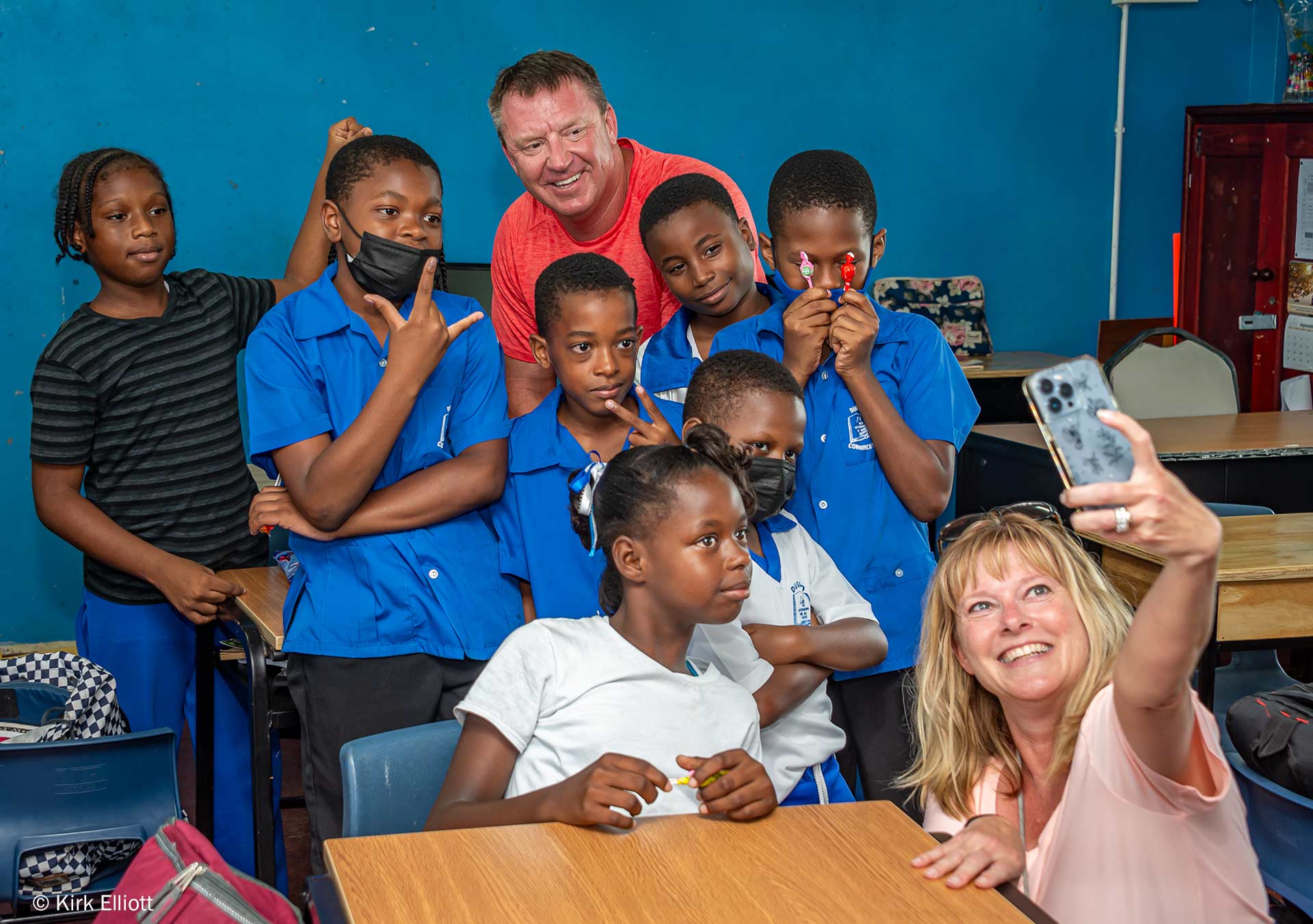
Since the post pandemic return of tourism Elliott has been taking patrons of his Private St Lucia Experiences to the Dugard Combined School where they get to engage with students first hand. Elliott invites his clients to bring over school supplies based on the needs of the school, and the general consensus of visitors is that their engagement with the students has been a highlight of their Saint Lucia vacation.
For the students – they have come to appreciate tourists as people just like themselves rather than as some abstract term they hear about on the radio or see on television newscasts.
A Burning Visitor Desire For Authentic Community-based Experiences
Today, more and more visitors are seeking authentic experiences that immerse them in the culture, history, cuisine and lived experiences of locals. These visitors wish to know that their money is creating a positive impact in the lives of the indigenous peoples of the destinations they visit. Towards this end such visitors are actively seeking out ways of connecting to and engaging with local communities and buying directly from them.
What’s Next For The Dugard Combined School
Students at the school have said they would love to have a proper playground at their school and the principal and teachers consider this an excellent idea that will teach the children about caring and sharing, among other things.
Elliott has engaged many of his professional friends to lend a helping hand to the Dugard Combined School’s Playground Project. From an engineer who has assessed the required earth works, to an architect who has produced architectural renderings for the playground, just about everyone Elliott has reached out to has lent their support and even gone way beyond his wildest expectations.
“The overwhelming support of everyone I have reached out to has emboldened me to invite both the teachers and the students to dream big scary dreams and then together let’s go out and make those dreams come through!” Elliott passionately commented when asked his thoughts on this playground project and beyond.
During the 2022/23 school year Elliott worked with the school to complete Phase 1 of the Playground Project in the form of the painting of educational games in the schoolyard. Not to let an opportunity go to waste, the school incorporated the games painting project into students’ School Based Assessment (SBA). This SBA is a practical activity students must successfully complete in order to graduate and gain admission to a secondary school.
From the video below of the official launch of the games it is clear that the students’ efforts were well received.
Video Link: https://StLuciaPhotoTours.com/DugardPlayground
Saint Lucia Diaspora Support
Saint Lucians, both in the diaspora and at home who participated in Elliott’s recent I Am Lucian Webinar Series have been super supportive too. Some have volunteered to fly down to Saint Lucia to assist with the playground construction, while others are sourcing electronic smart-boards for multiple schools on the island, and entry level STEM (Science, Technology, Engineering & Math) training for students.
“I am delighted by the outpouring of support and excited about the possibilities that lie ahead for community youth development and empowerment. It is refreshingly heartwarming to see what is possible through the power of collective caring and sharing” Elliott commented regarding the Saint Lucian diaspora support.
Creating an International Benchmark of Sustainable Community-based Tourism in Small Island Developing States (SIDS)
When Elliott embarked on this journey of seeking to empower a rural community little could he have imagined where the journey would lead. In the process of understanding and overcoming the obstacles he encountered he has come to realize that those we consider rural poor enjoy a richness of life and living that remains largely unrecognized.
However they are at risk of losing much that they hold dear due to the rapid environmental degradation of the world at large. For this reason, empowering them through an appreciation of the benefits of sustainable community-based tourism is a powerful way of preserving much that is rapidly being eroded away.
“I am super excited about this idea of Caring Entrepreneurship and my goal is to see this community engagement starting with the Dugard Combined School project manifest into an International Benchmark of Sustainable Community-based Tourism in Small Island Developing States” said Elliott when asked what was the overall outcome he envisions.
…and at the rate at which this intervention is progressing he just might be on to something.
About Kirk Elliott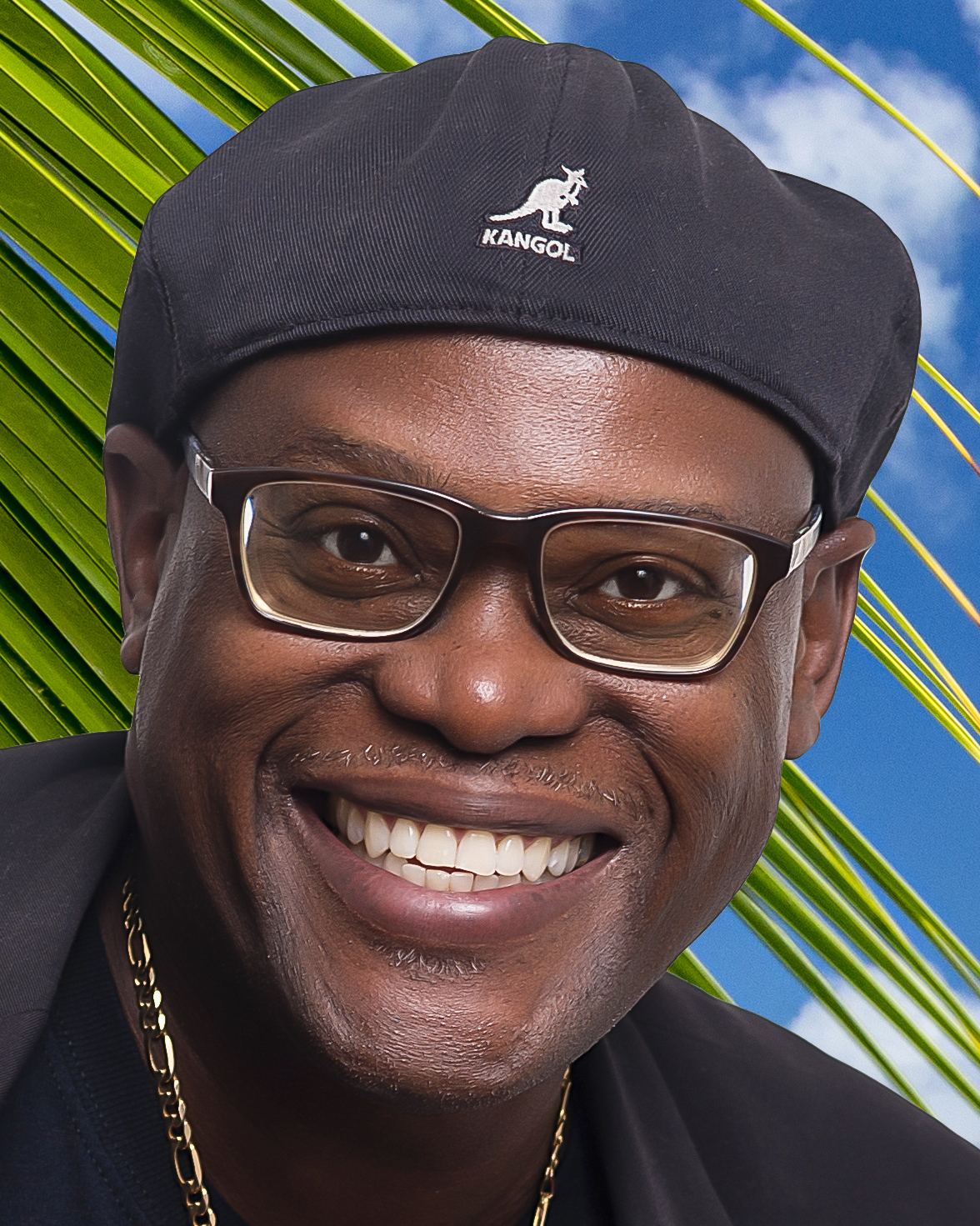
Kirk Elliott is an award-winning St Lucia Photographer, Sustainable Tourism Advocate and National Geographic Certified Educator.
Kirk is the Founder of the St Lucia Photo Tour where he introduces visitors to authentic Saint Lucia culture, history and cuisine through the medium of photography… Kirk@KirkElliott.com | https://StLuciaPhotoTours.com/Hello

By Deandrea Hamilton | Editor
September 28, 2026 – Wall Street initially flinched at the $3-billion handshake. But in a matter of days, it was smoother sailing.
Perhaps the bigger Caribbean business story is not what Sandals Resorts International is getting from the deal. It is who is writing the cheque — and what that says about what Gordon “Butch” Stewart built.
As reports of Royal Caribbean Group’s Sandals deal circulated Tuesday, RCL shares plunged 6.14 percent from Monday’s $250.25 close to $234.89, on sharply elevated trading.
When the agreement became official Wednesday — approximately $3 billion for a 50 percent equity interest in Sandals and Beaches Resorts — shares slipped another 1.95 percent to $230.30 and touched $222.22 intraday. Investors were digesting both the size of the investment and committed debt financing secured through Morgan Stanley.
But by Thursday, RCL rebounded 3.77 percent, with shares continuing their recovery Friday to finish the week around $243. Analysts were also looking ahead: JPMorgan reportedly raised its RCL price target from $345 to $394, while Citi placed the company on a 90-day positive catalyst watch.
And just who is RCL?
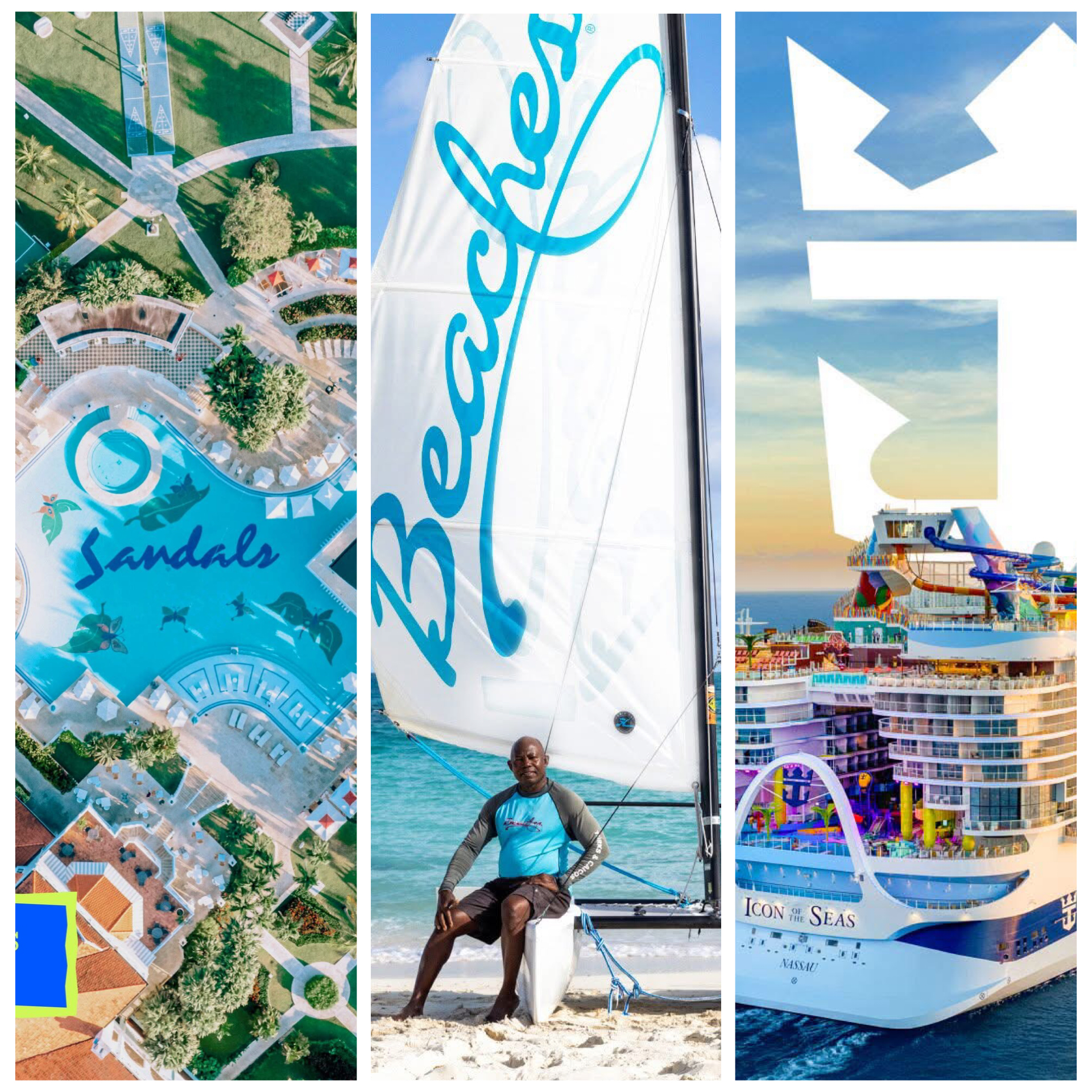
Royal Caribbean Group is a global vacation giant, publicly traded on the New York Stock Exchange with a market value of roughly $65 billion. Its portfolio includes Royal Caribbean International, Celebrity Cruises and Silversea, alongside private destinations and an expanding vacation platform.
So when a company of that scale commits $3 billion for only half of Sandals and Beaches Resorts, the transaction puts a striking financial marker on one of the Caribbean’s greatest home-grown hospitality success stories.
The deal, expected to close in early 2027, creates a 50-50 partnership with the Stewart family and takes Royal Caribbean deeper into the all-inclusive resort business.
Butch Stewart started Sandals in Jamaica in 1981 believing a Caribbean company could compete with the world’s best.
Forty-five years later, one of the world’s biggest vacation companies is prepared to pay $3 billion just to own half of what he built.
Now that’s the handshake that does more than seal a deal — it cements a legacy.
Caribbean News
Royal Caribbean Group and Sandals Resorts Announce Landmark Partnership to Accelerate Their Leading Vacation Experiences
Royal Caribbean Group Investment to Advance Sandals and Beaches’ Growth and Broaden the Group’s Vacation Portfolio
Montego Bay, Jamaica and Miami, September 24, 2026 – Royal Caribbean Group (NYSE: RCL) and Sandals Resorts today announced the signing of an agreement to form a partnership in the all-inclusive resort space with a 50% investment from Royal Caribbean Group. Building on Sandals and Beaches Resorts’ more than four decades of leadership in Caribbean hospitality, the joint venture will create new opportunities for continued resort growth while broadening the experiences across Royal Caribbean Group’s vacation platform.
The partnership brings together two of the travel industry’s most celebrated vacation companies, pairing Sandals and Beaches’ all-inclusive resort expertise with Royal Caribbean Group’s vacation platform, including industry-leading brands – Royal Caribbean, Celebrity Cruises and Silversea – a portfolio of private destinations, new river cruising offering, and an industry-first loyalty program. United in a shared history in the Caribbean and connected by a love for their communities, the companies will offer travelers an unparalleled collection of cruise, private destination and resort experiences, serving guests across more vacation occasions and establishing their undisputed leadership in Caribbean vacations.
The joint venture expands Royal Caribbean Group into an adjacent vacation category, growing its participation in the approximately $2 trillion global vacation market, and meets the growing global demand for Sandals and Beaches Resorts by accelerating their expansion. The partnership will include Sandals and Beaches’ collection of premier all-inclusive properties across the Caribbean, and the companies will explore opportunities to broaden distribution, deepen guest engagement, and make it easier for travelers to discover vacation experiences offered across both portfolios.
“For nearly 60 years, we’ve reimagined what a vacation can be, constantly expanding the ways we inspire our guests to explore, connect and create lifelong memories,” said Jason Liberty, Chairman and CEO, Royal Caribbean Group. “We have been building a vacation platform that brings joy to millions of people around the world and creates meaningful relationships that last with our guests. Our partnership with Sandals and Beaches Resorts is an important next step on that journey – bringing together two iconic leading vacation companies to further strengthen and grow one of the most admired resort portfolios in the world. The Stewart family has created powerful and beloved brands, and we are honored to build on that legacy. Together, we see tremendous opportunity to expand the reach of Sandals and Beaches Resorts and continue turning the vacation of a lifetime into a lifetime of vacations.”
“My father, Gordon ‘Butch’ Stewart, founded Sandals Resorts with the belief that a company built in the Caribbean could stand on the world stage alongside the most respected names in hospitality. Today is proof of how far that vision can go,” said Adam Stewart, Executive Chairman of Sandals Resorts and Beaches Resorts. “This partnership is the natural next step in building on that conviction. It gives us the ability to grow faster with a partner that shares our values of exceptional hospitality, long-term investment, and the power of enduring brands. Together, we will introduce more guests to Sandals and Beaches Resorts while creating even more extraordinary experiences for those who have made our resorts part of their lives for decades.” Stewart added, “As we continue to grow, we will remain true to what has always defined us: delivering authentic vacations that exceed expectations while creating opportunities for our team members, travel advisor partners and the communities we call home. The future has never been brighter, and I know this moment would make my father incredibly proud.”
The joint venture will be governed by a board under the shared leadership of Stewart and Liberty. Stewart will maintain a leadership role in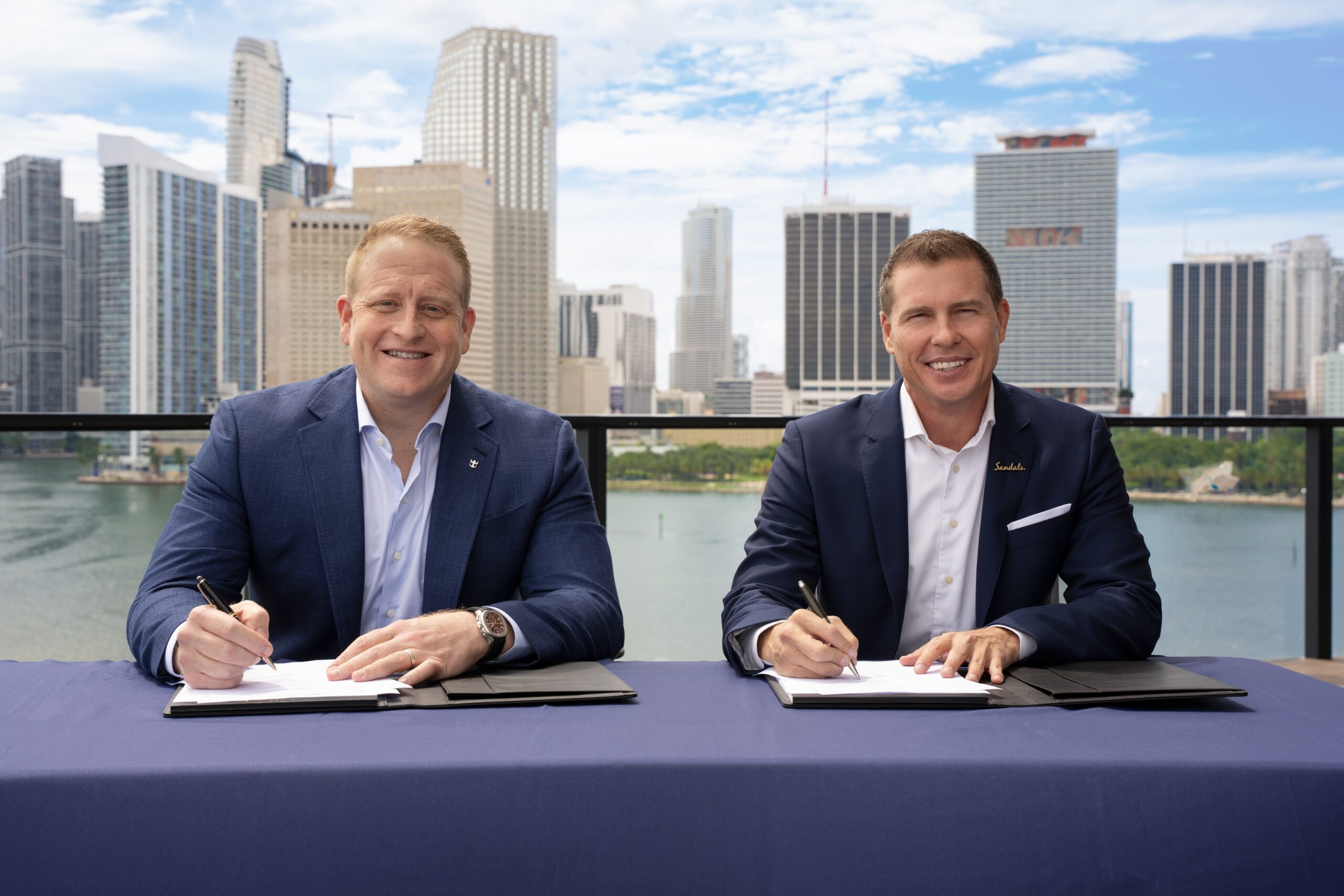 guiding the company’s long-term strategic growth as Executive Chairman of Sandals and Beaches Resorts. Existing reservations, loyalty programs, resort operations and cruise operations will continue as usual, with the partnership bringing additional resources to support future opportunities.
Under the terms of the agreement, Royal Caribbean Group will acquire a 50% equity interest in Sandals and Beaches Resorts for approximately $3 billion, representing a forward EBITDA multiple of approximately 10x. Royal Caribbean Group has secured committed debt financing from Morgan Stanley to fund the investment. The transaction is expected to close in early 2027, subject to customary approvals and closing conditions, and is expected to be accretive to earnings next year.
BofA Securities and PJT Partners acted as financial advisors, and Latham & Watkins and Jones Day acted as legal advisors to the Sandals Group. Perella Weinberg Partners and Morgan Stanley acted as financial advisors and Kirkland & Ellis LLP acted as legal advisor to Royal Caribbean Group.
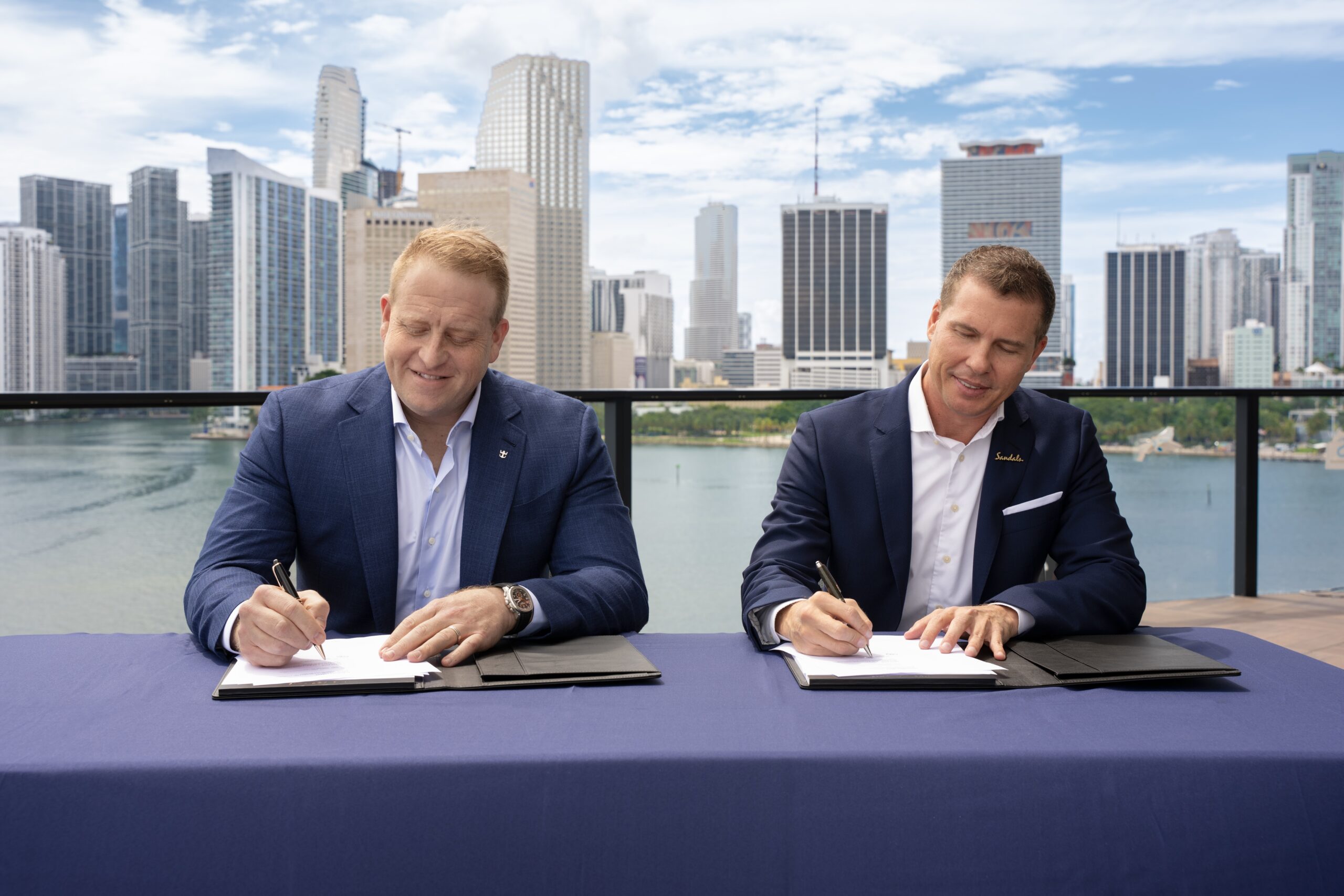
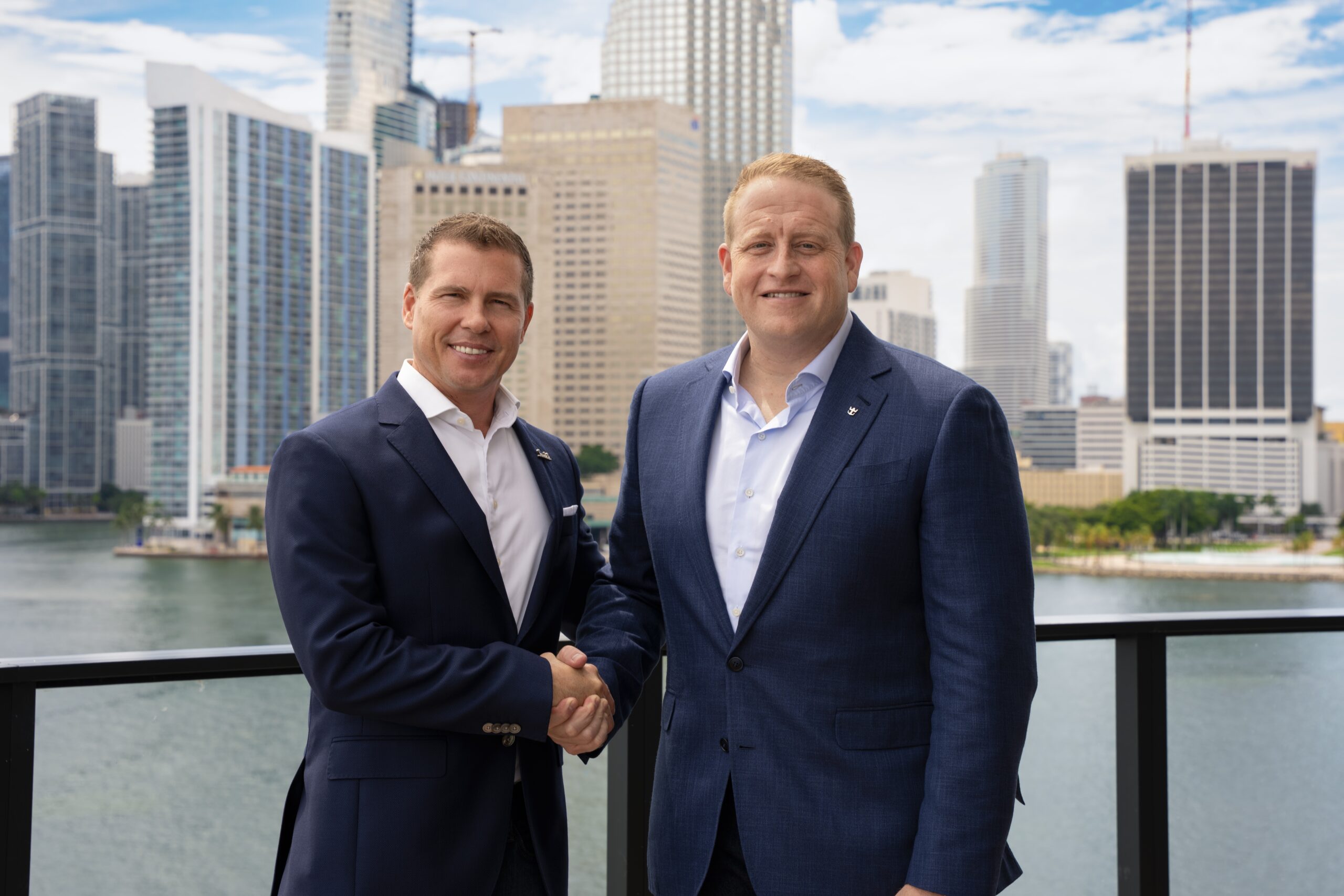
PHOTO CAPTION: Jason Liberty, Chairman and CEO of Royal Caribbean Group, and Adam Stewart, Executive Chairman of Sandals Resorts, mark the signing of an agreement to form a landmark partnership that expands Royal Caribbean Group into the all-inclusive resort space and supports the future growth of Sandals and Beaches Resorts. The signing took place at Royal Caribbean Group’s new headquarters in Miami, with the city’s skyline in the background.
The Caribbean tourism deal first reported as a possibility on Tuesday is now a signed agreement. Royal Caribbean Group plans to pay approximately US$3 billion for a 50% stake in Sandals and Beaches Resorts, putting the value of the business at about US$6 billion. The purchase is expected to close in early 2027, subject to approvals.
Founded in Jamaica by the late Gordon “Butch” Stewart in 1981, the resort business has a presence across nine Caribbean destinations, including Jamaica, The Bahamas and Turks and Caicos. Sandals has described its workforce as nearly 20,000 people, most of them Caribbean nationals.
“My father, Gordon ‘Butch’ Stewart, founded Sandals Resorts with the belief that a company built in the Caribbean could stand on the world stage alongside the most respected names in hospitality,” said Adam Stewart in the announcement carried by PR Newswire. He will remain executive chairman, while the Stewart family retains a stake. The companies say existing reservations and resort operations will continue as usual.





-
 News4 days ago
Imagine Turks & Caicos Represented in UK Parliament; New Report Favours It
-
 News1 week ago
Invest TCI Strengthens Regional Investment Connections at Caribbean Investment Forum 2026 in Barbados
-
 Bahamas News1 week ago
Rosewood Exuma: A precedent-setting case for environmental law and future development in The Bahamas
-

 Bahamas News4 days ago
Bahamas Issues Cybersecurity Alert Over Akira Ransomware Threat
-

 Bahamas News1 week ago
Energy Minister Delivers Electrifying Keynote Opening Address at CAREC 2026
-

 News4 days ago
BermudAir Launches Service to the Turks and Caicos Islands on October 26th, Expanding Air Connectivity Ahead of Winter Season
-

 News5 days ago
Crown Land Unit Leads Multi-Agency Enforcement Exercise in Five Cays
-
 News1 day ago
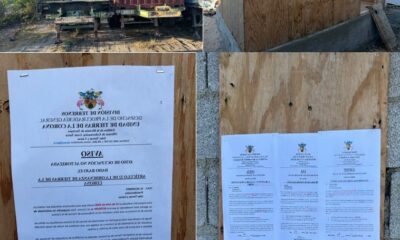
Multi-Agency Enforcement Exercise Targets Illegal Occupation of Crown Land in Five Cays