
News
TCI House of Assembly Divided over Airport PPP

By Dana Malcolm
Staff Writer
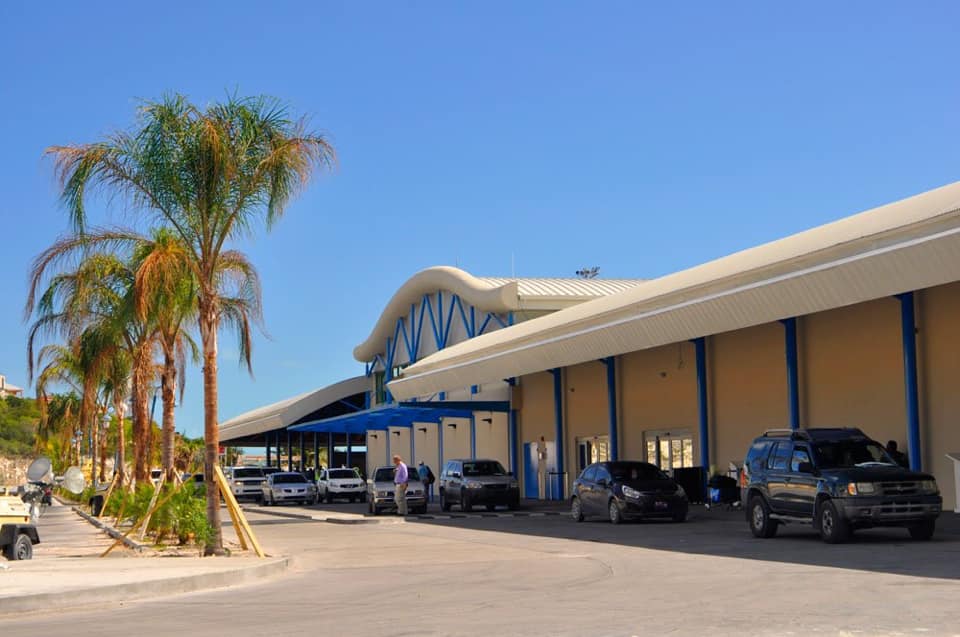
#TurksandCaicos, July 31, 2023 – An explosive back-and-forth in the House of Assembly on Wednesday, July 19th, has exposed a clear line of separation regarding the potential Public-Private Partnership to redevelop the Providenciales/Howard Hamilton International Airport.
Several senators on both sides of the House expressed concern over the Motion, while others defended it wholeheartedly.
Members of Parliament, including Akierra Missick, Member of Parliament for Leeward and Long Bay, Matthew Stubbs, Member of Parliament for The Bight, and Edwin Astwood, Opposition Leader, expressed serious concerns about the clarity of the motion and surrounding communication from the government.
The Opposition Leader continued to vocalise concerns about a partnership that could turn sour. 
“Our people have been burned too many times by these big contracts,” he said.
The Leeward and Long Bay MP emphasised the confusion stemming from how the $400 million project was being presented to the people, expressing that the government was allowing it to fester because of their approach to communication about the massive deal.
“The issue is we did not communicate effectively, where we were seeking to get to today. A press release here and there, an argument with Magnetic Media, a print release, [that] isn’t sufficient. We allowed this mischief to fester on the streets, and then we [the members of the House] are just obligated to agree on what is being put in front of us when no one said, ‘Let’s have a meeting.’ We meet on smaller bills all the time, so I was shocked that for something this detailed, members of the House, didn’t really get a chance to vent, articulate, or ruminate on where we need to go.”
Missick, taking offence to the insinuation that some members of the House did not truly understand the processes necessary in the procurement, revealed that not only had it not been discussed in a meeting with PNP backbenchers, but said she was confused and she knew others were as well because the documents seemed to suggest a PPP was the only way to go.
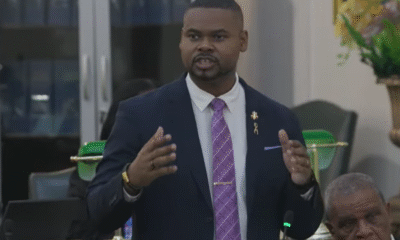
Akierra Misick during her statement said, “It says Section 26 of the PPO has decided to utilise a public-private partnership procurement method. Utilisation seems to be the result of a decision, not a consultation or a request for a genuine clear approach to support an option. I don’t believe that there had been any malice, but I would like to, when I say yay or nay at the end of this debate, make sure that I have made the best decision possible with the information that has been given to me.”
She questioned why an international airport operator was potentially being hired when the local companies had proved competent, maintaining that she was struggling to see the benefit to the islanders.
“[People] don’t want jobs working for international operators, so let’s stop throwing this idea of employment around without understanding what that actually means [my people] ain’t sweeping no bathrooms– my people shall own and operate their own businesses from this airport, and they should be able to do so without worrying about being priced out.”
Citing the massive surplus enjoyed by the TCI Government each year, she rejected the reason for entering into the PPP to avoid debt.
Following her contributions, the MP to the Bight also stood up.
“I would like to get a little bit more time— to get a better explanation on how Turks and Caicos Islanders will be benefitting from the redevelopment of the airport.’ Stubbs said and then queried what programs would be implemented to train islanders to take up positions in the airport.
“I need more clarification– this feels like an exploration— I am a PNP member, this is my government, but I have people to represent– to represent my people, I need more details,” he maintained.
The supporters of the bill, including Washington Misick, TCI Premier, Jamell Robinson, Minister of Physical Planning and Infrastructure Development and Arlington Musgrove Minister of Immigration and Border Services, held fast to several points, including that residents would be able to invest and it was faster and more economical to do the PPP.
“The greater the amount of risk transferred from the government to a private investor, the greater the value for money for the project,” Musgrove said. “If the project is not executed through a PPP and executed through traditional contracting, the project would be the lead for an additional two or more years.”
The minister explained that public financing would be less straightforward and would likely lead to taking on more debt. He also said that public operators were less efficient than private operators, often only getting to 95% of what private operators achieved.
“Over the years, TCIG and the TCIAA simply have not maximized the income potential of the Providenciales International Airport,” he said.
Both Misick and Musgrove also seemed keen on emphasising that there was no sale of the airport, lashing out at social media chatter that they said was baseless.
Robinson, for his part, announced that residents would soon be able to buy shares in the airport, which was welcomed by both sides of the House. He explained how the potential investment could work.
“If each Turks and Caicos Islander finds $1,000 to invest in this project, we could easily find $15 million and [say] this government finds $15 million to match that— and what if the NIB, through their Domestic Investment Fund, that’s the people’s money- invests 20 million dollars—right away were looking at 10 percent of whatever investment tied up in the duration of the contract– right then we would have some real ownership stake in our airport, ” he explained.
The contributions from Akierra Missick prompted a tirade from the Premier who lashed out at the MP for what he described as an ‘astonishing speech.’ He seemed to have taken issue with her comment that other Members of the House were ‘throwing shade.’
“I am not at all surprised about some of what has been said here today. This doesn’t apply to everybody, but clearly, on behalf of one person, the argument became too personal.”
He went on to slam the motives he perceived from the speeches, appearing to single out the representative of Leeward and Long Bay in particular.
“It was an astonishing speech from one particular person so far, I interpret that as a mixture of cherry-picking facts without any figures that I find to be self-serving and selective, and to be honest with you, distortion, misrepresentation, and misquotations that’s what I saw. This particular piece of infrastructure is just too important for us to allow ourselves to be distracted by people who are smarting over sour grapes, and that’s all. It is an intent to create confusion to the public.” He said of Missick, who until January of this year, had been a member of his Cabinet and was dismissed without explanation.
The Premier still did not address the concerns regarding how the motion was communicated to the public or other legitimate concerns raised by both the MPs who spoke.
Amid the verbal melee, the bill was pushed through and has since passed. But it passed without the input of the Opposition and several members who had to leave because of time constraints, including Akierra Missick.








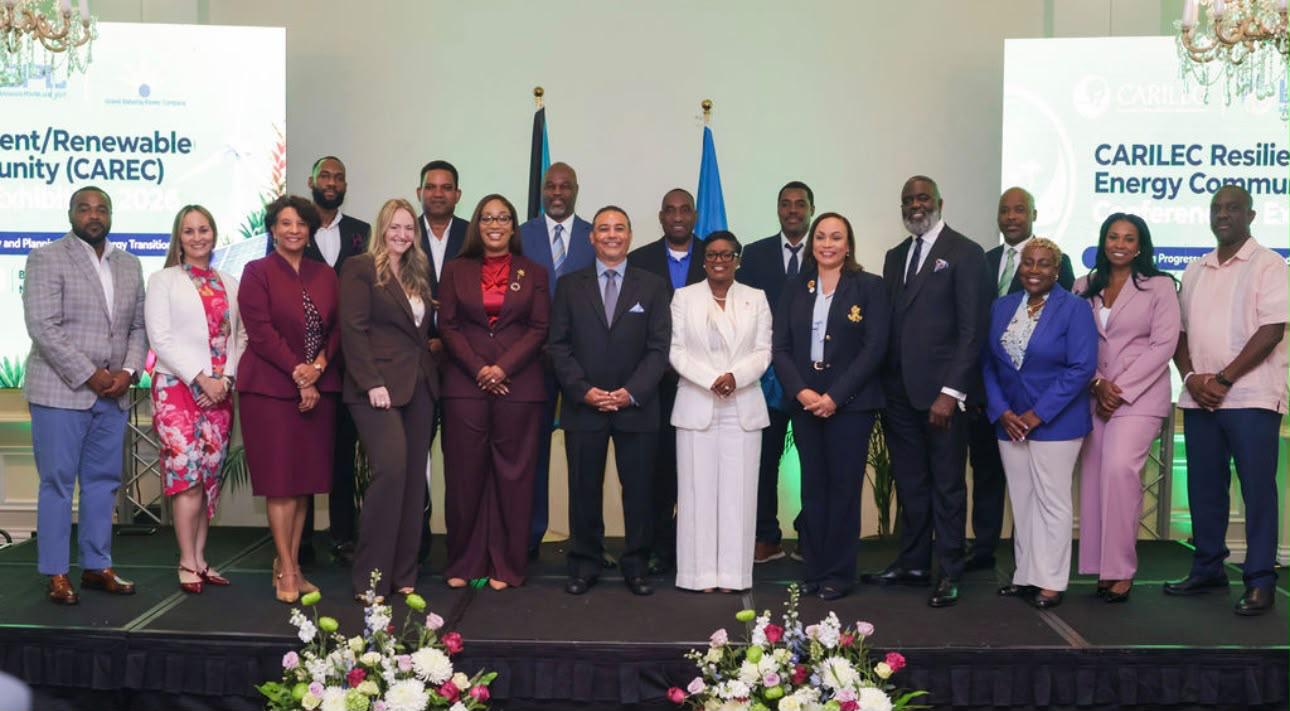
NASSAU, The Bahamas – The Bahamas’ Minister of Energy, Utilities and Aviation, The Honourable JoBeth Coleby-Davis, delivered an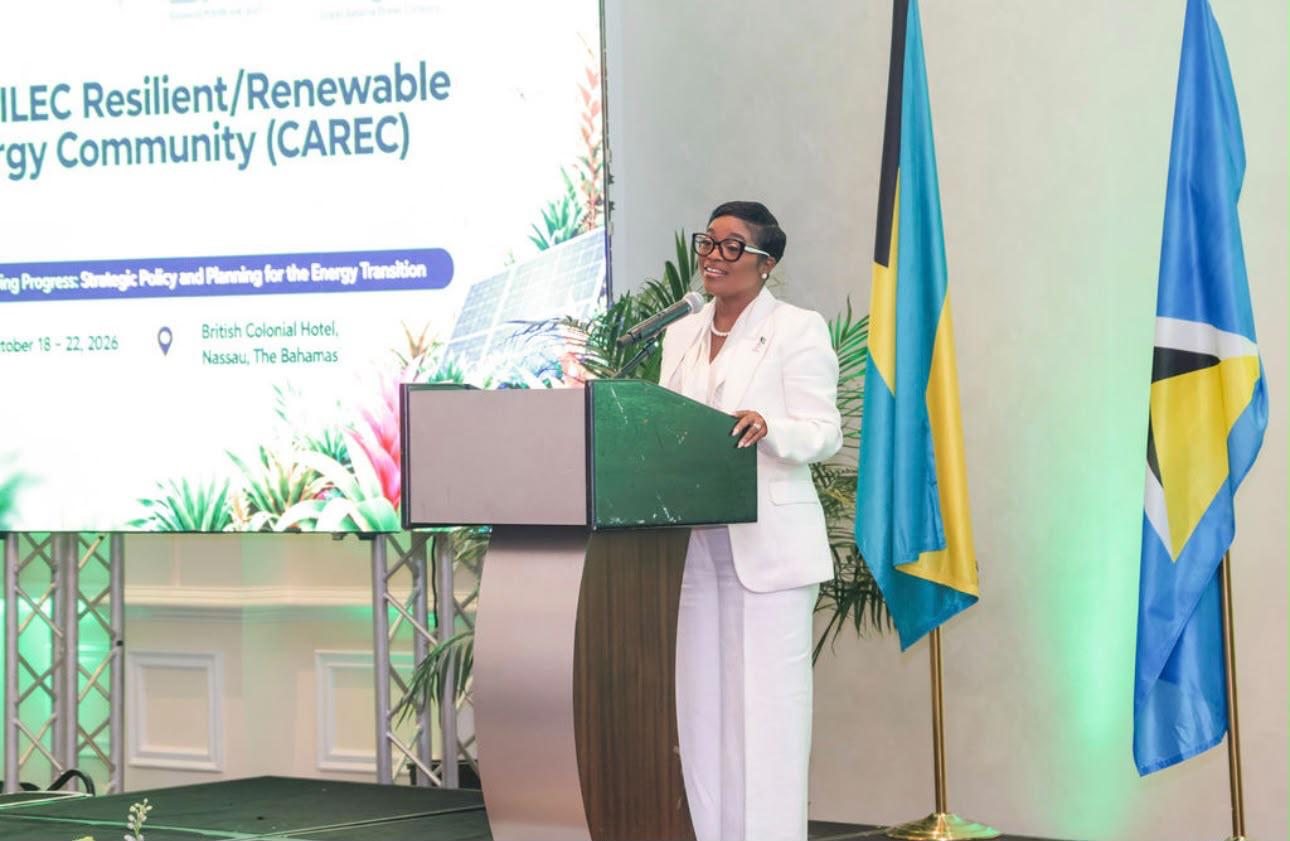 electrifying address during the opening ceremony of the 2026 CARILEC Resilient/Renewable Energy Community (CAREC) Conference and Exhibition, being held October 18–22, 2026, at the British Colonial Hotel in Nassau, The Bahamas.
Under the theme “Empowering Progress: Strategic Policy and Planning for the Energy Transition,” the event draws more than 200 industry leaders, policymakers, regulators, and energy professionals committed to advancing practical strategies for sustainable and reliable Caribbean power systems through renewable energy and emerging technologies.
During her address, titled “The New Energy Era: Transforming Policy into Progress,” Minister Coleby-Davis reminded attendees that The Bahamas’ national motto, “Forward, Upward, Onward, Together,” aptly describes what the region’s energy transition demands.
“Empowering Progress speaks directly to our national motto. Not waiting for progress, but creating the conditions that allow progress to happen. Meaningful progress, however, does not occur by accident. It requires vision, sound policy, strategic planning, strong institutions, and the determination to turn decisions into results,” said Minister Coleby-Davis.
Participants acknowledged that small island developing states share similar pressures, compounded by geographical challenges, small electricity markets, ageing infrastructure, geopolitical influences, and the growing threat of severe weather.
Tasked with ushering in a new energy era across the islands while addressing the challenges posed by The Bahamas’ unique archipelagic composition, Minister Coleby-Davis said, “Every island needs a different answer, but the same logic. As an archipelagic nation, we must provide electricity across many islands, each with its own demand and infrastructure needs. Our strategy, therefore, must be national in direction, but responsive to individual communities.”
Restating her Ministry’s three core messages—that energy is an economic and security priority, technology must be viewed as a tool to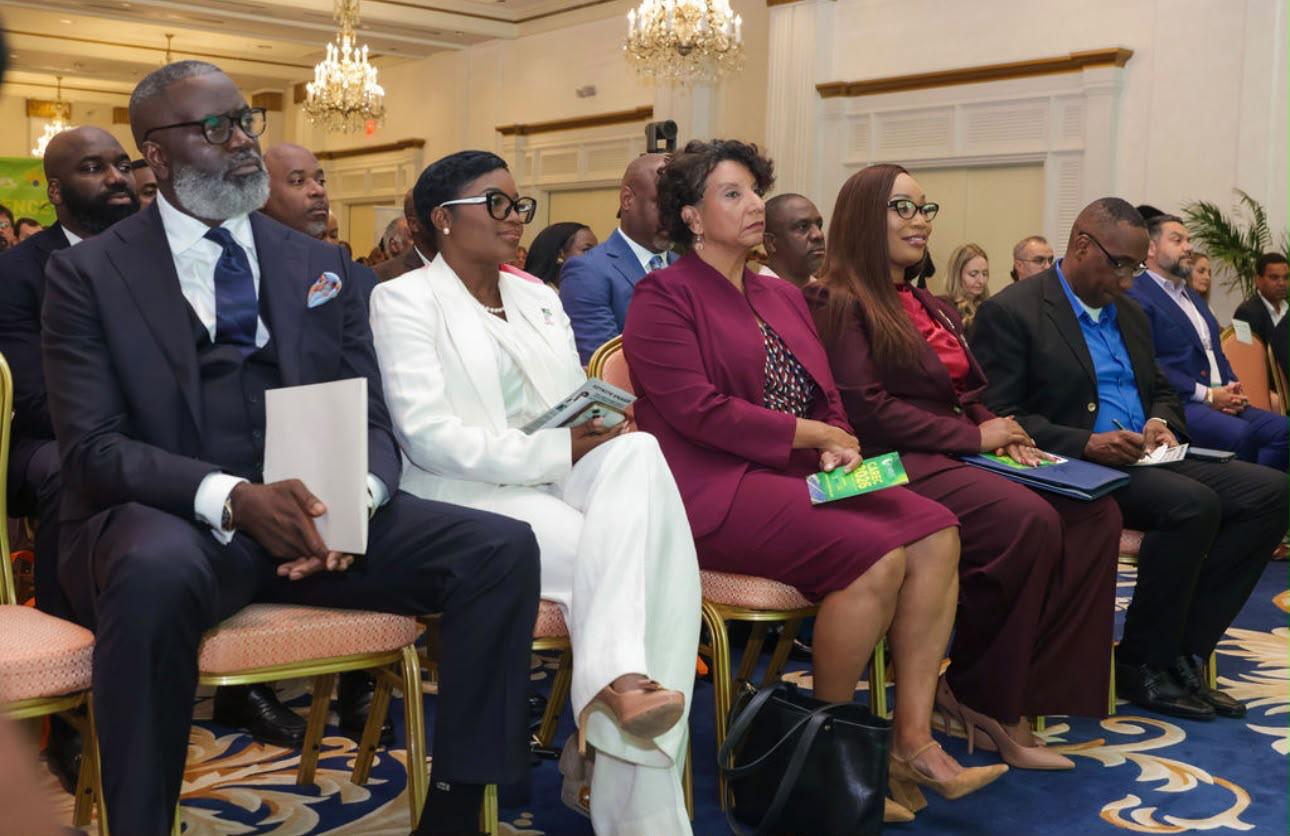 support strong institutional leadership, and natural gas should be considered a bridge, not a destination—Minister Coleby-Davis reiterated that “progress must now be reflected in functioning infrastructure, effective institutions, and better electricity services: from policy commitments to coordinated implementation, and from fragmented investment decisions to long-term planning.”
Organised by CARILEC and co-hosted by Bahamas Power and Light (BPL) and Grand Bahama Power Company (GBPC), the annual Conference and Exhibition brings together the Caribbean energy community to advance practical solutions to the region’s most pressing energy challenges and accelerate progress towards more resilient, reliable, and sustainable power systems.
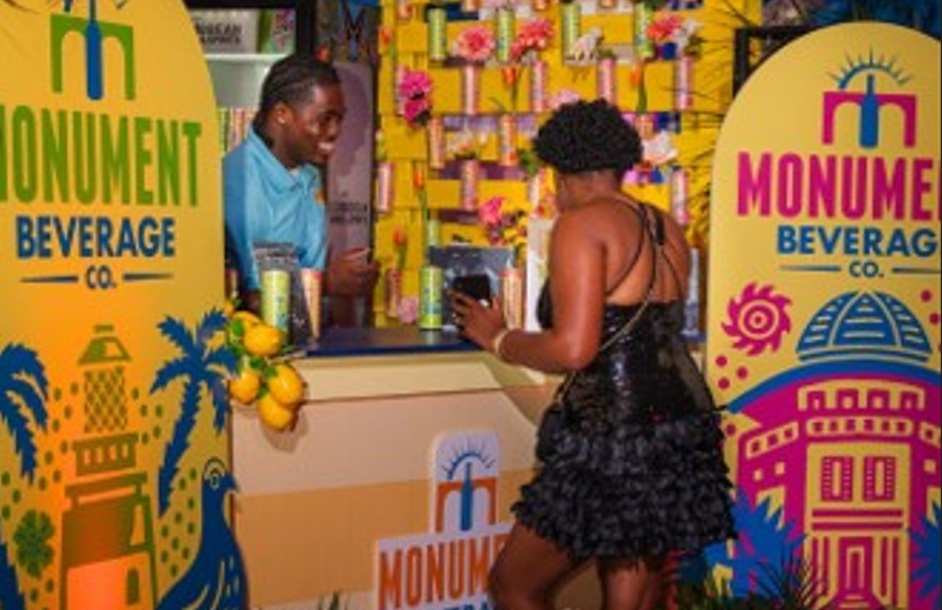
NASSAU, Bahamas — Caribbean Wines & Spirits (CWS), The Bahamas’ leading wine and spirits distributor, proudly supported Paradise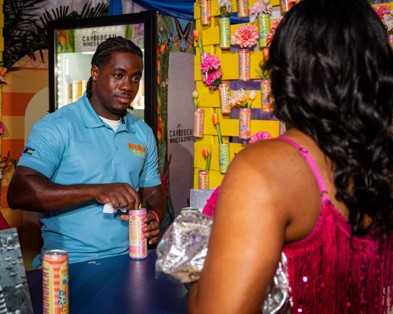 Plates, Hands for Hunger annual fundraiser with a flavorful offering of its newest product, Monument Beverage Co.
Monument, which launched this July and is available across six major islands, made its Paradise Plates debut. Guests enjoyed three bold flavors: Peach Passion, Ginger-Lime and Melon Fizz as they socialized throughout the evening.
Monument brand ambassadors engaged guests with knowledge on the ready-to-drink beverage’s unique taste and look. Many attendees were delighted to learn that Monument is 100% Bahamian-made and owned and enjoyed seeing the various national landmarks on the packaging.
The booth was adorned with vibrant brand colors, striped arches, tropical florals and a photo worthy backdrop featuring Monument cans filled with florals cascading down the wall.
At the end of the event, the entire Monument inventory had finished, making Monument’s Paradise Plates debut a huge success.
For more details on Caribbean Wines & Spirits, new products and specials, visit www.cwsbahamas.com today.
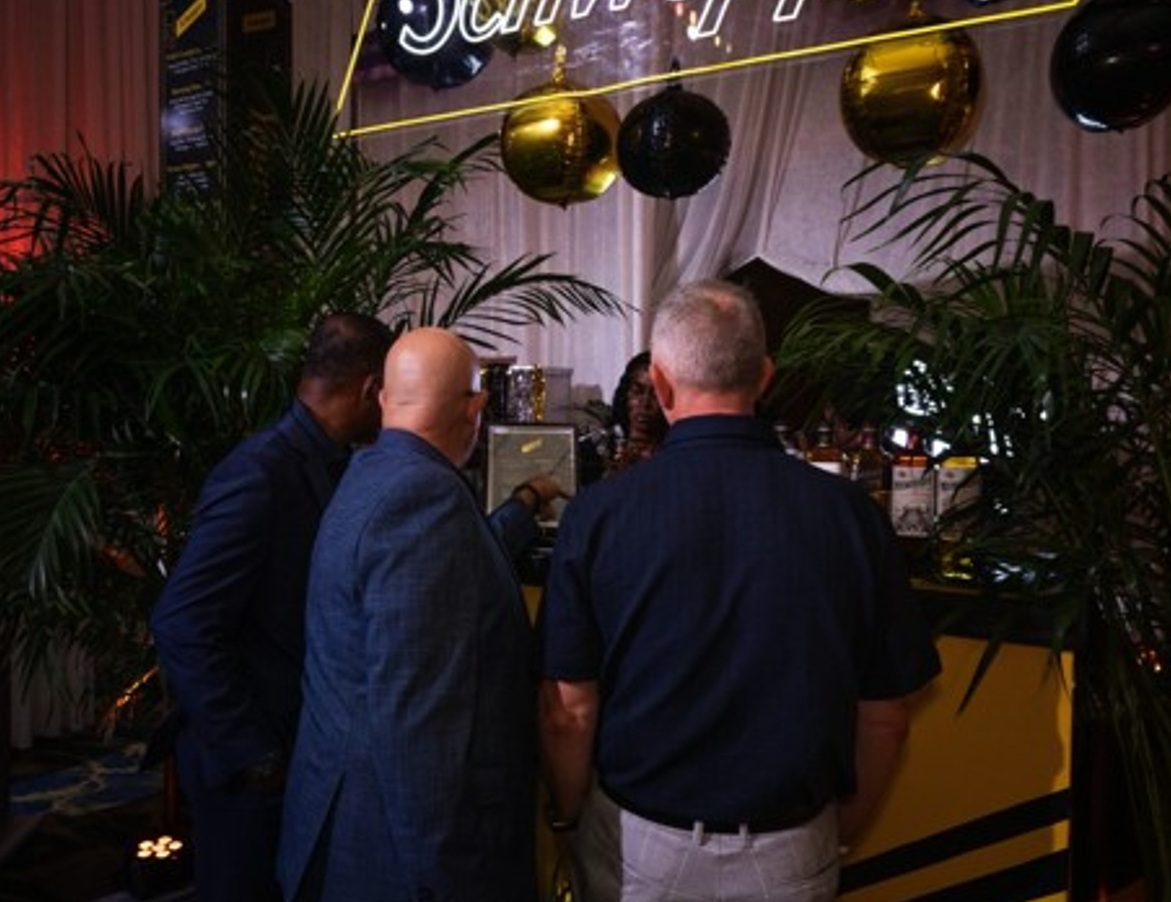
NASSAU, Bahamas — Schweppes, in collaboration with Nemiroff Vodka dazzled guests with handcrafted cocktails during Paradise Plates, Hands for Hunger’s annual fundraiser held at Atlantis’ Imperial Ballroom.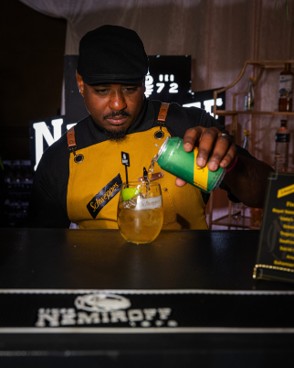
The evenings’ theme, 70’s: Paradise Disco, inspired bold and delicious sips from Schweppes and Nemiroff. The beautiful disco themed Schweppes booth, adorned with LED signs, lush greenery and hanging black and gold metallic orbs shined throughout the room.
Schweppes’ brand representatives and mixologists dressed in chic 70’s speakeasy attire engaged attendees throughout the night. Guests enjoyed receiving knowledge of each product and experiencing the vibrant energy of brand representatives.
Nemiroff Vodka, which is locally distributed by Caribbean Wines and Spirits (CWS), The Bahamas’ premier wines and spirits distributor; offered a unique variety of vodkas which made the perfect blend with Schweppes. Guests enjoyed, Nemiroff’s Honey Pepper, De Luxe, Burning Pear, Wild Cranberry, and Bold Orange vodkas throughout the night.
Fan favorite cocktails of the night were: the Wild Cranberry Tonic and the Bold Orange Fizz.
Following a positive response at Paradise Plates, CWS is offering Nemiroff and Schweppes specials at local liquor stores for the entire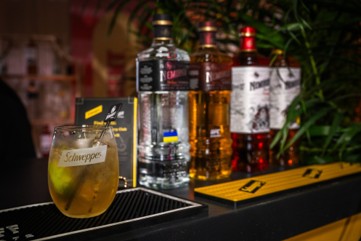 month. With the purchase of any 1-liter Nemiroff vodka, enjoy a complimentary three-pack of Schweppes mixers, to recreate the magic of Schweppes and Nemiroff.
Cara Douglas-Adderley, Senior Marketing Director for Caribbean Bottling (CBC), local producers and distributors of Coca-Cola and Dasani products and CWS shared the inspiration behind the Schweppes and Nemiroff promotion.
“We are thrilled to have paired Schweppes and Nemiroff for Paradise Plates this year, creating a premium cocktail experience for guests. After receiving such positive feedback, we wanted to extend that experience to consumers at home. Throughout October, consumers can visit their favorite watering hole, buy any 1-liter Nemiroff bottle and receive a free three-pack of Schweppes.”
Caribbean Bottling Company is proud to offer Schweppes, Coca-Cola’s premier mixer in collaboration with Caribbean Wines & Spirits and Nemiroff Vodka at Paradise Plates in support of Hands for Hunger’s mission.
For more information on CBC’s philanthropic work, new products and specials, visits www.cbcbahamas.com today.





-

 Independent writer1 week ago
Born Here, Raised Here, but Still Unable to Vote: Is this a Conundrum for TCI Electorate?
-

 Bahamas News2 days ago
Rosewood Exuma: A precedent-setting case for environmental law and future development in The Bahamas
-

 Bahamas News6 days ago
Monument Supports Hands for Hunger With Paradise Plates Debut
-

 Bahamas News1 week ago
Schweppes ‘the Art of Mixology’ Dazzles at Paradise Plates with Nemiroff Vodka
-
 Bahamas News1 day ago
Energy Minister Delivers Electrifying Keynote Opening Address at CAREC 2026