
Bahamas News
US VP Kamala Harris and PM Davis Co-Host US-Caribbean Leaders Meeting, in The Bahamas

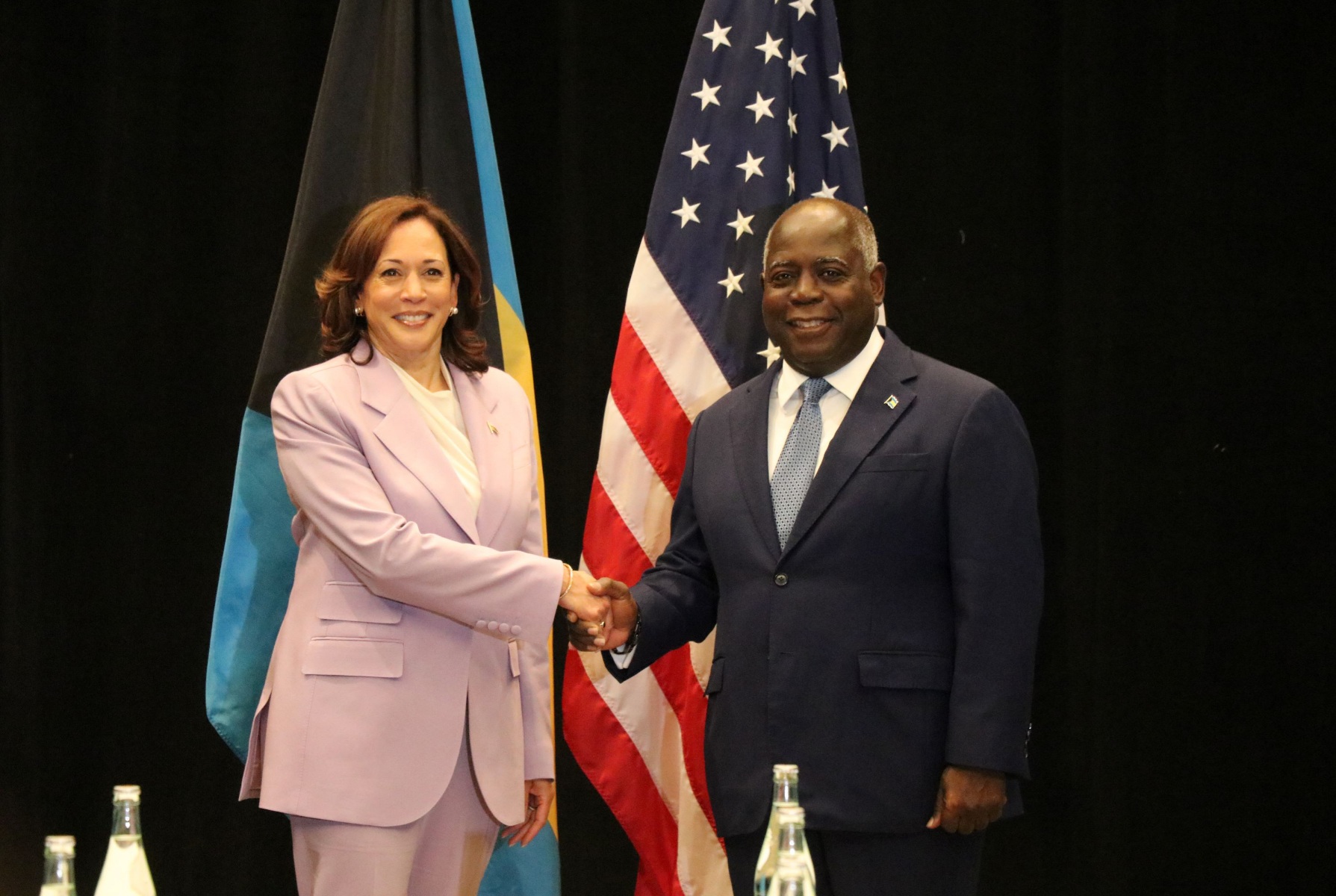
NASSAU, The Bahamas — Vice-President of the United States Kamala Harris arrived in The Bahamas on Air Force 2, landing at Odyssey Aviation, on June 8, 2023. She became the highest-ranking sitting US official to visit The Bahamas, since its Independence in 1973. Vice-President Harris joined Prime Minister and Minister Finance the Hon. Philip Davis in co-hosting the US-Caribbean Leaders Meeting, which was held at Atlantis Resort, Paradise Island, Thursday.
Among those there to greet her upon her arrival were Minister of Foreign Affairs and the Public Service the Hon. Frederick Mitchell; Minister of Education and Technical & Vocational Training the Hon. Glenys Hanna-Martin; Minister of State for the Public Service the Hon. Pia Glover-Rolle; US Charge d’Affaires, a.i., Ms. Usha E. Pitts; senior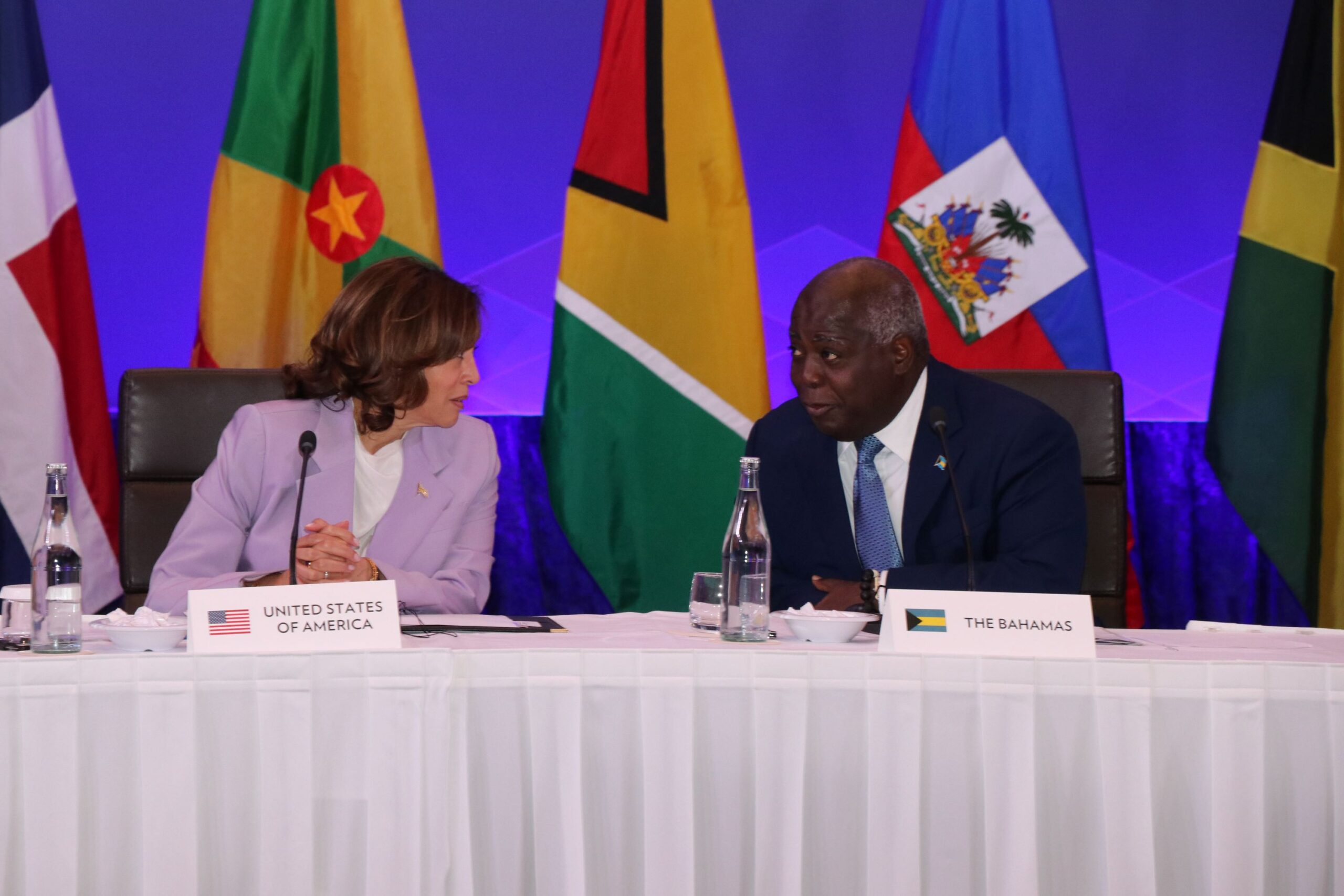 representatives of the Royal Bahamas Police and Defence Forces and a combined forces Colour Guard; special invited guests; civic and social group representatives; local members of her Alpha Kappa Alpha sorority family; and students from a number of public and private schools.
As her convoy made its way to Paradise Island, scores of onlookers – many of them tourists who were on vacation – cheered and waved, many with cellphones in hand to capture a glimpse of the historic visit.
Before the US-Caribbean Leaders Meeting, Prime Minister Davis greeted Vice-President Harris and they were the leads in a Bilateral Meeting. Also present for that meeting were various Cabinet Ministers.
According to the Office of the Prime Minister’s social media pages, both nations reaffirmed their commitment to fortify connections and address important regional concerns by building on their prior engagements. Their dialogue also reportedly paved the way for a successful summit, later that day, with a focus on attaining goals for sustainable development and climate resilience. Topics that were discussed, according to the Prime Minister’s social media pages, were collaboration and progress on climate change, regional security, and economic development.
After the Bilateral meeting, they took part in the multilateral US-Caribbean Leaders Meeting. During his Public Opening Statement to the Press, Prime Minister Davis welcomed visiting “friends and colleagues” to The Bahamas.
“Today, we are very pleased to welcome Vice-President Harris to join our Caribbean nations,” Prime Minister Davis said. “Madam Vice-President: I believe we all feel and appreciate the depth and sincerity of your commitment to the region and to our people. We will make the most of our time together, I’m sure.
“Indeed, our discussions will cover a broad range of issues: Energy and Food Security, Climate Resilience, Development Finance and Economic Opportunity, and Regional Co-operation and Security,” he added. “The agenda is ambitious – reflecting the urgency of addressing these challenges, and the real opportunity we see to make progress.”
Prime Minister Davis pointed out that they were not “starting anew”; but were building on the work and dialogue of June 2022’s Summit of the Americas, in Los Angeles, and in regional meetings held since.
“Coming together here in The Bahamas, let us seize the moment — to accelerate and deepen our engagement, and to work together to produce tangible outcomes,” he said.
“Madam Vice-President: it has been many years since we had an official visit from a President or Vice-President of The United States,” Prime Minister Davis added. “You hosted us very graciously at the White House earlier this year, and today I have the honour of extending to you our warmest welcome.
“We look forward to working together in close partnership to build solutions and a better way forward for us all.”
During her remarks, Vice-President Harris congratulated The Bahamas and CARICOM on their respective 50th anniversaries.
She also pointed out that as neighbors, the United States shared common bonds and interests with the Caribbean nations. She added that the partnership, was essential to “our mutual security and prosperity.”
“Our nations have extensive people-to-people ties,” Vice-President Harris said. “In fact, in the United States this month, we celebrate Caribbean American Heritage Month.”
She added: “Strengthening the U.S.-Caribbean relationship is a priority for me, as it is for President Joe Biden. And these meetings have proven — I believe, at a leader level, have proven to be very important and essential to the strength of these relationships.”
Vice-President Harris noted that, regarding the “existential threat” of the climate crisis, Caribbean nations were on the front lines. She pointed out that the US and regional leaders had discussed, for example, powerful storms that can wipe out economic progress; low-lying islands that face erosion, flooding, and deadly storm surge from rising seas.
“These discussions resulted in the launch of our U.S.-Caribbean Partnership to Address the Climate Crisis — or, as we call it, PACC 2030 — last year at the Summit of the Americas,” she noted. “PACC 2030 is designed to help accelerate the Caribbean’s transition to clean energy and to promote energy security and climate resilience.”
Vice-President Harris stated that, since they last met in Los Angeles in 2022, the United States had helped to facilitate clean energy projects throughout the region.
She said: “I’ll offer some examples: in St. Lucia, the work that we have done thus far to deploy solar microgrids to power schools, hospitals, and water treatment plants; Dominica and St. Kitts, to develop commercial geothermal power projects; Antigua and Barbuda, to train a clean energy workforce; and the Dominican Republic, to integrate battery storage in their energy grid.”
“Our work together has also helped build capacity for disaster preparedness,” she added. “For example, the administrator of NOAA led a group of U.S. experts to Barbados to support regional resilience, including early warning systems and sharing climate information with communities.”
Vice President Harris said that they established a network of Caribbean-based scientific experts to create new climate mitigation and adaptation methods; and in Jamaica, they are helping develop a national emergency commercial infrastructure and communications infrastructure.
“Since we last met, we have also worked to bring investors to the Caribbean to identify new opportunities for clean energy infrastructure, including through trade missions,” she said. “We have provided $28 million in food security assistance. And we have invested in the Blue-Green Investment Corporation, spearheaded by Barbados, which we expect to unlock up to $210 million over three years.”
Vice-President Harris pointed out that it was her pleasure to announce additional PACC 2030 investments.
She said: “One, specifically, a $20 million investment in the Caribbean Climate Investment Program to help incentivize the private sector to partner with Caribbean nations to develop more clean energy technologies, like microgrids and energy storage systems, and to help businesses become more energy efficient in their operations.”
“And, second, a $15 million investment to support emergency response efforts and strengthen the capacity of the Caribbean Disaster Emergency Management Agency,” she added. “This investment is intended to help develop new early warning systems and pre-position first aid equipment and generators.”
“As a follow-up to this convening, in fact, tomorrow the Atlantic Council and RMI are hosting a PACC 2030 summit here in Nassau,” Vice-President Harris announced. “There, we will work with these and other organizations to facilitate connections between the United States government, the private sector, NGOs, and philanthropic organizations, and officials here in the Caribbean to identify, build, and operate new clean energy projects.”
She noted that another key area of the United States’ work with the Caribbean, through PACC 2030, was to increase access to development financing. She added that, to that end, she met with the new President of the World Bank, Ajay Banga, earlier that week, and informed him that the United States will lead a diplomatic campaign on multilateral development bank reform.
“My conversations with the leaders at this table helped inform our administration’s approach,” she revealed. “We seek more available and — availability of low-cost concessional financing to nations in the Caribbean. And we believe addressing the climate crisis should be a critical part of the mission of the World Bank.
“More broadly, new debt must include disaster clauses to allow a pause on debt payments immediately following a natural disaster.”
Vice-President Harris pointed out that they wanted the bank to better mobilize the private sector in support of those goals.
“Implementation of these reforms will have a major impact on countries in the Caribbean, and we aim to achieve these key reforms by the G20 meeting this fall,” she said.
“At my invitation, President Banga will join our meeting today virtually in just a few minutes.”
Vice-President Harris said that, on the issue of security, too many people in all of their countries were dying from gun violence.
“I will reiterate that our administration is committed to disrupt gun trafficking,” she said. “We are committed to interdict shipments of arms and ammunition and hold traffickers accountable.”
“And today, I am pleased to announce that the United States Department of Justice will create a new position, a Coordinator for Caribbean Firearms Prosecutions, which will help maximize information sharing between our countries to support the prosecution of traffickers,” Vice-President Harris shared.
“This effort will be aided by the bipartisan Safer Communities Act, which President Biden signed last year, and includes new federal criminal offenses for firearms trafficking and straw purchases,” she added.
Vice-President Harris noted that, in addition, through the U.S. law enforcement agencies, they were supporting a recently established Caribbean Crime Gun Intelligence Unit in Trinidad and Tobago to train officials in firearms investigations and help bring criminals to justice.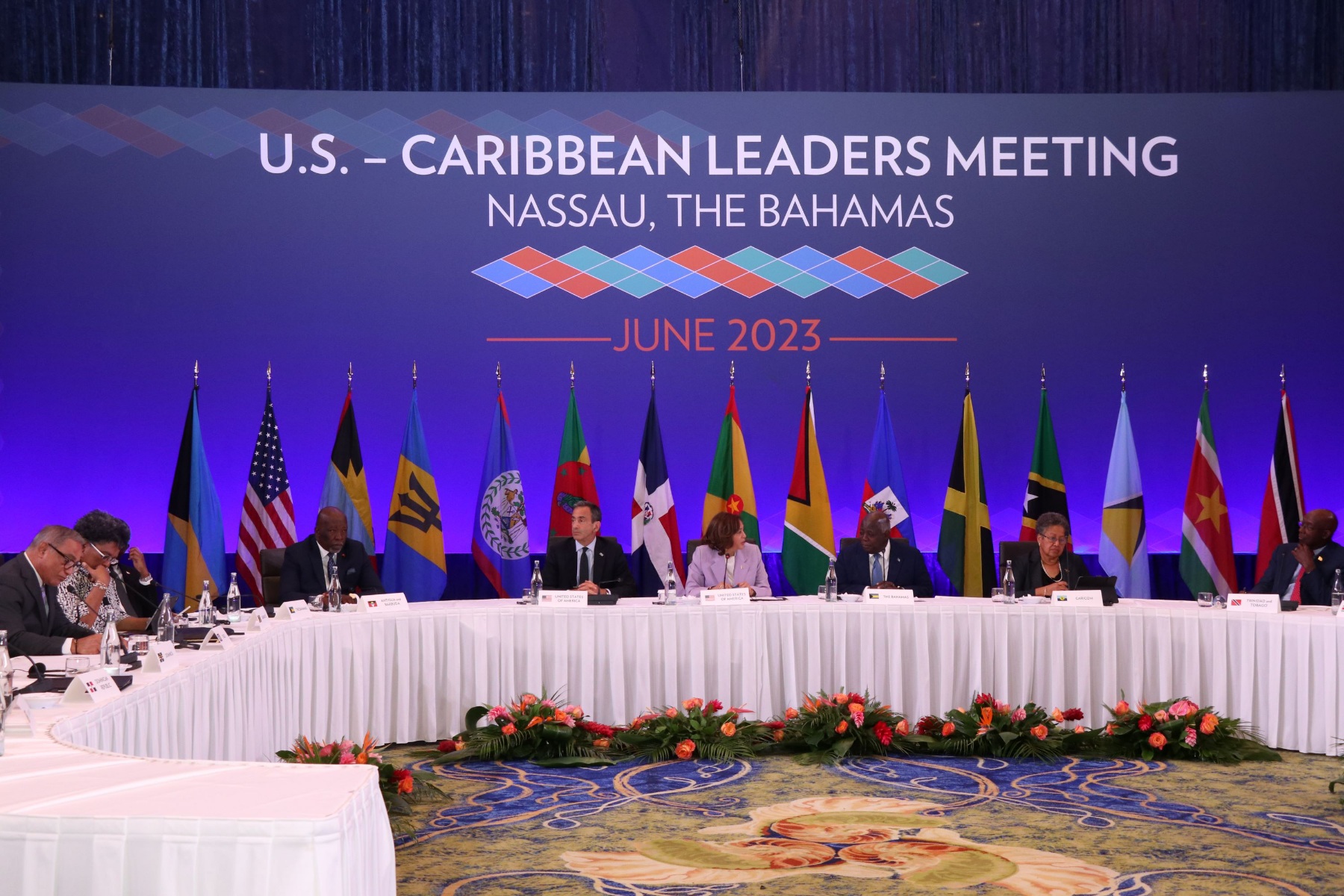
“And we will stand up a Haiti Transnational Criminal Investigative Unit in collaboration with the Haitian National Police to facilitate investigation and prosecution of firearms and human trafficking, which affects the entire region,” she said.
“More broadly on the issue of Haiti: First, I will say that our hearts go out to those who have lost loved ones and all who have been impacted by, just this week alone, the flooding and the earthquake,” she added. “The international community must continue to support the Haitian people in light of the devastating humanitarian and security crisis in that country.”
Vice-President Harris stated that the United States supported the development of a multinational force to Haiti.
“And today I’m pleased to announce $53.7 million in new humanitarian aid for Haiti,” she added. “In addition, our administration will support the extension of HOPE-HELP trade preferences for Haiti, which are due for renewal in 2025.”
Vice-President Harris noted that, in response to “longstanding requests from our Caribbean partners”, she was pleased to announce that the Biden-Harris administration had begun to process to establish an expanded diplomatic presence in the Eastern Caribbean, including two new embassies.
She said: “In conclusion: From the climate crisis, to development financing, to security, and Haiti and diplomatic presence, we have achieved substantial progress in the last two years based on shared priorities, many of which have been formed and discussed through these convenings that we have had over the last two years.”
“We are neighbors in the Western Hemisphere,” Vice-President Harris noted. “And the security and prosperity of this region requires the type of collaboration and partnership that we have developed and continued to grow over the last two years.
“It is the full intention of our administration and the United States to continue this good work, knowing, of course, there is more to do but that progress has been made. And so, again, I thank the leaders at this table and, Mr. Prime Minister, you, again, for hosting us.”
After the Multilateral Meeting, Vice-President Harris left Paradise Island, her convoy passing more waving onlookers – and rush-hour traffic – before being greeted back at Odyssey Aviation by the Colour Guard. Minister Mitchell, Ms. Usha Pitts, representative heads of the Royal Bahamas Defence and Police Forces, and members of local US Embassy bade her farewell.
As she waved from the top of the stairs, she appeared to pause a little, to catch a glimpse of the setting sun, before she entered Air Force 2.
(BIS Photos/Eric Rose)


The Bahamas, August 27, 2026 – The Royal Bahamas Police Force wishes to inform members of the public that several individuals are scheduled to appear before the Magistrate’s Court on Thursday, 27th August 2026, at 12:00 noon.
The individuals and charges are as follows:
An 18-year-old female is scheduled to be arraigned on the following charges:
Three (3) counts of Murder
Three (3) counts of Attempted Murder
Three (3) counts of Possession of a Firearm with Intent to Endanger Life
Three (3) counts of Possession of an Unlicensed Firearm
Two (2) counts of Possession of Ammunition
Armed Robbery
Abetment to Armed Robbery
Stealing
Receiving
The charges stem from three separate shooting incidents and an armed robbery that occurred on Friday, 21st August 2026, and Saturday, 22nd August 2026.
The first shooting occurred in the area of Soldier Road and Baillou Hill Road, resulting in the death of a 51-year-old male.
The second shooting occurred in the area of Joe Farrington Road, resulting in the death of a 52-year-old male.
The third shooting occurred in the area of Gladstone Road, resulting in the death of a 36-year-old male.
The armed robbery occurred at a business establishment in the area of Carmichael Road and Baillou Hill Road.
A 21-year-old male is scheduled to be arraigned on one charge of:
- Murder
The charge stems from a shooting incident that occurred on Tuesday, 21st July 2026, in the area of Samson Street, Nassau Village, which resulted in the death of a 28-year-old male.
A 32-year-old male is scheduled to be arraigned on the following charges:
- Murder
- Attempted Murder
These charges stem from a shooting incident that occurred on Wednesday, 24th December 2025, in the area of Graham Drive, Yellow Elder, which resulted in the death of a 25-year-old male.
RBPF, PACD
Bahamas News
Bahama Brass Band Invitation Sparks Heritage Debate Ahead of TCI Constitutional Holiday
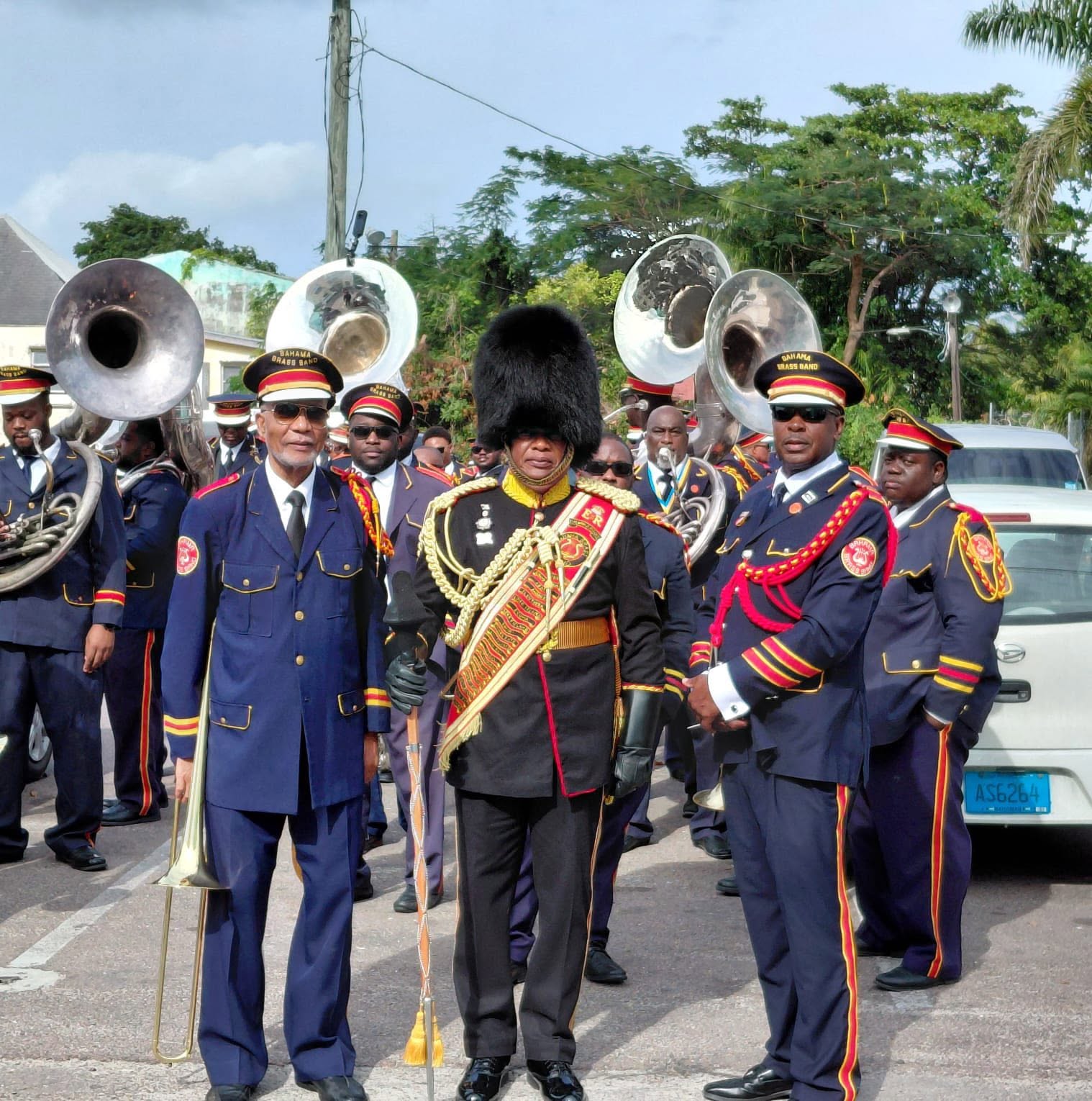
Turks and Caicos, August 20, 2026 – The planned participation of the Bahama Brass Band in the Turks and Caicos Islands’ inaugural Constitutional Holiday celebrations on August 30 has sparked public debate over culture, heritage and the historical contributions of Turks and Caicos Islanders abroad.
Organizers defended the invitation, saying the band’s inclusion is intended to highlight the deep historical ties between the two countries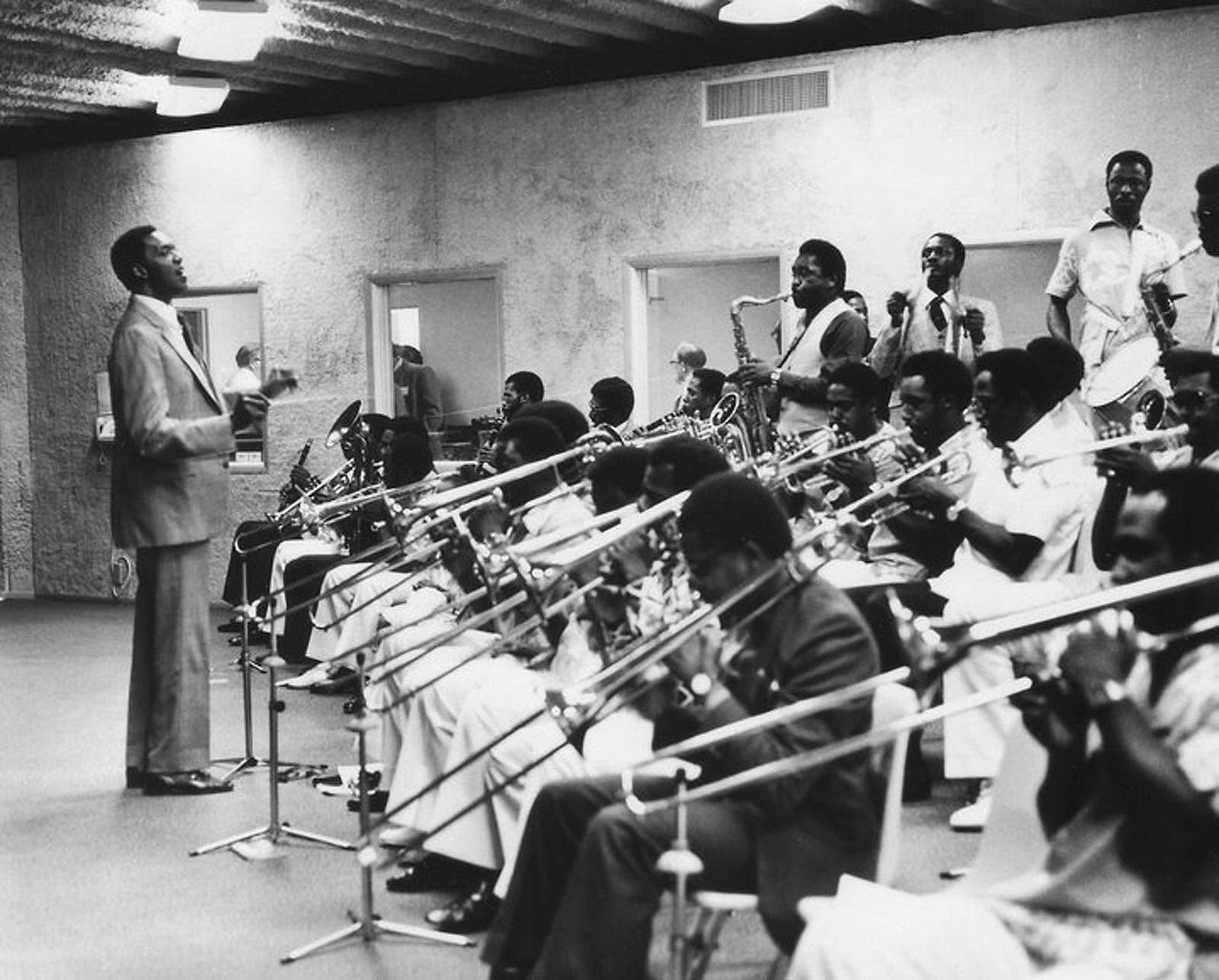 and honor Turks and Caicos men who helped establish and develop the institution in Grand Bahama.
According to the organizers, the Bahama Brass Band began in 1955 in Pine Ridge, Freeport, with Turks and Caicos Islanders, including the late Deacon Reuben Hall Sr. of Middle Caicos and Jenkins Williams and Mervin Hendfield of North Caicos, among those who helped build its foundation. The band eventually grew to more than 50 men.
The organizers also pointed to the participation of Turks and Caicos men in The Bahamas’ Independence celebrations on July 10, 1973, arguing that their contributions became part of Bahamian history while maintaining strong connections to their homeland.
Supporters say bringing the band home represents an opportunity to honor those pioneers, showcase their regional influence and expose younger generations to an important part of Turks and Caicos history.
However, concerns raised publicly described the invitation as potentially disrespectful to local culture and heritage. Organizers acknowledged those concerns, apologizing to anyone who felt overlooked or offended, while maintaining that no disrespect was intended.
The committee said the event should ultimately unite rather than divide, presenting the band’s history as evidence of the reach and resilience of Turks and Caicos heritage.
PHOTO CREDIT: Bahamas Brass Band
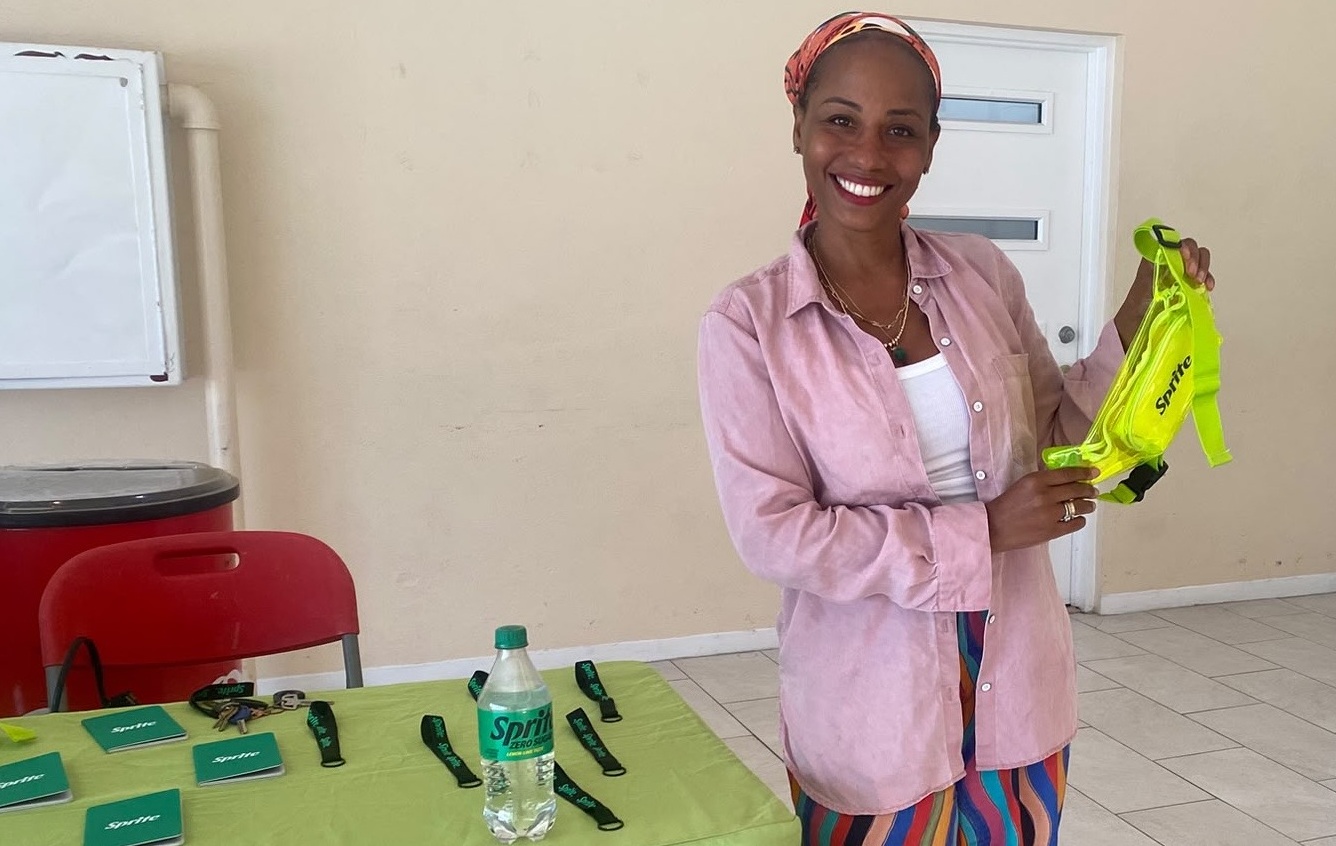
NASSAU, Bahamas — Caribbean Bottling Company (CBC), local producers of Dasani products, proudly sponsored the fifth annual, Caribbean Hoopfest.
The tournament brings together Bahamian high school basketball teams and visiting teams from the United States for a competitive showcase at the Kendal G. L. Isaacs Gymnasium. Following its inaugural year at the Kendal G. L. Isaacs gym and last year’s event at Loyola Hall, the tournament returned to the Kendal G. L. Isaacs gym this year.
During the weekend tournament, CBC kept athletes well hydrated with in-kind donations of Dasani Water, Powerade and Minute Maid Juices.
During the tournament’s final day, CBC provided additional support by offering Sprite No Sugar samples and inviting attendees to participate in its Spin the Wheel for a chance to win exciting prizes.
CBC was proud to support this incredible event, which provides young Bahamian athletes with valuable exposure to U.S. basketball scouts and coaches. This opportunity gives them the chance to earn scholarships, continue their education, and pursue their basketball careers in the United States.
Event organizer, Donald Francois shared his appreciation for CBC’s support.
“I want to express our sincere appreciation for Caribbean Bottling Company, who has been a tremendous supporter and an important part of the success of our program. Without CBC’s support, Caribbean Hoop Fest would not be able to function at the level it does today. And without Caribbean Hoop Fest, we would not have been able to provide the opportunities that have helped young Bahamian athletes gain exposure and pursue educational opportunities in the United States,” he expressed.
Since the program’s inception, several Bahamian student-athletes have been selected for scholarship opportunities, highlighting the tournament’s growing impact on the development and advancement of young basketball talent in The Bahamas.
They are: Kelvin McDowells – Guard, Wodson Antoine – Power Forward, Justin Lafleur – Guard and Sean John – Guard.
After another successful edition of the tournament, Francois shared what he hopes he and Caribbean Bottling Company can achieve in the future.
“Our vision is bigger than basketball. We want to use the platform of Caribbean Hoop Fest to educate, develop, and create opportunities for young people and their families throughout the Bahamas. With individuals and organizations committed to our mission, we believe we can continue to grow the program and make an even greater impact,” Francois said.
For more details on community support, events and new products visit Caribbean Bottling Company at www.cbcbahamas.com today.





-
 News1 day ago
Starlink Gets 15-Year TCI Licence; Commission Reveals Fees, Future Flow and Digicel Partnerships
-

 Bahamas News1 week ago
Royal Bahamas Police Force – ARRAIGNMENT NOTICE
-
 News3 days ago
Government Restates Commitment to TCI’s Telecommunications Evolution
-
 Independent writer2 days ago
A Second Chance Through Service: Is the TCI Regiment an Untapped Tool for Rehabilitation?
-
 News3 days ago
Tomorrow’s Communities Start with Today’s Young Leaders: Why Youth Engagement Matters
-

 Health6 days ago
Is It Bad To Sleep in a Bra?
-

 News1 day ago
Flow Strengthens Network Leadership in TCI