
Government
PDM not satisfied with Gov’t Press Event; says PNP ‘arrogant’

By Dana Malcolm
Staff Writer
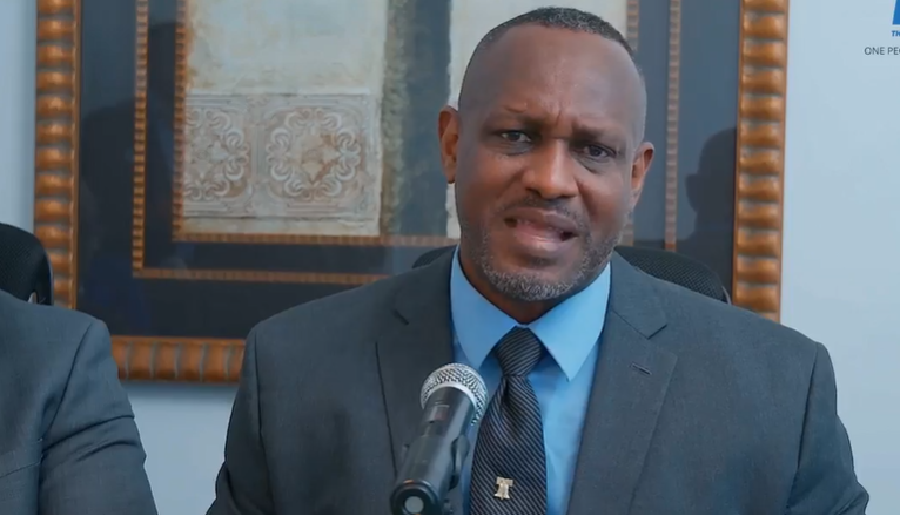
#TurksandCaicos, May 1, 2023 – While the establishment of the Destination Marketing and Management Organisation may have been in the PNP’s Citizens’ contract, residents who voted for the PNP were not expecting a total breakdown of the Tourist Board, this is according to Edwin Astwood, Leader of the Opposition.
His claim was part of a response to the recent press conference held by the government to shed light on the DMMO. Astwood slammed Washington Misick, TCI Premier for quoting his Citizens’ Contract, where Misick said the plan for the DMMO was listed.
“In other words, he is saying that all those who voted for this PNP administration supported the closing down of the Tourist Board and replacing it with the DMO. Somehow, I do not think that this is what the Premier’s supporters were expecting,” he challenged “Maybe some in the inner circle would have known the sneaky details, but not the majority of the people who voted for the PNP and the last election.”
The government is defending their investment in the DMMO as doggedly as the Opposition is denouncing it but in the verbal melee Astwood highlights one question that remains unanswered. Why were the Tourist Board employees let go?
Minister Josphine Connolly explained that the Board’s structure and information collection methods were unsuitable for the new era of tourism the government is trying to usher in, but thus far nothing has been shared that indicates the employees were unsatisfactory in any way.
In truth, the staff are constantly on the receiving end of compliments from the Minister for stellar work, supportive research and credited for having led TCI’s destination marketing for three consecutive years of robust growth.
The recent DMMO press conference did not explain the dismissal, but informed that staff recruitment and retention will no longer be a function of TCIG.
Piggybacking on an example of Apple and its Ipod shared by E Jay Saunders, Minister of Finance, about taking a good product and making it better the Opposition Leader criticized the touted improvement which lessens TCIG control of the country’s number one industry.
“What did not happen, Mr. Minister, was that Apple did not give control of their star product or their new upcoming star product to another company, nor did they put the management and sale of their new star product into the hands of others, like this Government is doing right now. So yes, Honourable Minister of Finance they made a good thing better, but they did it themselves, bringing the talent, using the accumulated experience, employing the latest technical advancements. The Government should be doing the same- The Government should be Making the People’s Tourist Board better and not shutting it down, leaving our Turks and Caicos Islanders jobless,” he maintained.
Edwin Astwood described the decision to move forward without widespread public consultation as arrogant.









NASSAU, The Bahamas — The Government is moving to protect the rights, privacy, independence, and dignity of older persons throughout the Commonwealth of The Bahamas.
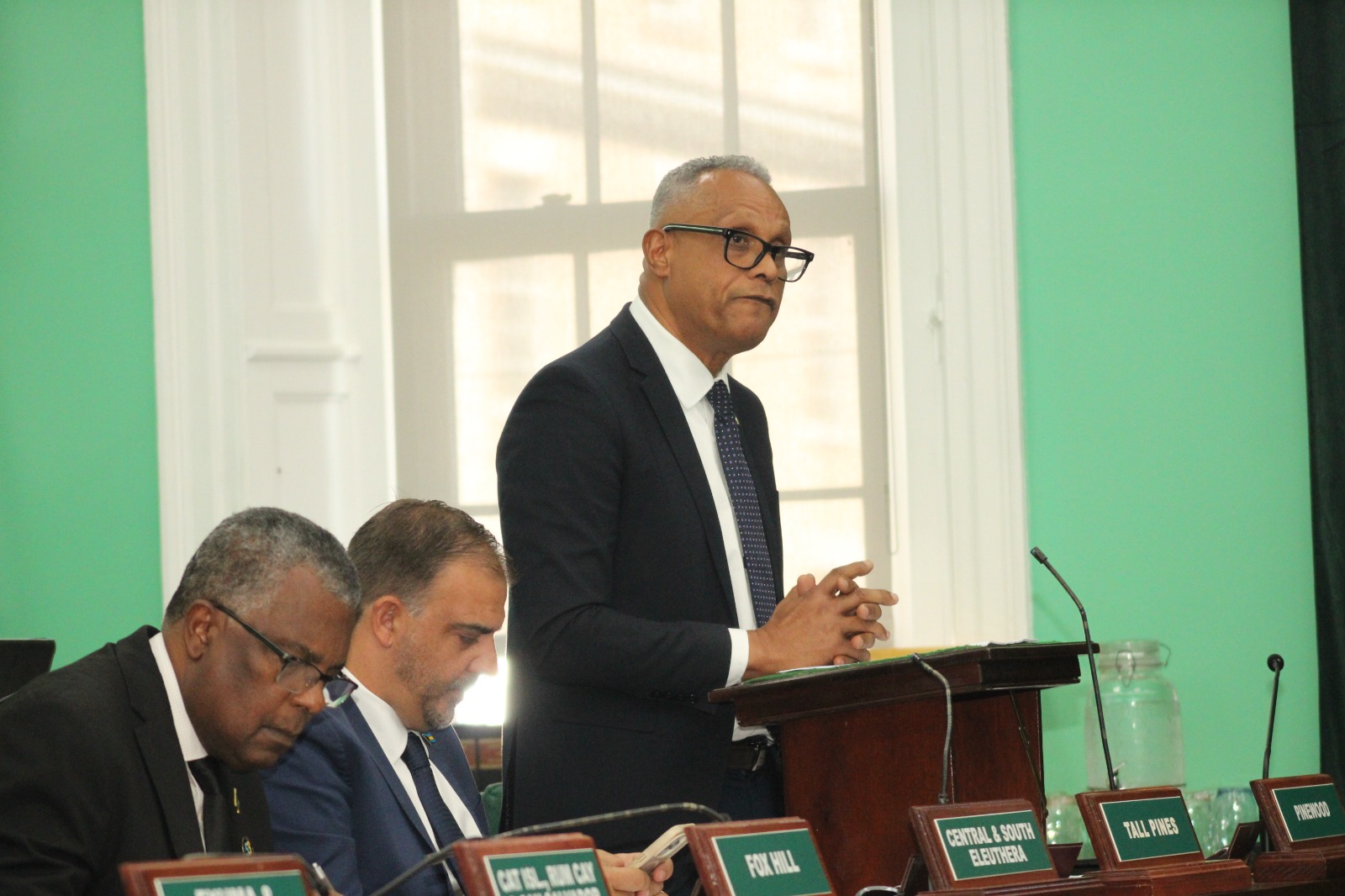
The Hon. Dr. Michael Darville, Minister of Health and Wellness tabled The Older Persons Rights, Protections, Care and Support Bill (2026), in the House of Assembly on Wednesday, September 16, 2026.
“This is legislation whose time has come. It is rooted in a very simple thought that growing older must never mean becoming less valued, less visible, less protected or less entitled to dignity.
“Ageing is not somebody else’s issue. It is one of the few public policy matters that, if we are blessed with longevity, will eventually touch every one of us,” Dr. Darville said.
He noted that The Bahamas, like the world, is experiencing a clear demographic shift. According to the 2022 Census, the number of persons aged 65 years and older rose by 28.2 percent since 2010.
In The Government’s Blueprint for Progress, it made a commitment to strengthening protections for older persons. And, this Bill gives practical expression to that commitment. But there is also a wider context.
Furthermore, in 2025, the United Nations Human Rights Council established an Intergovernmental Working Group charged with developing a legally binding international instrument on the human rights of older persons. Its first substantive negotiating session was held in Geneva in July of this year.
In this vein, Dr. Darville said that The Bahamas brings this Bill at an important moment.
“While the international community is negotiating what a future global legal instrument should contain, The Bahamas is moving now with legislation that goes beyond a declaration of principles,” he said.
“This Bill recognizes older persons as rights-holders. But it also recognizes that rights written on paper mean little if there is no machinery to make them real.”
Provisions under the Bill establish in law the rights of older persons, including dignity, equality, privacy, autonomy, participation, financial self-management and access to healthcare and public services.
Secondly, it confronts abuse and abandonment, physical abuse, sexual abuse, psychological and emotional abuse, neglect and abandonment.
“These are expressly prohibited. For far too long older persons have been abandoned at hospitals with no recourse. This ends today,” Dr. Darville stated.
The Bill also permits anonymous reporting of suspected abuse and protects persons who make reports in good faith. Certain healthcare, social service, law enforcement and other professionals will have a statutory duty to report where
they reasonably suspect that an older person requires care and protection.
And thirdly, this Bill confronts an abuse that can sometimes remain hidden behind family relationships — financial exploitation, Dr. Darville said.
He added, “Taking an older person’s pension. Misusing their bankcard. Coercing them to transfer property. Manipulating a will. Using their National Insurance benefit for purposes other than their welfare. Preventing them from accessing their own money. These matters are specifically addressed in this legislation, with financial exploitation attracting serious penalties.”
The Bill is about support, by providing for the development of a National Older Persons Policy within 12 months, with priority given to a National Dementia Strategy.
“It promotes community nursing, home-based care and older persons’ day-care services, because where it is safe and appropriate, we should help our older persons remain independent, connected to their communities and supported in familiar surroundings,” Dr. Darville said.
The Bill further recognizes the tremendous responsibility carried by caregivers and provides for caregiver training and support, among other things. “It incorporates the needs of older persons into disaster preparedness, response, relief and recovery. And importantly, it rejects the idea that retirement means irrelevance,” Dr. Darville said.
By Lindsay Thompson
Bahamas Information Services
(BIS Photo/Ulric Woodside)
By Magnetic Media Newsroom
PROVIDENCIALES, Turks and Caicos Islands — The Turks and Caicos Islands Government says the breakdown of its relationship with InterHealth Canada presents an opportunity to reshape healthcare delivery, with plans to expand local medical services, strengthen primary care and reduce dependence on overseas treatment.
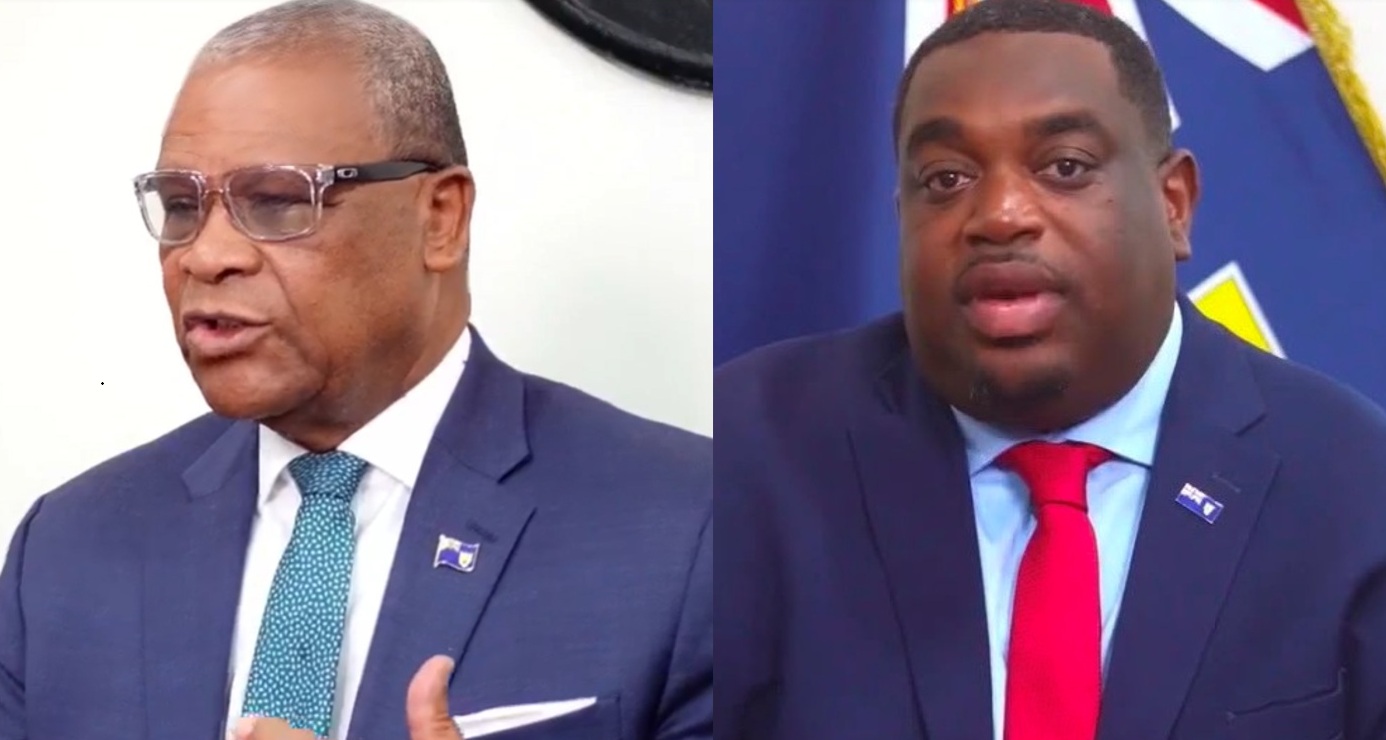
During a national briefing following InterHealth Canada’s notice terminating its hospital contract, Premier Charles Washington Misick acknowledged publicly for the first time that Government and InterHealth had been negotiating an exit from the arrangement for more than a year after what he described as an “irretrievably broken down” relationship.
Despite the contractual dispute, Misick and Health Minister Kyle Knowles stressed that healthcare services will continue uninterrupted during the transition.
“Allow us to do our job,” Knowles appealed, assuring residents that Government is actively managing the transition and safeguarding patient care.
The Premier outlined what amounts to a broader healthcare transformation built around four connected levels of care: strengthened community-based primary healthcare; expanded polyclinic services; enhanced hospital-based secondary care with greater specialist capacity; and overseas tertiary treatment only for cases that cannot be managed locally.
Among the proposals are the long-discussed establishment of intensive care units, expanded use of currently unfinished hospital space, recruitment of more resident specialist physicians and stronger contract management to oversee future healthcare agreements.
Knowles said the new polyclinic model will broaden services available outside the hospitals, including dentistry, ophthalmology, laboratory services, diagnostic imaging, gynaecology and preventative screening, helping to reduce pressure on emergency departments while improving early intervention.
Misick also acknowledged that while the hospital system significantly improved healthcare access after opening in 2010, Government believes further reform is necessary to improve affordability, sustainability and the range of services available within the Turks and Caicos Islands.
The briefing marked the Government’s most comprehensive explanation to date of its plans beyond the InterHealth contract, signalling that officials now see the transition as an opportunity to redesign healthcare delivery rather than simply replace one operator with another.
Government
Parnell Urges Premier to Step Aside, Proposes Bipartisan Board to Guide Healthcare Transition
By Magnetic Media Newsroom
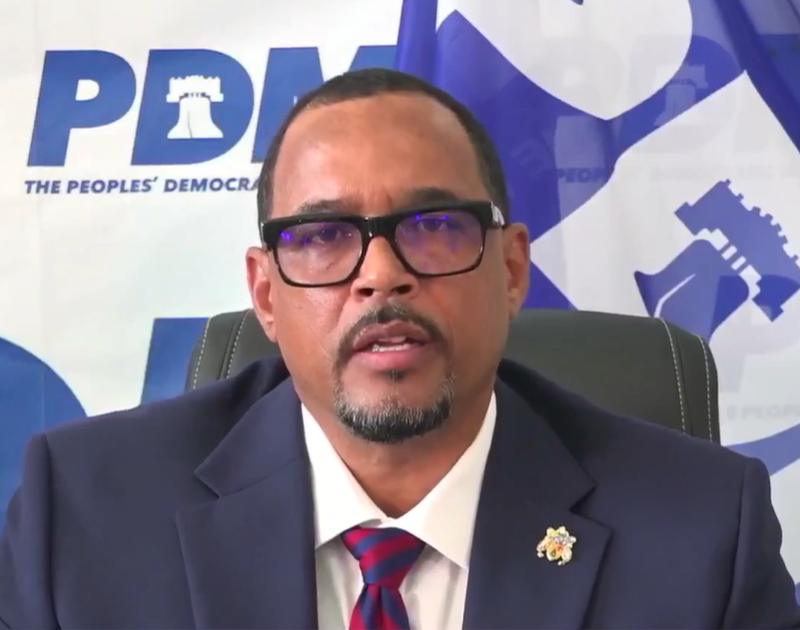
PROVIDENCIALES, Turks and Caicos Islands — Opposition Leader Douglas Parnell is calling on Premier Charles Washington Misick to step aside, arguing that the Government has failed to provide the leadership, transparency and public engagement needed as the Turks and Caicos Islands prepares for one of the most significant changes in its healthcare system.
Responding to Government statements following InterHealth Canada’s contract termination notice, Parnell said residents were only now learning officially that negotiations with the hospital operator had been underway for more than a year, despite several previous opportunities for Government to inform the public.
He questioned why no detailed explanation was provided during the State of the State Address, Budget Debate or recent healthcare announcements, including the opening of the new polyclinic.
Parnell argued that while the PDM supports reforming or replacing the existing hospital arrangement, the process must be transparent and centred on the public interest.
The Opposition Leader reminded residents that the PDM had challenged the InterHealth agreement while in government, pursuing arbitration and preparing further legal action over concerns about the contract before leaving office following the General Election.
To guide the next phase, Parnell proposed establishing a bipartisan Health Transition Board comprising Government and Opposition representatives to oversee the transition, monitor public accountability and manage the procurement process for any future healthcare provider.
He also outlined what the PDM believes should form the foundation of the next healthcare system, including guaranteed continuity of care, automatic employment protection for hospital workers, recruitment incentives for specialist physicians, expanded intensive care services, comprehensive mental health care, enhanced geriatric services and accelerated efforts to attract qualified Turks and Caicos Islanders in the medical profession back home.
Parnell also presented ten questions for Government covering outstanding payments, borrowing plans, legal implications, transition arrangements and the future structure of healthcare delivery.
He said the changes now unfolding require decisive leadership, openness and a carefully managed transition that places patients, healthcare workers and the long-term interests of the Turks and Caicos Islands first.





-

 News1 week ago
Invest Turks and Caicos Officially Opened Caya Hico Collective, Grand Turk MSME Storefront
-

 Health1 week ago
Cleveland Clinic First in Ohio to Perform Robotic Nipple-Sparing Mastectomy
-

 News4 days ago
Beaches Turks & Caicos strengthens year-round commitment with local craft vendors and transport operators
-

 News2 days ago
Beaches Turks & Caicos gives Enid Capron Primary a pre-term facelift
-

 Bahamas News5 days ago
Two Months On, The Bahamas Academy of Sciences Turns Fifty Years of Research into Action