
Government
International Women’s Day Celebrated by DCR Female Staff

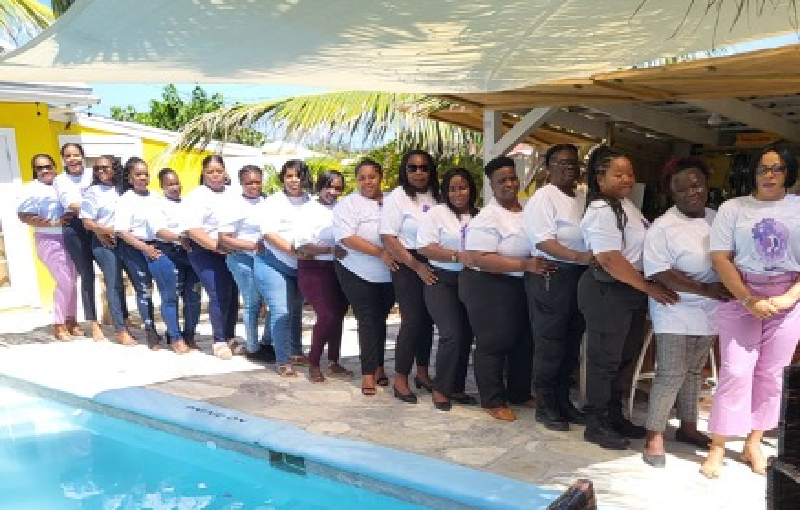
Grand Turk, Turks and Caicos Islands, 16th March 2023 – On March 8th, 2023, we celebrated International Women’s Day under the theme “Women forcing change through digital innovation and technology for gender equality and sustainable development.”. We see the female staff at the DCR treated to a brunch outside the Prison compound.
There are many other titles that are in a prison other them Prison Officers: Hear from some of our female staff first-hand about their experiences and benefits as women working in Prison
MESHELLE JENNINGS – Our Assistant Superintendent
I am a single mother of three sons, and three grandchildren, two whom I personally raised by myself. My hobbies are traveling, playing dominoes and shopping.
My career in Law Enforcement began in 1991 as a police officer and in 2000 I transitioned as a prison officer where I’ve been for the past twenty-three years.
Joining the Prison service was not my first love for it was only a job , however as time passed I began to love and enjoy what I do and I decided to make a job my career.Working in the prison service has afforded me the opportunity to acquire a wealth of experiences on the job and knowledge from attending training locally and overseas in areas of Offenders Sentenced management; Restorative Justice; Five Minutes Intervention (FMI); Protecting Society Challenges of delivering effective prison services, First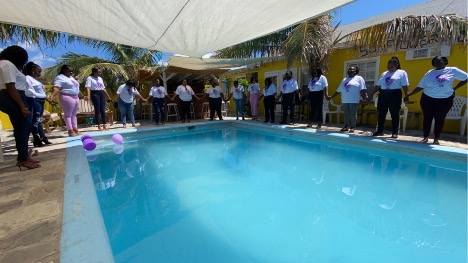 Line Manager etc.
Some of the benefits of being a female prison officer are the training, teamwork and the support you need to succeed. You will be trained to handle every situation. Whatever the challenge, you’ll have the support you need from your team to make a difference every day. All of us are given the opportunities to be involved in area of our interest and get valuable experiences as we pursue them.There are so many different roles open to a female prison officer and it is so much more than the locking and unlocking of gates at the end of the day.After joining the Prison service, I was determined to used my police training to be the best that I could be and one of my main aspirations was to work hard towards advancement in my career.In 2010 I made history by being promoted as the first female Senior Officer and in 2012, history was again made when I became the first and only female Assistant Superintendent in the history of HM Prison TCI.
Prepping myself for a technology evolving world, I have moved from ASP of residential to ASP of Business Administration where I am trained in smart stream and troubleshooting.As a female prison officer it has given me opportunities to learn new things, and push myself in all the efforts to make advancement in leadership.
We wear many hats and encompass many skills and being a good role model is one of them. I am passionate, resilient and I enjoy my work. Achieving gender equality and being empowered as a female prison officer is my major objective, especially owing to the fact that I am employed in an institution formally dominated by males. I will leave behind a legacy of a job “Well Done.”
I love the feel of responsibility and I’m doing my best as a role model to Junior female prison officers and by passing on my experiences and knowledge to them through coaching, mentoring for their personal development and advancement in their career. There is not a day that goes by, that I am not willing to make a positive change in the lives of my colleagues and in the life of an inmate. My motto is Live life better today than yesterday for a brighter tomorrow.
LEEROSE LEWIS – Rehabilitation Unit
Working in male a dominated prison system for over seventeen years has proven to be very challenging but also very satisfying and rewarding. I have been exposed to working with individuals from different ethnicity and culture which brings on its fair share of complexities. Nonetheless, I have grown to appreciate diversity, and be more culturally aware and this assisted me to excel over the years. I joined the prison service in May 2005 when the population was an average of seventy inmates and while there were a few serious crimes, the majority were incarcerated for minor offenses. During those years, the five-minute intervention was the order of the day with inmates (I did not realize it at the time).
Over the years, I have worked in various areas of the prison and before demitting those areas, I have successfully trained officers to take up those positions. I acted as Senior Officer on several occasions from 2008 to 2013 and in 2014, I was appointed to the position of Senior Officer. For the last two years, I have overseen the newly formed Rehabilitation Department. I have been privileged to attend several training programs both locally and overseas sponsored by the department. These experiences enable me to expand my capabilities.
During my years in the Department of Correction and Rehabilitation, I have seen so many inmates pass through the system forced me to realize and get a clearer understanding of the challenges faced by individuals in society. My role is not to judge them, but rather challenge their offending behavior and give them hope through rehabilitation. Changing everyone is impossible but changing one life represents success. I am committed to effecting change daily and will continue to give my best for this noble institution, the Department of Correction and Rehabilitation.
MARCELLA WILLIAMS – Custodial Probation Unit
Disciplined, Confident, Respectful, Reliable, Dedicated, Empathetic, Patient, Considerate, Courageous.
All the adjectives above were further strengthened thus far during my time working within the Prison service. The right motivation and determination have allowed me to complete my job not only effectively but also at a high standard.
My first job in government began in 2012 when I joined Her Majesty’s Prison Service, I must admit that in the beginning I was not sure if this institution was something I can see myself settling into as a career but that thought quickly diminished after I learned of all the great opportunities that was available within the prison service. After 2 years within the service, I was promoted to Senior Prison Officer I have had the opportunity to Manage the Reception area as well as Shift leader where I was able to prove to myself and others that woman can be small but mighty in all areas.
Make No mistake working within the prison service is no walk in the park by any means, but it has been a very rewarding experience thus far. There is so much I have learned within the past 10 years and to date I must say there is so many things I have yet to acquire. One of the rewards of being a Prison Officer is the experiences that we are privy to which includes meeting interesting individuals both prisoner and Officers who come through those gates from different walks of life, some of whom simply pass through never to return as well as those that are recidivist offenders who require more rehabilitation. One of our main duties are to protect the public by keeping such persons in safe keeping until their release with hopes that they leave here better than they came. Getting to know my colleagues who come from different cultural background have all became like family.
I have been privileged to take part in various local and overseas training which allowed me to develop other skills to transition into different roles within the prison service.
During my time working within the prison, I was giving the opportunity to work and pursue higher education, management along with my colleagues were very accommodating and supportive during that period. In 2021 I received my bachelor’s degree in social work and was able to use this degree in many different areas particularly within my work environment. In April 2022 I begin working as Probation Officer within the Rehabilitation Department. Thus far this experience has been highly rewarding and I would encourage others to take on the many opportunities that are available locally which can be useful within this profession.
Personally, no other job fully prepared me for such a role as a prison officer, I will leave here feeling Fulfilled that I had the opportunity to impact if few but at least one person’s lives even if the difference is minimal.
Remember those who are in prison, as though in prison with them, and those who are mistreated, since you also are in the body. Hebrews 13: 3
DR. CARLINE JACKSON – CAMPBELL Our Counsellor
It is an honor to serve those who are most vulnerable, especially to be employed in this institution (DCR) where I am surrounded by collogues and administrative authorities collaborating in all rehabilitative efforts to get the prison’s work done. While working in the Department of Correction and Rehabilitation, I am reminded of my need to be humble as those incarcerated could easily be us or our children or those we hold in high regards. Joseph was thrown into prison for maintaining God’s principles. Moses in a moment of anger and compassion for his fellow man who was subjected to suffrage committed murder. Hence Christ require us to be kind to those who are incarcerated.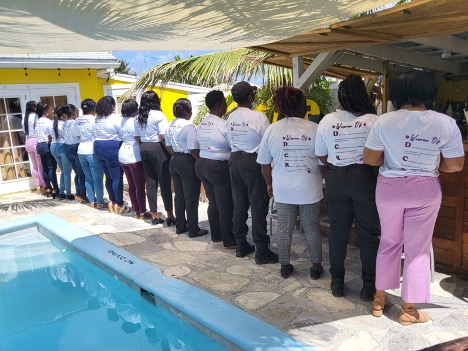
I am grateful to God for giving me the opportunity to be working in this penal institute where I can use my counselling expertise to touch the lives of human beings. While it is not possible to motivate all to change their offending behaviors, I am passionate to do all that I can to motivate inmates to be better. I am aware that all things are possible with God and I trust him to do the impossible. Hence we work together in the Department of Correction and Rehabilitation despite our many challenges to create an atmosphere where inmates are encouraged and given the skills to change their undesirable behavior and to become law-abiding citizen worthy to be reintegrated in society.
SIMONE ROWE- Prison Officer
I started my career as a Correctional officer in Jamaica year 2014, where I served five years as a trained change agent for Juvenile delinquents. I was later given another opportunity to be a Prison Officer in the Turks and Caicos Islands at Her Majesty Prison in 2019, which was one of my most challenging years. Despite the negativity you may hear working within DCR, I am motivated by my code of ethics “I will regard myself as a member of an important and honorable profession…I will be exemplary in my conduct at all times.’’ My job isn’t about judgment – it’s about making sure the person has safe and peaceful incarceration. I also appreciate the various opportunities to work with management and the responsibilities and challenges entrusted to me by my supervisor who knows my capabilities and can help me obtain my personal career aspirations. Training opportunities for me are a plus, especially physical and mental training. I genuinely like the people that I work with and the camaraderie. I appreciate the sense of humor that most of us develop to survive overwhelming days. I thrive on the unspoken bond developed between us, knowing that even though we may not always agree, when the need arises, we are “one team and we work together for the common good!”
Finally, there is the camaraderie that exists amongst my teammates of Prison Officers, which equals solidarity that springs from shared attitudes, values, and lifestyles demanded by a shared profession. Friendships that develop in corrections last a lifetime. There is a support system that you don’t find in many other areas of employment.
Press Release: TCIG

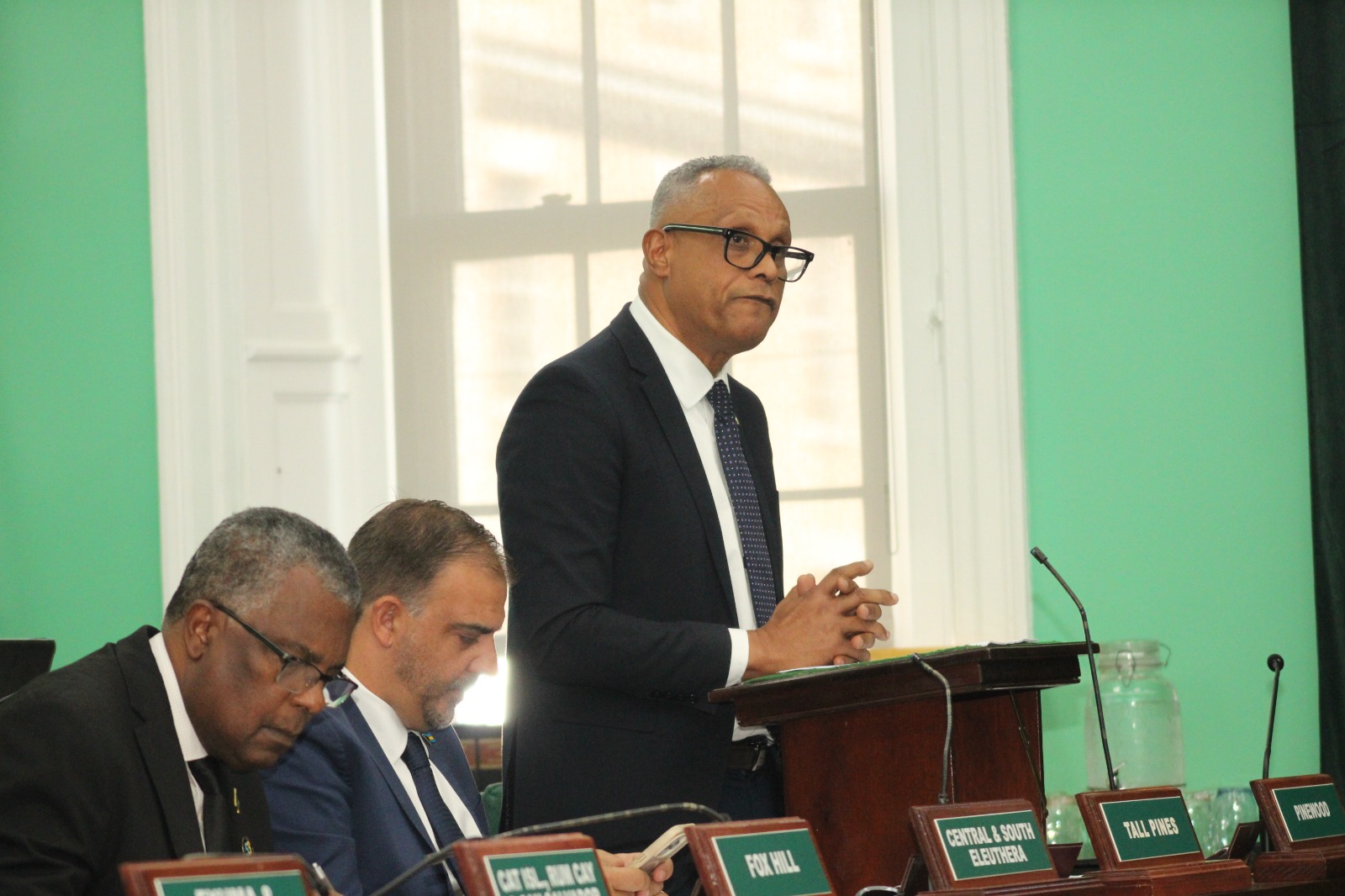
NASSAU, The Bahamas — The Government is moving to protect the rights, privacy, independence, and dignity of older persons throughout the Commonwealth of The Bahamas.
The Hon. Dr. Michael Darville, Minister of Health and Wellness tabled The Older Persons Rights, Protections, Care and Support Bill (2026), in the House of Assembly on Wednesday, September 16, 2026.
“This is legislation whose time has come. It is rooted in a very simple thought that growing older must never mean becoming less valued, less visible, less protected or less entitled to dignity.
“Ageing is not somebody else’s issue. It is one of the few public policy matters that, if we are blessed with longevity, will eventually touch every one of us,” Dr. Darville said.
He noted that The Bahamas, like the world, is experiencing a clear demographic shift. According to the 2022 Census, the number of persons aged 65 years and older rose by 28.2 percent since 2010.
In The Government’s Blueprint for Progress, it made a commitment to strengthening protections for older persons. And, this Bill gives practical expression to that commitment. But there is also a wider context.
Furthermore, in 2025, the United Nations Human Rights Council established an Intergovernmental Working Group charged with developing a legally binding international instrument on the human rights of older persons. Its first substantive negotiating session was held in Geneva in July of this year.
In this vein, Dr. Darville said that The Bahamas brings this Bill at an important moment.
“While the international community is negotiating what a future global legal instrument should contain, The Bahamas is moving now with legislation that goes beyond a declaration of principles,” he said.
“This Bill recognizes older persons as rights-holders. But it also recognizes that rights written on paper mean little if there is no machinery to make them real.”
Provisions under the Bill establish in law the rights of older persons, including dignity, equality, privacy, autonomy, participation, financial self-management and access to healthcare and public services.
Secondly, it confronts abuse and abandonment, physical abuse, sexual abuse, psychological and emotional abuse, neglect and abandonment.
“These are expressly prohibited. For far too long older persons have been abandoned at hospitals with no recourse. This ends today,” Dr. Darville stated.
The Bill also permits anonymous reporting of suspected abuse and protects persons who make reports in good faith. Certain healthcare, social service, law enforcement and other professionals will have a statutory duty to report where
they reasonably suspect that an older person requires care and protection.
And thirdly, this Bill confronts an abuse that can sometimes remain hidden behind family relationships — financial exploitation, Dr. Darville said.
He added, “Taking an older person’s pension. Misusing their bankcard. Coercing them to transfer property. Manipulating a will. Using their National Insurance benefit for purposes other than their welfare. Preventing them from accessing their own money. These matters are specifically addressed in this legislation, with financial exploitation attracting serious penalties.”
The Bill is about support, by providing for the development of a National Older Persons Policy within 12 months, with priority given to a National Dementia Strategy.
“It promotes community nursing, home-based care and older persons’ day-care services, because where it is safe and appropriate, we should help our older persons remain independent, connected to their communities and supported in familiar surroundings,” Dr. Darville said.
The Bill further recognizes the tremendous responsibility carried by caregivers and provides for caregiver training and support, among other things. “It incorporates the needs of older persons into disaster preparedness, response, relief and recovery. And importantly, it rejects the idea that retirement means irrelevance,” Dr. Darville said.
By Lindsay Thompson
Bahamas Information Services
(BIS Photo/Ulric Woodside)
By Magnetic Media Newsroom
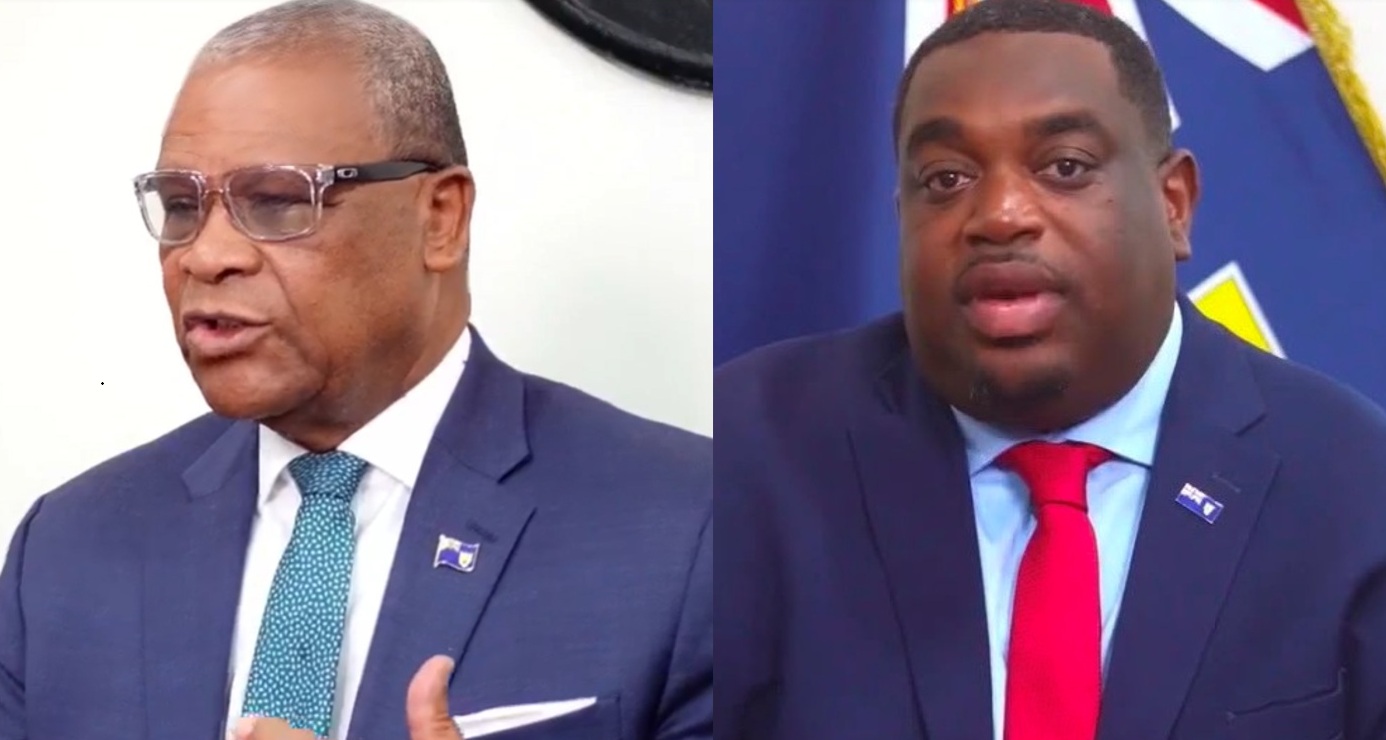
PROVIDENCIALES, Turks and Caicos Islands — The Turks and Caicos Islands Government says the breakdown of its relationship with InterHealth Canada presents an opportunity to reshape healthcare delivery, with plans to expand local medical services, strengthen primary care and reduce dependence on overseas treatment.
During a national briefing following InterHealth Canada’s notice terminating its hospital contract, Premier Charles Washington Misick acknowledged publicly for the first time that Government and InterHealth had been negotiating an exit from the arrangement for more than a year after what he described as an “irretrievably broken down” relationship.
Despite the contractual dispute, Misick and Health Minister Kyle Knowles stressed that healthcare services will continue uninterrupted during the transition.
“Allow us to do our job,” Knowles appealed, assuring residents that Government is actively managing the transition and safeguarding patient care.
The Premier outlined what amounts to a broader healthcare transformation built around four connected levels of care: strengthened community-based primary healthcare; expanded polyclinic services; enhanced hospital-based secondary care with greater specialist capacity; and overseas tertiary treatment only for cases that cannot be managed locally.
Among the proposals are the long-discussed establishment of intensive care units, expanded use of currently unfinished hospital space, recruitment of more resident specialist physicians and stronger contract management to oversee future healthcare agreements.
Knowles said the new polyclinic model will broaden services available outside the hospitals, including dentistry, ophthalmology, laboratory services, diagnostic imaging, gynaecology and preventative screening, helping to reduce pressure on emergency departments while improving early intervention.
Misick also acknowledged that while the hospital system significantly improved healthcare access after opening in 2010, Government believes further reform is necessary to improve affordability, sustainability and the range of services available within the Turks and Caicos Islands.
The briefing marked the Government’s most comprehensive explanation to date of its plans beyond the InterHealth contract, signalling that officials now see the transition as an opportunity to redesign healthcare delivery rather than simply replace one operator with another.
Government
Parnell Urges Premier to Step Aside, Proposes Bipartisan Board to Guide Healthcare Transition
By Magnetic Media Newsroom
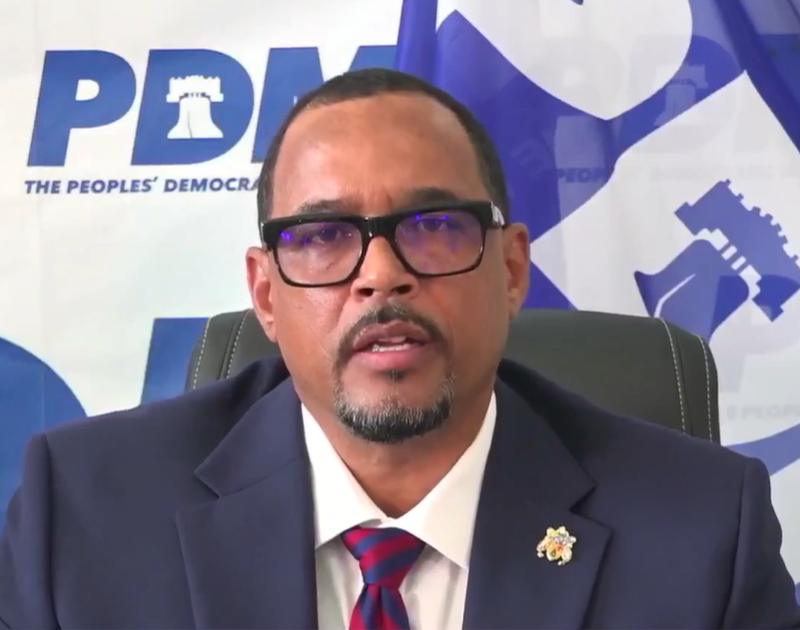
PROVIDENCIALES, Turks and Caicos Islands — Opposition Leader Douglas Parnell is calling on Premier Charles Washington Misick to step aside, arguing that the Government has failed to provide the leadership, transparency and public engagement needed as the Turks and Caicos Islands prepares for one of the most significant changes in its healthcare system.
Responding to Government statements following InterHealth Canada’s contract termination notice, Parnell said residents were only now learning officially that negotiations with the hospital operator had been underway for more than a year, despite several previous opportunities for Government to inform the public.
He questioned why no detailed explanation was provided during the State of the State Address, Budget Debate or recent healthcare announcements, including the opening of the new polyclinic.
Parnell argued that while the PDM supports reforming or replacing the existing hospital arrangement, the process must be transparent and centred on the public interest.
The Opposition Leader reminded residents that the PDM had challenged the InterHealth agreement while in government, pursuing arbitration and preparing further legal action over concerns about the contract before leaving office following the General Election.
To guide the next phase, Parnell proposed establishing a bipartisan Health Transition Board comprising Government and Opposition representatives to oversee the transition, monitor public accountability and manage the procurement process for any future healthcare provider.
He also outlined what the PDM believes should form the foundation of the next healthcare system, including guaranteed continuity of care, automatic employment protection for hospital workers, recruitment incentives for specialist physicians, expanded intensive care services, comprehensive mental health care, enhanced geriatric services and accelerated efforts to attract qualified Turks and Caicos Islanders in the medical profession back home.
Parnell also presented ten questions for Government covering outstanding payments, borrowing plans, legal implications, transition arrangements and the future structure of healthcare delivery.
He said the changes now unfolding require decisive leadership, openness and a carefully managed transition that places patients, healthcare workers and the long-term interests of the Turks and Caicos Islands first.





-
 Independent writer1 week ago
Born Here, Raised Here, but Still Unable to Vote: Is this a Conundrum for TCI Electorate?
-
 Bahamas News3 days ago
Rosewood Exuma: A precedent-setting case for environmental law and future development in The Bahamas
-

 Bahamas News7 days ago
Monument Supports Hands for Hunger With Paradise Plates Debut
-

 Bahamas News1 week ago
Schweppes ‘the Art of Mixology’ Dazzles at Paradise Plates with Nemiroff Vodka
-
 Bahamas News2 days ago
Energy Minister Delivers Electrifying Keynote Opening Address at CAREC 2026
-

 News2 days ago
Invest TCI Strengthens Regional Investment Connections at Caribbean Investment Forum 2026 in Barbados