
Government
Highly Sought After Kroll working to remove black-eye on TCI’s #2 Industry


By Dana Malcolm
Staff Writer
#TurksandCaicos, March 15, 2023 – “I think we are going to be best in class, I think we are going to be the case study for how you go from being on the blacklist to putting in the proper systems to meet the requirements,” says E Jay Saunders, Finance Minister and Deputy Premier, in an expression of total faith in the upswing of the country’s financial sector. This is thanks to Government funding and expertise from Kroll, a company he describes as a world leader in financial compliance consultation.
“We hired the absolute best, the former head of the Financial Action Task Force. This is no exaggeration or bravado; we have the best advising us on getting off of the blacklist – I’m not saying the biggest but certainly headed up by one of the best.”
He told Magnetic Media in an interview over the phone that the Government had spared no expense to get Kroll, which had been on the ground in February. The country is currently fighting to get out of an EU blacklisting caused by poor computer systems, he says.
While the Deputy Premier admits that the TCI stumbled in that regard, Saunders says the country was never non-compliant or unresponsive. The Minister explained that, coupled with the EU’s disproportionate language surrounding the blacklisting, to fit EU standards small countries with small economies had to spend an extraordinary amount of money and that was not always viable.
“Sometimes your industry just can’t afford it,” he maintained. “The only reason we got lucky is because we have a lot of cash.”
He says connecting with Kroll via LinkedIn and getting them into the Turks and Caicos was a serious feat on the part of the Government.
“They didn’t have to take it because this is a small jurisdiction for them. Just by luck, by the Grace of God, the company headed by one of the top people in the world dealing with the OECD accepted our proposal.”
Saunders said several of the TCI’s financial services stakeholders had met with Kroll during their February visit and were deeply impressed with where the country seems to be heading with the help of the consultants, and the Government says it’s already putting $2 million into needed computer systems as part of this upgrade.
“There is no question about it. I’m confident that by February 2024, we will be off the list– I’m completely confident and there are no lasting repercussions.”
While October 2023 would be good, he said he didn’t want the company to rush for that deadline and skimp on proper upgrades.
“We told them don’t aim for the minimum requirements, put in something that puts us best in class, we are already on it, don’t try to meet a deadline. I know people get concerned about that type of position, but I don’t want to be on, get off and then realize- we’re back on it,” he explained.
The finance minister, who is also charged with transitioning all of the Government to electronic systems, said that the EU’s requirements were moving targets, upgraded and fine-tuned every year and with Kroll’s members having intimate knowledge of that they would equip the country with a system that would hold up to the rapidly shifting goal posts.
“With that we can be best in class and start growing our financial services sector. I don’t want us to be constantly trying to catch up. We want them to put us in a position where we are the Switzerland of the Caribbean.”
He was absolutely sure this would come to fruition.
Currently, the Turks and Caicos Financial Service sector, its #2 industry is earning ?? annually; Saunders wants to grow that to ??? by????. He did not say. On the Government side, the regulatory body the Financial Services Commission is managed by both elected Government Administration and the UK Governor.
“I think people are going to be surprised at how far we’ve come– I can guarantee we will be off the blacklist in twelve months, and I will not be surprised if the OECD writes a recommendation saying the Turks and Caicos did it right.”
The desire to go along with the EU’s “arbitrary” regulations is fuelled by the knowledge that the TCI desperately needs to diversify its economy. Financial services could be a new frontier, believed the DP.
As for whether this blacklisting will affect those ambitions, only time will tell.



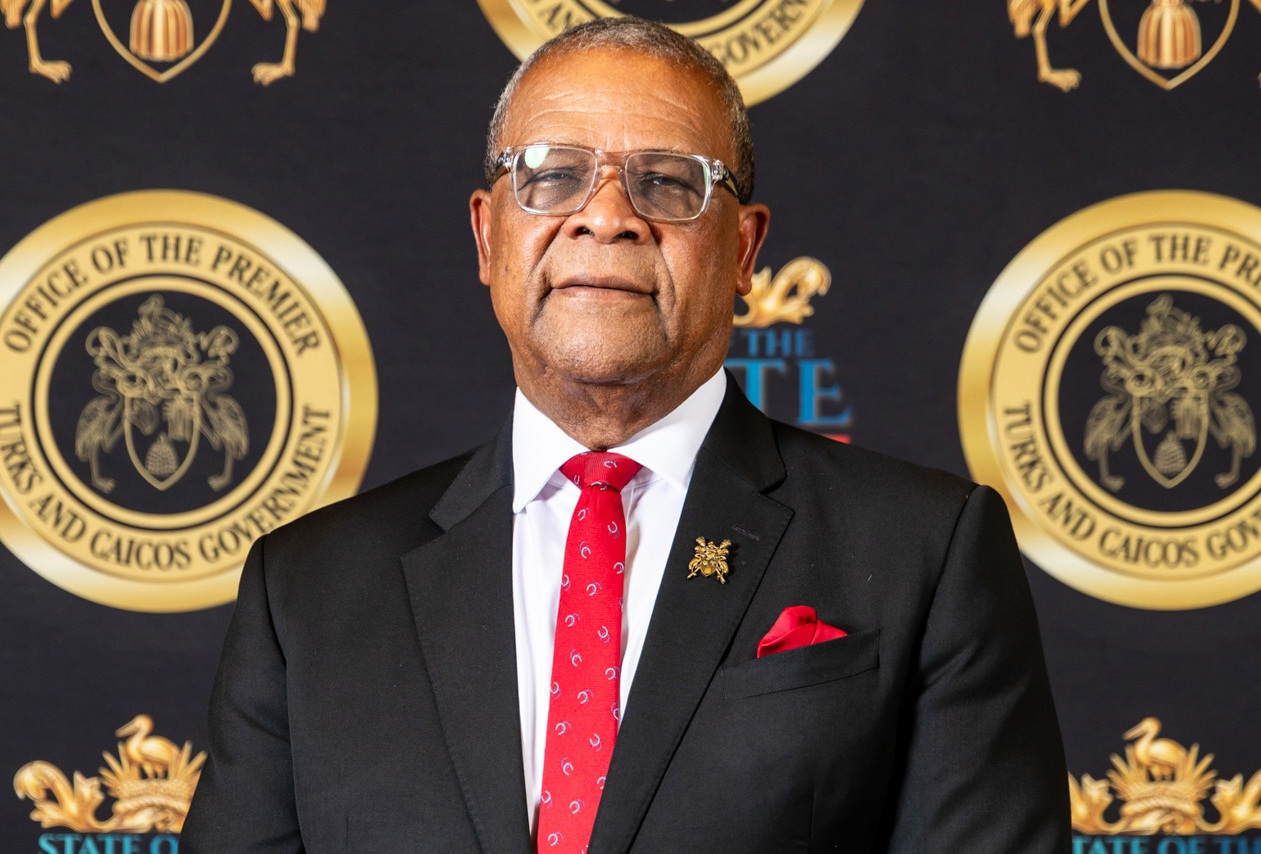
Turks and Caicos, March 18, 2026 – Despite securing significant constitutional reforms within the past year — including new powers that allow for a national referendum — Premier Charles Washington Misick made no mention of independence or any vote on the country’s political future during his 2026 State of the State Address, signalling what appears to be a continued strategy of building institutional strength before raising the question with the electorate.
The absence of any reference to a referendum stood out, particularly after the Turks and Caicos Islands successfully negotiated constitutional changes with the United Kingdom that expanded the authority of elected leaders and modernised the structure of Government.
Those reforms, which took effect last year, increased the size of Parliament, allowed for more Cabinet ministers, extended the life of a government from four to five years, and strengthened the role of elected officials in domestic affairs. The amendments also included provisions allowing for a referendum to be held on matters of national importance, a change widely viewed as giving the territory greater flexibility in determining its future political direction.
In his address, the Premier spoke of the reforms as moving the country toward “fuller self-government,” noting that the changes deliver a fully elected Parliament, widen delegated responsibility in external affairs and give elected leadership clearer authority and accountability to the people.
However, while the speech emphasised sovereignty, national security and stronger local institutions, it stopped short of any suggestion that the Government intends to call a referendum on independence or any other change in constitutional status.
Instead, the tone of the address suggested a focus on strengthening systems at home before considering further political steps.
The Premier outlined plans to expand the Police Force, strengthen the Border Force, increase the role of the Turks and Caicos Islands Regiment, modernise government through digital transformation, and improve immigration control through biometric border technology — all measures he said are necessary to secure the country’s future.
He also pointed to economic stability, infrastructure development and expanded investment as priorities, repeatedly framing the Government’s approach as one of building a stronger and more secure nation before taking on larger challenges.
The 2024 constitutional amendments, agreed between the Turks and Caicos Islands Government and the United Kingdom, formally expanded the number of elected members in the House of Assembly, increased the number of Ministers who may serve in Cabinet, extended the Parliamentary term to five years, strengthened Cabinet authority in domestic matters, and introduced provisions allowing for a referendum to be held on issues of national importance. The changes also widened delegated responsibility to local leaders in key areas of governance, marking one of the most significant steps toward greater self-government in recent decades.
The constitutional reforms achieved last year were seen by many observers as laying the groundwork for greater autonomy, and potentially future debate on independence, but the latest State of the State suggests the Government is moving cautiously.
For now, the message from the Premier appears clear: before any question of political status is put to the people, the country must first strengthen its institutions, its economy and its capacity to govern itself.
Angle by Deandrea Hamilton. Built with ChatGPT (AI). Magnetic Media — CAPTURING LIFE.
Government
$6M Digital Transformation Drive to expand E-Government, National ID and Biometric Borders
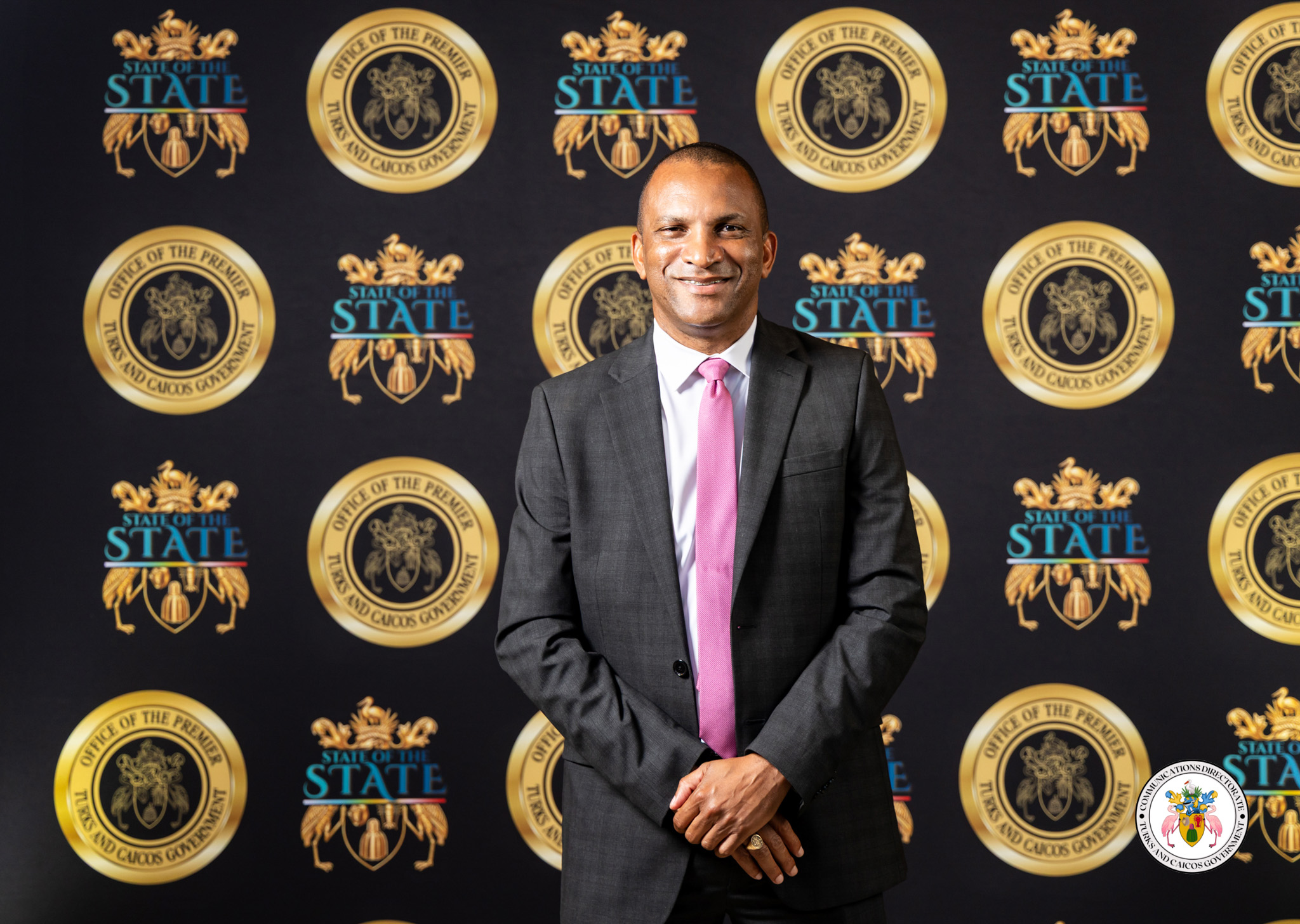
Turks and Caicos – A $6 million digital transformation programme launched after the 2024 government cyber breach is now driving a major push toward e-government in the Turks and Caicos Islands, with new systems planned for online payments, national digital identification and biometric border controls.
In his 2026 State of the State Address, Premier Charles Washington Misick said weaknesses exposed by the cyber-attack made it clear that government technology systems must be modernised to improve security, efficiency and public service delivery.
The Premier said the three-year digital agenda includes stronger network security, a redesigned government data system, new identity management tools and the creation of a National Security Operations Centre to monitor threats.
He told the country that modernising government services through digital transformation and e-governance is no longer optional but necessary for transparency, accountability and national progress.
One of the centrepieces of the plan is the National Digital ID Programme, which the Government says will modernise civil registration, establish a national population register and make it easier for residents to access public services while strengthening national security and election integrity.
The Premier also pointed to early success with the new E-Pay system, reporting that more than $1 million in government payments had already been made online within days of its launch in February, reducing long lines, paperwork and processing delays while improving transparency in public transactions.
Digital transformation is also extending to the country’s borders.
The Government confirmed that a multi-million-dollar Digital Borders Programme will introduce biometric screening and automated E-Gate technology at ports of entry, allowing citizens and low-risk travellers to move more quickly through immigration while giving authorities real-time access to identity and status information.
The move aligns with wider security standards being implemented across British Overseas Territories, where upgraded border technology is being introduced to strengthen immigration control and improve passenger processing.
Officials say the changes are part of a broader effort to create a more modern, secure and efficient public service, with additional digital systems planned across government departments over the next several years.
Angle by Deandrea Hamilton. Built with ChatGPT (AI). Magnetic Media — CAPTURING LIFE.





-

 News1 week ago
CARICOM – A Regional Club With Benefits; Turks & Caicos Wants In
-

 News2 days ago
Password to Paradise Radio Remotes at Beaches Turks & Caicos continue to highlight the TCI as the preferred Caribbean destination
-

 Health1 week ago
Turks and Caicos Islands Hospital Celebrates Patient Safety Awareness Month: “Team Up for Patient Safety”
-

 News3 days ago
Beaches Turks & Caicos adds four new PADI Dive Instructors to the cadre of professionals in the watersports department
-

 Health1 week ago
Turks and Caicos Islands Medical Association (TCIMA) Elects New Executive
-

 News3 days ago
Beaches Turks & Caicos shares fine dining experiences to high school students in Providenciales
-

 News6 days ago
Flow TCI supports ‘Stars of Tomorrow’ at Inter-Primary Track and Field Championships
-

 News6 days ago
ISU Community Caravan Delivers Essential Services to Granny Hill North