
News
The Ayes Have it – Youth Parliament in TCI a Rivetting Row over Minimum Wage

By Dana Malcolm
Staff Writer
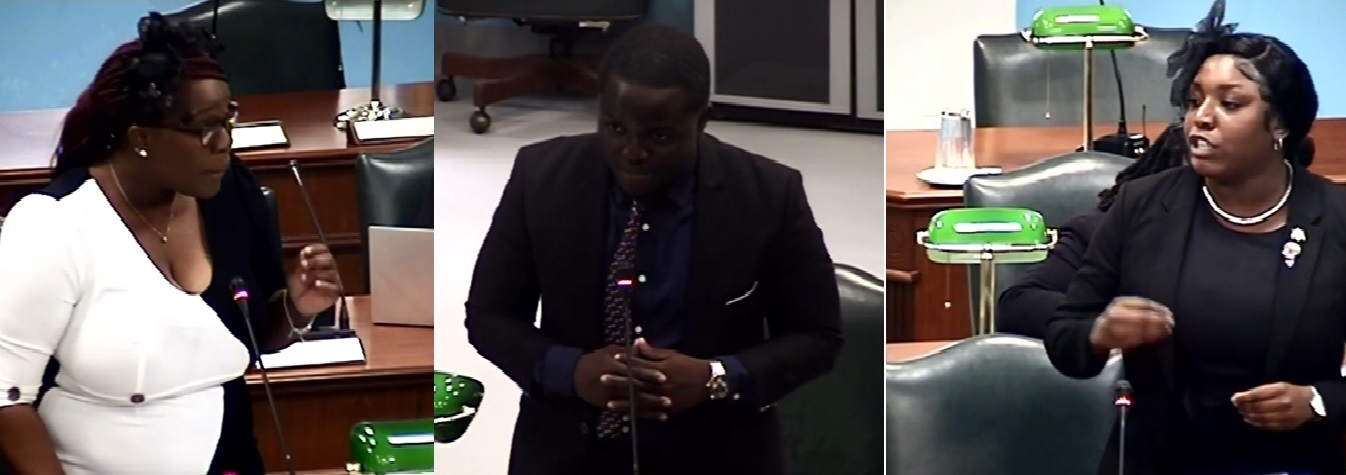
#TurksandCaicos, December 7, 2022 – A raise in the minimum wage was the topic up for fierce debate in this year’s Turks and Caicos Youth Parliament; Young people from across the TCI sitting as various Cabinet Ministers represented the hypothetical interests of residents as both the Government and Opposition argued about the best course of action.
The motion was raised by Lee-Anna Sutton, Minister of Education with responsibility for labour who proposed that the (hypothetical) $6.25 minimum wage be raised to $8.50.
“A raise in minimum wage is justified on moral social and economic grounds– it will provide an improved quality of life for all in the Turks and Caicos” she said referencing all the detrimental effects of poverty on the country including low birth rates and an increased likelihood that young people would be funnelled into crime.
Manville Gardiner, Opposition Leader questioned what percentage of islanders would be benefitting from the raise as many of the jobs in the category were held by expats.
Gardiner, who referred to his party as the ‘Government in waiting’ said the minimum wage was the wrong way to go and explained why.
“The motion says Islanders find it hard to make ends meet. I find it hard to believe that this government thinks that the minimum wage alone is what is standing in the way– our problem is not simply low resources but high costs. The government solution should not just be increasing resources but lowering costs.”
He suggested putting more TCI islanders in higher positions in local companies and increasing agricultural production.
Slamming the bill as thoughtfulness, he dismissed the proposal with: “it aint ready…”
“Our people have to eat secondhand important vegetables that can be grown in our own backyard” the opposition leader said, “The current minimum wage cannot keep up with inflation and that’s a fact– Who will benefit the most from an increase? Our local low income families.” was the response to the opposition’s points by Jatavia Howell, Minister of Tourism.
In a spirited argument, the minister pointed to another tourism heavy destination – Los Angeles – and the benefits of minimum wage increase there including lower turnover rates, less employee absenteeism and stronger staff retention.
On the other side of the aisle, describing the raise in minimum wage as a ‘quick fix’, Andy Missick, Opposition Appointed Member said the government would continue to fail at breaking the cycle of poverty if they employed these short term ideas.
“The raising of minimum wage might slightly reduce poverty but it also comes with many possible implications– we are looking for a long term solution” he maintained.
It was an engaging and feisty afternoon as several members of the governing party including Dixie Smith, Premier of the TCI threw their support behind the bill.
Youth Premier Smith referenced the lighthouse effect that had occurred in other countries in the Caribbean where a minimum wage increase resulted in an overall increase in all wages.
“Let us be realists, low wages in the Turks and Caicos islands pushes households that are already at a threshold into poverty– why earn less when you could earn more.”
The debate continued with contributions from Shakiah Lewis, Minister of Home Affairs; and Adrian Parker, Governor’s Appointed member who were tightly regulated by Alex Taylor, Speaker of the House.
The motion passed 4-2 with one abstaining.
The speed with which ideas and quips were tossed across the floor broke even Madame Speaker’s facade as a laugh escaped once or twice. After the end of the debate, which attracted many supporters in the gallery, all of the young people were allowed to speak on the experience, some admitting cases of nerves rattled them but still pushing forward.
Madame Speaker used her position to encourage residents between 18 and 29 to join the country’s youth parliament “So that the youth will have a voice.”
All the young people were supported by family, friends and elected government members including Anya Williams, Governor (actg); Otis Morris, Minister of Home Affairs; Rachel Taylor, Minister of Education and Youth; E Jay Saunders, Deputy Premier and Akeirra Missick, Member for Leeward and Long Bay who is credited with being a mentor to the Youth Parliamentarians.











The Bahamas, March 30, 2026 – The voice of a proud mother captured the spirit of a nation Monday night, as Bendra Rolle shared heartfelt reflections on the overwhelming Bahamian support for her son, VJ Edgecombe, during the Philadelphia 76ers matchup against the Miami Heat in Miami.
“The patriotic support and scenery at my son, VJ Edgecombe’s NBA game… was overwhelming,” Rolle said in a statement issued following the game. “The arena in Miami was lit. Bimini and the Bahamas showed up and showed out.”
Her words come amid what has already been widely described as a remarkable showing of national pride, with Bahamians traveling in large numbers to South Florida to witness the young guard’s continued rise. For Rolle, however, the moment extended far beyond basketball.
“Beyond VJ’s basketball talents, I’m so moved by his magnetic personality and personal journey to inspire and excite an entire nation—our beloved Bahamas,” she said. “I thank God for VJ’s humility and for his hunger for greatness. He never forgets how far God has brought us.”
While the Sixers did not secure the win on the night, Edgecombe delivered a solid individual performance, finishing with 13 points and five assists. He made an early impact on the game, showing confidence and poise before foul trouble disrupted his rhythm, but still managed to leave his mark in meaningful minutes.
The game itself evolved into a cultural showcase, with Bahamian flags waving throughout the arena and chants ringing out in support of Edgecombe. Much of that presence was bolstered by a coordinated travel push from Bahamasair, which helped facilitate fan travel and added to the electric atmosphere in Miami.
Rolle said the emotional weight of the moment was deeply felt by her family, as they witnessed firsthand the unity and pride of the Bahamian people.
“Thanks and love for the tears and overwhelming joy on Monday, Bahamas,” she expressed. “The Bahamian flags were love, loud, and proud. On my own behalf, VJ, and the entire family, I am ever grateful for the indescribable experience.”
Her closing words underscored what many have described as the true victory of the night—not the final score, but the powerful display of national pride and support surrounding one of The Bahamas’ rising stars.
Turks and Caicos, March 30, 2026 – The Turks and Caicos Islands Government has signaled changes to its tourism funding framework, with Cabinet approving draft amendments to the Destination Management Fee Act 2023.
The decision was confirmed in the Post Cabinet statement following the February 5 meeting, chaired by Governor Dileeni Daniel- Selvaratnam, where members agreed to move forward with revisions to the law governing the collection and administration of the fee.
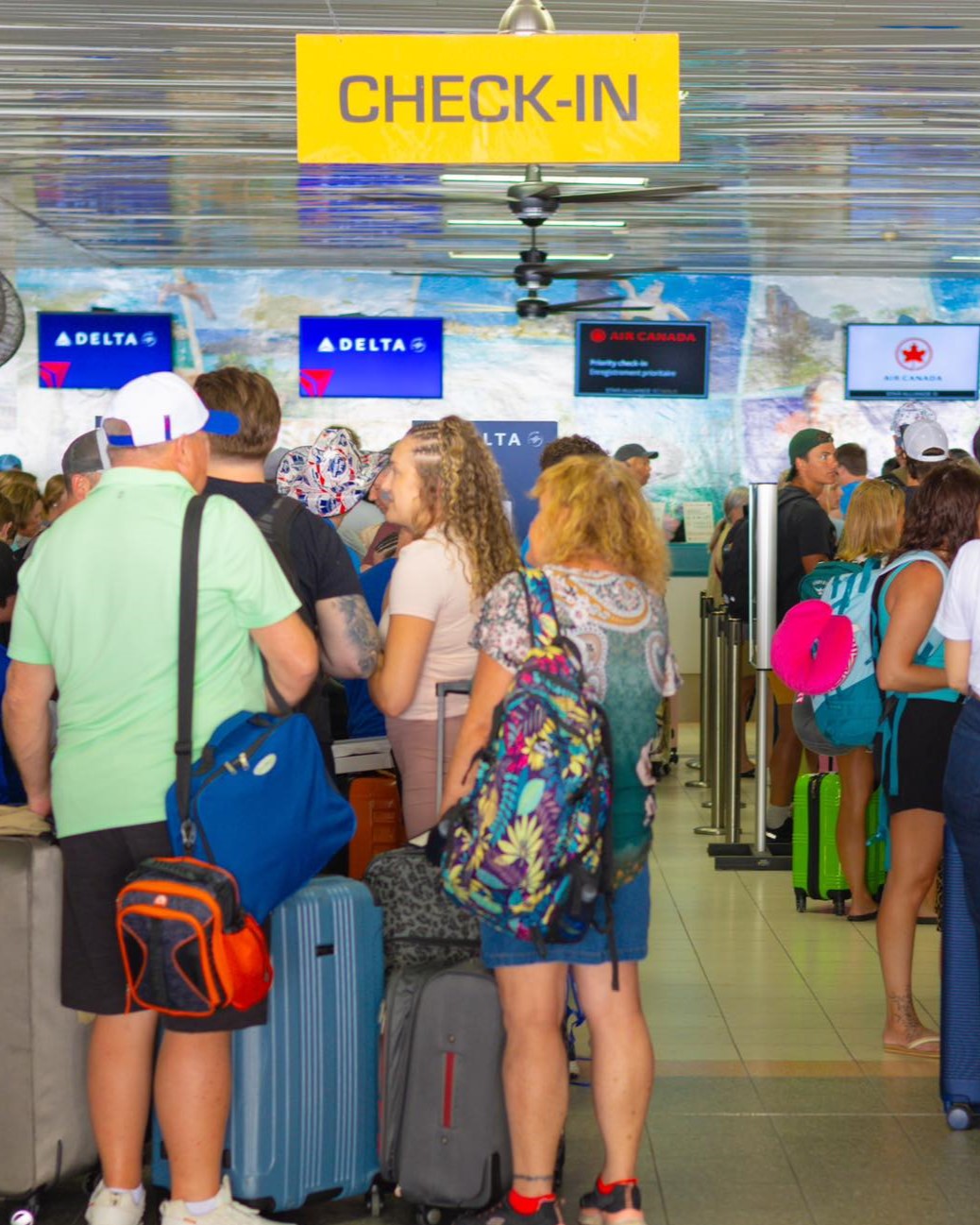
The Destination Management Fee, introduced in 2023, is applied to travelers entering the country and is embedded within the cost of travel. The charge was designed to support tourism-related development, including marketing, infrastructure, and sustainability initiatives.
At the time of its introduction, the fee was linked to the establishment of a Destination Management and Marketing Organisation (DMMO), which was expected to coordinate tourism strategy and enhance the visitor experience.
However, recent developments have shifted that landscape.
The DMMO has since been discontinued, raising new questions about how funds generated through the fee are being managed and what structure will now guide tourism development efforts.
The Cabinet note does not outline what specific changes are being proposed under the amended legislation.
It also does not indicate whether adjustments will be made to:
- who pays the fee,
- how it is collected, or
- how the revenue is allocated and overseen.
The move to amend the law comes amid broader government efforts to strengthen revenue collection and compliance, including updates provided to Cabinet on the work of the Drag-Net Steering Committee — a multi-agency initiative focused on improving government revenue systems.
The lack of detail surrounding the amendments leaves several key questions unanswered, particularly given the fee’s direct impact on both visitors and residents and its role in supporting the country’s tourism economy.
Any changes to the Act would require further legislative steps, including presentation to the House of Assembly, before taking effect.
For now, the Cabinet’s approval signals that the government is moving to revise a policy that is already in force — but without yet disclosing how those revisions will alter the current system.
As tourism remains the backbone of the Turks and Caicos Islands economy, clarity on the future of the Destination Management Fee — and the framework it supports — is expected to be closely watched in the weeks ahead.
Developed by Deandrea Hamilton • with ChatGPT (AI) • edited by Magnetic Media.
Photo Credit: TCIAA
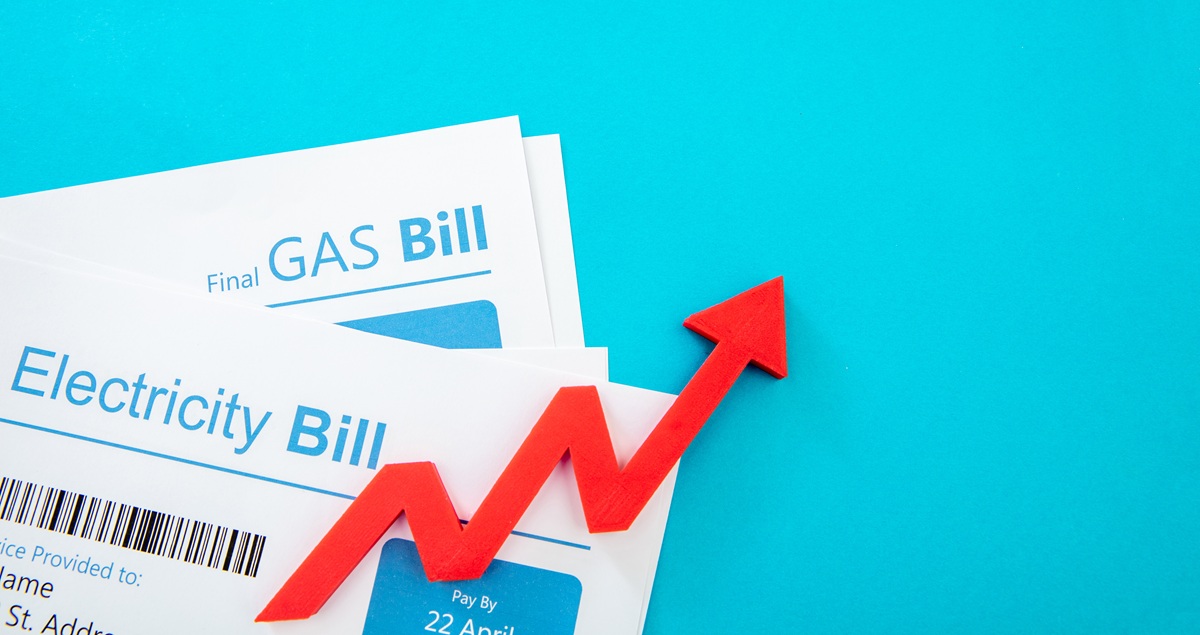
Turks and Caicos, March 30, 2026 – Electricity costs in the Turks and Caicos Islands are climbing again, with Pelican Energy reporting increases in the fuel factor for March, while warning that global instability could push prices even higher in the months ahead.
In its latest update to customers, the power provider confirmed that fuel factor rates — the portion of electricity bills tied directly to the cost of fuel — have risen across most service territories.
Providenciales, North Caicos and Middle Caicos will see a 3.4 percent increase, bringing the rate to $0.1658 per kilowatt hour, while Grand Turk and Salt Cay will experience a 2.8 percent rise to $0.1569 per kWh. The rate for South Caicos is still pending, though in February it climbed by 2.8 percent to $0.1728 per kWh.
The fuel factor is a variable charge, meaning it moves in response to international oil prices — and right now, those prices are under pressure.
Pelican Energy pointed to geopolitical tensions in the Middle East, including ongoing conflict affecting key global shipping routes such as the Strait of Hormuz, as a major driver of recent increases.
That narrow waterway near Iran is one of the world’s most critical oil transit corridors, with a significant share of global fuel supply passing through it daily. Any disruption — whether from conflict, threats, or shipping delays — has a direct impact on global prices.
Energy markets have remained volatile as a result, with production decisions by OPEC and its allies also influencing supply levels and pricing trends.
For the Turks and Caicos Islands, which relies heavily on imported fuel for electricity generation, the impact is immediate.
“Because we rely on imported fuel to generate electricity, these market conditions can influence fuel costs in TCI,” the company said, noting that it is closely monitoring developments.
While the upward movement in fuel costs is concerning, Pelican Energy also indicated that infrastructure upgrades are underway — projects that may cause short-term inconvenience but are expected to improve long-term energy reliability.
Those improvements could include enhancements to generation capacity and distribution systems, though in the near term, residents and businesses may experience disruptions, including traffic impacts linked to ongoing works.
The company emphasized that the fuel factor will continue to fluctuate in line with global trends, rising when international prices increase and falling when they decline.
For consumers already facing high utility costs, the latest adjustment reinforces how closely local electricity prices are tied to global events far beyond the region’s control.
With tensions in key oil-producing areas showing no clear resolution, and global supply routes remaining vulnerable, the outlook for fuel costs remains uncertain.
For now, Pelican Energy says it will continue to monitor international developments and keep customers informed — but the message is clear: what happens in global oil markets is being felt directly on electricity bills at home.
Developed by Deandrea Hamilton • with ChatGPT (AI) • edited by Magnetic Media.





-

 News1 week ago
CARICOM – A Regional Club With Benefits; Turks & Caicos Wants In
-

 News2 days ago
Password to Paradise Radio Remotes at Beaches Turks & Caicos continue to highlight the TCI as the preferred Caribbean destination
-

 Health1 week ago
Turks and Caicos Islands Hospital Celebrates Patient Safety Awareness Month: “Team Up for Patient Safety”
-

 News3 days ago
Beaches Turks & Caicos adds four new PADI Dive Instructors to the cadre of professionals in the watersports department
-

 Health1 week ago
Turks and Caicos Islands Medical Association (TCIMA) Elects New Executive
-

 News3 days ago
Beaches Turks & Caicos shares fine dining experiences to high school students in Providenciales
-

 News6 days ago
Flow TCI supports ‘Stars of Tomorrow’ at Inter-Primary Track and Field Championships
-

 News6 days ago
The Turks and Caicos Islands Featured in Top Canadian Publications