
News
National Security Council Makes Decisions on Five Cays Intervention

Dana Malcolm
Staff Writer
#TurksandCaicos, September 8, 2022 – New laws are coming for the Turks and Caicos Islands which will give more power to the police in several spheres, including detainment and stop and search exercises.
Along with these new laws, the establishment of a temporary Police center, and drone-assisted policing were only some of the decisions made in Tuesday’s National Security Council meeting to put a cap on the violence in Five Cays, which recently left four residents dead.
The new legislation to be tabled with cabinet will,
- Strengthen police powers to stop and search when there is a reasonable suspicion that an individual may be armed.
- Strengthen penalties for gun-related offences and for those who support gang activity or interfere with criminal
 investigations by harbouring suspected criminals from the police or destroying evidence.
 - Extend powers to detain, after initial arrest, for those involved in serious crime.
- Strengthen penalties around both the possession of, and the brandishing of, semi-automatic and automatic weapons in public
- Stiffen penalties for threats to harm and assaults on law enforcement officers and officers involved in the criminal justice system, including the RTCIPF, Immigration, and Customs Officers, and the Judiciary.

A great deal of the police’s recent successes with recovering illegal weapons and making arrests has been thanks to stop and search operations. There have been multiple reports of young men trying to ditch guns before the police can catch up to them, an indication that the strengthening may yield more success.
Copiously absent were more stringent laws on witness protection and any indication of stiffer penalties for police officers who leak information that puts witnesses in danger, a lingering concern for residents.
During this meeting, it was also revealed that the promised Royal Cayman Islands Police Service Helicopter with night-time surveillance had arrived on Tuesday and would start working to augment police operation. In addition to the helicopter, a newly formed drone unit has also been deployed and is active in the five keys area.
Along with this aerial support, the police will be using the community center as a temporary physical base in five keys. No specified opening time was given, the NSC only said it would be open at agreed times based on policing and public need.
The meeting which is being described as extraordinary, was attended by Governor Nigel Dakin, Premier Washington Misick, Attorney General Rhonda Lee Brathwaite Knowles, immigration Minister Arlington Musgrove, Police Commissioner Trevor Botting, and other officials.










February is National Self- Check Month and family medicine physician at Cleveland Clinic, OH, John Hanicak, MD, highlights why at home self-checks are extremely important when it comes to not just early cancer detection but identifying other illnesses too and offers tips on what to look out for.
“Sometimes I look at them as sort of like your check engine light on the car, just like there would be a red flashing light that tells you that there’s something wrong with a car and prompts you to bring that in and get serviced. Your body does the same thing. It gives you warning signs to look into that symptom a little bit further,” said Hanicak.
Dr. Hanicak said self-checks are going to be a little different for everyone.
However, in general, he recommends looking for anything that may seem abnormal, such as unexplained weight loss, blood in your urine, bumps and bruises that won’t heal, and changes in bowel habits.
For example, if you suddenly start going to the bathroom a lot more than you used to, that could be a sign of something more serious.
He also suggests doing regular skin checks and documenting any moles or spots that start to look different.
“Realize that you are your own person. There’s nobody else in the world exactly like you. You’ve got your own set of ideas, your own family history and your own genetics. Know what is normal for you, and when that changes, that’s the kind of thing that we would be interested in talking about,” said Dr. Hanicak.
Dr. Hanicak notes that self-checks are not meant to replace cancer screenings, as those are just as important to keep up with.
Press Release: Cleveland Clinic
PM: Project delivers on promise and invests in youth, sports and national development
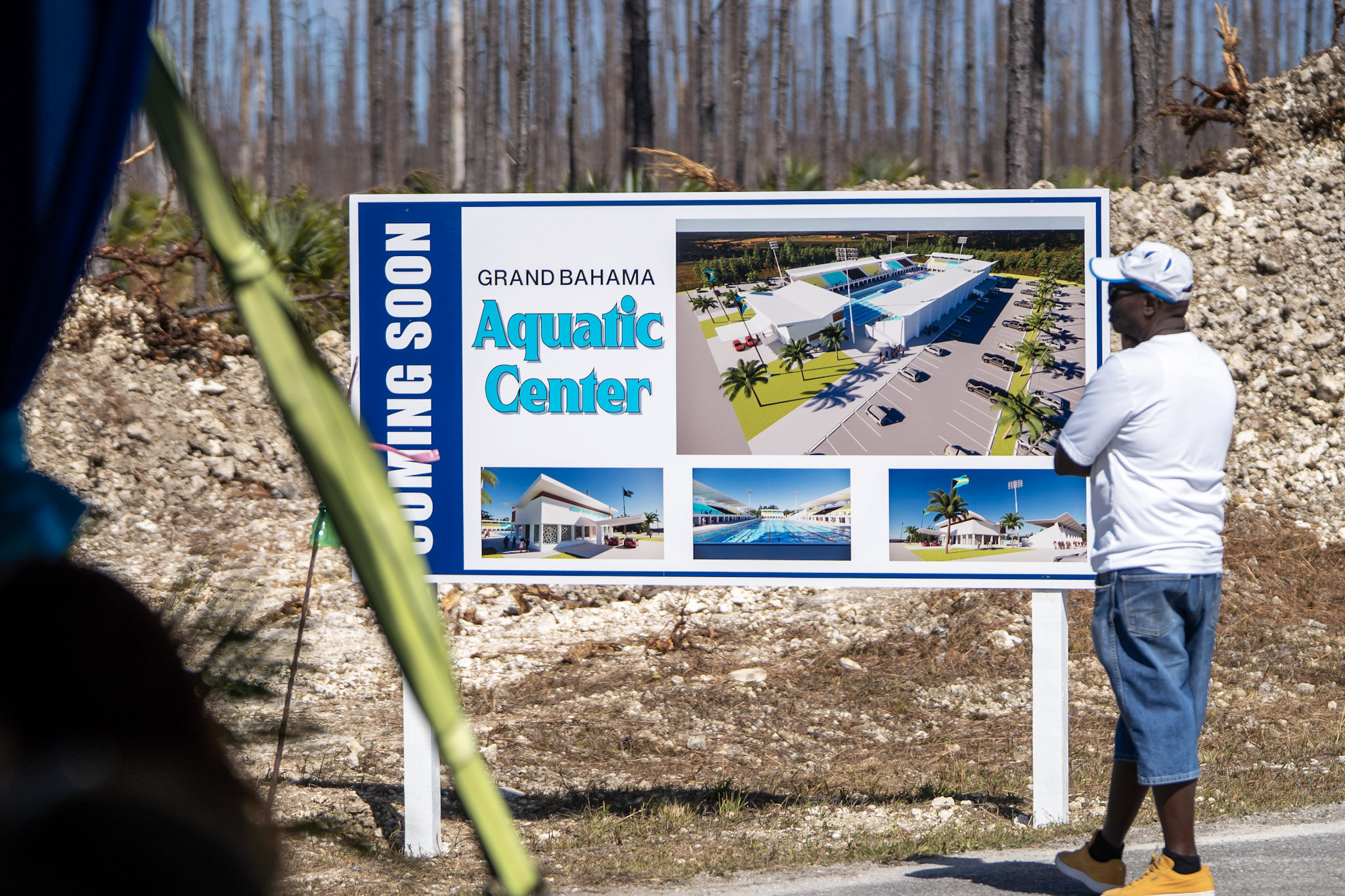
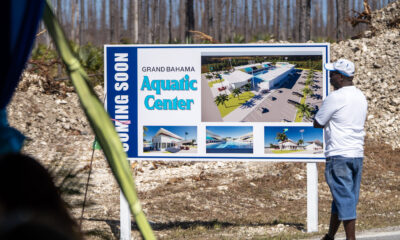
GRAND BAHAMA, The Bahamas — Calling it the fulfillment of a major commitment to the island, Prime Minister Philip Davis led the official groundbreaking for the Grand Bahama Aquatic Centre, a facility the government says will transform sports development and create new opportunities for young athletes.
Speaking at the Grand Bahama Sports Complex on February 12, the Prime Minister said the project represents more than bricks and mortar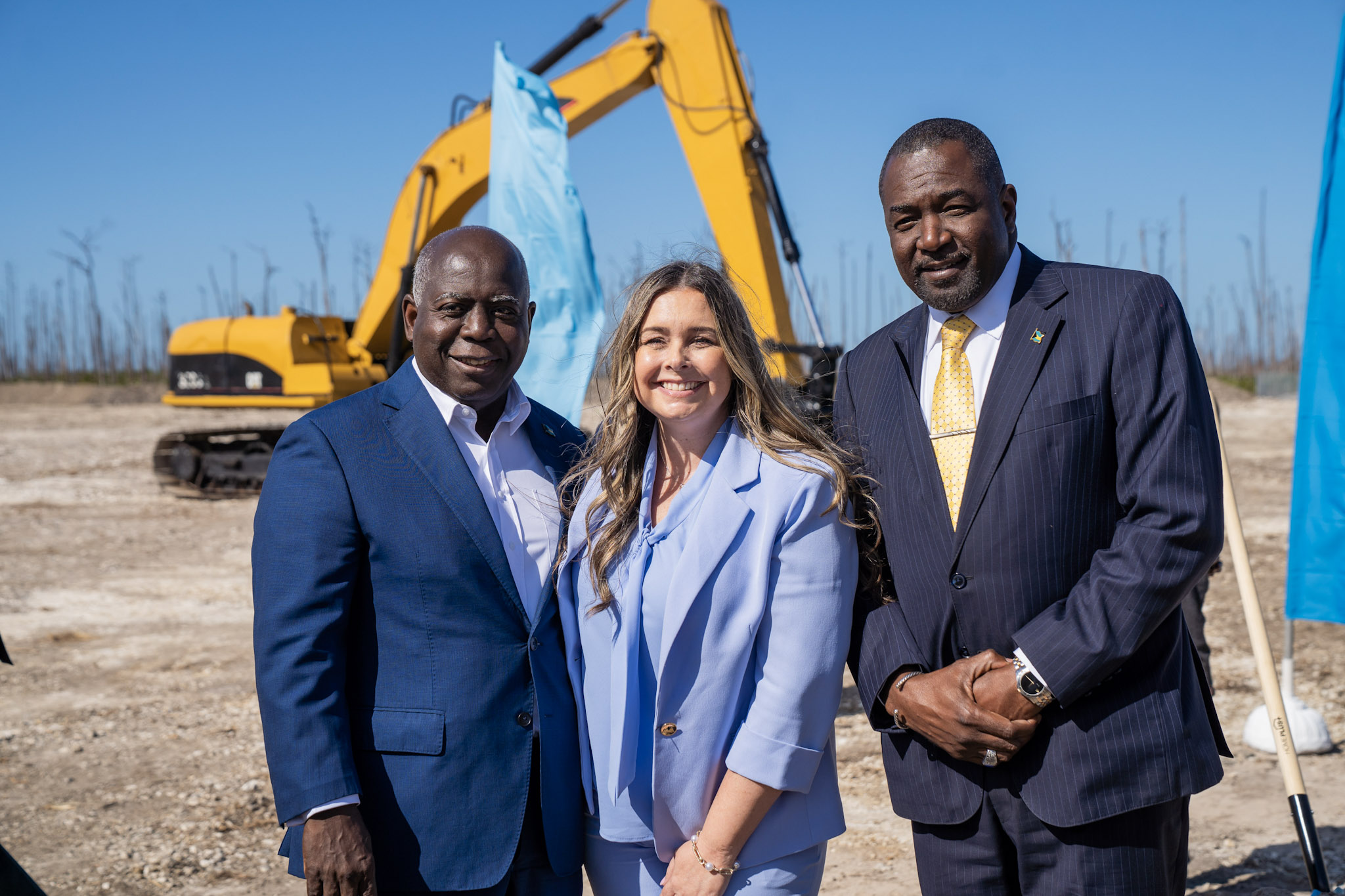 — it is an investment in people, national pride and long-term economic activity. The planned complex will feature a modern 50-metre competition pool, designed to meet international standards for training and regional and global swim meets. Davis said the facility will give Bahamian swimmers a home capable of producing world-class performance while also providing a space for community recreation, learn-to-swim programmes and water safety training.
He noted that Grand Bahama has long produced outstanding athletes despite limited infrastructure and said the new centre is intended to correct that imbalance, positioning the island as a hub for aquatic sports and sports tourism.
The Prime Minister also linked the development to the broader national recovery and revitalisation of Grand Bahama, describing the project as part of a strategy to expand opportunities for young people, create jobs during construction and stimulate activity for small businesses once operational.
The Aquatic Centre, he said, stands as proof that promises made to Grand Bahama are being delivered.
The project is expected to support athlete development, attract competitions, and provide a safe, modern environment for residents to access swimming and water-based programmes for generations to come.
Angle by Deandrea Hamilton. Built with ChatGPT (AI). Magnetic Media — CAPTURING LIFE.

The Bahamas, February 15, 2026 – For the better part of three years, Bahamians have been told that major Afreximbank financing would help transform access to capital, rebuild infrastructure and unlock economic growth across the islands. The headline figures are large. The signing ceremonies are high profile. The language is ambitious. What remains far harder to see is the measurable impact in the daily lives of the people those announcements are meant to serve.
The Government’s push to secure up to $100 million from Afreximbank for roughly 200 miles of Family Island roads dates back to 2025. In its February 11 disclosure, the bank outlined a receivables-discounting facility — a structure that allows a contractor to be paid early once work is completed, certified and invoiced, with the Government settling the bill later. It is not cash placed into the economy upfront. It does not, by itself, build a single mile of road. Every dollar depends on work first being delivered and approved.
The wider framework has been described as support for “climate-resilient and trade-enhancing infrastructure,” a phrase that, in practical terms, should mean projects that lower the cost of doing business, move people and goods faster, and keep the economy functioning. But for communities, that promise becomes real only when the projects are named, the standards are defined and a clear timeline is given for when work will begin — and when it will be finished.
Bahamians have seen this moment before.
In 2023, a $30 million Afreximbank facility for the Bahamas Development Bank was hailed as a breakthrough that would expand access to financing for local enterprise. It worked in one immediate and measurable way: it encouraged businesses to apply. Established, revenue-generating Bahamian companies responded to the call, prepared plans, and entered a process they believed had been capitalised to support growth. The unanswered question is how much of that capital has reached the private sector in a form that allowed those businesses to expand, hire and generate new economic activity.
Because development is not measured in the size of announcements.
It is measured in loans disbursed, projects completed and businesses expanded.
The pattern is becoming difficult to ignore. In June 2024, when Afreximbank held its inaugural Caribbean Annual Meetings in Nassau, Grand Bahama was presented as the future home of an Afro-Caribbean marketplace said to carry tens of millions of dollars in investment. What was confirmed at that stage was a $1.86 million project-preparation facility — funding for studies and planning to make the development bankable, not construction financing. The larger build-out remains dependent on additional approvals, land acquisition and further capital.
This distinction — between financing announced and financing that produces visible, measurable outcomes — is now at the centre of the national conversation.
Because while the numbers grow larger on paper, entrepreneurs still describe access to capital as out of reach, and communities across the Family Islands are still waiting to see where the work will start.
And in an economy where stalled growth translates into lost opportunity, rising frustration and real social consequences, the gap between promise and delivery is no longer a communications issue.
It is an inability to convert announcements into outcomes.
Angle by Deandrea Hamilton. Built with ChatGPT (AI). Magnetic Media — CAPTURING LIFE.





-

 TCI News7 days ago
Experience Turks and Caicos and Aquila Host Product Development Workshops to Strengthen Sister Islands Tourism
-
 News5 days ago
The Department of Trade, Industry & Fair Competition to Host Export Readiness Workshop Under the theme “Empowering TCI Businesses for Local Growth and Global Markets.”
-

 Bahamas News2 days ago
Tens of Millions Announced – Where is the Development?
-
 News4 days ago
Strong December Performance Signals Continued Demand for the Turks and Caicos Islands
-
 Bahamas News22 hours ago
Groundbreaking for Grand Bahama Aquatic Centre
-

 News6 days ago
Multi-Agency Planning Enforcement Operation Conducted at multiple locations in Providenciales
-
 Caribbean News5 days ago
Mottley Sworn in After Historic Clean Sweep in Barbados Election
-

 Health22 hours ago
What to Look for with Self-Checks at Home