
News
TCIAA update on matter as it relates to Disruption in Flight Services at Providenciales

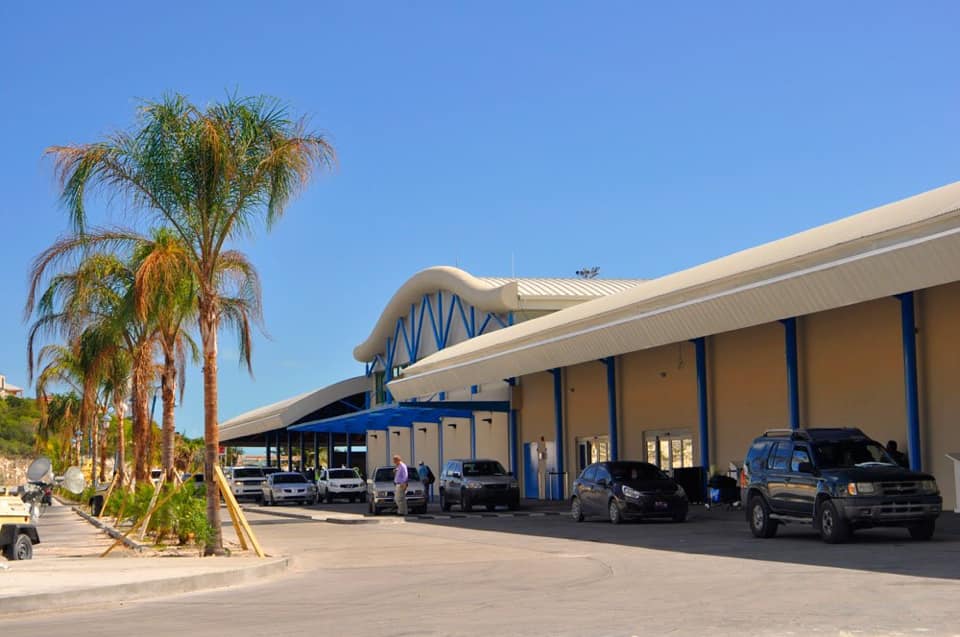
#TurksandCaicos, June 18, 2022 – The Turks and Caicos Islands Airports Authority (TCIAA) wishes to advise its stakeholders and the public on the matters which unfolded at the Providenciales International Airport today. It is important that all who are concerned note that not all flight cancellations occurring today were the result of the events which unfolded in the early morning at the Airport.
Concerning the industrial action taken by firefighters today across the TCIAA and in the wake of various news and social media circulars purporting to properly understand the situation the TCIAA wishes to advise that it has and continues to prioritize improving work conditions and salaries/wages at the TCIAA.
Today’s industrial action occurred without any formal notice issued to the TCIAA and in response to a recent announcement by the TCIAA to its staff that it was immediately introducing a phased salary increase to all staff. To this end, the fire service received a 15% increase to be applied to all staff within the department. The announcement advised that this 15% increase was the first step of a two-part process leading to the introduction of a salary grading scale, during which time an additional increase was to be anticipated.
To prepare for the introduction of this salary pay grade scale the TCIAA proposed in its budget for the 2022-2023 fiscal year and additional sum to be reserved to meet the demands of these salary increases once they occurred. The Turks and Caicos Islands Government approved this provision during its 2022 budgeting session.
The TCIAA continues to review staff salaries for the purpose of implementing a grading scale which meets the ethics of both staff remuneration and the fiscal management of public funds. The TCIAA will continue to work with its Team Members, including the Fire Service to wholly and adequately address salary and other concerns affecting the work environment. It is important that stakeholder and the public are aware of the open and transparent manner in which the TCIAA endeavours to address these legacy staff issues.
Notably, the TCIAA has recently broken ground for the construction of a new Fire Hall and Air Traffic Control Tower, another effort being taken to improve work conditions at the TCIAA. It is further hoped that the anticipated redevelopment of the Providenciales International Airport would address several other workplace issues which both the Board and Management of the TCIAA share concerns about with its staff.
The TCIAA thanks the Hon. Deputy Governor, the Hon. Premier, and the Hon. Minister for Border Services for being part of the discussion with the Fire Service this morning. Together, with the Turks and Caicos Islands Government, the TCIAA remains committed not only to the safety of aircraft, passengers, staff and other users of the airport, but is genuinely committed to developing the TCIAA into a desirable and model work environment. Addressing all of the legacy issues will not be an overnight fix, but the TCIAA remains committed to doing it because in all honesty, our staff deserve it.
For more information visit us at www.tciairports.com


The Bahamas, August 27, 2026 – The Royal Bahamas Police Force wishes to inform members of the public that several individuals are scheduled to appear before the Magistrate’s Court on Thursday, 27th August 2026, at 12:00 noon.
The individuals and charges are as follows:
An 18-year-old female is scheduled to be arraigned on the following charges:
Three (3) counts of Murder
Three (3) counts of Attempted Murder
Three (3) counts of Possession of a Firearm with Intent to Endanger Life
Three (3) counts of Possession of an Unlicensed Firearm
Two (2) counts of Possession of Ammunition
Armed Robbery
Abetment to Armed Robbery
Stealing
Receiving
The charges stem from three separate shooting incidents and an armed robbery that occurred on Friday, 21st August 2026, and Saturday, 22nd August 2026.
The first shooting occurred in the area of Soldier Road and Baillou Hill Road, resulting in the death of a 51-year-old male.
The second shooting occurred in the area of Joe Farrington Road, resulting in the death of a 52-year-old male.
The third shooting occurred in the area of Gladstone Road, resulting in the death of a 36-year-old male.
The armed robbery occurred at a business establishment in the area of Carmichael Road and Baillou Hill Road.
A 21-year-old male is scheduled to be arraigned on one charge of:
- Murder
The charge stems from a shooting incident that occurred on Tuesday, 21st July 2026, in the area of Samson Street, Nassau Village, which resulted in the death of a 28-year-old male.
A 32-year-old male is scheduled to be arraigned on the following charges:
- Murder
- Attempted Murder
These charges stem from a shooting incident that occurred on Wednesday, 24th December 2025, in the area of Graham Drive, Yellow Elder, which resulted in the death of a 25-year-old male.
RBPF, PACD
by Deandrea Hamilton | Editor
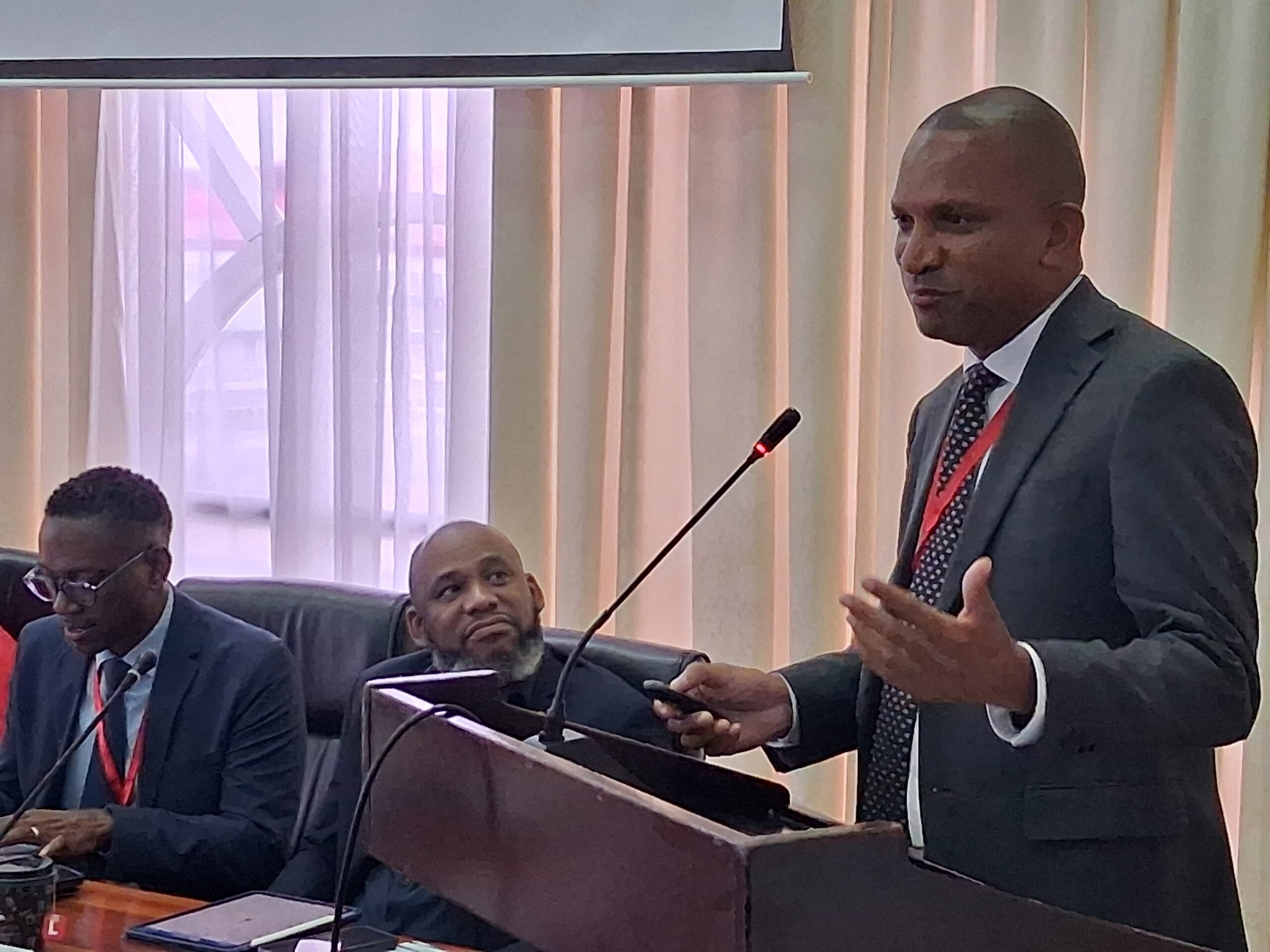
PROVIDENCIALES, TCI — In a country where government press conferences are virtually non-existent, ministers are often difficult for journalists to access and regular broadcast television news has disappeared, TCI Innovation, Technology and Energy Minister E. Jay Saunders has challenged Caribbean media to become “impossible to ignore.”
Speaking at the Caribbean Broadcasting Union gathering, Saunders argued that the Caribbean does not have a relevance problem but a “discoverability and positioning problem.”
Discoverability is precisely the issue in Saunders’ home country. Even Government’s own attempts at video news broadcasting have struggled against the realities of consistently producing a daily, weekly or even monthly newscast.
The difficulties confronting TCI media extend well beyond algorithms: limited advertising revenue, underfunding, shortages of trained professionals and insufficient human capacity leave newsrooms struggling for both staff and stamina.
Then there is the reality of operating in one of the region’s smallest societies. Politicians, journalists, advertisers, businesses and the subjects of stories often exist within the same tight economic and social circles. A controversial report that might create a ripple elsewhere can produce a tsunami in TCI, intensifying concerns among journalists about commercial and professional victimisation.
Saunders believes AI can help.
He urged Caribbean media to use the technology to transform one original story into television, radio, web, podcast, social and translated content without multiplying newsroom workload.
He also wants regional journalism structured so AI systems can find, understand and trust Caribbean sources, moving media beyond traditional SEO into Answer Engine Optimisation.
His ultimate message was emphatic: “Use AI not to make Caribbean media more artificial — but to make Caribbean voices more visible.”
For Turks and Caicos media, however, becoming visible may require more than technology. It requires an environment in which journalism can survive.
That last sentence is where I think we land the plane. It acknowledges that EJ actually has some us
Bahamas News
Bahama Brass Band Invitation Sparks Heritage Debate Ahead of TCI Constitutional Holiday
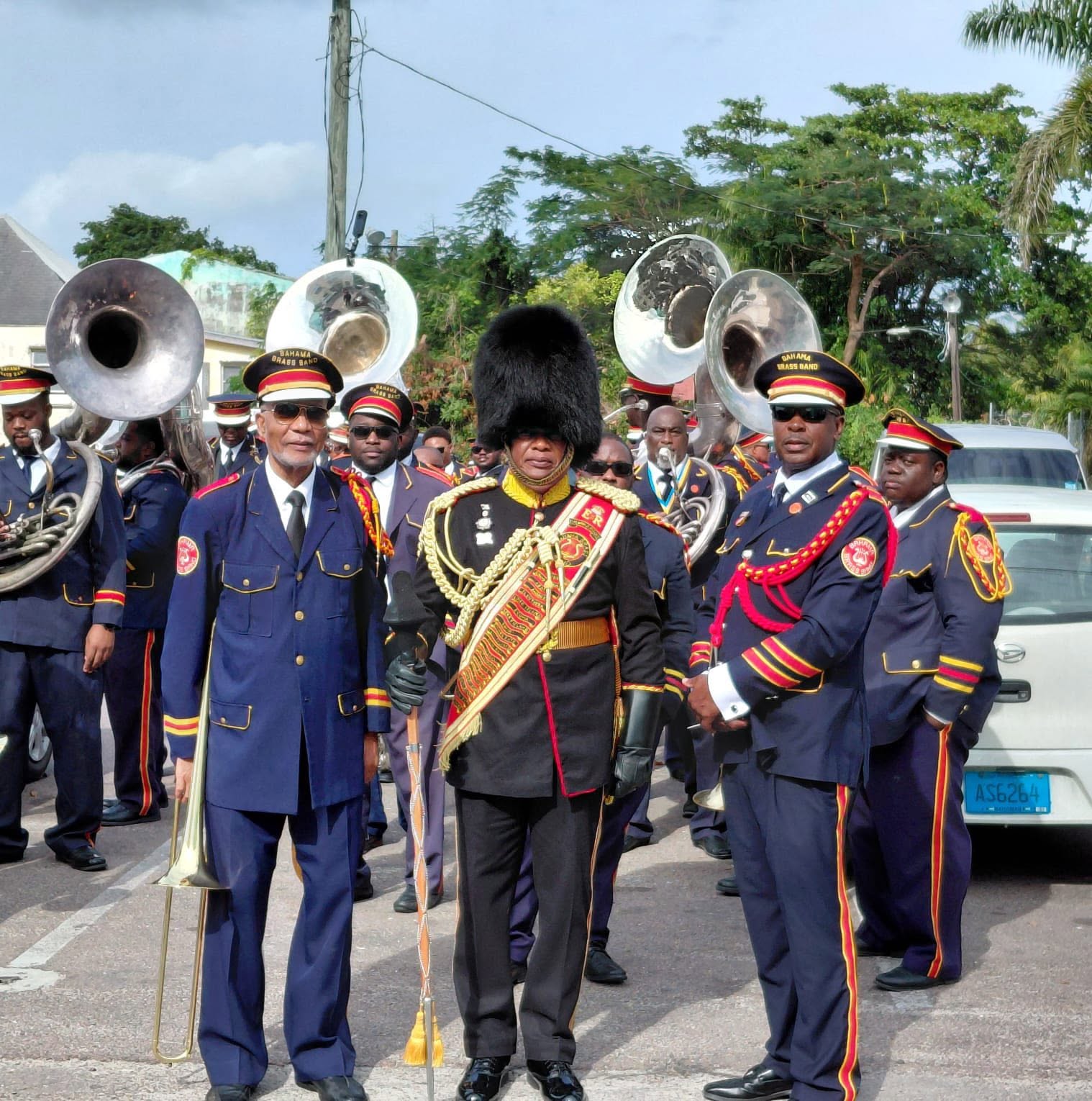
Turks and Caicos, August 20, 2026 – The planned participation of the Bahama Brass Band in the Turks and Caicos Islands’ inaugural Constitutional Holiday celebrations on August 30 has sparked public debate over culture, heritage and the historical contributions of Turks and Caicos Islanders abroad.
Organizers defended the invitation, saying the band’s inclusion is intended to highlight the deep historical ties between the two countries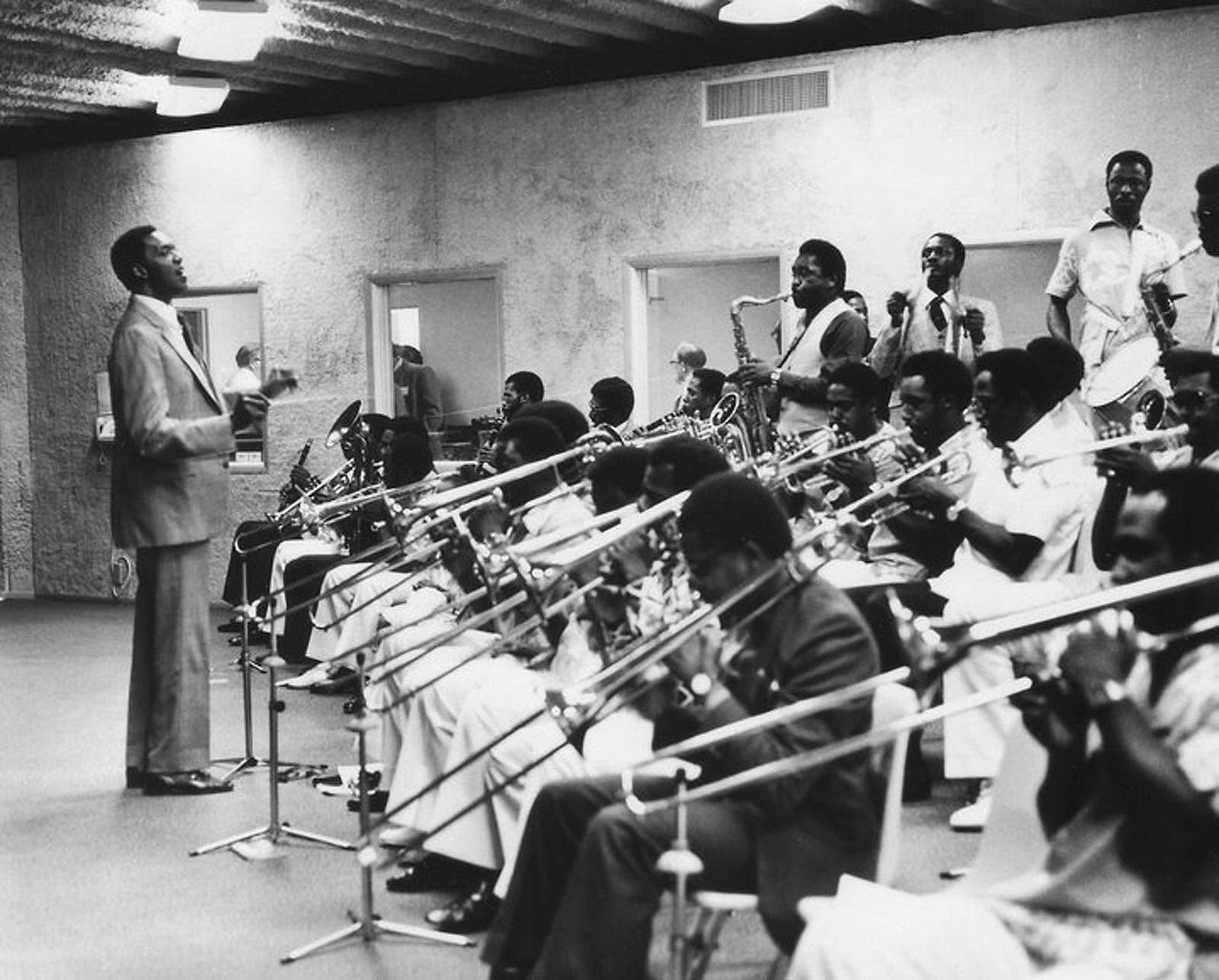 and honor Turks and Caicos men who helped establish and develop the institution in Grand Bahama.
According to the organizers, the Bahama Brass Band began in 1955 in Pine Ridge, Freeport, with Turks and Caicos Islanders, including the late Deacon Reuben Hall Sr. of Middle Caicos and Jenkins Williams and Mervin Hendfield of North Caicos, among those who helped build its foundation. The band eventually grew to more than 50 men.
The organizers also pointed to the participation of Turks and Caicos men in The Bahamas’ Independence celebrations on July 10, 1973, arguing that their contributions became part of Bahamian history while maintaining strong connections to their homeland.
Supporters say bringing the band home represents an opportunity to honor those pioneers, showcase their regional influence and expose younger generations to an important part of Turks and Caicos history.
However, concerns raised publicly described the invitation as potentially disrespectful to local culture and heritage. Organizers acknowledged those concerns, apologizing to anyone who felt overlooked or offended, while maintaining that no disrespect was intended.
The committee said the event should ultimately unite rather than divide, presenting the band’s history as evidence of the reach and resilience of Turks and Caicos heritage.
PHOTO CREDIT: Bahamas Brass Band





-

 News1 week ago
BermudAir Launches New York Area’s First Nonstop Service to South Caicos, Now Just a 3.5 Hour Flight from Newark
-

 Bahamas News1 week ago
CBC Supports Opportunities for Young Bahamian Basketball Players
-

 Bahamas News1 week ago
Bahama Brass Band Invitation Sparks Heritage Debate Ahead of TCI Constitutional Holiday
-

 News5 days ago
Saunders Tells Caribbean Media: Be Seen, Be Heard – But What About TCI
-

 Bahamas News3 days ago
Royal Bahamas Police Force – ARRAIGNMENT NOTICE