
News
Better Solid Waste Management for TCI


#TurksandCaicos, May 27, 2022 – The growing demand for better control of solid waste management in TCI still remains a challenge. In recent years, what have we done differently to improve or expand in scope the existing resources to support our current solid waste management situation?
Polluted air has plagued residents of Grand Turk and Providenciales for years. The lingering question is, can we get control of the situation before it becomes a crisis? This is the concern of many citizens across the country.
As a resident of Grand Turk, I have experienced first-hand the impact it can have on this tiny island. Due to the location of the dump site, some residents are in a more vulnerable position to toxic fumes then others.
Citizens are relieved to hear the recent announcement that a dialogue is set to take place among a newly established Solid Waste Management Task Force. It should also be noted, within the last couple of years, the occasional flare-ups has declined. Nevertheless, to my knowledge it’s yet to be determined whether the fires were the work of an arsonist or uncontrollable combustion.
In all likelihood, until a viable plan is put in place and in motion, I’m afraid it’s only a matter of time. With the damages it could cause to human health over time, even one flare up is to many.
What is even more concerning due to the potential impact it could have on our sanitation services; is the fact that Carnival Cruise Line recently added their largest ship to the fleet and is now embarking on our shores. This particular ship has a capacity that exceeds 6K passengers. Now imagine the additional number of recyclable cans, bottles, human waste etc. that will be added to our inadequate landfill.
It’s pretty clear as to which companies and or facilities in these islands are generating the lion share of the waste. The question remains, are they doing enough to support the country as a whole in this area. In a small developing nation like TCI where the economy depends primarily on its pristine coastline and ecotourism, a lot more can be done by big players like the Ritz-Carlton, Beaches, Carnival Corporation and others.
With the recent opening of the Ritz-Carlton in Providenciales and the newly signed Carnival contract, it was a pivotal time to bring this issue to the table. If provisions were not included, in my opinion it should have been.
Our country is in a financial position right now to lead the way on this issue and not just follow or propose Band-Aids. Any government must have a commitment to put a solid plan of action in place based on reasoning and evidence of critical issues impacting the country.
Therefore, it’s imperative that critical issues such as this, is placed at the forefront of any cabinet discussion. This will help to raise the level of accountability for those responsible for protecting the health and well-being of our citizens.
Here are some proposed ideas to expand upon.
First and foremost, government must provide more support for local level sanitation services and strategies, to include restructuring the existing processes and procedures for garbage collection and disposal.
Grand Turk in particular, the constant easterly winds blows garbage from the dump site towards the leeward side of the island. Rather than having a chain link fence to contain it, erecting a wall will help to alleviate this issue.
Secondly, we must get serious about recycling. The existing company that is undertaking this initiative, why not expand their reach to the other developed islands.
Let’s start with educating and exposing our elementary and high school students to the importance of recycling instead of disposing of garbage. This will help to pave the way for a more sustainable future.
Let’s incentivize the private sector to set up local food banks or soup kitchens and encourage resorts, hotels and restaurants to donate their nonperishable and unspoiled perishable foods instead of disposing them in the landfill.
Long term solutions needs to be explored, to include being more open to outside investors with genuine interest and expertise in this arena.
The infrastructure for getting rid of recyclables is partly there. For example, there is a high volume of containers coming into our country on a weekly basis via these cargo ships.
This is a great opportunity to broker a deal with a foreign recycling company. Recyclables can be shipped out in those empty containers on un-laden vessels that are heading back to home base or other ports of departure. We realize this initiative is a monumental task, but we must act fast as time is running out.
Until the country is ready to tackle this issue head on, we will probably continue to see spontaneous combustion as the cause of landfilled fires.
As concerned citizens, we must become a stronger voice in the push for clean air and continue to sound the alarm before it’s too late.
Ed Forbes
Concerned citizen of Grand Turk


News
Starlink Gets 15-Year TCI Licence; Commission Reveals Fees, Future Flow and Digicel Partnerships
Deandrea Hamilton | Editor
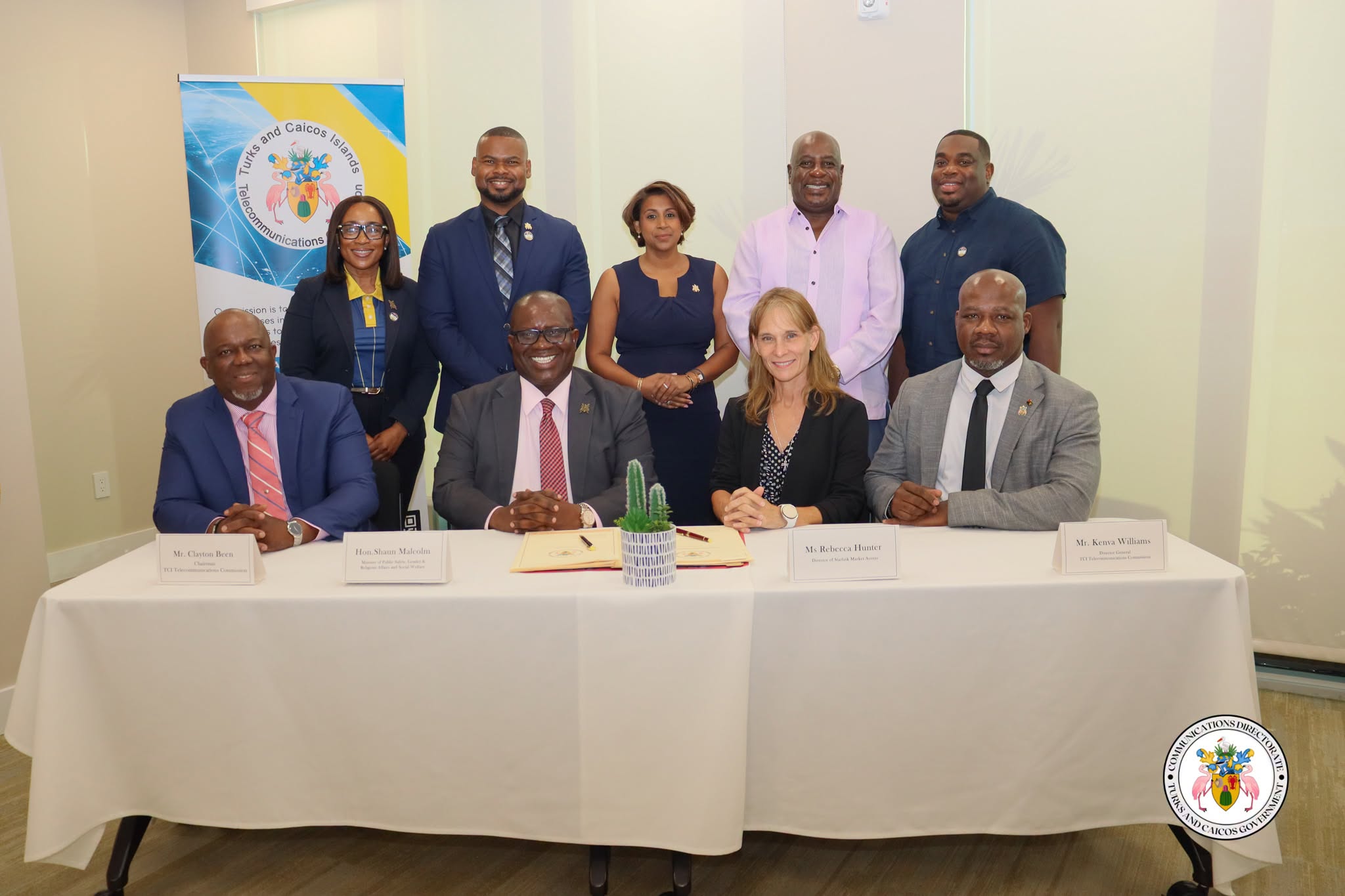
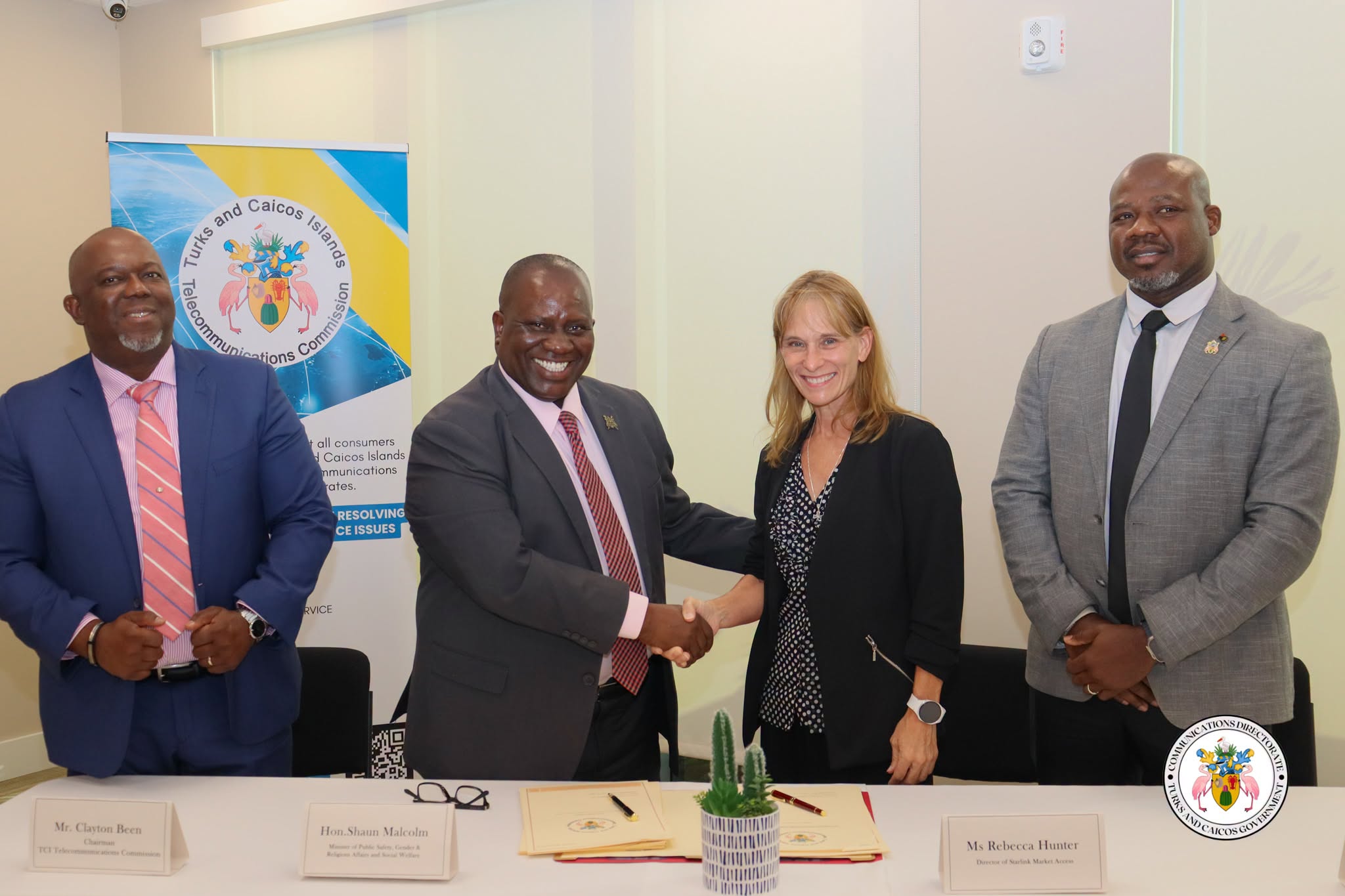
PROVIDENCIALES, TURKS AND CAICOS ISLANDS — Starlink has been granted a 15-year telecommunications licence in the Turks and Caicos Islands, with the satellite internet provider required to pay an initial licensing fee of approximately $112,600, followed by annual payments tied to revenues and spectrum use.
The details were provided directly to Magnetic Media by Kenva Williams, Director General of the TCI Telecommunications Commission, following the August 27 formal licensing ceremony.
Williams said Starlink will pay seven per cent of gross annual revenues for its network licence, a $23,600 annual spectrum fee, and a further 1.8 per cent of annual gross revenues as a regulatory fee. The licence carries conditions and runs for the same 15-year period afforded other service providers.
The Telecommunications Fee Structure Regulation was also amended to create a category for satellite services.
For consumers, Williams confirmed that Starlink operates independently of Flow and Digicel, meaning residents do not require either provider to access its regular satellite internet service. He also confirmed that areas shown in blue on Starlink’s availability map indicate that service is available.
However, the relationship changes with Direct to Cellular (D2C) technology.
“For Direct to Cellular services, they will partner with Flow and Digicel,” Williams told Magnetic Media.
The Director General described Starlink as a complement to terrestrial telecommunications, capable of facilitating internet access in locations and circumstances where conventional infrastructure has been difficult or impossible to deploy.
That need helped drive a licensing process Williams said took two years.
Speaking at the ceremony, he explained that the Commission found no Caribbean regulatory framework it could simply replicate and therefore undertook consultation with existing operators, satellite providers, stakeholders and the public.
Williams said a Commission survey found 80 percent of respondents wanted Starlink, but acknowledged concerns from existing operators about the impact of a global satellite provider entering the TCI market.
“We’re going to ensure that policies are in place to keep the terrestrial services alive,” Williams said, stressing that Flow and Digicel maintain critical physical and mobile infrastructure. He also urged government not to abandon plans for a national fibre network, describing it as “a must.”
For Starlink, however, the licence represents more than commercial entry into another market.
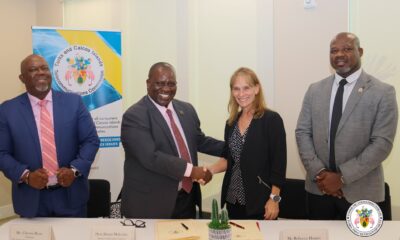
Rebecca Hunter, Director of Market Access for Starlink, described August 27 as “day one of our relationship with the Turks and Caicos Islands,” promising that the company intends to become a long-term community partner.
“We look forward to contributing in the proper ways, following all the rules and requirements… and we look forward to giving back to the community,” Hunter said.
She identified resilience, government continuity, maritime services, disaster management, healthcare and education among areas where Starlink believes its technology can contribute.
“However we can contribute, we want to be part of your story,” Hunter told the gathering.
The entry is particularly significant for an archipelago where smaller and sparsely populated islands have historically presented challenges for traditional telecommunications infrastructure.
For the Commission, Starlink therefore adds another layer of connectivity rather than replacing existing networks — expanding consumer choice today while creating future opportunities for satellite-to-mobile connectivity through TCI’s established operators.
Turks and Caicos Islands – Leading telecoms provider Flow TCI has announced enhancements to both its fixed and mobile networks, delivering faster speeds, expanded coverage and greater capacity for customers across the country.
The latest improvements include the activation of a new mobile site in Long Bay, enhanced broadband speeds for residential customers, and independent recognition from Ookla for the performance of the company’s fixed network.
“Together, these developments reflect our continued focus on building the digital infrastructure needed to support the evolving needs of households, businesses and the wider economy,” said Joanne Missick, Country Manager, Flow Turks and Caicos Islands.
“Our continued network enhancements are focused on delivering a better experience for our customers while ensuring that the Turks and Caicos Islands has the digital infrastructure needed to support economic growth, innovation and opportunity.”
The newly activated mobile site in Long Bay delivers improved coverage, increased network capacity and faster mobile connectivity to one of the fastest-growing communities in the Turks and Caicos Islands. Further mobile network expansion is planned through late 2026 and into 2027, strengthening Flow’s ability to meet growing demand and ensuring more communities can benefit from high-quality connectivity.
Flow has also enhanced the experience for its residential broadband customers. Effective August 1, eligible customers received significant upgrades, with internet speeds on selected plans doubled or tripled. Some customers also benefited from a reduction in their monthly bill.
The strength of Flow’s fixed network has also received independent international recognition. Flow Turks and Caicos Islands was awarded the Ookla Speedtest Award for Fastest Fixed Network in the Turks and Caicos Islands, based on data from Speedtest Intelligence.
The award provides independent validation of Flow’s network performance and gives customers tangible assurance that the network they rely on for work, entertainment, education and everyday life delivers leading speeds.
“Reliable, high-performing connectivity is no longer simply a convenience. It is fundamental infrastructure for modern life and for national development,” added Missick.
“The recognition from Ookla is particularly meaningful because it independently validates the performance of our fixed network. For our customers, it reinforces what these investments and enhancements are designed to deliver: faster, stronger and more dependable connectivity for the things that matter most in their lives and businesses.”
These network developments form the foundation of Flow’s new nationwide campaign, ‘This Is TCI’s Network’, which highlights the company’s long-term commitment to the Turks and Caicos Islands and its role in connecting communities and supporting the country’s continued development.
Deandrea Hamilton | Editor
PROVIDENCIALES, TURKS AND CAICOS ISLANDS — The Turks and Caicos Islands Government is embracing satellite technology while reaffirming that neither Flow and Digicel nor plans for national fibre-optic infrastructure will be abandoned as the country enters a new era of telecommunications.
The position was underscored during the August 27 licensing of Starlink Caribbean LLC, completing a process that Kenva Williams, Director General of the TCI Telecommunications Commission, said took two years.
Minister responsible for Telecommunications Shaun Malcolm stressed that Starlink is intended to complement the telecommunications infrastructure already built across the islands, with Government remaining committed to supporting existing providers as technology evolves.
That commitment was echoed emphatically by Williams, who acknowledged concerns among the country’s established telecommunications companies about the arrival of the global satellite provider.
“The stakeholders are concerned, of course — Flow and Digicel — but I would say, as a regulator, you’re not going to fail, not on our watch. We’re going to ensure that policies are in place to keep the terrestrial services alive,” Williams said.
He explained that the established providers remain essential because of the infrastructure and mobile networks they operate.
“They are the ones who have infrastructure. They are the ones who provide the mobile services. We have to implement policies to ensure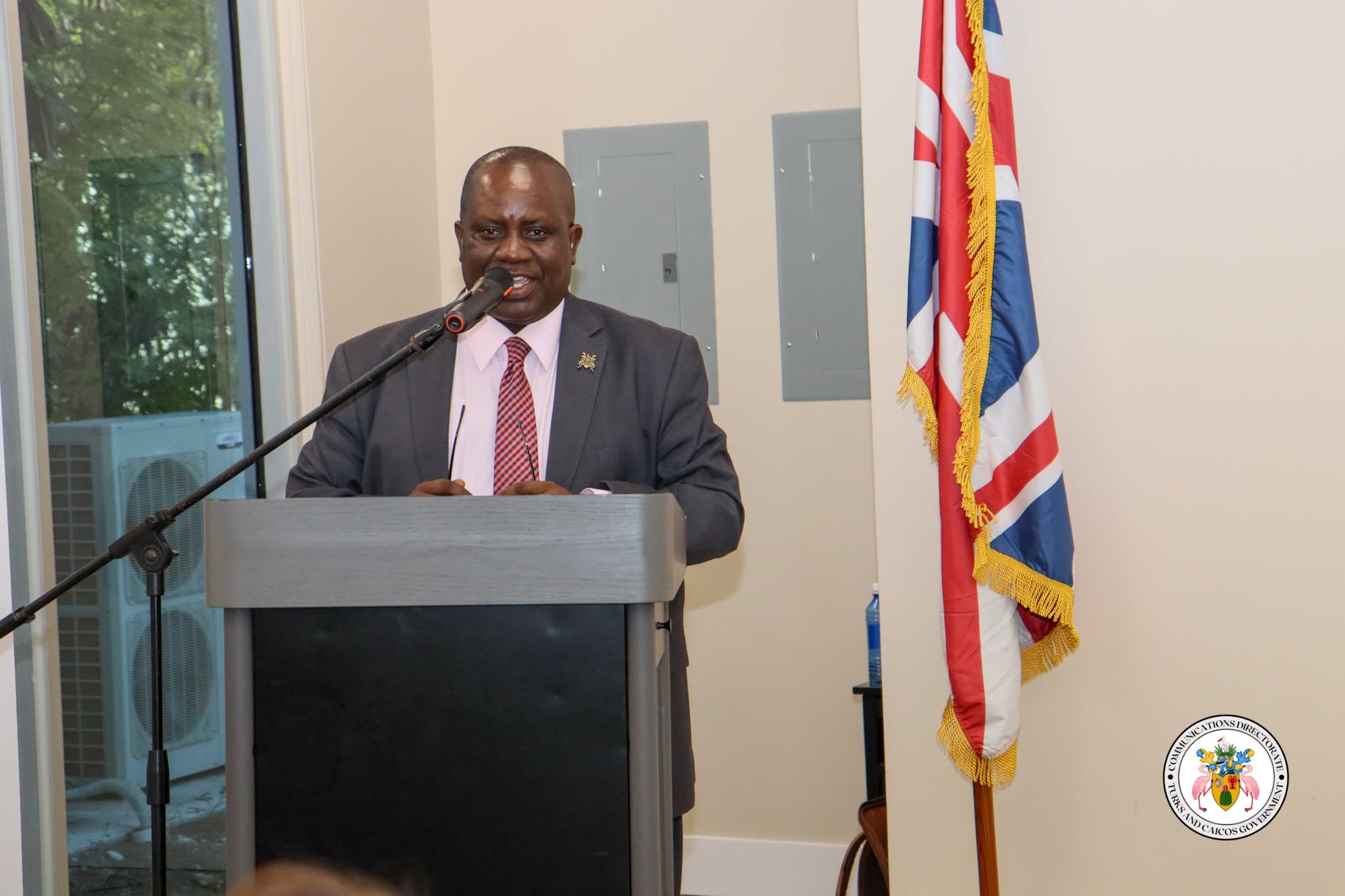 that they are well and alive while Starlink is here.”
Starlink’s entry was also strongly supported by consumers. Williams revealed that during consultation, 80 per cent of respondents indicated they wanted the satellite internet service.
The Commission nevertheless spent two years establishing an appropriate regulatory framework, consulting existing operators and stakeholders and addressing licensing, spectrum and competitive concerns before approving Starlink.
Government is also maintaining its longer-term ambition of a national fibre network, despite the considerable expense involved. Williams used the licensing ceremony to publicly urge Government to continue pursuing the project.
“Please do not lose the dream of the national fibre. That is needed. It is a must,” he said, with Malcolm reaffirming Government’s commitment to the development.
The approach positions satellite, terrestrial and fibre technologies as complementary pieces of TCI’s future telecommunications network rather than competitors from which only one can survive.
Starlink offers an immediate advantage for the country’s geography, particularly sparsely populated islands where laying extensive terrestrial infrastructure can be difficult and expensive. TCI now joins more than 20 Caribbean countries and territories where Starlink is available, expanding broadband options for homes and businesses.
The service also provides another layer of communications resilience during hurricanes and other emergencies when conventional infrastructure may be damaged or inaccessible.
Starlink will operate independently from Flow and Digicel for its regular satellite internet service, although future Direct to Cellular services will involve partnerships with the two mobile providers, according to Williams.
One significant difference will remain between the new entrant and TCI’s established telecommunications companies: Starlink will not maintain a physical office in the Turks and Caicos Islands. Williams confirmed that its operations and customer interactions will instead be conducted online.





-
 News1 day ago
Starlink Gets 15-Year TCI Licence; Commission Reveals Fees, Future Flow and Digicel Partnerships
-

 Bahamas News1 week ago
Royal Bahamas Police Force – ARRAIGNMENT NOTICE
-
 News3 days ago
Government Restates Commitment to TCI’s Telecommunications Evolution
-

 Independent writer2 days ago
A Second Chance Through Service: Is the TCI Regiment an Untapped Tool for Rehabilitation?
-
 News3 days ago
Tomorrow’s Communities Start with Today’s Young Leaders: Why Youth Engagement Matters
-

 Health6 days ago
Is It Bad To Sleep in a Bra?
-

 News1 day ago
Flow Strengthens Network Leadership in TCI