
Bahamas News
Message to Downtown Property Owners – DPM Chester Cooper


#The Bahamas, March 28, 2022 –
Good afternoon, Ladies and gentlemen.
- Cabinet & Parliamentary Colleagues
- Executives of the DTP
- MOTIA Executives
- Members of the RBPF
I have invited you here this morning to seek common ground and to share with you the vison that the Davis-Cooper administration has for Downtown, Nassau. I come in peace.
Last week in the House of Assembly I voiced my displeasure about the state of Downtown, Nassau and I called it an embarrassment. And I know that many of you feel the same way. As an owner of property Downtown myself, I am intimately familiar with the challenges facing downtown as well as the progress, slow though it may be, that has been made.
Successive governments and the Downtown Nassau Partnership have worked in tandem over the years to try and transform the city center into what we now have. But the time for incremental change has come and gone.
We have seen progress in the refinishing of sidewalks, the investment in art on abandoned buildings and a focus on a police presence during the daytime hours. But the fact remains that the private sector is not redeveloping downtown rapidly, and indeed often standing in the way of progress.
For years we have had incentives for development downtown, and while that has borne some fruit, there is no question that the growth of downtown pales in comparison with the escalating number of cruise ship passengers who are brought to the Port of Nassau. Now we stand on the cusp of something new.
There is more than $200 million being invested in the new port that see it become one of the nicest, most modern ports in the region. The expansion of cruise ship berths and the loosening of restrictions on cruise ship occupancy means that we could see days with more than 20,000 cruise ship visitors brought to our shores multiple times per week. The difficulty has become getting them off the boats and to spend money downtown.
In addition that the port, we have the United States investing $300 million in a state of the art embassy that will change the landscape of Shirley Street and East Street.
In addition to that, we have a new Central Bank building that will cost well over $100 million that will begin construction soon and will further transform downtown.
In addition to that, the government of The Bahamas intends to construct a new Cabinet building downtown before the end of this term in government.
We are looking at over $700 million in investment into the downtown area in the next few years alone. Add to that The Pointe, and we would be looking at close to a billion dollars in investment. However, this will still not be enough to transform one of the busiest ports of entry in the region. Our tourism is rebounding strongly. Despite our challenges we still consider ourselves the leaders in the region.
The vibrancy of downtown should be the story our visitors tell to their friends and family when they return home. It should be a must visit destination in the Caribbean that serve as the bridge between Atlantis and Baha Mar, two of the most famous and meticulously constructed resorts in the world.
Downtown should be a memorable, authentic and safe journey stretching west to Arawak Cay, which is also being targeted for redevelopment, all the way east to Potter’s Cay Dock, also on the government’s drawing board for redevelopment. Yet it is still “on the drawing board”. Just this past weekend we had six ships in port, on a single day.
There were thousands of guests here and I often hear taxi drivers and vendors tell me how embarrassed they are to have tourists walk past Victoria Avenue going east to see the raft of abandoned buildings, overgrown spaces and desolate areas that scream for guests to speed past as opposed to enjoying the local fare.
It is the one area we get consistent complaints about.
It is poorly maintained and not adequately managed.
It was thought that moving the various waterfront ports would spur development of living spaces, a boardwalk, restaurants and shops, but that dream has stalled.
I have often heard that buildings that are neither pleasing to the eye nor functional to the city are protected as historical sites, and that may require laws being amended. I am told that outdated building covenants that limit the height of structures are also an impediment. I foreshadow that, that will require adjustment as well.
But given what we have seen with the The Pointe and with other buildings, we can clearly see that exceptions can be made in the greater move toward progress.
As far as our vagrancy issues downtown, those are being addressed by the police and through amendments to the Mental Health Act that will be coming. Harassment by those who may be mentally ill and/or have substance abuse issues is not something Bahamians or visitors desire. And we certainly do not want to tell the world that we allow people who may be a danger to themselves and others exist without help outside the gaze of a government mandated to provide order. We will get them compassionate care in a safe place. Bay Street is not that place.
I addition to a cleaner downtown, we also want downtown with spaces for small businesses and spaces for larger businesses.
The Small Business Development Centre and the Tourism Development Corporation are already being positioned to aid in this transformation. We plan to make certain that Nassau Cruise Port has a transparent process for engaging Bahamian entrepreneurs to operate and have ample opportunity to experience the coming economic growth.
We plan to establish business incubation centers east of Bay Street with shared office spaces like the Incudesk model as well as a high-end authentically Bahamian marketplace.
In the House, I announced a plan to work with the Ministry of Works, the police, the Office of the Attorney General and the Office of the Prime Minister to tackle these issues head-on. We will have a collaborative inter-ministerial approach. I also pledged to meet with you to discuss the way forward.
I want to be clear that though I seek the way forward to be one of mutually beneficial partnership, the thrust of this administration is first and foremost progress. And we are not willing to sacrifice progress pursuing partnerships that will not bear fruit. There is no chance that we allow the status quo to remain. Always, we will try to work together to move our nation forward. But governments have a responsibility to act in the national interest, even if that is not to the liking of a few.
There are multiple tools in the government’s arsenal to address compliance, but our first tool will always be diplomacy. And what is good for downtown is good for the economy of The Bahamas. Downtown is historic and its parameters well defined in the law. A raft of legislation exists in the form of concessions to aid this redevelopment. As I said, there is no need to reinvent the wheel.
We have had multiple studies on the redevelopment of downtown, and the government will also engage the public for ideas. We will implement a sustained plan that will out last me as Minister and beyond the 5-year political cycle. But consensus among property is not required for the government to lead the way forward. Our city center is no longer a hub for merchant ports. And it is no longer the epicenter of retail commerce it once was. But the fact remains that there is money to be made downtown.
For artists and artisans, for those directly in the tourism business, for existing property owners and many, many others. If you are not interested in being in business in the downtown area, this administration fully understands that. But we want to work together. Therefore, this is why I make this call to action. But disinterest cannot translate into inaction.
If we cannot figure out how to entertain and attract millions of visitors to spend on their vacations with a safe, diverse, dynamic and varied experience that changes and grows more interesting and more inviting over time, then we do not understand the business that we are in.
Downtown needs to become the calling card of The Bahamas, not continue to be a point of national shame. There is a sense of urgency in implementing the action plans outlined in our Blue Print for Change. It’s our commitment to you, as we govern on behalf of all.
As Deputy Prime Minister and Minister of Tourism, Investments and Aviation, I am daily confronted with the issues: maintaining the infrastructure, Cleaning Streets and sidewalks, Improved Signage, Addressing Poor Lighting, The Enhancement and enforcement of penal code as they relate to loitering, solicitation, illegal vendors, and illicit activities. The Government intends to do its part. We will apply existing laws to manage downtown and introduce new ones where necessary to have it restored, kept clean and provide a unique experience for our visitors and Bahamians.
Government will look at work with the DNP to establish a statutorily empowered PPP entity to manage downtown. We have been meeting with Cruise Line Partners to strongly emphasize the imperative to model exceptional partnerships to increase their calls on the Port of Nassau, incentivize more passengers to come off vessels, work with the TDC to enhance and support our tours and local offerings, which will largely result in increased visitor spend on shore and on Bay Street. They have given us their word.
We need you to repair your buildings and paint them. Revamp your store fronts. Ensure the removal of garbage. Adhere to signage guidelines and remedy derelict and abandoned buildings. We don’t need to wait. I urge you to act.
I would be remiss, if I did not also applaud the work of our own Tourism Sites and Facilities Department, who rose to the occasion during the reopening of our sector to ensure that Bay Street, and more specifically Pompey, Pirates and Raswon Square was ready to receive residents and visitors.
I am hopeful that will come together with greater frequency, and share ideas, innovations and make inputs to ensure our collective success.
We must propel our nation on the path to recovery, on the journey to economic restoration and to truly make it, “Better in The Bahamas” for all of us.





PM: Project delivers on promise and invests in youth, sports and national development
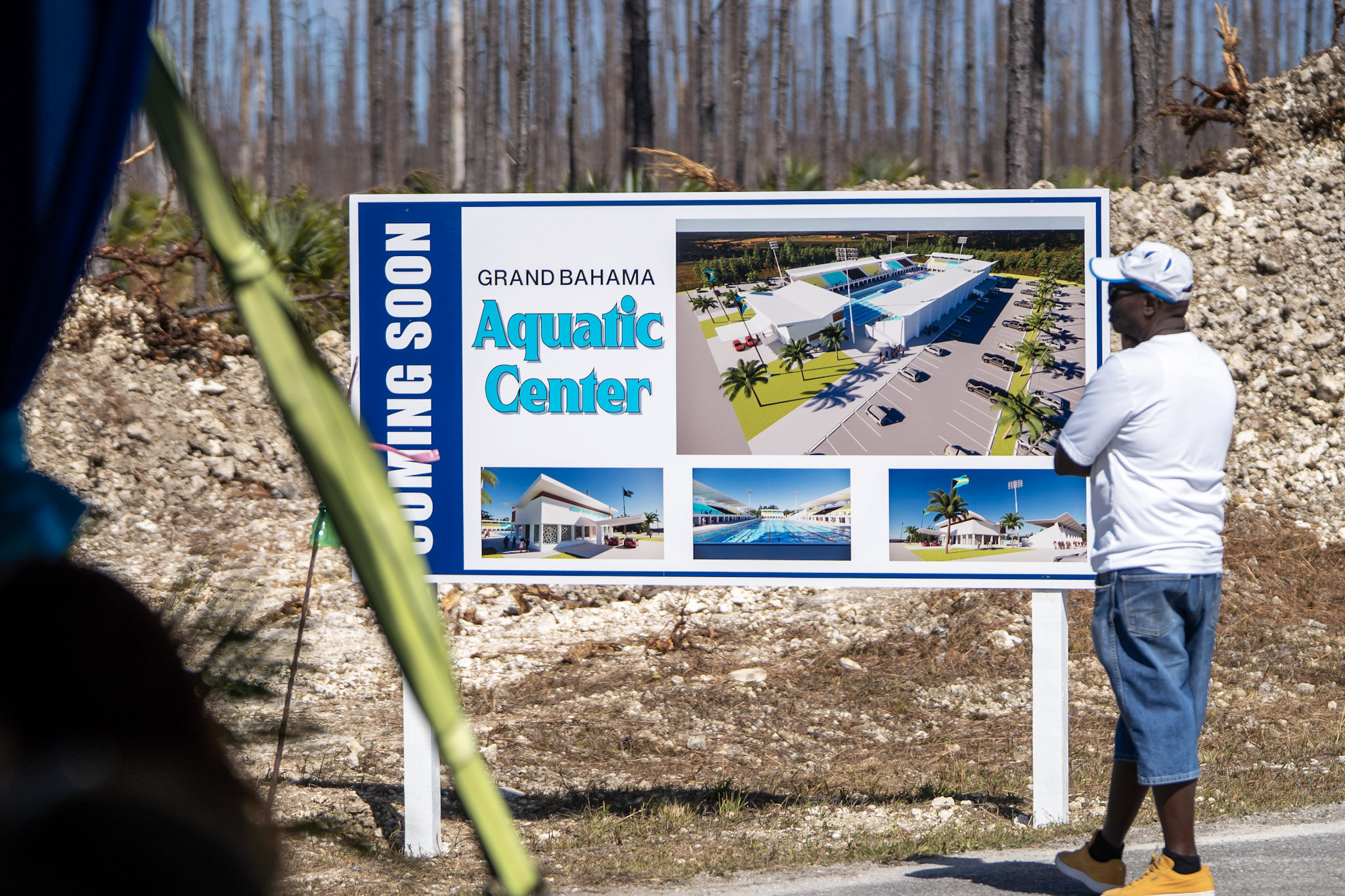
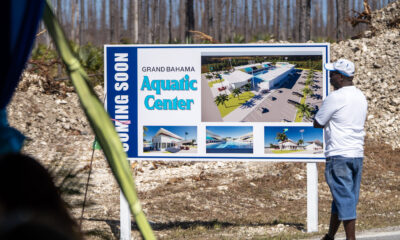
GRAND BAHAMA, The Bahamas — Calling it the fulfillment of a major commitment to the island, Prime Minister Philip Davis led the official groundbreaking for the Grand Bahama Aquatic Centre, a facility the government says will transform sports development and create new opportunities for young athletes.
Speaking at the Grand Bahama Sports Complex on February 12, the Prime Minister said the project represents more than bricks and mortar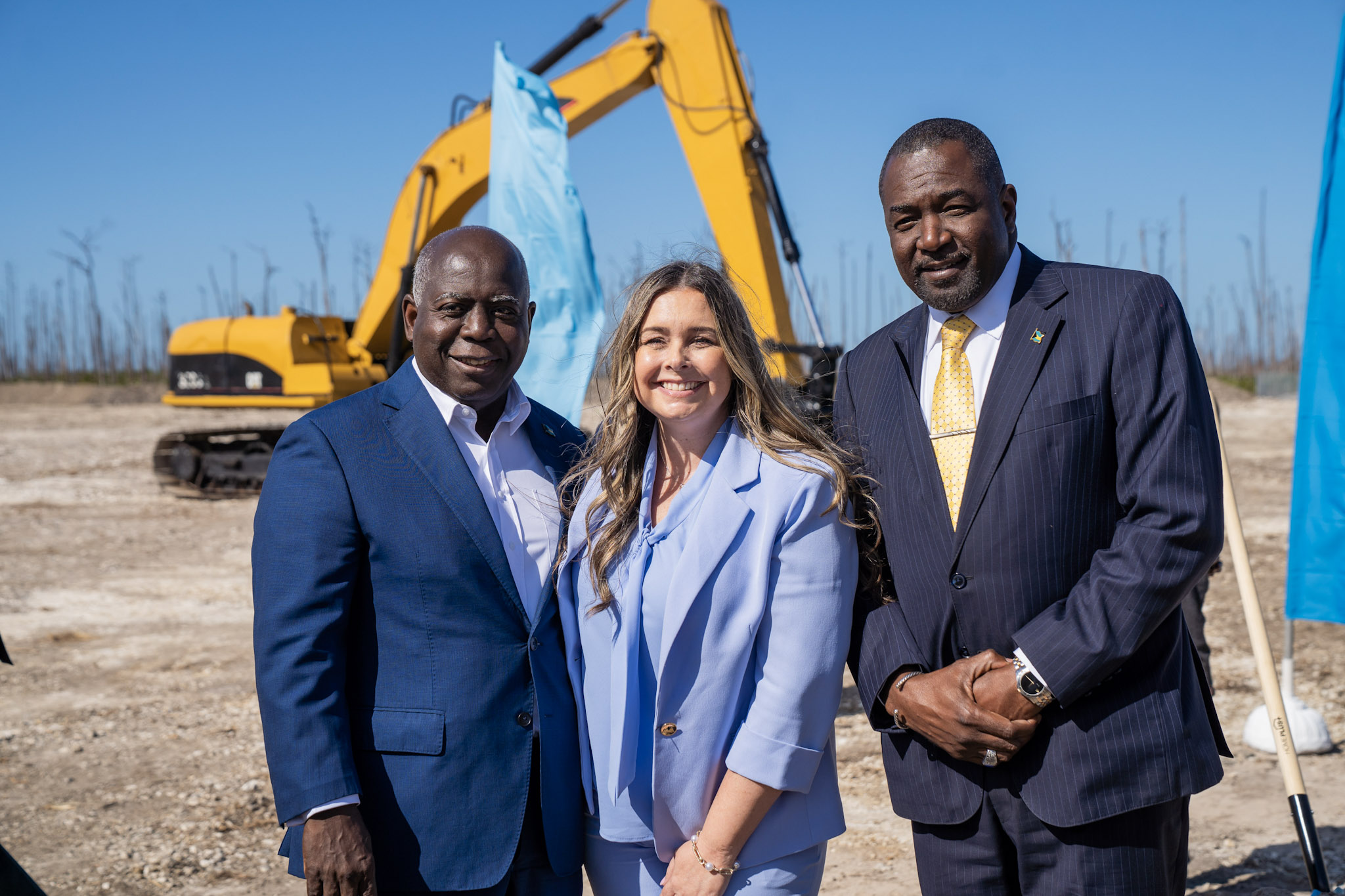 — it is an investment in people, national pride and long-term economic activity. The planned complex will feature a modern 50-metre competition pool, designed to meet international standards for training and regional and global swim meets. Davis said the facility will give Bahamian swimmers a home capable of producing world-class performance while also providing a space for community recreation, learn-to-swim programmes and water safety training.
He noted that Grand Bahama has long produced outstanding athletes despite limited infrastructure and said the new centre is intended to correct that imbalance, positioning the island as a hub for aquatic sports and sports tourism.
The Prime Minister also linked the development to the broader national recovery and revitalisation of Grand Bahama, describing the project as part of a strategy to expand opportunities for young people, create jobs during construction and stimulate activity for small businesses once operational.
The Aquatic Centre, he said, stands as proof that promises made to Grand Bahama are being delivered.
The project is expected to support athlete development, attract competitions, and provide a safe, modern environment for residents to access swimming and water-based programmes for generations to come.
Angle by Deandrea Hamilton. Built with ChatGPT (AI). Magnetic Media — CAPTURING LIFE.

The Bahamas, February 15, 2026 – For the better part of three years, Bahamians have been told that major Afreximbank financing would help transform access to capital, rebuild infrastructure and unlock economic growth across the islands. The headline figures are large. The signing ceremonies are high profile. The language is ambitious. What remains far harder to see is the measurable impact in the daily lives of the people those announcements are meant to serve.
The Government’s push to secure up to $100 million from Afreximbank for roughly 200 miles of Family Island roads dates back to 2025. In its February 11 disclosure, the bank outlined a receivables-discounting facility — a structure that allows a contractor to be paid early once work is completed, certified and invoiced, with the Government settling the bill later. It is not cash placed into the economy upfront. It does not, by itself, build a single mile of road. Every dollar depends on work first being delivered and approved.
The wider framework has been described as support for “climate-resilient and trade-enhancing infrastructure,” a phrase that, in practical terms, should mean projects that lower the cost of doing business, move people and goods faster, and keep the economy functioning. But for communities, that promise becomes real only when the projects are named, the standards are defined and a clear timeline is given for when work will begin — and when it will be finished.
Bahamians have seen this moment before.
In 2023, a $30 million Afreximbank facility for the Bahamas Development Bank was hailed as a breakthrough that would expand access to financing for local enterprise. It worked in one immediate and measurable way: it encouraged businesses to apply. Established, revenue-generating Bahamian companies responded to the call, prepared plans, and entered a process they believed had been capitalised to support growth. The unanswered question is how much of that capital has reached the private sector in a form that allowed those businesses to expand, hire and generate new economic activity.
Because development is not measured in the size of announcements.
It is measured in loans disbursed, projects completed and businesses expanded.
The pattern is becoming difficult to ignore. In June 2024, when Afreximbank held its inaugural Caribbean Annual Meetings in Nassau, Grand Bahama was presented as the future home of an Afro-Caribbean marketplace said to carry tens of millions of dollars in investment. What was confirmed at that stage was a $1.86 million project-preparation facility — funding for studies and planning to make the development bankable, not construction financing. The larger build-out remains dependent on additional approvals, land acquisition and further capital.
This distinction — between financing announced and financing that produces visible, measurable outcomes — is now at the centre of the national conversation.
Because while the numbers grow larger on paper, entrepreneurs still describe access to capital as out of reach, and communities across the Family Islands are still waiting to see where the work will start.
And in an economy where stalled growth translates into lost opportunity, rising frustration and real social consequences, the gap between promise and delivery is no longer a communications issue.
It is an inability to convert announcements into outcomes.
Angle by Deandrea Hamilton. Built with ChatGPT (AI). Magnetic Media — CAPTURING LIFE.

A hardline strategy that reduced murders, gunfire, and collateral deaths
The Bahamas, February 8, 2026 – What happens when police stop routinely granting bail to high-risk suspects and aggressively execute outstanding warrants? In The Bahamas, the answer in 2025 was fewer murders, fewer gunshots, and safer communities.
The Royal Bahamas Police Force arrested 4,337 individuals on outstanding warrants last year, ensuring suspects were brought directly before the courts instead of being released back onto the streets. At the same time, police significantly curtailed the use of police bail for high-risk and repeat offenders, particularly those already entangled in violent disputes.
Police Commissioner Shanta Knowles said the shift was informed by hard lessons from previous years. Intelligence reviews showed that many homicide victims were not random targets, but men already wanted by law enforcement and — critically — by other criminals. When released on bail, those individuals often became targets themselves, triggering retaliatory shootings that spilled into neighbourhoods, roadways and public spaces.
By keeping high-risk suspects in custody pending court appearances, police say they disrupted that cycle — removing both potential offenders and potential victims from the streets.
The impact was stark. Murders declined by 31 percent in 2025, falling from 120 in 2024 to 83, the largest percentage decrease in homicides since national tracking began in 1963 and the lowest murder count in nearly two decades.
Police leaders say the strategy also reduced the collateral damage that had increasingly alarmed communities. Innocent residents had been caught in “sprays of gunfire” as targeted attacks unfolded in residential areas, at traffic stops, and in public settings.
Gun-violence indicators reflected the change. Gunshot reports fell by 35 percent, while incidents detected by ShotSpotter technology declined by 29 percent, confirming that fewer shots were being fired across the country.
“Gunshots ringing out and cutting through our peaceful paradise were down remarkably,” Commissioner Knowles said, attributing the improvement to decisive enforcement, tighter bail practices, and sustained pressure on offenders.
Police also intensified enforcement against breach of bail conditions, charging and detaining more suspects than in any previous reporting period. Officers say the approach removed the opportunity for repeat offending while matters were before the courts.
Police leadership said the results go beyond statistics. By limiting bail for high-risk suspects and executing warrants at scale, the strategy saved lives, protected bystanders, and restored confidence in public safety.
In 2025, fewer people were hunted, fewer bullets were fired, and fewer families were left grieving — a shift police say was no accident, but the result of deliberate, hardline choices.
Angle by Deandrea Hamilton. Built with ChatGPT (AI). Magnetic Media — CAPTURING LIFE.





-

 TCI News1 week ago
Experience Turks and Caicos and Aquila Host Product Development Workshops to Strengthen Sister Islands Tourism
-

 News1 week ago
The Department of Trade, Industry & Fair Competition to Host Export Readiness Workshop Under the theme “Empowering TCI Businesses for Local Growth and Global Markets.”
-

 Bahamas News5 days ago
Tens of Millions Announced – Where is the Development?
-
 Bahamas News4 days ago
Groundbreaking for Grand Bahama Aquatic Centre
-
 Caribbean News1 week ago
Mottley Sworn in After Historic Clean Sweep in Barbados Election
-
 News7 days ago
Strong December Performance Signals Continued Demand for the Turks and Caicos Islands
-

 Health4 days ago
What to Look for with Self-Checks at Home
-

 News1 week ago
Multi-Agency Planning Enforcement Operation Conducted at multiple locations in Providenciales