
Bahamas News
PM Davis – Communication to HOA re COP 26 – 16th Feb 2022

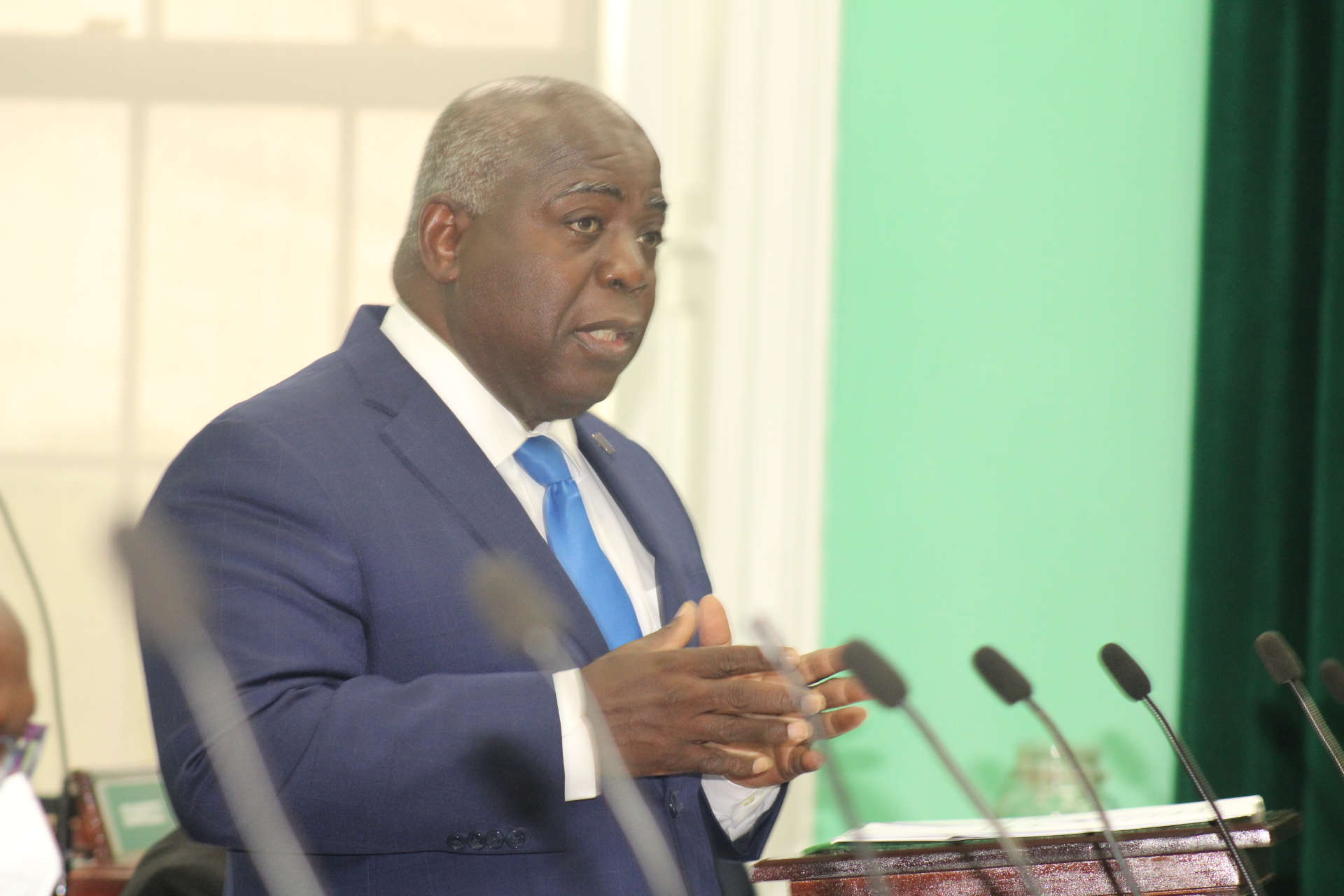
COMMUNICATION TO THE HONOURABLE HOUSE OF ASSEMBLY BY
PRIME MINISTER HON. PHILIP DAVIS, QC, MP
ON THE 26TH MEETING OF THE CONFERENCE OF THE PARTIES
WHICH FORMS PART OF THE UNITED NATIONS FRAMEWORK CONVENTION ON CLIMATE
CHANGE AND INCLUDES THE WORLD LEADERS’ SUMMIT HELD FROM OCTOBER 28TH, 2021, TO NOVEMBER 14TH, 2021 IN GLASGOW, SCOTLAND
#TheBahamas, February 18, 2022 –
Madame Speaker:
I wish to communicate to the House to report on the participation of The Bahamas in the 26th Meeting of the Conference of The Parties, or COP26, which forms part of the United Nations Framework Convention on Climate
Change.
The meeting was held in Glasgow, Scotland, from October 28th 2021, to November 14th 2021, and included the World Leaders Summit.
Afterwards, I will table the full report contained in this Communication.
Madame Speaker:
In November 2021, some ten short weeks after taking office, I led the Bahamian delegation to Glasgow, Scotland, to participate in the most prominent global forum on Climate Change referred to as
COP26.
My Administration, deeply aware of the impacts of climate change, especially its manifestation through hurricanes, sought to ensure that the plight and struggles of The Bahamas were recognized and that efforts to address these issues would be at the forefront of the negotiations.
Through this Communication, I wish to draw the attention of Honourable Members to the successes, achievements, and plans that came out of this meeting, and speak to other projects and programmes being implemented as we now move forward in preparation for COP27.
I will also draw attention to my Government’s climate change agenda in “Our Blueprint for Change”.
Madame Speaker:
I am incredibly proud of what we achieved.
COP26 put us on the map as never before.
It is no exaggeration to say that our participation greatly enhanced the profile of The Bahamas, and the increased attention from the international media and other world leaders shows the wisdom of our decision to participate.
As you will soon hear, our participation’s practical, tangible benefits were manifold.
This was no easy feat, Madame Speaker, as the previous administration had done nothing by way of preparation.
They didn’t get it.
It beggars belief that, even after the experience of Hurricane Dorian, even with the impact of climate change dominating the global conversation, the previous administration chose to ignore the largest gathering in the world, where the single biggest, existential threat to all our lives was being discussed, and significant financing opportunities negotiated.
Madam Speaker, it was only through the determined effort made by our team members that we were able to secure flights, hotels, transportation, and other logistical arrangements at such short notice.
We are deeply grateful for the efforts made, and support is given by the British High Commissioner and the Government of the United Kingdom to facilitate our participation.
My thanks also to our delegation at the United Nations in New York, our High Commissioner in London and his team, the Ministry of Foreign Affairs staff, the Department of the Environment and the Office of The Prime Minister for their collective determination to make it all happen.
Strengthen international co-operation on climate change mitigation
Madame Speaker:
In our ‘Blueprint for Change’, which we published last summer during the election campaign, we committed to strengthening our cooperation with international partners on climate change mitigation.
I am happy to report that during COP26, The Bahamas significantly stepped up its representation on various UN Climate Change committees.
In the past, The Bahamas was on the outside looking in. While rules were being developed and innovative climate finance funds were being accessed, we were not benefitting fully from these activities.
I am proud to say that as a result of our strong leadership at COP26, we now have the following Bahamians representing us on climate mitigation committees:
In Article 6.4, dealing with Carbon Markets, Mr. N. Charles Hamilton was elected to serve as the Caribbean and Latin America representative.
On the Kyoto Protocol Compliance Committee’s Facilitative Branch, Dr. Lisa Benjamin, a Bahamian lawyer and a fellow of the University of The Bahamas, were elected to serve as the Caribbean and Latin America representative.
These two Bahamians will ensure that mitigation issues of importance to The Bahamas remain on the table and are actioned through proposed global finance and programmes.
Madame Speaker:
This is not just success for our administration, committed to fulfilling the promises made to the Bahamian people; this is success for all Bahamians. Our brightest and best among us have a seat at the table and can best represent our interests on all our behalf.
Strengthen and deepen international partnerships to secure [the] most beneficial commercial relationships in connection with Climate Change and
Sustainable Development Goals
Madame Speaker:
In our ‘Blueprint for Change’, we also committed to “Strengthen and deepen international partnerships to secure [the] most beneficial commercial relationships in connection with Climate Change and Sustainable Development Goals”.
In Glasgow, we also had the opportunity to engage with the two largest financial donors within the United Nations System, along with other financial agencies.
As a result of our participation at COP26, The Bahamas drew international attention to the impacts of Hurricane Dorian, including its effect on our Gross Domestic Product (GDP).
For years we have advocated that GDP was not an accurate indicator of a country’s unique vulnerabilities or economic stability. I made the point back in September when I addressed the UN’s General Assembly and did so again in Glasgow.
Madame Speaker:
Every country’s economy is vulnerable to environmental shocks. In recent years, our annual hurricane season has demonstrated the extent of that vulnerability.
However, Hurricane Dorian, unprecedented in its size, duration and ferocity, showed how these single events could completely cripple our country.
Against this backdrop, the use of GDP to determine the level of financial assistance offered to our country is not reasonable.
Therefore, our delegation consistently made interventions throughout COP26 that drew attention to this stark reality.
We forcefully drove home this argument in discussions with the ‘Global Environment Facility, a significant financial donor for environmental programmes.
Madame Speaker:
I am thrilled to report that at the recent global meeting of countries in January, the Global Environment Facility indicated that they would be moving away from using GDP as the primary economic indicator.
Currently, the Funding available to The Bahamas through the Global Environment Facility for 2022-2023 is approximately $7 Million.
The Global Environment Facility is now proposing to use two indices: an Economic and Environmental Vulnerability Index or EVI and a Human Development Index or HDI.
EVI indicators would capture economic and environmental shocks, while HDI indicators would consider the country’s health and living standards.
Madame Speaker:
This is a major win for The Bahamas and other Caribbean Small Island Developing States or SIDS.
These new indicators are better suited to convey our countries’ realities and are likely to increase the mobilization of climate finance.
This change will also aid in amplifying the continued efforts of SIDS to move toward the much-needed ‘Multi-dimensional Vulnerability Index or MVI.
Most SIDS are considered middle or highincome countries and are currently ineligible for concessional financing due to the present GDP income classification.
This change will help secure the much-needed financial support to address the adverse impacts of climate change.
Therefore, progress on the development of the MVI is critical, and we need to support the efforts of our regional, Atlantic and Pacific partner countries in having this addressed.
Our Technical Teams will continue to advocate and negotiate for the rapid adoption and implementation of the MVI by international financial organizations. The Bahamas can get the much-needed support to address climate change.
Madame Speaker:
We also met with the ‘Green Climate Fund’ to discuss financial support for matters relating to Health and building a ‘Sustainable Resilient Infrastructure’.
The Bahamas is presently conducting a Green Climate Fund ‘Health-Readiness’ project, managed by the Ministry of Health and Wellness, with a capital value of approximately $800,000.
Once completed, The Bahamas would be ready to develop and submit a complete Health Project to address the healthcare infrastructure needs within the country, which is estimated to cost approx. $300 Million.
The Green Climate Fund encouraged The Bahamas to move this plan forward, as a Green Climate Fund health-based proposal of this magnitude would be the first of its kind globally.
Once again, Madame Speaker: our efforts in Glasgow are already producing the kinds of benefits for the Bahamian people that have been sorely neglected in recent years.
Country Partnership and Technology
Transfers
Madame Speaker:
Our attendance at COP26 also allowed us to engage in discussions to facilitate partnership arrangements with other countries.
The Bahamas held discussions with Israel regarding capacity-building opportunities and technology exchange.
We have also communicated with the International Renewable Energy Agency headquartered in the United Arab Emirates (UAE). This will come under Mr. Toni Joudi as The Bahamas’ non-resident Ambassador to the UAE.
Other countries where we have common interests are Gabon and South Africa. We will report further on these partnerships as they develop.
Madame Speaker:
One of the fascinating outcomes of our presence at COP26 has been stimulating interest among climate investors to come to The Bahamas.
We strongly signalled that The Bahamas is a country seeking investors to present proposals for renewable energy.
Our invitation to work with and advance renewable technology projects has created effective options for our sustainable development platform.
‘Proof of Concept’ Projects are being developed to address energy gaps. For example, an OTEC project is being developed for Eleuthera, where power generation costs exceed profit capabilities. Concerted efforts to engage our continued competitive investor calls can only result in favourable outcomes for the country’s lower costs and technological advances. A similar investor framework is being examined to address public transportation improvements, which may yield, for example, environmentally friendly and sustainable public buses.
Once these partnerships are confirmed, these programmes will be flagged as “national development projects”, and The Bahamas will be in a position to target global financing in climate change funds.
The capital budget requirements would be in the hundreds of millions of US dollars, so financing these national-level projects would significantly contribute.
International Coalitions and
Partnerships
Madame Speaker:
I wish to highlight two vital international partnerships concluded around COP26, significantly benefiting The Bahamas.
In addition to representation on UN Climate Change international committees, The Bahamas, at the highest level, took a seat at the table with other national leaders as the newest members to The NDC Partnership.
The NDC or Nationally Determined Contributions is our country’s road map to addressing climate change mitigation and adaptation challenges.
The NDC Partnership supports countries like The Bahamas and provides a platform for knowledge and information-sharing.
More importantly, it assists in aligning our nation’s NDC goals with much-needed climate finance and resources. Being a member of this partnership means that we no longer will be the “Johnny-Come-Lately” from our region.
We now have a seat at the table.
We joined the second critical partnership was ‘The Coalition of Finance Ministers for Climate Action.
Madame Speaker:
It is hard to overstate the significance of this.
Membership of the Coalition provides us access to new and emerging strategies to integrate climate change into our economic and financial policies.
It also offers us access to investment opportunities that support climate action. As only the second CARICOM member state to join this committee, The Bahamas is leading in influencing international monetary policies and decisions. Our country will be on the cutting-edge of climate finance mechanisms.
Madame Speaker:
Less than six months in office, this is what our New Day Administration has already achieved for the Bahamian people.
And this is still just the beginning!
Seek[ing] support from the UN and international bodies for Climate Justice Madame Speaker:
As a result of my Administration’s efforts during COP26, we have further arranged to be elected next-in-line for the following UN Climate Change Committee seats related to Firstly Loss & Damage.
And secondly, we will have a seat on The Committee to Facilitate Implementation and Promote compliance with Article 15.2 of the Paris Agreement.
Membership of this committee is strategically essential because all world actors must be held accountable to uphold their commitments to carbon reductions under the Paris Agreement.
Madame Speaker:
I called for more significant support for financing and technology transfer for our country at COP26. Our Administration ensured that we now have people in the room at the UN Climate Change Committee level.
I am pleased to announce that Dr. Rhianna Neely has been appointed to the ‘Adaptation Committee’; we will be next-in-line to be elected to the ‘Adaptation Fund Board’ through the appointment of Mrs. Rochelle Newbold.
These boards and committees directly influence how international funds are distributed for projects and programs aimed at helping developing countries adapt to the harmful effects of climate change.
Madame Speaker:
The Bahamas has advanced several training opportunities for capacity-building.
For 2022-2023, we have negotiated a series of training opportunities to ensure Bahamians are trained for climate-change-related jobs. Successful candidates will then be identified as national and global experts with these training certifications.
The 2022-2023 UN certification offerings are centred around collecting, analyzing and reporting on Greenhouse Gases for the following sectors in The Bahamas and globally, namely:
- Agriculture
- Forestry
- Industry
- Energy, and
- Waste
Candidates who complete the courses will be able to apply for Consultant positions for people with such skillsets, which are being advertised internationally.
Additional capacity building activities which will be undertaken this year to enhance our data collection and climate reporting requirements are:
Evaluation and assessment of institutional arrangements;
The development of a National Inventory Improvement Plan;
And Support with developing Energy Statistics.
Bahamian Representation across COP26
Side Events
Madame Speaker:
COP26 was the first time The Bahamas hosted a side event at any Conference of the Parties.
Our side event titled “Hurricane Dorian:
Analysis-to-Action: Mobilizing nature-based solutions & Partnerships for Resilience” was seen by nearly 1,000 people.
This event was produced in partnership with The University of The Bahamas, The Nature Conservancy, and the Department of Environmental Planning and Protection (DEPP). 
Bahamian experts spoke in more than 15 side events, proving that the Bahamian people can hold their own on the international stage.
Our delegation advanced public education and outreach activities with the most vulnerable among us in the country. This was achieved through a virtual event with more than 130 Bahamian students from across five islands of our islands.
Some exciting youth and educational partnerships were formed for climate action/climate education that the team is pursuing. We will share more in the future.
Madame Speaker:
These long-term strategic positions will significantly enhance The Bahamas’ voice and role in global decision-making. Under our administration, this, Madame Speaker, is how the world “marks the manner of our bearing.”
Youth Empowerment and Capacity
Building
Madame Speaker:
Throughout our ‘Blueprint For Change’, we made clear that the young people of The Bahamas are not just our future; they are very much key to the success of our present.
As well as appointing significant numbers of young people to critical roles in our Administration, we recognize the need to involve young people in the key opportunities and challenges of our time.
Before travelling to COP26, I engaged with The Bahamas Caucus of the “One Young World” organization.
Since then, my Office has committed to partnering with the University of The Bahamas and One Young World to host a youth climate change dialogue tomorrow, on February 17th, 2022. Young people worldwide will participate, and I look forward to their discussion.
This engagement is the first of several initiatives by my Administration to connect, collaborate and strategise with young people on climate change matters.
Additionally, my government has agreed to host a Youth Climate Conference, which will be held at the University of The Bahamas from July 6-8, 2022. Young people worldwide will be invited to engage with Bahamians from 15-30yrs old, to debate and discuss issues including climate change mitigation, adaptation, loss and damage, and climate justice.
Along with our private sector partners, we have committed to ensuring that at least two students from each of our Family Islands can participate in this event. And we are going further.
Madame Speaker:
I am proud and excited to announce that we have appointed two ‘Climate Youth Ambassadors’ to help us to engage and empower young people on the world stage. I am delighted to inform the House that Ms. Maya Delaney and Mr. Bradley Watson are the first two Youth Ambassadors to hold this post.
And as we make preparations for The Bahamas to be well-represented at COP27 in Egypt, my government, assisted by partners in the private sector, is committed to ensuring that at least eight youth representatives will form part of the delegation from The Bahamas. These students will be identified through a national selection process.
Ruby Nottage has agreed to lead the committee making that selection. We hope all that young people interested in climate change will put themselves forward in what is expected to be a competitive process. And we will continue to do what we can to ensure that the voices of young Bahamians can be brought to the highest level of international discussion, debate and negotiation.
Conclusion
Madame Speaker:
At no time in our history have the Bahamian people been so actively involved and aware of climate change’s happenings on the international stage. And at no time has the presence of our people been so necessary.
We are one of the countries most vulnerable to climate change. To do nothing, to say nothing, not to show up, not to raise our hands and voices and be counted: this is not an option for our administration.
Madame Speaker:
I am proud to be leading an administration that ‘gets it’. Our presence at COP26 in Glasgow was a game-changer for our country and our Bahamian people. And we will continue to make every effort to secure a better future for our country.
I pray God’s blessings upon us all.
Thank you.
END
51


Nassau, The Bahamas, October 22, 2026 — The National Computer Incident Response Team of The Bahamas (CIRT-BS) has issued a cybersecurity advisory warning businesses, government institutions and other organisations about the growing threat posed by Akira ransomware, a cybercriminal operation capable of stealing sensitive information, disrupting networks and demanding ransom payments.
Active since March 2023, Akira operates through a Ransomware-as-a-Service model, with affiliates exploiting weaknesses in computer networks to gain unauthorised access.
Once inside, attackers can steal confidential data, disable recovery systems and encrypt files, preventing organisations from accessing critical information.
Particularly concerning is Akira’s use of double extortion, threatening to publish stolen information unless victims pay. Some attacks involve data theft without encryption.
The October 22 advisory identifies vulnerabilities involving Cisco and SonicWall firewalls, VPN services, Microsoft Remote Desktop Protocol, Veeam backup systems and outdated Windows and Linux operating systems. VMware ESXi and Nutanix AHV environments are also potential targets.
Attackers may exploit unpatched software, stolen login credentials and inadequately secured remote-access applications, including AnyDesk and RustDesk.
Warning signs include unexpected administrator accounts, unusual remote logins, unauthorised software installations, suspicious backup activity, mass file changes and ransom notes.
CIRT-BS recommends immediate security updates, multifactor authentication, restricted remote access, stronger network monitoring and secure backups maintained separately from operational systems.
Organisations should also remove unnecessary internet exposure of remote desktop services, limit administrative privileges and regularly test backup restoration.
The advisory does not identify any confirmed Akira attack against a Bahamian organisation but highlights vulnerabilities that could expose institutions to serious financial and operational disruption.
Cybersecurity incidents can be reported to CIRT-BS at soc@cirt.bs or through its official website.
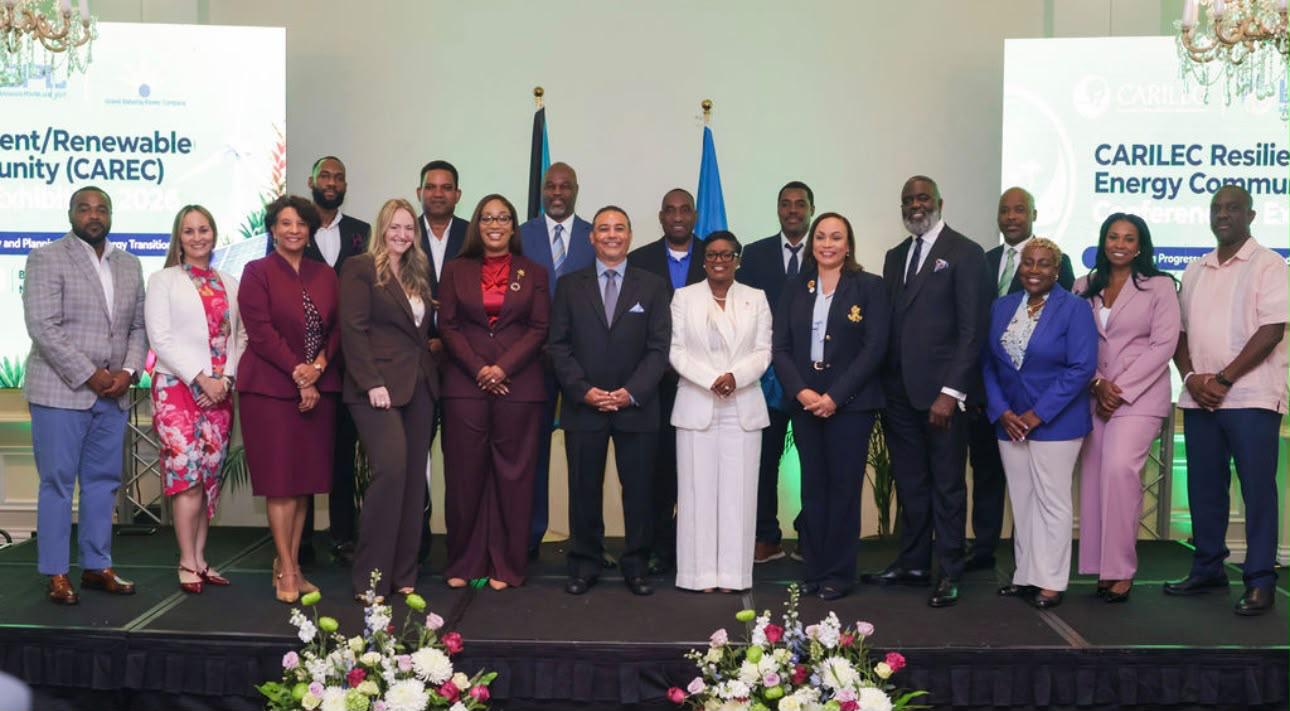
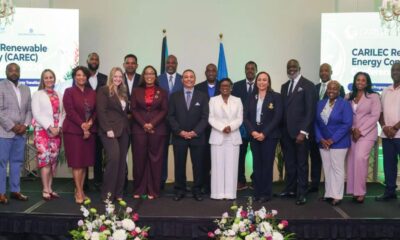
NASSAU, The Bahamas – The Bahamas’ Minister of Energy, Utilities and Aviation, The Honourable JoBeth Coleby-Davis, delivered an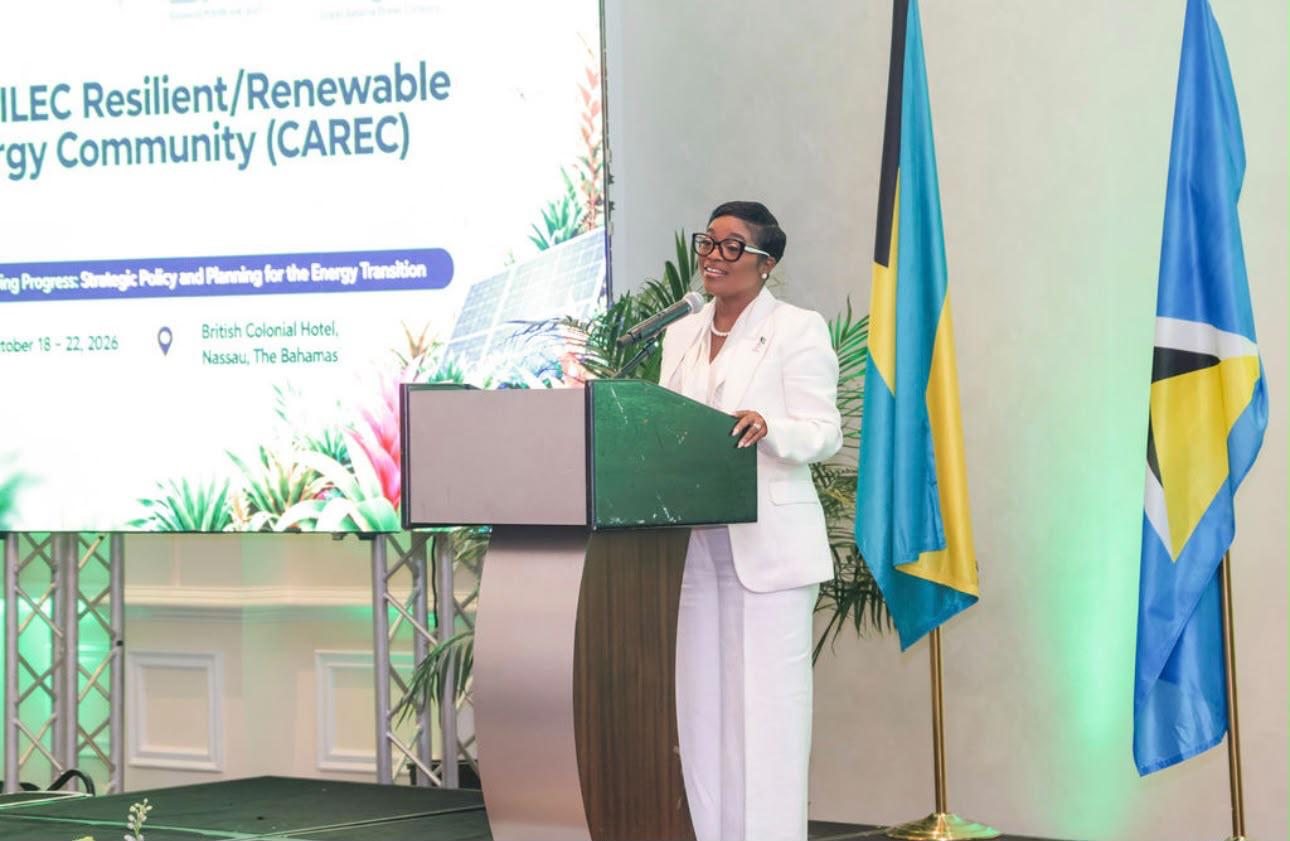 electrifying address during the opening ceremony of the 2026 CARILEC Resilient/Renewable Energy Community (CAREC) Conference and Exhibition, being held October 18–22, 2026, at the British Colonial Hotel in Nassau, The Bahamas.
Under the theme “Empowering Progress: Strategic Policy and Planning for the Energy Transition,” the event draws more than 200 industry leaders, policymakers, regulators, and energy professionals committed to advancing practical strategies for sustainable and reliable Caribbean power systems through renewable energy and emerging technologies.
During her address, titled “The New Energy Era: Transforming Policy into Progress,” Minister Coleby-Davis reminded attendees that The Bahamas’ national motto, “Forward, Upward, Onward, Together,” aptly describes what the region’s energy transition demands.
“Empowering Progress speaks directly to our national motto. Not waiting for progress, but creating the conditions that allow progress to happen. Meaningful progress, however, does not occur by accident. It requires vision, sound policy, strategic planning, strong institutions, and the determination to turn decisions into results,” said Minister Coleby-Davis.
Participants acknowledged that small island developing states share similar pressures, compounded by geographical challenges, small electricity markets, ageing infrastructure, geopolitical influences, and the growing threat of severe weather.
Tasked with ushering in a new energy era across the islands while addressing the challenges posed by The Bahamas’ unique archipelagic composition, Minister Coleby-Davis said, “Every island needs a different answer, but the same logic. As an archipelagic nation, we must provide electricity across many islands, each with its own demand and infrastructure needs. Our strategy, therefore, must be national in direction, but responsive to individual communities.”
Restating her Ministry’s three core messages—that energy is an economic and security priority, technology must be viewed as a tool to support strong institutional leadership, and natural gas should be considered a bridge, not a destination—Minister Coleby-Davis reiterated that “progress must now be reflected in functioning infrastructure, effective institutions, and better electricity services: from policy commitments to coordinated implementation, and from fragmented investment decisions to long-term planning.”
Organised by CARILEC and co-hosted by Bahamas Power and Light (BPL) and Grand Bahama Power Company (GBPC), the annual Conference and Exhibition brings together the Caribbean energy community to advance practical solutions to the region’s most pressing energy challenges and accelerate progress towards more resilient, reliable, and sustainable power systems.
Bahamas News
Rosewood Exuma: A precedent-setting case for environmental law and future development in The Bahamas
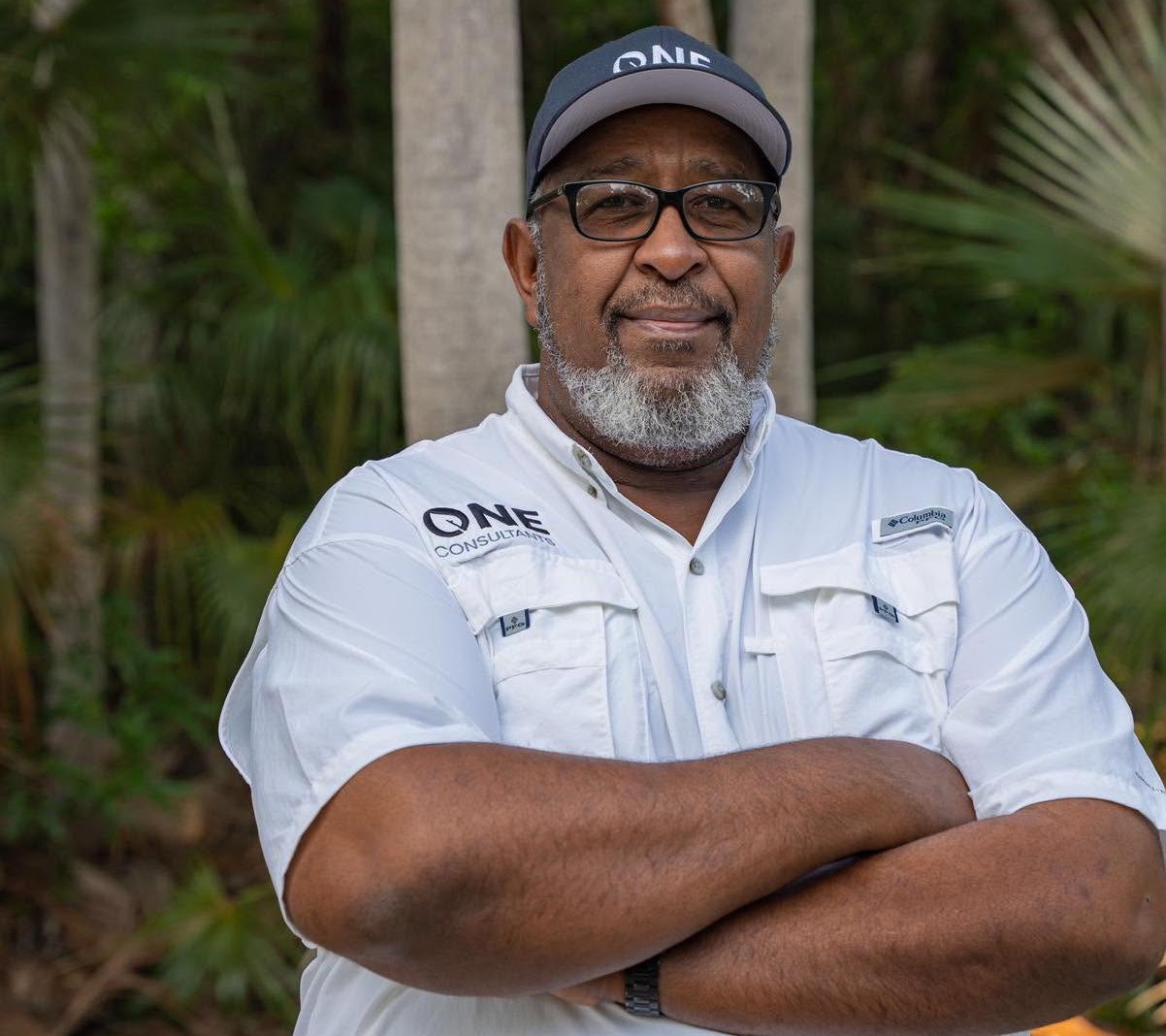
By Eric Carey, ONE Consultants, former Executive Director of the Bahamas National Trust.
We are facing an extraordinarily important moment in judicial history in The Bahamas as we await a decision on the trial of allegations in the Yntegra group’s Rosewood Exuma project.
As former Minister of the Environment, Romauld Ferreira, put it in the Supreme Court last week: “A lot is at stake…a great deal of what will be considered in this case sets the stage for what’s to come for future development in the country.”
In the trial of the judicial review of government approvals given to Yntegra for their Rosewood Exuma resort this week, we’ve heard technical arguments about failure to make key environmental documents like Yntegra’s Environmental Impact Assessment and Environmental Management Plan available to the public, failure of key documents to assess some of the most controversial aspects of the project, an unlawful consultation process, and a failure to conduct further consultation following major changes to the development.
Lawyers for Turtlegrass described how there was a “salami slicing” of the project into chunks as a way to circumvent the approvals process and disguise its full impact from public scrutiny. Only certain portions came before the public and key stakeholders like Turtlegrass and Over Yonder Cay for scrutiny, while some of the most controversial aspects did not. This is particularly problematic given what is at stake – the dredging of a beautiful Exuma bay, the North Bay, to transform it into an industrial shipping channel, complete with an enormous seawall, dock, back-of-house facilities and other industrial infrastructure.
It is unfortunate that it has had to come to this – an expensive judicial review process that calls out the government for falling down on its duties to protect the environment and follow the law – but it is important and the broader implications should not be overlooked. When Justice Leif Farquharson rules on this case, he’ll set a precedent that could echo in The Bahamas for years to come, one that answers the question: are the 2019 environmental laws that Ferreira took to parliament after many years of advocacy by environmentalists toothless tigers that are just for decoration – or are they capable of protecting the environment that we all depend on and the rights of those affected by projects to have a genuine say in them?
What is curious is that at the same time as these points are being raised in court as part of the judicial review, we are seeing personal attacks about Bob Coughlin – the person spearheading this legal action and test of environmental laws – by online trolls. Coughlin, an Exuma resident for almost a decade, has long been established as an environmental advocate and a passionate philanthropist – one who has donated almost $4 million to causes in The Bahamas since 2018, including millions to the organisation I once led, the Bahamas National Trust.
For reasons one can only speculate about, these trolls have been trying to make out all sorts of absurd things: that his legal action in support of environmental protection is a petty dispute born out of fears of competition. That Coughlin no longer even wants to pursue his eco-tourism project, when the reality is that he was forced to put it on hold because of the destructive environmental plans that are in dispute. That he is the only one who has an issue with this Rosewood Exuma resort, when in fact, neighbouring resort, Over Yonder Cay – one of the top rated resorts in the Caribbean – as well as the Save Exuma Alliance – consisting of most of the local islands and businesses in the Exuma area, and thousands of petition signers have expressed their concern with the project – over 9,000 to date. Most ironically, they claim, wrongly, that Coughlin received crown land for personal use, when in fact it is Yntegra who received crown land while having no development track record, when Coughlin instead bought his lease on Sampson Cay from a private owner.
The timing of these claims, in the week of the trial, suggest a patronising and cynical attempt to distract from the gravity of the case being heard, what it represents, and how important this decision is. With their simplistic, jingoistic and factually-dubious references to crown land, white foreigners, and the like – it’s not hard to imagine that those involved are engaged in a ploy to push the buttons of Bahamians who they apparently believe can be too easily distracted into ignoring the real issue here: that the government, has – in the words of those in the Supreme Court this week – “run roughshod” over environmental laws with its approvals for Yntegra’s Rosewood Exuma project and that this is truly a landmark case and the decision will have a long-lasting impact on future development. This is at a time when foreign direct investment (FDI) inflows into the Bahamian economy are forecast to increase by as much as two thirds over the next two years, according to the Inter-American Development Bank (IDB).
So I call on my fellow Bahamians to stay focused. This is not a story about one man – it is a story about the future we want for our country and whether we are willing to sacrifice our ability to demand environmental accountability in all developments moving forward. There is too much at stake to be thrown off the track by trolls.
As Ferreira says of the judicial review that now awaits Justice Leif Farquharson’s judgement: “This is the first set of litigation, serious litigation, that takes a deep dive into the Environmental Planning and Protection Act and the environmental impact assessment regulations…There’s a lot at stake here.”





-

 Independent writer1 week ago
Born Here, Raised Here, but Still Unable to Vote: Is this a Conundrum for TCI Electorate?
-

 Bahamas News4 days ago
Rosewood Exuma: A precedent-setting case for environmental law and future development in The Bahamas
-
 News3 days ago
Invest TCI Strengthens Regional Investment Connections at Caribbean Investment Forum 2026 in Barbados
-

 Bahamas News1 week ago
Monument Supports Hands for Hunger With Paradise Plates Debut
-

 Bahamas News1 week ago
Schweppes ‘the Art of Mixology’ Dazzles at Paradise Plates with Nemiroff Vodka
-
 Bahamas News3 days ago
Energy Minister Delivers Electrifying Keynote Opening Address at CAREC 2026
-
 News1 day ago
Crown Land Unit Leads Multi-Agency Enforcement Exercise in Five Cays
-

 Bahamas News2 hours ago
Bahamas Issues Cybersecurity Alert Over Akira Ransomware Threat