
Bahamas News
Caribbean is Sensational at Summer Olympics



#TheBahamas, August 4, 2021 – The Caribbean has 44 million people; together. The performances at the Tokyo Summer Olympics from Caribbean athletes, even those who have Caribbean heritage have been astounding to say the least. It was and continues to be thrilling to watch these fine athletes collect the valuable hardware from a ‘Games’ which is a year late and wrought with complexities as a result of the ongoing Coronavirus pandemic.
The Caribbean women have emerged as pioneering figures in these games, a fact not lost on another Caribbean woman of sports who has exemplified that ladies can not only prepare what is on the table, but join the feast as equal partner and leader at the table.
““It gives me great pride and honor as I reflect on the incredible accomplishments of the women participants of the Olympic Games Tokyo 2020. It is fair to say that not only are women breaking glass ceilings in leadership positions around the world but women are now dominating in sports arenas around the world. Congratulations to all the female achievers of the Olympic Games Tokyo 2020, in particular our Caribbean Sisters who continue to raise the bar. You are an inspiration to all of us and we are forever proud of you and your achievements,” said Sonia Fulford, President of the Turks and Caicos Island Football Association (TCIFA) and newly re-elected member of the FIFA Council.

Even as we prepare this issue of The Magnate; regional people celebrate the gold medal performance of Andre De Grasse of Canada who has secured first place in the Men’s 200m, with a career best time. De Grasse is the son of a Barbadian man and a Trinidadian woman.
And while we could be wiped out by the feats of the men and women who reflect our diversity as an English, French, Dutch and Spanish speaking region, we are not and the expectation for more, is high and will not go unquenched.
Jamaica is by far is rolling out the most headline grabbing show.
“Without having the crowds, you can actually feel the love and the comradery there. You can see that they have really bond together well because after coming off such a tough period we are really happy that Digicel has been able to carry the Games on Sports Max,” said Addison Stoddard, CEO of Digicel TCI which is not only offering expert commentary by Caribbean professional athletes, trainers and former Olympians but an mobile App to watch on the go.
“You have 15 channels you can scroll across and select any of the channels on the (Sports Max) App and watch any of the events.”

This is great news; the unencumbered access to the planet’s premier sporting event where Elaine Thompson-Herah would deliver the first huge and historic deed when she smashed the 33-year Olympic record of celebrated female US Champion – Florence Griffith-Joyner in the 100m. In a time of 10.61 Thompson-Herah is firmly cemented as the fastest woman ever in the Olympics and tidily raised the bar in her home country of Jamaica where the time is also now the national record.
Elaine wasn’t even born when Flo-Jo ran that race in 1988; Elaine at 29-years old would not only lead a one-two-three- sweep of the 100m event for Jamaica (ShellyAnn Fraser-Pryce, second and Shericka Jackson, third) but would go on to power through in the 200m for another landmark victory.
In the race, filled with famous and accomplished female athletes from six other countries of the world, Thompson-Herah unequivocally earned another gold medal. The thing is, this was no ordinary gold. This triumph solidified Elaine as both the most captivating figure of health, strength, beauty and speed and the Queen of Sprints because no other female athlete has ever won both the 100m and 200m at two consecutive Olympics; those being Rio Games of 2016 and the current Summer Games in Tokyo, Japan.
“The Olympics have been absolutely amazing and we are so proud of the accomplishments of Elaine Thompson-Herah, breaking the Olympic record in the 100 and great performance by ShellyAnn Fraser-Pryce also but Elaine is definitely the Queen at the Olympics in the sprints,” said Mr. Stoddard in commenting to The Magnate.
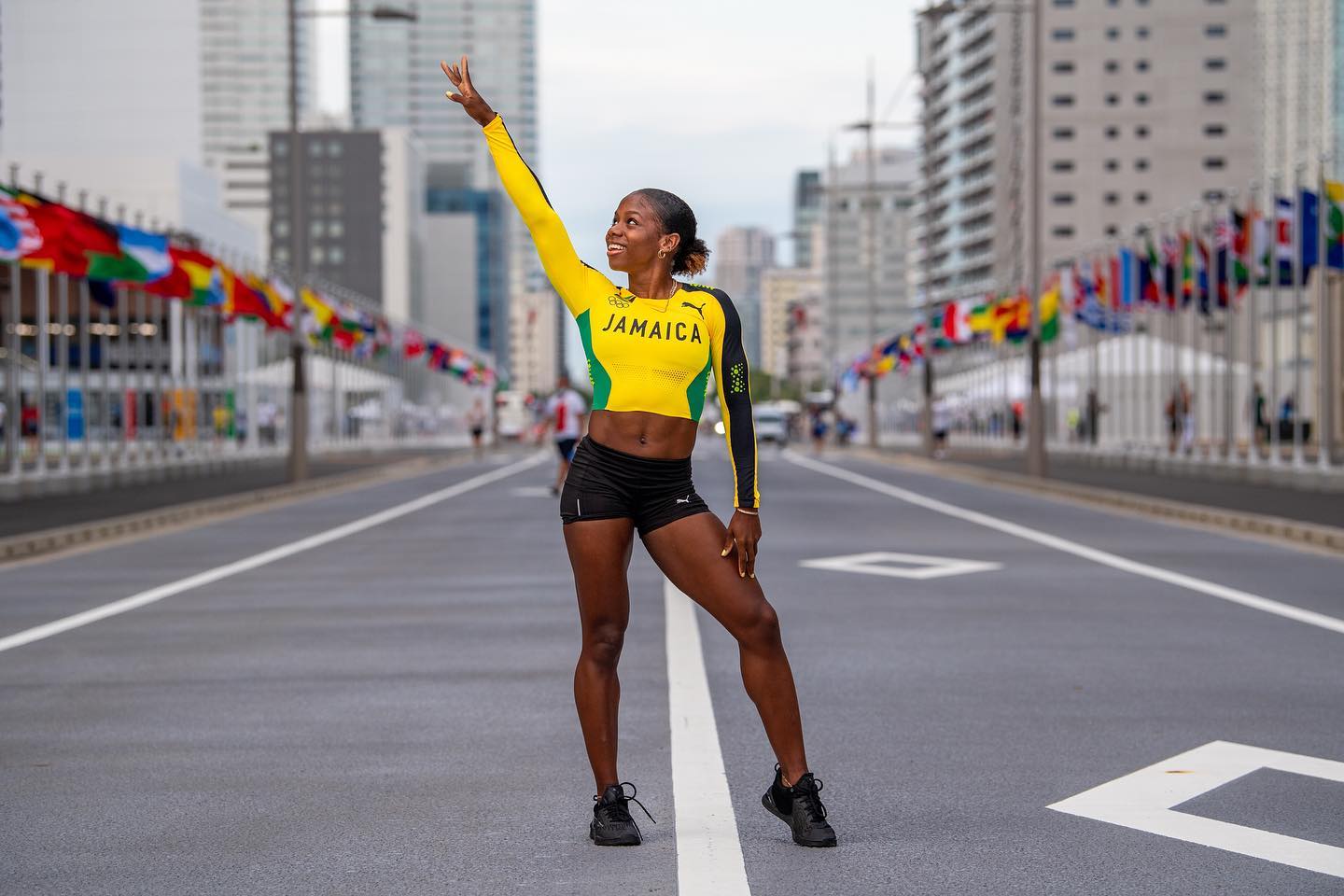
In the Women’s 400m hurdles we had another fantastic demonstration of sensational athleticism by several Caribbean women. Though Devynne Charlton of The Bahamas would not make the medal stand, one of the shortest (height-wise) in the field, it would be another ‘shorty’ who would prove very successful. Again, hailing from the Sprint Capital of the World: Jamaica, millions of television viewers were locked onto the race and eventually wowed by Megan Tapper.
Tapper, and her spirited personality won the individual bronze, becoming the first woman from the English Speaking Caribbean to medal in the event.

“I am happy to see the young lady in the 100m hurdles, Tapper. That was really a very good run. She defied all odds, she is barely 5’ 1” and had to jump over all of those high hurdles, while sprinting. And a really good event was Rai Benjamin, getting a silver medal in the 400m hurdles in record breaking time,” Stoddard, a sports enthusiast himself reminded, “Rai Benjamin, although he is an American, he is the son of a former West Indies medium base bowler from Antigua and Barbuda called Winston Benjamin; his father played cricket for the West Indies team.”

The gold medal show stopper in the same race as Megan was from the Camacho line. Hailing from Puerto Rico, Jasmine Camacho-Quinn during the heats set a new Olympic Record and then went on to secure the first individual gold medal for a Puerto Rican woman at any Games; only the second gold in the country’s history.
The results was a beautiful recompense for Jasmine who DQed out of the event at the 2016 Rio Games and missed a medal many said she would have surely won.

The other Latino-Caribbean countries are working spectacularly on the field and off. Cuba has 12 medals in the Games, the most of any Caribbean region country. The Dominican Republic has 3 medals, including one in female weightlifting.
Crismery Santana, 26 years old has earned a bronze and the DomRep is beaming with joy at her historic feat.
The Cuban long jumpers were almost gold and silver in the men’s event, until their Greek counterpart Miltiadis Tentoglou pulled off an upset in his final effort; snatching the gold. The men – Juan Miguel Echevarria and Maykel Masso – would walk away with a limp each and the silver and bronze for the Republic.

There is great expectation in the Women’s 400m on Thursday; it features Shaunae Miller-Uibo of The Bahamas; who has come to defend her Rio Games title in the event. Miller-Uibo has run well in these Games, but even veteran Olympic champion and compatriot Pauline Davis-Thompson is worried.
The Bahamian Golden Girl expressed, in her Sports Max interview on Wednesday that, she is a concerned about Miller-Uibo who showed some weakness in the 200m; Shaunae placed last in the event after three consecutive sessions of running the 200m and 400m heats and final.



NASSAU, Bahamas — What should be a simple five-minute drive is fast becoming an expensive, hour-long ordeal, as rising fuel prices collide with worsening traffic congestion across New Providence.
As of early April 2026, gasoline prices across The Bahamas have climbed sharply, with motorists now paying an estimated $5.50 to over $6.50 per gallon, depending on the station and grade. The increases, seen at major retailers including Esso, Rubis and Shell, reflect a volatile global oil market driven by escalating geopolitical tensions.
The latest spike — in some cases jumping more than 50 cents per gallon within days — is being driven by uncertainty surrounding escalating tensions involving Iran. U.S. President Donald Trump has issued a direct ultimatum, warning that the United States could launch aggressive strikes on Iranian infrastructure, including power plants and key facilities, if demands are not met. While he has also expressed hope for a swift resolution, the threat of rapid escalation is already rattling global oil markets — and The Bahamas, heavily dependent on imported fuel, is feeling the impact almost immediately.
At the pumps, the frustration is real.
Drivers are now paying significantly more just to sit in traffic. Commutes that once took minutes are stretching into hour-long crawls, burning fuel with little movement and compounding the financial strain. For many residents, the issue isn’t just the price per gallon — it’s how quickly that gallon disappears.
Industry players are also bracing for impact. Higher diesel prices are expected to ripple across key sectors, including trucking, construction, and shipping — all of which ultimately feed into the cost of goods and services. In short, this is not just a fuel story; it’s an inflation story in the making.
Despite the surge, the Bahamas Petroleum Retailers Association has moved to calm fears, confirming that there is no fuel shortage. Supply remains stable, but consumers are being urged to adjust behavior — from maintaining proper tyre pressure to considering carpooling — small measures that could stretch every dollar a bit further.
Retailers, however, are not offering much comfort on price relief. While fluctuations are expected, insiders say the days of sudden price drops are unlikely in the immediate term. The “shock” increases may level off, but a meaningful decline hinges on global stability — something that currently feels out of reach.
For Bahamians, the reality is tightening: higher fuel costs, longer commutes, and a growing sense that relief isn’t coming anytime soon.
Angle by Deandrea Hamilton. Built with ChatGPT (AI). Magnetic Media — CAPTURING LIFE.
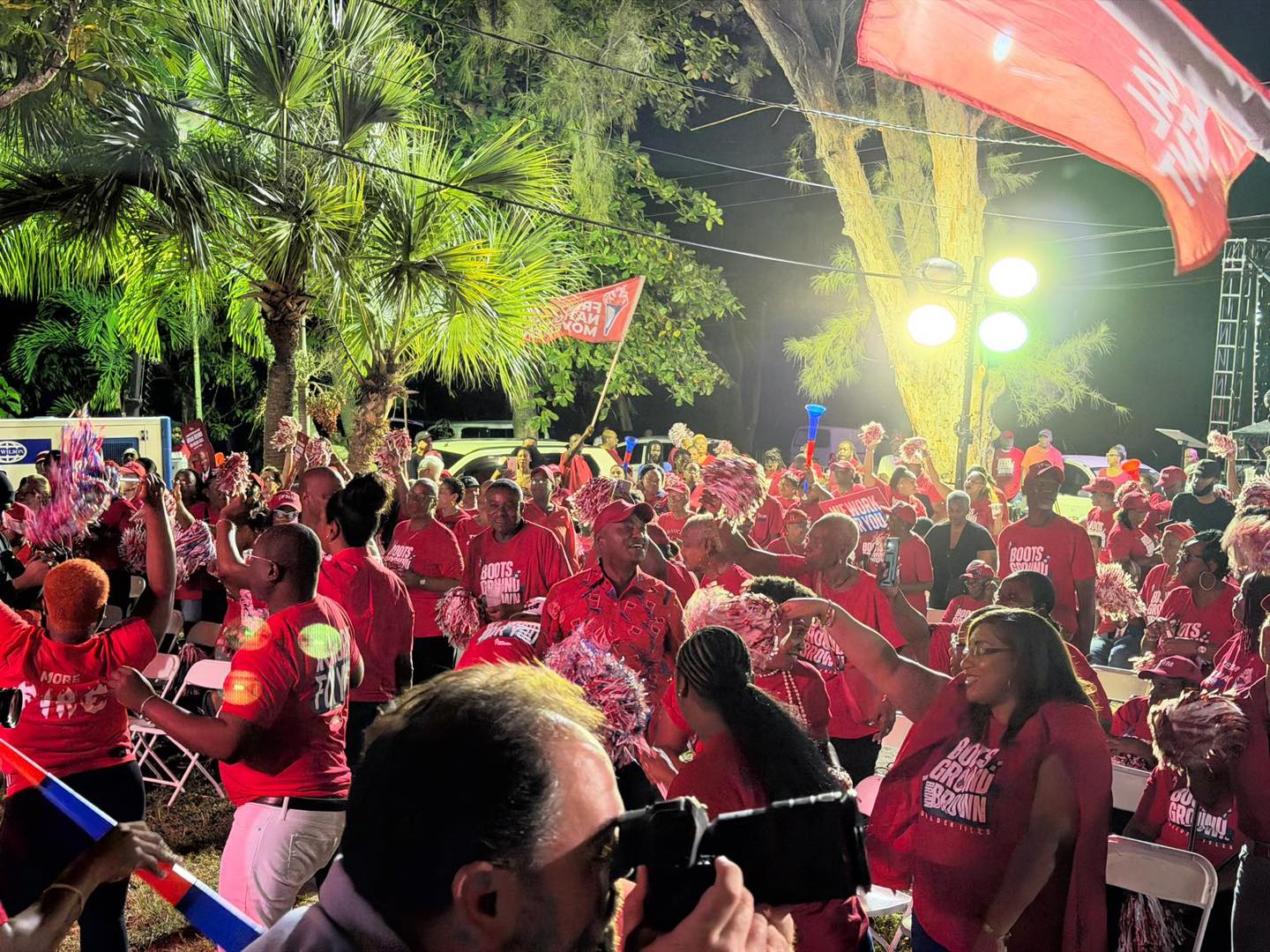
NASSAU, Bahamas — The Free National Movement has rolled out details of its proposed $200 monthly Working Parent Child Support Initiative, but the announcement has already ignited political debate and prompted clarification from the party.
Leader Michael Pintard said the initiative would provide $200 per month to qualifying caregivers during the first two years of a child’s life, as part of a broader push to ease the cost of living for Bahamian families.
The party estimates the programme would cost between $12 million and $14 million annually, with funding to come from reducing what it describes as excessive government spending — particularly consultancy contracts.
However, the proposal quickly drew scrutiny.
The governing Progressive Liberal Party has challenged the feasibility of the plan, questioning how the payments would be sustained without increasing the deficit or introducing new taxes. The response forced the FNM to further outline its funding strategy, emphasizing that a 21 percent reduction in consultancy spending could fully finance the initiative.
The exchange has highlighted a familiar election-season tension — bold proposals versus practical execution.
Beyond the child support plan, Pintard outlined a wide-ranging policy agenda, including:
- Removing VAT on select essential goods
- Constructing 5,000 affordable homes within five years
- Cutting the country’s food import bill by half
- Strengthening enforcement against illegal immigration
- Reforming the nation’s healthcare system

Pintard also took aim at the current administration, accusing it of mismanaging public funds and awarding more than $400 million in contracts without competitive bidding — claims which have further fueled political back-and-forth.
“The best way to pay for high-quality public services in the long run is to have a strong, efficient economy,” Pintard said, arguing that government spending must be redirected toward ordinary Bahamians.
While supporters have welcomed the proposals as timely relief for struggling families, critics remain cautious, pointing to unanswered questions around implementation, eligibility, and long-term sustainability.
With election momentum building, the debate surrounding the FNM’s plan underscores a broader reality — Bahamians are being presented with big promises, but increasingly demanding clear answers on how those promises will be delivered.
Angle by Deandrea Hamilton. Built with ChatGPT (AI). Magnetic Media — CAPTURING LIFE.
Bahamas News
COI UNVEILS FIRST 100 DAYS PLAN, PROMISING SWEEPING CHANGE AND BREAK FROM MAINSTREAM POLITICS

NASSAU, Bahamas — The Coalition of Independents has rolled out its First 100 Days Plan, positioning it as a roadmap for rapid national transformation and a clear break from what it describes as the failures of the country’s two dominant political parties.
Leader Lincoln Bain introduced the plan during a recent public presentation, outlining a series of early actions his party says would be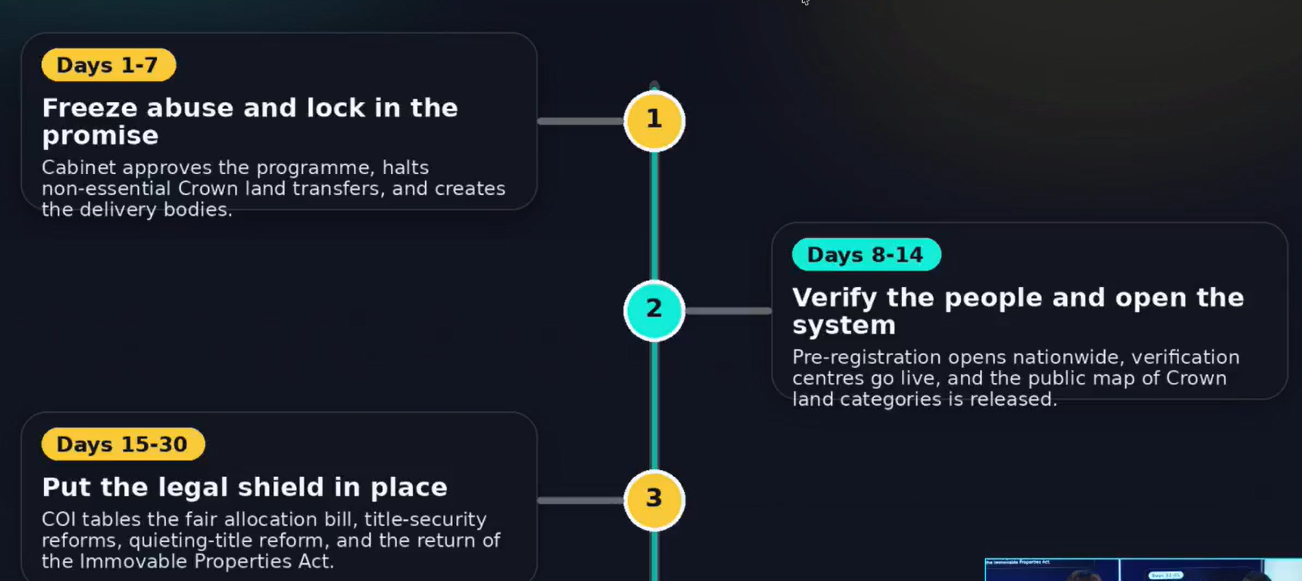 implemented immediately upon taking office.
At the heart of the proposal is a push to redistribute access to Crown land, a signature policy of the Coalition, which argues that Bahamians should have greater direct benefit from national resources. The plan also prioritizes the full implementation of Freedom of Information legislation, with Bain framing transparency as a cornerstone of restoring trust in government.
Additional focus areas include proposed reforms to the healthcare system, including improved compensation for nurses and medical professionals, and broader governance changes aimed at increasing accountability and reducing political control over national decision-making.
The Coalition has branded the plan as a historic first, describing itself as the only political group to present a structured 100-day agenda ahead of a general election.
But beyond the policy points, the messaging was unmistakable.
Bain and his team continue to urge Bahamians to move away from the traditional two-party system, arguing that both the Progressive Liberal Party and the Free National Movement have failed to deliver meaningful change despite decades of governance.
“The system is not working for the people,” has been a consistent refrain from the Coalition, which is campaigning on the idea of resetting how the country is governed.
While supporters view the 100-day plan as a bold and necessary shift, questions remain about the level of detail provided, particularly around costing, timelines, and how proposed changes would be executed within the existing structure of government.
Still, the rollout signals that the Coalition of Independents is seeking to position itself not just as an alternative voice, but as a ready governing option — one promising immediate action and systemic reform.
With election momentum building, the emergence of a defined 100-day agenda adds a new dimension to the political landscape, as Bahamians weigh competing visions for the country’s future.
Angle by Deandrea Hamilton. Built with ChatGPT (AI). Magnetic Media — CAPTURING LIFE.





-

 News4 days ago
GOLD & SILVER – Hall & Guerrier Fly High for Turks and Caicos at CARIFTA 2026
-

 News4 days ago
CALL 649-338-4008 OR 649-338-2684 IF A CHILD IS AT RISK: TCI Confronts Alarming Reality During Child Abuse Prevention Month
-

 Independent writer3 days ago
The Rise of Right-Wing Populism and What It Could Mean for the Turks and Caicos Islands
-

 News5 days ago
Beaches Turks & Caicos, FIU train next generation of hospitality leaders in Providenciales
-

 Bahamas News4 days ago
Fuel Pain at The Pump: Global Tensions Drive Prices Up as Bahamians Feel the Squeeze
-

 Bahamas News4 days ago
FNM’S $200 CHILD SUPPORT PLAN SPARKS DEBATE AS PLP QUESTIONS FUNDING AND SCOPE
-

 News4 days ago
Birthright Citizenship Unchanged as U.S. Supreme Court Weighs Case, Majority of Americans Oppose Ending Policy
-
 News4 days ago
COMING SOON: BORROWING TO MODERNISE