
Caribbean News
American Airlines and Sandals Resorts International Meet to Discuss Regional Airlift

World’s Leading All Inclusive Company continues efforts to drive the recovery of Caribbean Tourism
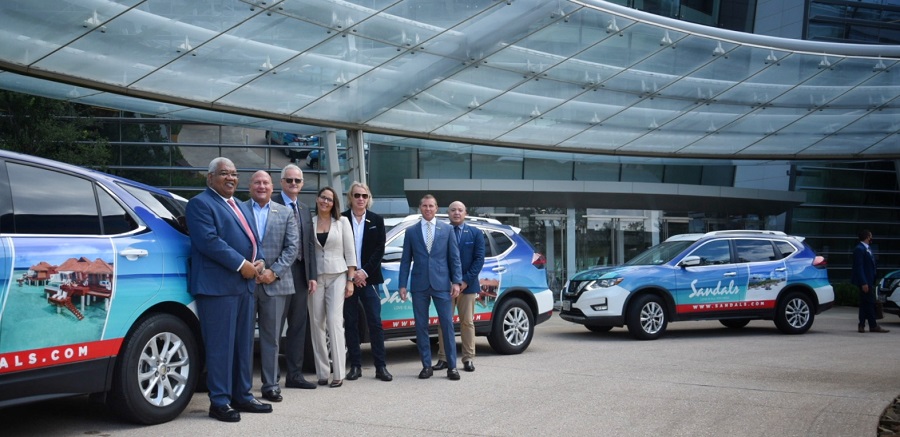
A landmark meeting between top executives of American Airlines (AA) and Sandals Resorts International (SRI) took place at the American Airlines Headquarters in Dallas, Texas on June 27th, and comes at a time when the regional tourism and hospitality sector along with several CARICOM governments are working hard to restore airlift to the Caribbean after the fallout from the COVID 19 pandemic.
The Sandals team was led by Executive Chairman Adam Stewart and Chief Executive Officer Gebhard Rainier and also included Executive Vice-President of Sales and Industry Relations for Unique Vacations (UVI) Gary Sadler along with UVI Chief Executive Officer Jeff Clarke and Senior Vice President of Brand Development Tony Cortizas. Unique Vacations is the exclusive marketing partner for Sandals Resorts.

The American Airlines team meantime comprised Vice President of Global Sales Kyle Mabry, Chief Customer Officer at American Airlines Alison Taylor and Managing Director for Latin America, Caribbean and Florida Sales Christine Valls.
This is the first time American Airlines, one of the world’s largest airline companies, has hosted a Caribbean hotel company for such a meeting, and SRI Executive Chairman Adam Stewart said this is part of Sandals’ ongoing efforts to help drive the recovery of the regional tourism sector.
“This meeting could not have come at a better time as we seek to restore the airlift that is so vital to the region’s hospitality and tourism sector. The incredible relationship Sandals has with American Airlines has led to enormous benefits for the many destinations where Sandals now operates, and we expect they will soon begin planning for increased flights to the destinations where we will soon be operating such as Saint Vincent and the Grenadines and Curacao. I remember my dad, the late Gordon ‘Butch’ Stewart used to always boast that wherever Sandals establishes a resort the airlines were sure to follow, and I am beyond proud that along with the amazing teams at Sandals and Unique Vacations we continue to carry on and build on that legacy.”
Stewart went on to thank AA for the incredible support it had already provided thus far in helping to support recovery efforts, ‘Over the last 14 months American has demonstrated a level of strength and agility in a highly complex time and we appreciate it. If there is one thing COVID 19 has shown us is the power of partnerships and relationships. Business does not come to those who wait; it’s about getting out and making it happen. We are pleased to be in a position where we can advocate on behalf of the entire Caribbean, and assist with trying to reestablish and enhance the routes that all our islands depend on to not just to bring visitors, but to connect with the rest of the world.”
The discussions revolved around growth, the expansion of air service, how American can provide more flights to the Caribbean and how they can strengthen their efforts in the region.

Gary Sadler, Executive Vice-President of Sales and Industry Relations at Unique Vacations said this was great news for the region, and is a result of Sandals taking the initiative to go out and do what is needed to drive the recovery of tourism.
“Building tourism goes beyond just having a beautiful beach and nice hotels; the meeting with AA showcases Sandals’ continued commitment to being a champion of the entire Caribbean tourism sector. The company is constantly taking steps to promote the region, and their success is reflected in the fact that there is increasingly high demand for travel to their resorts and to the region. This meeting will ensure that as American Airlines moves to increase its service worldwide, the Caribbean remains at the top of the list.”
The Sandals team made quite a splash as they arrived at the American Airlines headquarters in a fleet of Sandals and Beaches branded cars. They were taken on a tour of the facility where they got a chance to get up close with some historic American Airlines equipment on display.
As they left the meeting the Sandals Executive Chairman assured that there was much to look forward to, “The future of Caribbean travel is strong and our good company is bringing a new level of product to the Caribbean that is going to change the game.”








By Deandrea Hamilton | Editor
September 28, 2026 – Wall Street initially flinched at the $3-billion handshake. But in a matter of days, it was smoother sailing.
Perhaps the bigger Caribbean business story is not what Sandals Resorts International is getting from the deal. It is who is writing the cheque — and what that says about what Gordon “Butch” Stewart built.
As reports of Royal Caribbean Group’s Sandals deal circulated Tuesday, RCL shares plunged 6.14 percent from Monday’s $250.25 close to $234.89, on sharply elevated trading.
When the agreement became official Wednesday — approximately $3 billion for a 50 percent equity interest in Sandals and Beaches Resorts — shares slipped another 1.95 percent to $230.30 and touched $222.22 intraday. Investors were digesting both the size of the investment and committed debt financing secured through Morgan Stanley.
But by Thursday, RCL rebounded 3.77 percent, with shares continuing their recovery Friday to finish the week around $243. Analysts were also looking ahead: JPMorgan reportedly raised its RCL price target from $345 to $394, while Citi placed the company on a 90-day positive catalyst watch.
And just who is RCL?
Royal Caribbean Group is a global vacation giant, publicly traded on the New York Stock Exchange with a market value of roughly $65 billion. Its portfolio includes Royal Caribbean International, Celebrity Cruises and Silversea, alongside private destinations and an expanding vacation platform.
So when a company of that scale commits $3 billion for only half of Sandals and Beaches Resorts, the transaction puts a striking financial marker on one of the Caribbean’s greatest home-grown hospitality success stories.
The deal, expected to close in early 2027, creates a 50-50 partnership with the Stewart family and takes Royal Caribbean deeper into the all-inclusive resort business.
Butch Stewart started Sandals in Jamaica in 1981 believing a Caribbean company could compete with the world’s best.
Forty-five years later, one of the world’s biggest vacation companies is prepared to pay $3 billion just to own half of what he built.
Now that’s the handshake that does more than seal a deal — it cements a legacy.
Caribbean News
Royal Caribbean Group and Sandals Resorts Announce Landmark Partnership to Accelerate Their Leading Vacation Experiences
Royal Caribbean Group Investment to Advance Sandals and Beaches’ Growth and Broaden the Group’s Vacation Portfolio
Montego Bay, Jamaica and Miami, September 24, 2026 – Royal Caribbean Group (NYSE: RCL) and Sandals Resorts today announced the signing of an agreement to form a partnership in the all-inclusive resort space with a 50% investment from Royal Caribbean Group. Building on Sandals and Beaches Resorts’ more than four decades of leadership in Caribbean hospitality, the joint venture will create new opportunities for continued resort growth while broadening the experiences across Royal Caribbean Group’s vacation platform.
The partnership brings together two of the travel industry’s most celebrated vacation companies, pairing Sandals and Beaches’ all-inclusive resort expertise with Royal Caribbean Group’s vacation platform, including industry-leading brands – Royal Caribbean, Celebrity Cruises and Silversea – a portfolio of private destinations, new river cruising offering, and an industry-first loyalty program. United in a shared history in the Caribbean and connected by a love for their communities, the companies will offer travelers an unparalleled collection of cruise, private destination and resort experiences, serving guests across more vacation occasions and establishing their undisputed leadership in Caribbean vacations.
The joint venture expands Royal Caribbean Group into an adjacent vacation category, growing its participation in the approximately $2 trillion global vacation market, and meets the growing global demand for Sandals and Beaches Resorts by accelerating their expansion. The partnership will include Sandals and Beaches’ collection of premier all-inclusive properties across the Caribbean, and the companies will explore opportunities to broaden distribution, deepen guest engagement, and make it easier for travelers to discover vacation experiences offered across both portfolios.
“For nearly 60 years, we’ve reimagined what a vacation can be, constantly expanding the ways we inspire our guests to explore, connect and create lifelong memories,” said Jason Liberty, Chairman and CEO, Royal Caribbean Group. “We have been building a vacation platform that brings joy to millions of people around the world and creates meaningful relationships that last with our guests. Our partnership with Sandals and Beaches Resorts is an important next step on that journey – bringing together two iconic leading vacation companies to further strengthen and grow one of the most admired resort portfolios in the world. The Stewart family has created powerful and beloved brands, and we are honored to build on that legacy. Together, we see tremendous opportunity to expand the reach of Sandals and Beaches Resorts and continue turning the vacation of a lifetime into a lifetime of vacations.”
“My father, Gordon ‘Butch’ Stewart, founded Sandals Resorts with the belief that a company built in the Caribbean could stand on the world stage alongside the most respected names in hospitality. Today is proof of how far that vision can go,” said Adam Stewart, Executive Chairman of Sandals Resorts and Beaches Resorts. “This partnership is the natural next step in building on that conviction. It gives us the ability to grow faster with a partner that shares our values of exceptional hospitality, long-term investment, and the power of enduring brands. Together, we will introduce more guests to Sandals and Beaches Resorts while creating even more extraordinary experiences for those who have made our resorts part of their lives for decades.” Stewart added, “As we continue to grow, we will remain true to what has always defined us: delivering authentic vacations that exceed expectations while creating opportunities for our team members, travel advisor partners and the communities we call home. The future has never been brighter, and I know this moment would make my father incredibly proud.”
The joint venture will be governed by a board under the shared leadership of Stewart and Liberty. Stewart will maintain a leadership role in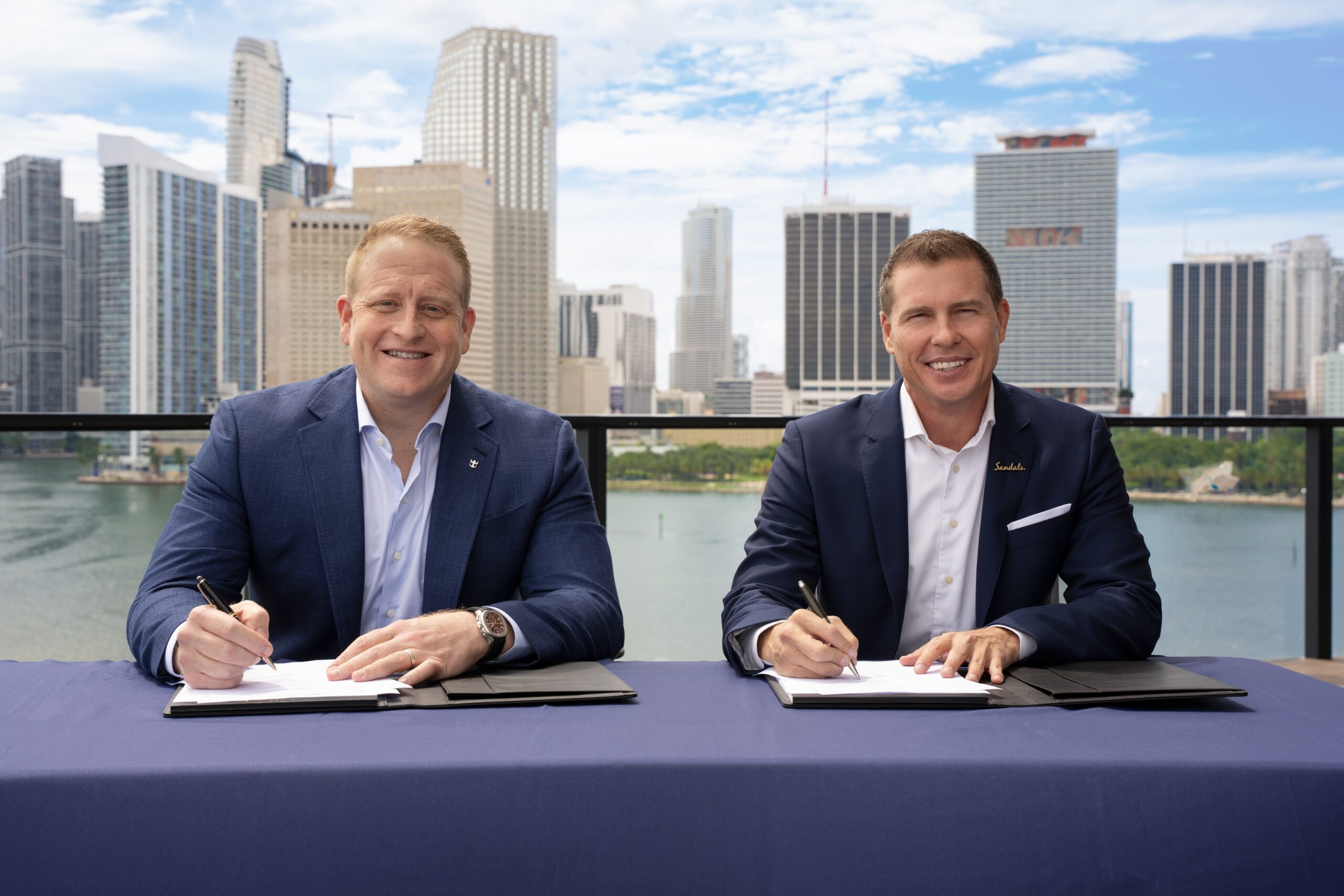 guiding the company’s long-term strategic growth as Executive Chairman of Sandals and Beaches Resorts. Existing reservations, loyalty programs, resort operations and cruise operations will continue as usual, with the partnership bringing additional resources to support future opportunities.
Under the terms of the agreement, Royal Caribbean Group will acquire a 50% equity interest in Sandals and Beaches Resorts for approximately $3 billion, representing a forward EBITDA multiple of approximately 10x. Royal Caribbean Group has secured committed debt financing from Morgan Stanley to fund the investment. The transaction is expected to close in early 2027, subject to customary approvals and closing conditions, and is expected to be accretive to earnings next year.
BofA Securities and PJT Partners acted as financial advisors, and Latham & Watkins and Jones Day acted as legal advisors to the Sandals Group. Perella Weinberg Partners and Morgan Stanley acted as financial advisors and Kirkland & Ellis LLP acted as legal advisor to Royal Caribbean Group.
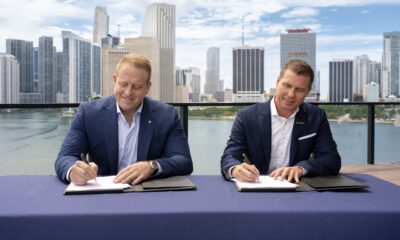
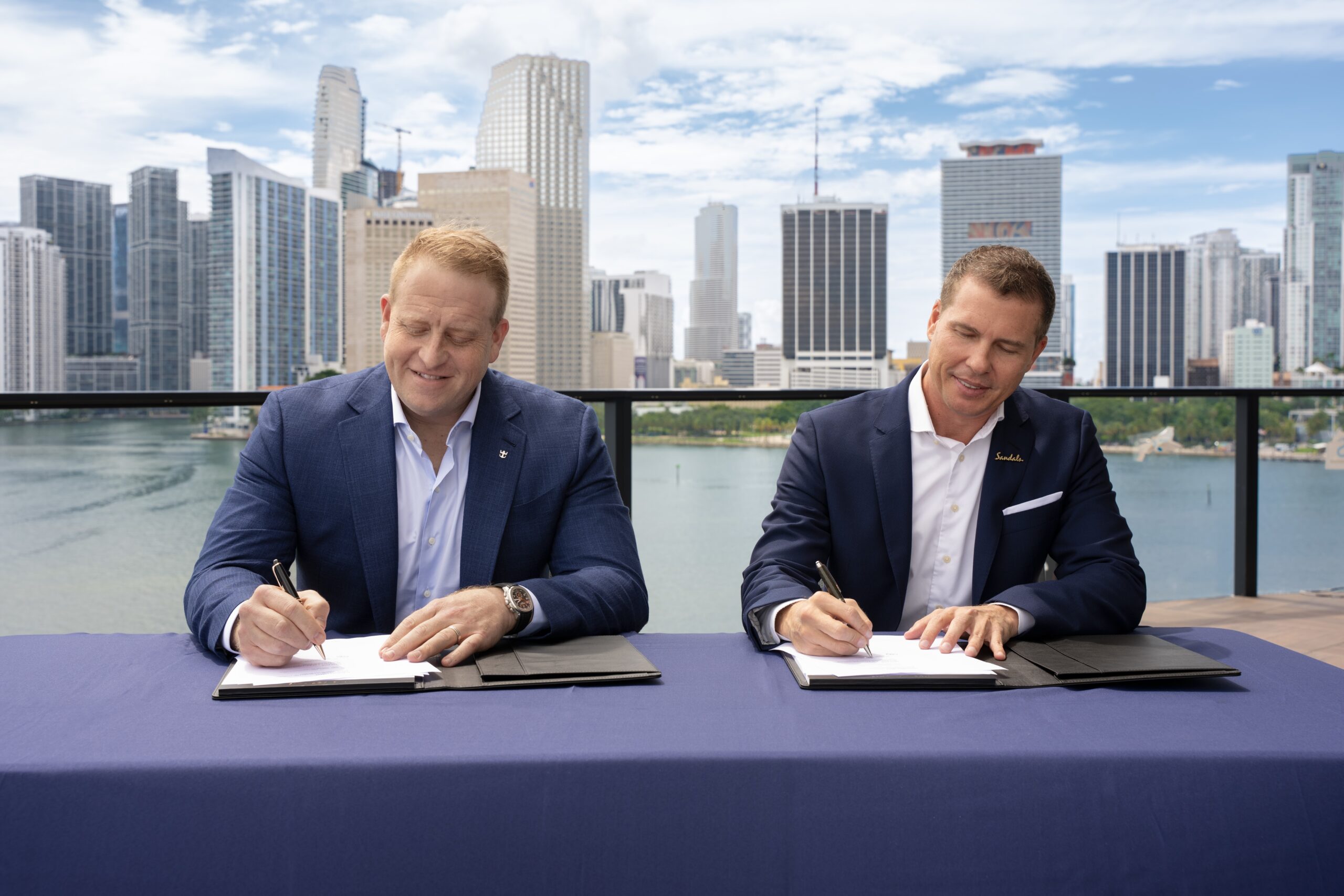
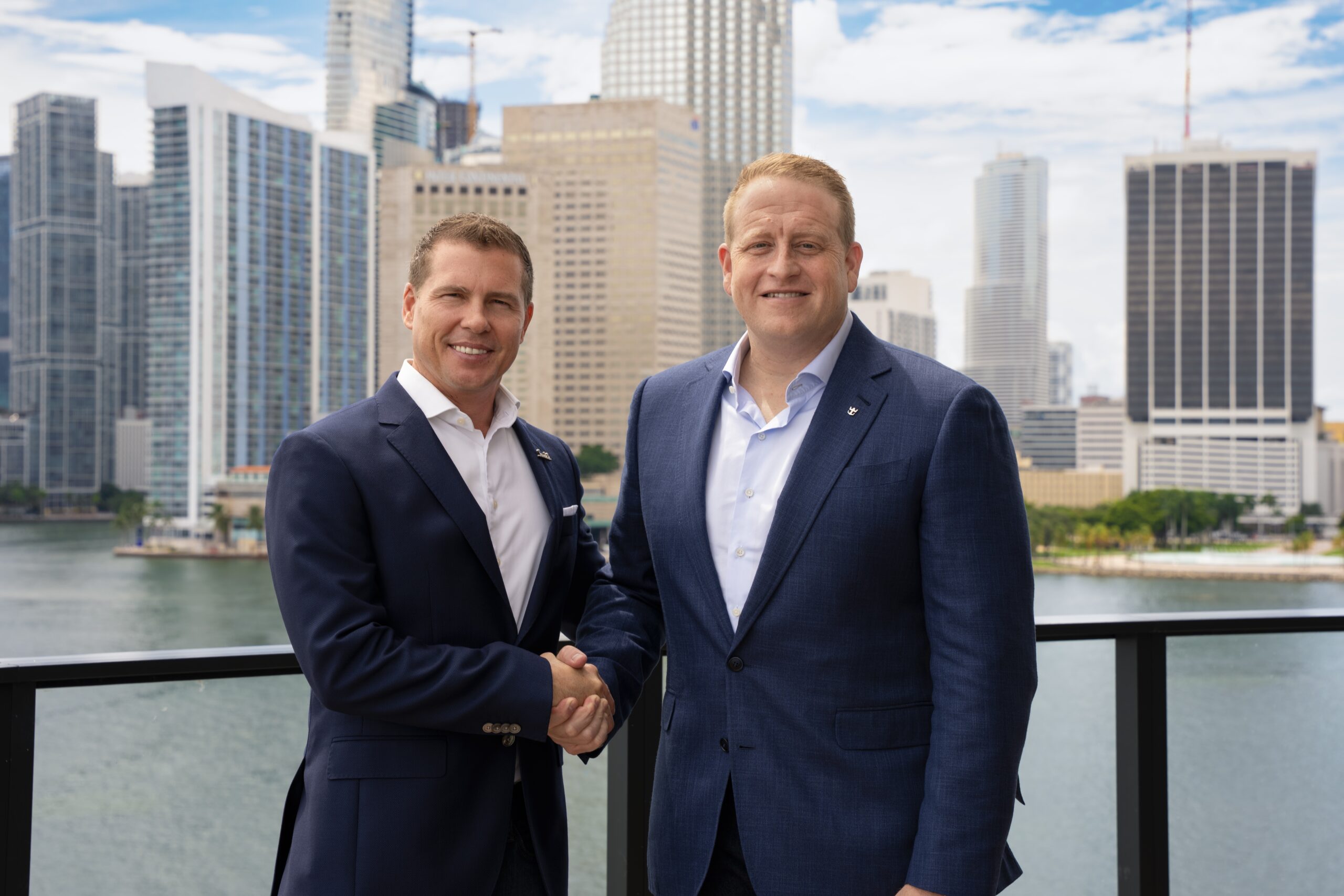
PHOTO CAPTION: Jason Liberty, Chairman and CEO of Royal Caribbean Group, and Adam Stewart, Executive Chairman of Sandals Resorts, mark the signing of an agreement to form a landmark partnership that expands Royal Caribbean Group into the all-inclusive resort space and supports the future growth of Sandals and Beaches Resorts. The signing took place at Royal Caribbean Group’s new headquarters in Miami, with the city’s skyline in the background.
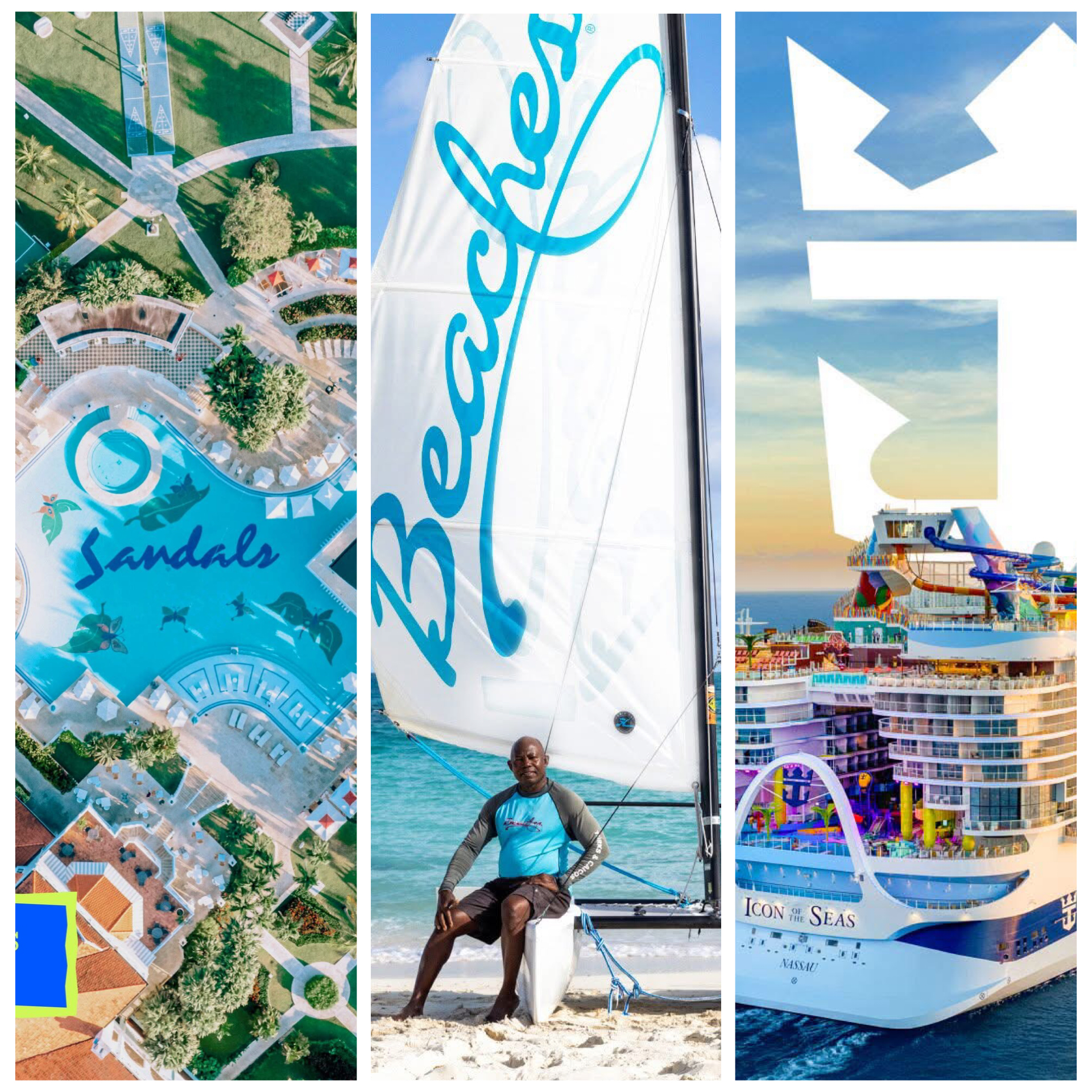
The Caribbean tourism deal first reported as a possibility on Tuesday is now a signed agreement. Royal Caribbean Group plans to pay approximately US$3 billion for a 50% stake in Sandals and Beaches Resorts, putting the value of the business at about US$6 billion. The purchase is expected to close in early 2027, subject to approvals.
Founded in Jamaica by the late Gordon “Butch” Stewart in 1981, the resort business has a presence across nine Caribbean destinations, including Jamaica, The Bahamas and Turks and Caicos. Sandals has described its workforce as nearly 20,000 people, most of them Caribbean nationals.
“My father, Gordon ‘Butch’ Stewart, founded Sandals Resorts with the belief that a company built in the Caribbean could stand on the world stage alongside the most respected names in hospitality,” said Adam Stewart in the announcement carried by PR Newswire. He will remain executive chairman, while the Stewart family retains a stake. The companies say existing reservations and resort operations will continue as usual.





-

 Health1 week ago
Cleveland Clinic First in Ohio to Perform Robotic Nipple-Sparing Mastectomy
-
 News5 days ago
Beaches Turks & Caicos strengthens year-round commitment with local craft vendors and transport operators
-

 News3 days ago
Beaches Turks & Caicos gives Enid Capron Primary a pre-term facelift
-

 Bahamas News6 days ago
Two Months On, The Bahamas Academy of Sciences Turns Fifty Years of Research into Action