Connect with us

Bahamas News

Bahamas gets Update on the Emergency Food Plan

Published

on

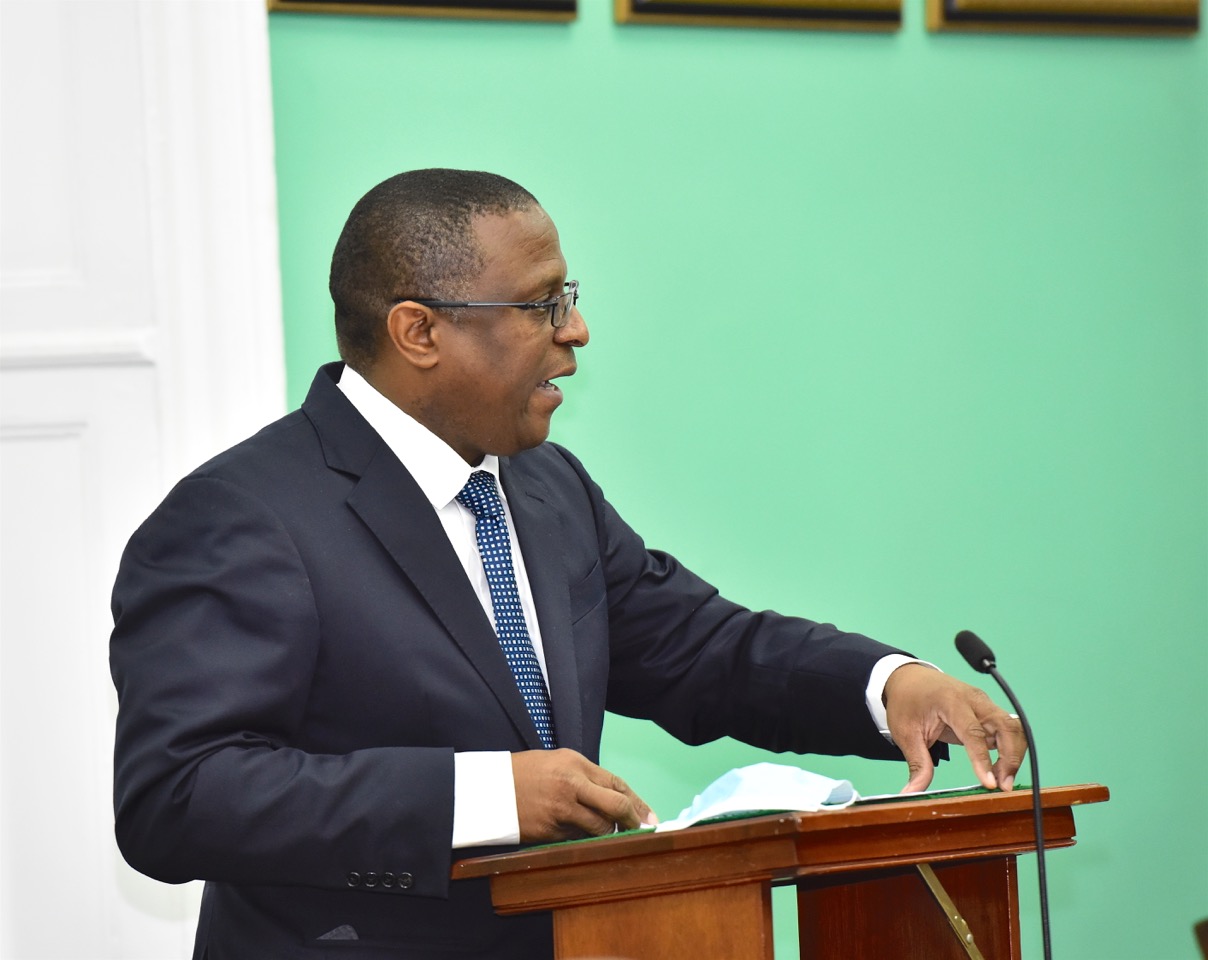
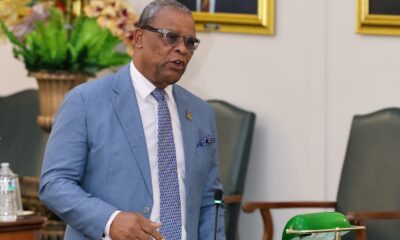
Statement by Michael Pintard, Bahamas Minister of Agriculture & Marine Resources

#Nassau, The Bahamas – From April 27, 2020 — Mr. Speaker, I rise on behalf of the great Constituency of Marco City to which I have the honour to represent.

Mr. Speaker, The Cabinet of The Bahamas has determined that food production is especially crucial in these times. And that whatever measures we put in place must be sustained beyond Covid-19.  We take seriously the mandate that has been given by the Prime Minister to fix outstanding issues that may exist along the entire value chain and supply chain to ensure that The Bahamas has adequate food resources and the right food resources for the health and wealth of our people.

Strengthening existing partners and working with stakeholders to reach common objectives will be critically important to weather this crisis. My Ministry continue to make ourselves available to hear the concerns of farmers and fishers and will be making deliberate efforts to use the available technology to reach out to farmers and fishers throughout the country.

Mister Speaker, the COVID-19 crisis is an important opportunity for Bahamians to make healthier food choices by increasing their consumption of fruit and vegetables. There has been unprecedented interest expressed in farming over the last few months. We are responding quickly and carefully. We are making every effort to make local products accessible and affordable.

  1. The Packing Houses remain operational in all our Family Island locations (Andros, Cat Island, Eleuthera, and Long Island). The Bahamas Agricultural and Industrial Corporation continues to operate the Produce Exchange and The Bahamas Agricultural and Marine Science Institute has continued local produce purchases. Both agencies have reoriented their marketing to make ‘value boxes’ available to persons on New Providence who may be facing financial challenges and have instituted the social distancing protocols to protect employees and customers. Extended hours have been added on Saturday to facilitate essential workers.

Additionally, ‘The Market’ at Gladstone Road has also been opened to allow purchase of domestic agricultural products.

  • Mr. Speaker, the long overdue renovations to packing houses in San Andros, North Andros, Clarence Town, Long Island, and Lower Bogue, Eleuthera will commence 1st May, 2020. Contracts have already been signed in the amount of four hundred fifty four thousand eight hundred and forty dollars ($454,840.00) to renovate the packing houses in the aforementioned islands.
  • Mr. Speaker, the slaughter house in New Providence has been closed from the initial COVID-19 Emergency Order on March 23rd, 2020. The Government, in consultation with the relevant authorities is seeking a gradual opening of the abattoir to allow for the slaughter of animals.  We anticipate that the abattoir will reopen on Tuesday 28th April, 2020. We will upgrade this facility as a matter of urgency. The growth of the livestock sector depends on a national slaughterhouse system throughout the relevant islands engaged in animal husbandry.
  • The Department of Agriculture and the Department of Marine Resources have maintained essential services to farmers and fishers during the period by providing reduced hours to facilitate urgent matters including facilitating import and export permits. The Veterinary Services will be implementing telemedicine for livestock farmers on New Providence and the Family Islands. The information on the times and link for services will be posted on the website of the Ministry of Agriculture and Marine Resources.
  • Mr. Speaker, the Ministry of Agriculture and Marine Resources (MAMR) has also produced an Emergency Food Production Plan to strengthen food and nutrition security in this time of crisis. It includes the assistance to farmers in the clearing of Agricultural Land of which one million eighteen thousand six hundred dollars ($1,018,600.00) has been allocated to farmers throughout The Bahamas with four hundred seventy-nine thousand six hundred dollars ($479,600.00) out of the said figure being allocated to Grand Bahama and Abaco (those islands devastated by Hurricane Dorian). These funds have already been sent to the affected islands.
  • Mr. Speaker, my Ministry is in the process of purchasing and distributing some ten thousand (10,000) backyard gardening kits throughout The Bahamas. The kits will include seeds, seedling, fertilizer, drip line, and pro-mix along with guidelines of how to arrange a proper backyard gardening system. The distribution of these kits should begin in two weeks.
  • Mr. Speaker, our Ministry is sourcing more than one thousand (1000) hydroponic systems which will be strategically placed throughout The Bahamas to assist with producing adequate supplies of vegetables especially leafy greens. The MAMR in collaboration with the Ministry of Education is adding an additional 22 hydroponics systems to the previously agreed upon number of hydroponics and aquaponics systems which will be placed in schools throughout The Bahamas.  
  • Mr. Speaker, two thousand layer chicks have been purchased from a local vendor and will be distributed to the Family Islands as soon as this week. This will provide additional protein and encourage farmers in the various communities to produce eggs for their local economy. Additionally, some five thousand (5000) layers are on order from a company in the United Stated and would be available within the next three weeks for distribution to New Providence farmers. On receipt of these birds/layers, it is intended to purchase an additional 5000 to 7000 layers to assist farmers further. The MAMR has begun planning to work with the sector about urgently upgrading the available hatcheries so that we can in the short to medium term dramatically increase egg production throughout the Bahamas especially on New Providence, Eleuthera, Abaco and Grand Bahama in phase one.
  • The Ministry’s Food processing and Cooperative leadership in conjunction with BAIC and BAMSI and later with Home Economic Teachers and private enterprises will shortly lay out our plan to accelerate and scale up food processing and light manufacturing.
  1. Mr. Speaker, the Department of Marine Resources plays a pivotal role in the dietary consumption of seafood and the protection of our Marine Resources. During Hurricane Dorian, Marine Resources vessels were damaged/destroyed and we have already paid a 50% deposit of two hundred fifty-four thousand five hundred and twenty dollars ($254,520.00) for three vessels allocated for Bimini, Grand Bahama, and Abaco with which we expect to replace those vessels lost.
  1. Furthermore, we continue to discuss a plan of action to keep both subsistence and commercial fishers fully engaged in order to feed our nation and earn foreign currency. Discussions are underway to ensure the reopening of fish markets in a safe manner and the safe delivery of marine products to stores and customers.
  1. In addition, my Ministry is also in the process of partnering with the Ministry of Social Services, the Ministry of Health, The Ministry of National Security (Royal Bahamas Police Force), the Ministry of Transport and Local Government, the Ministry of Education and also food suppliers and wholesalers, and Non-Governmental Organizations (NGOs) to launch the National Food Distribution Program to ensure, as the Prime Minister stated, that no vulnerable person is left behind.

Mr. Speaker, the program will target Senior Citizens and Disabled, Persons receiving Social Services Assistance, Students on the School Lunch Program and Furloughed Workers. Mr. Speaker, the distribution will include a number of dried goods but even more importantly Bahamian grown fruits and vegetables, Bahamian marine products, Bahamian jams, jellies, honey, Bahamian meats, Bahamian soaps, etc.

  1. Mr. Speaker in order to ensure that adequate animal feed and agriculture inputs are available to farmers in the various islands and that we reduce wastage in the movement of agriculture and marine products our Ministry is documenting available dry, cool and cold storage space.
  2. Since we last met we have begun to forge important partnerships upon which we will build. We are excited about the meetings held with church leaders about national and local agriculture projects we will work on together. We are encouraged by the initial meeting with the new generation of agro-youth professionals who are committed to the full incorporation of new technologies in all aspects of agriculture and marine resources. We intend to assist them in several key areas as they assist the sector. Our discussions with approximately 16 Agriculture educators resulted in several key commitments on both sides. I and the Ministry team have participated in more than two Ministerial meeting with Ministers throughout the region sharing best practices and plugging the data gap. We are in ongoing discussions with the leaders in the fishing and farming sector.

Mister Speaker,

These are challenging times at a national and personal level for our entire nation. Constituents and staff members have lost loved ones and other staff, in every section of the ministry, (Department of Agriculture, Department of Marine Resources, Cooperatives, Regatta, BAIC, BAMSI, and BAHFSA), and despite these difficult circumstances show up to work daily and on weekends. I am indeed grateful to them and to the farmers and fishers throughout the archipelago for their dedication and support.

Thank you, Mister Speaker, for this opportunity to update the Honourable House.

Magnetic Media is a Telly Award winning multi-media company specializing in creating compelling and socially uplifting TV and Radio broadcast programming as a means for advertising and public relations exposure for its clients.

Bahamas News

Experts Analyze Economic Landscape; Opportunities and Challenges

Published

on

Nassau, THE BAHAMAS – From pressures on the independence of the US Federal Reserve and relations with China to the instability facing the global economic landscape and how it all impacts The Bahamas’ economy and prospects, Tuesday’s Central Banking Series hosted by University of The Bahamas (UB) in partnership with the Global Interdependence Center (GIC) peeled back the layers of the most critical factors impacting the world’s economic landscape.

At the one-day summit, top economic strategists, policymakers, academics, and economists gave frank and considered insights on the range of opportunities and challenges. In facilitating the high-level talks, UB’s Government and Public Policy Institute (GPPI) continues to provide the platform for evidence-based dialogue on public policy and reform.

“By convening world-class thinkers, policymakers, and practitioners here in Nassau, we affirm that The Bahamas is not solely a subject of global economic forces, but also a participant in the conversations that shape them,” said UB President Dr. Robert Blaine, III.

In his remarks, Minister of Economic Affairs Senator the Honourable Michael Halkitis acknowledged the ripple effects of financial shifts which put pressure on the Bahamian economy, yet he acknowledged that the economy is on the rise. He expressed confidence in the country’s readiness to adapt, citing a deep talent pool and expanding foreign and domestic investments.

“What makes this period particularly significant is the breadth of investment activity across sectors,” said Minister Halkitis, a UB alumnus. “Tourism development remains strong, but it is not the sole driver of growth. Investments are expanding into renewable energy, maritime services, digital infrastructure, agriculture, logistics and the blue and green economies.”

Economist and Former President and CEO of the Federal Reserve of Richmond, Dr. Jeffrey Lacker offered a sobering view on the independence of the US Federal Reserve, a topic that has attracted much national and international in the face of blistering pronouncements by US President Donald Trump.

Dr. Lacker said the Federal Reserve’s choice of monetary policy instrument and setting of the overnight interest rate that it controls should be “free of executive branch and congressional meddling.”

“And by meddling, what I mean is overtly expressed policy direction, opinions about where policies should go, expressed in a way that carries with it the implied threat of adverse consequences to either the individual or the institution, either in the form of legislative changes or some sort of political harassment,” he said.

“The value of insulating day-to-day, meeting-to-meeting monetary policy from pressure from elected officials with an eye on their next election is widely recognized. Neglecting that pressure, caving into that pressure is a road to short-termism, or short-term stimulus at the cost of inflation later on.”

Other pertinent conversations at the summit focused on digital initiatives for financial inclusion, monetary and fiscal policies and strategies in The Bahamas, and the impact of AI on macroeconomic conditions. There was also a special presentation on the history and value of gold. Students from Government High School were among the audience members gaining knowledge from experts.

“When we determined the theme for this year, being Challenges and Opportunities in a Dynamic Global Environment, we did not know what was going to evolve in recent times,” said GPPI Executive Director Zhivargo Laing, referring to the war that the US and Israel initiated against Iran. “So I would like to think that maybe there was a little bit of insight that was taking place during the course of our discussions. But we are here again for the third time with our partners at the GIC to entertain a deep discussion on just what are those challenges and opportunities in this very dynamic environment in which we find ourselves.”

Continue Reading

Bahamas News

Economic and Financial Experts Assess US-China Relations; Offer Advice for The Bahamas

Published

on

Nassau, The Bahamas — The People’s Republic of China, in the span of two decades, has transformed itself into an economic superpower the world can scarcely function without. This was one of the perspectives that added context to crucial conversations about the US-China outlook at the Central Banking Summit held at University of The Bahamas (UB) on Tuesday.

“China has gone from being, conceptually, a non-economy. It has gone from being a $2 trillion economy in 2000; today it is a $20 trillion economy. There has never been growth like that anywhere on the planet,” said Michael Drury, chief economist, McVean Trading.

In the Caribbean region and for The Bahamas, China has become both a critical link in the global supply chain and, at times, a financial partner when the price tag of major infrastructure projects proves difficult to carry alone.

During the summit, facilitated by UB’s Government and Public Policy Institute (GPPI) in partnership with the Global Interdependence Center (GIC), the outlook on US-China relations and how the world will be impacted was a key topic of discussion.

Drury appeared on a panel with Zhivargo Laing, Executive Director of UB’s GPPI. Both gave insight into China’s rapid economic rise and its growing influence over global manufacturing and trade.

“The wish was that China would become a capitalist democracy, and it was on its way there until President Xi Jinping took control of the country in 2012. [Xi] is a Marxist. When you are a Marxist, you believe capitalism will destroy itself,” Drury explained.

Drury, who also serves as an executive and assistant program director with the GlC, noted that the statistics surrounding China’s meteoric manufacturing expansion often evoke strong reactions when presented to audiences across the US.

“The solution for the United States in freeing itself from China’s manufacturing dominance is to find somewhere it can produce goods without depending on China. There is no such place on earth. China produces 30 percent of all manufactured goods,” he said.

The discussion also examined recent efforts by the US to reclaim manufacturing capacity and reverse trends Washington believes could compromise national security.

“The spoken goal of wanting to return manufacturing to the United States essentially means restoring enough production capacity to support national defence,” Drury explained. “The auto industry built the bombers and tanks during World War II. If you don’t have an auto industry, you don’t have an industry you can flip into national defence production.”

For The Bahamas, the geopolitical dynamics has become increasingly challenging to navigate with the latest example being the proposed specialty hospital project for which the Government of The Bahamas has secured Chinese financial backing. In response, the US, through its newly appointed ambassador, has publicly encouraged The Bahamas to reconsider the arrangement.

Laing, former Minister of Economic Affairs and a UB graduate, offered this contextual view: that The Bahamas understands the importance of maintaining strong relationships with both global powers.

“If we were going to have concerns about any country being overly influential in The Bahamas, it would be the United States of America. Why? Eighty-plus percent of our tourism comes from the United States. We have one of the only U.S. pre-clearance facilities in the world. There are substantial American investments in The Bahamas. Our currency is pegged to the United States. And if we ever needed help in this country, we have no doubt who we would turn to,” Laing said.

Laing noted that the influence of the United States extends beyond economics and geopolitics into the cultural and personal realms.

“We love to go to the United States. We go for education, healthcare, and socializing. But for practical reasons, we also nurture relationships with countries around the world. The Bahamas is not a war state.”

As competition between the two global giants intensifies, Laing offered this advice for policymakers navigating the geopolitical landscape.

“It will continue to be very competitive between these two giants, and if I were advising policymakers in The Bahamas, I would say: keep hugging your friends and shaking the hands of your associates.”

Continue Reading

Bahamas News

Dredging Is Not Just About Size — It Is About What Is Being Destroyed, Warns Save Exuma Alliance Regarding Yntegra’s Proposed Rosewood Resort

Published

on

Save Exuma Alliance (SEA) — a coalition of Central Exuma business owners, tour operators and residents — has warned that the issue of dredging in the North Bay of Sampson Cay, Exuma, is not just about the number of acres being dredged – but what exists within the proposed dredge area. SEA describes the site as an ecological treasure trove filled with seagrass, coral, turtles and abundant marine life.

This comes after foreign developer Yntegra agreed to reduce the scope of its dredging following government warnings that it would impact The Bahamas carbon credit status, which shows the importance of the marine habitat.

“It is easy to point to other developments and say they are dredging more, but that is not comparing like with like,” SEA said in response to comparisons made by Yntegra. “If one area is largely sand with little marine life, that is very different from what we have in North Bay. Anyone who has spent time there can tell you it is filled with turtles, fish, and — critically — the seagrass and coral that provide essential habitat.”

Miami-based investment group Yntegra is seeking to construct a large-scale Rosewood-branded resort on Sampson Cay. Since its announcement, the project has generated environmental, social and economic concerns among residents and business operators in Central Exuma.

The proposed development includes dredging in North Bay, construction of a substantial seawall that would alter natural water flow, more than 100 structures, two mega yacht marinas, and an industrial dock serviced by fuel and supply ships in an area currently used by swimmers. Opponents argue that the scale and design of Yntegra’s Rosewood Exuma project are incompatible with the fragile ecosystem and cultural character of the Central Exumas.

SEA noted that the government’s Climate Change Unit has also raised concerns about the environmental cost of dredging associated with Yntegra’s Rosewood Exuma project.

“The government has acknowledged that this is an area of significant importance,” SEA said. “While the financial implications are serious, for us here in Exuma this is about more than money. It underscores how valuable this marine ecosystem is — the seagrass, coral and marine life that make Exuma exceptional. This is what attracts visitors from around the world. We should not minimize the concern by comparing this bay to areas that do not have the same remarkable underwater ecosystem. It is simply not the same.”

Experienced boat captain Tito Baldwin also questioned the feasibility of the marine infrastructure proposed as part of this plan. He warned that the dredging currently outlined would not be sufficient to accommodate the vessels required to service the project.

“It’s going to have to be at least four times larger than what has been proposed,” Baldwin said. “As designed, it is beyond possibility.”

He explained that vessels supplying fuel, construction materials and provisions for a projected 300-person workforce would require significantly greater depth and maneuvering space.

“For supply vessels delivering hundreds of thousands of gallons of diesel, you’re looking at ships with a 10-foot draft,” Baldwin said. “To operate safely, you would need at least 13 feet of depth. That means dredging far deeper than what has been proposed. With currents running east and west in that area, you would also need a much wider turning basin to maneuver safely. As it stands, it would be extremely difficult, if not impossible.”

SEA is urging individuals concerned about the environmental impact of dredging connected to Yntegra’s Rosewood Exuma project to visit www.saveexumaalliance.org for more information. A petition calling for a halt to approvals is also available on the site, with more than 7,100 signatures collected to date.

Continue Reading

FIND US ON FACEBOOK

TRENDING