
TCI News
TCI Opposition Leader points to little communication by PDM Gov’t; says he was told of two COVID-19 cases since last week


#TurksandCaicosIslands – Full Statement by Leader of Progressive National Party (PNP) – In times of national crisis, the well being of people surpasses politics, and all decisions made with the potential outcome of securing the welfare of the TCI and its people will be supported by me.
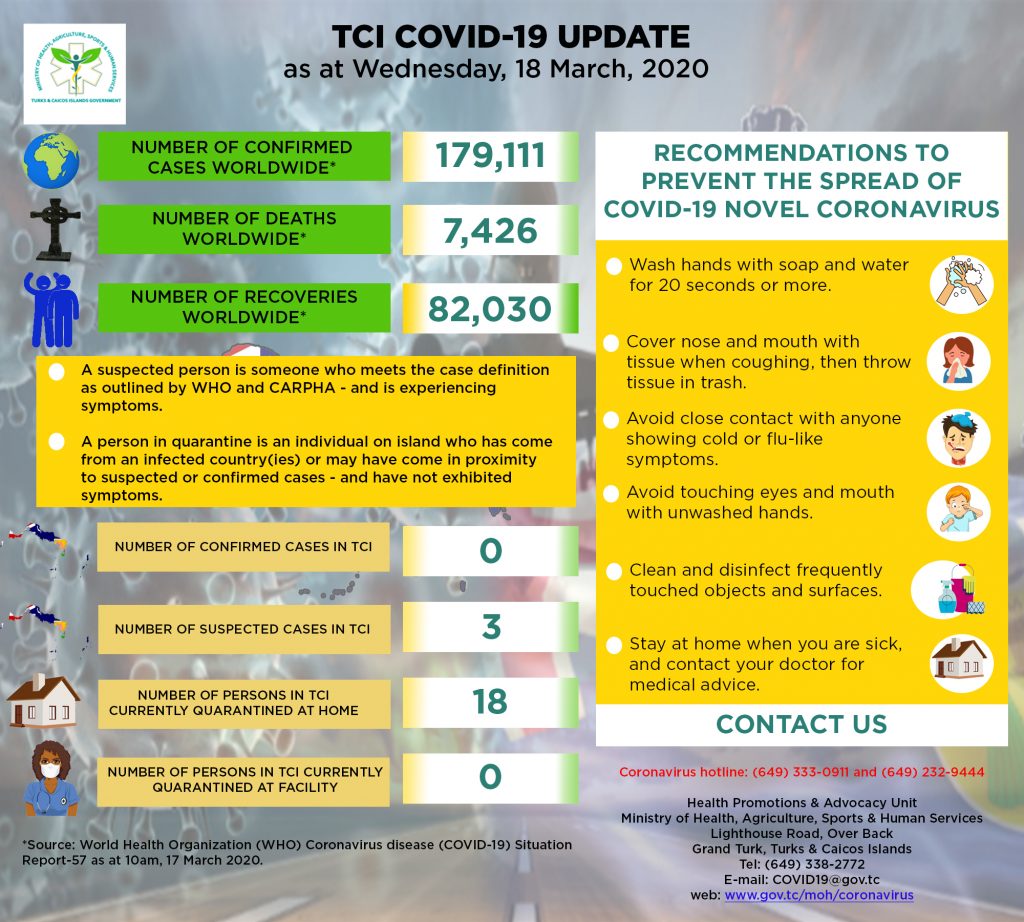
The Premier contacted me last week Thursday, 12 March 2020 to say that there were two suspected cases of COVID-19; seven persons were in self quarantine and that she would keep me updated on matters as results became known. That was the only conversation during this crisis that I have had with the Premier. However, I am happy to hear that to date TCI is COVID-19 free.
The COVID-19 pandemic has created a global panic that are seeing border after border closing and countries becoming virtual fortresses as whole communities are forced by their governments to retreat within the walls of their homes. The streets of many busy commercial districts are reminiscent of the sixty’s television series: The Twilight Zone except that this is not science fiction, but reality.
In this hypervigilant environment of fear the TCI must take its cue from governments and countries with the technical skills and means to assess the risk and potential fall-out from the pandemic without frightening its people into psychological paralysis. However, considering the social and economic impact of a prolonged life cycle of the virus one wonders if TCIG has to date move swiftly enough to prepare the islands in the event the virus gets into the general population.
As an example, the government should by now have undertaken the mass distribution of surgical masks; and alcohol base hand sanatisers – because many people simply do not have access to a dependable source of water, and some who do, cannot afford mask and sanitizers assuming that they are available locally. This is especially concerning given that there are no testing facilities and the availability of testing kits in the islands has not been disclosed neither has the process for testing suspected cases to ensure that samples can reach labs before the expiration of the life span of the virus outside a host.
The TCI is a tourism dependent destination and the hiatus in travel may be devastating for the country. The industry indicates that cancellation rate for stay-over visitors to the TCI as of today has exceeded 60% of forward bookings for the next six weeks, and new bookings have ground to a halt. By some estimates the current rate of global infection is expected to peak towards the end of April but will be with us at least through June. Therefore, the rate of cancellation could possibly last for 90 days. At the same time, cruise passenger arrivals for the time being has been reduced by 100%.
The multiplier effect of visitors spending in the local economy is difficult to measure but according to the World Travel and Tourism Council (WTTC) the multiplier for tourism is 3.2 times the initial dollar spent. Given significant leakages because of TCI dependence on imported goods and labour, as well as limited activities and attractions in the destination, a multiplier of 2 is assumed to be more realistic. Assuming therefore an adjusted average daily spending (ADS) per visitor of $200, the total impact to the GDP would be $400 per day per visitor.
Average visitor arrivals for March through the end of May in 2018 was 100,000 with an average stay of 6 nights according to TCI Statistics Department. Assuming TCIG was on target to receive the same number of visitors in the same period of 2020 as it received in 2018 that would translate into 600,000 nights at $200 or $120 million directly to the industry; with a multiplier of 2 that equals a contribution to the GDP of $240 million. A 60% cancellation over 90 days could result in lost revenue to the industry of $72 million, to the GDP of $144 million and $14.4 million to TCIG from stay over visitors. Cruise tourism arrivals for the period March through May 2019 was approximately 265 000 passengers. Assuming similar numbers were expected in 2020: an average spent per head of $50 would result in lost revenue of $13.25 million to vendors and tour operators in addition to TCIG departure tax of $14 translating to 3.7 million of lost TCIG revenue in the beleaguered economy of Grand Turk
Based on the above, a combined total of upwards to $85 million could potentially be loss to the private sector, over $18 million to TCIG and approximately $160 million could be shave off of the GDP in the next 90 days. This is a potential reduction of 16% base on a one-billion-dollar economy. The gravity of the situation may require the declaration of a state of emergency by the Governor under Section 37 (1)(c) of the TCI Constitution to mandate actions in the public interest. What these actions should be would depend on the prevailing circumstances over time but should pertain to certain basic physiological needs of food, water, shelter and safety in its broadest sense; and may include rationing to discourage hoarding resulting in artificial shortages for some people; as well as price control on staples and sanitary goods.
Given the favourable cash balances of the TCIG, it should take action to ease the pressure off of consumers by removing duties and custom processing fees from all basic consumable merchandise imported, to make it easier on workers. In addition, it should through the House of Assembly appropriate funding for social welfare to subsidize the living expenses of unsupported indigents, and other vulnerable groups; negotiate with financial institutions to freeze for a period of 90 days mortgage payments for those persons who find themselves unemployed or underemployed and unable to meet their payments; and negotiate a freeze on the Fortis rate increase and all other rates until further notice. Consider introducing a means testing framework to provide relief to basic wage earners in the hospitality and related industries until the industry recovers.
Whatever the outcome, the situation has place in sharp focus the tremendous vulnerabilities we face as a small tourism dependent country. In the face of the challenges, it cannot be business as usual. We must immediately reprogram our collective mind-set to suit our unique circumstances. In the new reality food and citizen security, social development and environmental sustainability MUST trump everything else. We simply must prepare ourselves for the growing natural and manmade threats of the 21st century. Regardless to how we arrive here and whatever our political persuasion maybe we face a common and uncertain future at least in the short term; and in these times must coalesce around the common value of cooperation and community.
Finally, I wish to appeal to all to heed the massages from the authorities. The risk is high, the threat is real, resources are limited and facilities are rudimentary. Stay at home unless you absolutely need to be out. This too will pass, but in the meanwhile hunker down.
Sincere thanks and gratitude to all those on the frontline especially our medical professional and senior public health officials for your tireless efforts in monitoring this pandemic in the interest of all of us. It is in these times when your genius shine. I appreciate your invaluable contribution and sacrifice and pray for your safety and good health.
May God bless our beautiful Islands and may he keep us safe and healthy!!!







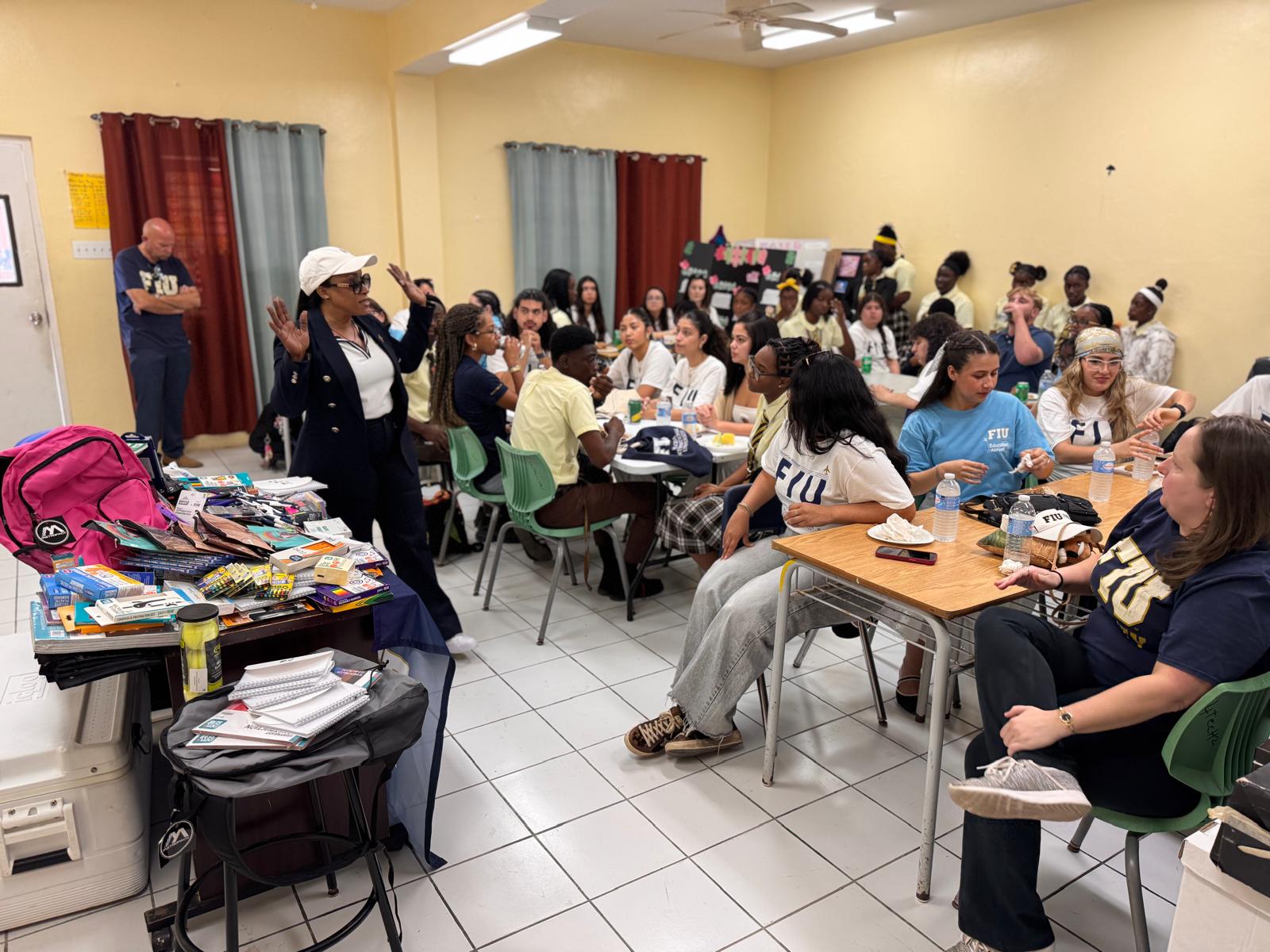
PROVIDENCIALES, Turks & Caicos Islands: — Beaches Turks and Caicos and Florida International University’s (FIU) Chaplin School of Hospitality & Tourism Management have joined forces to inspire the next generation of hospitality leaders in the Turks and Caicos Islands, partnering with Clement Howell High School and Oseta Jolly Primary School during FIU’s recent education abroad visit.
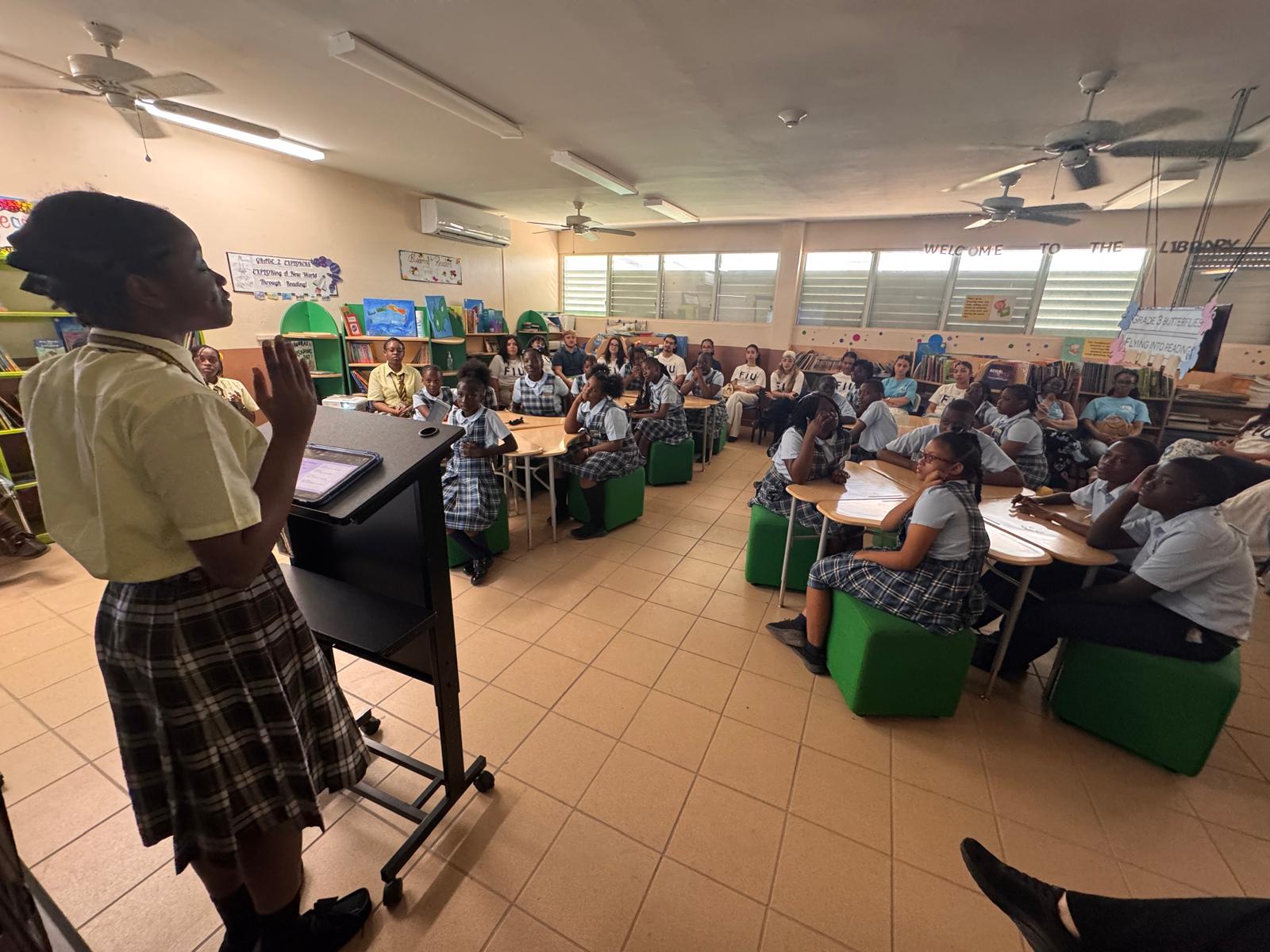
BTC & FIU training with Clement Howell High and Oseta Jolly Primary student leaders
As part of FIU’s Education Abroad programme, a delegation from the Chaplin School of Hospitality & Tourism Management travelled to Providenciales to engage students in interactive sessions on careers in tourism, leadership and customer service. Hosted by Beaches Turks and Caicos, the programme blended classroom-style presentations with on-resort exposure, underscoring the resort’s long-standing commitment to youth development and training across the islands. FIU, consistently ranked among the top hospitality management schools in the United States, used the visit to highlight international study opportunities and the global reach of a hospitality degree.
Beaches Turks and Caicos, a flagship all-inclusive family resort on Providenciales, has developed a reputation for structured training and mentorship, frequently opening its doors to local students for hands-on learning and industry immersion. This new collaboration with FIU’s Chaplin School builds on that foundation by linking local classrooms directly to a world-recognised university programme, giving students early exposure to academic pathways and professional standards in tourism.
At Clement Howell High School, FIU faculty, students and Beaches representatives met with aspiring hospitality professionals in a series of workshops and talks. Sessions focused on leadership, guest experience, innovation in tourism and the importance of regulatory standards and sustainable practices for a destination whose economy is anchored in travel and hospitality. Students also heard about internship pipelines, scholarship options and the practical steps required to transition from secondary school to university-level studies in hospitality management.
FIU alumna and Deputy Governor of the Turks and Caicos Islands, Anya Williams, delivered an energizing address, encouraging students to see themselves as future global leaders. “To build strong networks with the visiting FIU team, we have to build relationships now which will open doors to study overseas as well as mentorship and career opportunities.” Williams also highlighted how her own journey, including her time at FIU, helped shape her path to national leadership and underscored the value of combining academic excellence with service to country.
The delegation extended its outreach to Oseta Jolly Primary School. There, Clement Howell, FIU and Beaches volunteers tailored activities for younger students, introducing them to basic leadership skills. The sessions reinforced values already central to the school—respect, cleanliness and excellence.
Minister of Education, Youth, Sports and Social Services, Rachel Taylor, praised the collaboration, noting that strategic partnerships with world-class institutions are vital to aligning the national education agenda with the realities of a tourism-driven economy. She commended Beaches Turks and Caicos and FIU for investing time and resources in local students and said she looks forward to continued collaboration that will expand access to training, scholarships and international exposure for young Turks and Caicos Islanders. Taylor also emphasized that initiatives like this complement government-backed hospitality training efforts already underway with industry partners across the islands.
General Manager of Beaches Turks and Caicos, Deryk Meany, reaffirmed the resort’s commitment to developing local talent and supporting the wider community. He noted that the success of the Turks and Caicos tourism product depends on a strong developmental programme of well-trained, passionate professionals who understand both global standards and local culture.
News
50 Years of Ministerial Government: Cabinet Moves to Mark Milestone Rooted in 1976 Constitution

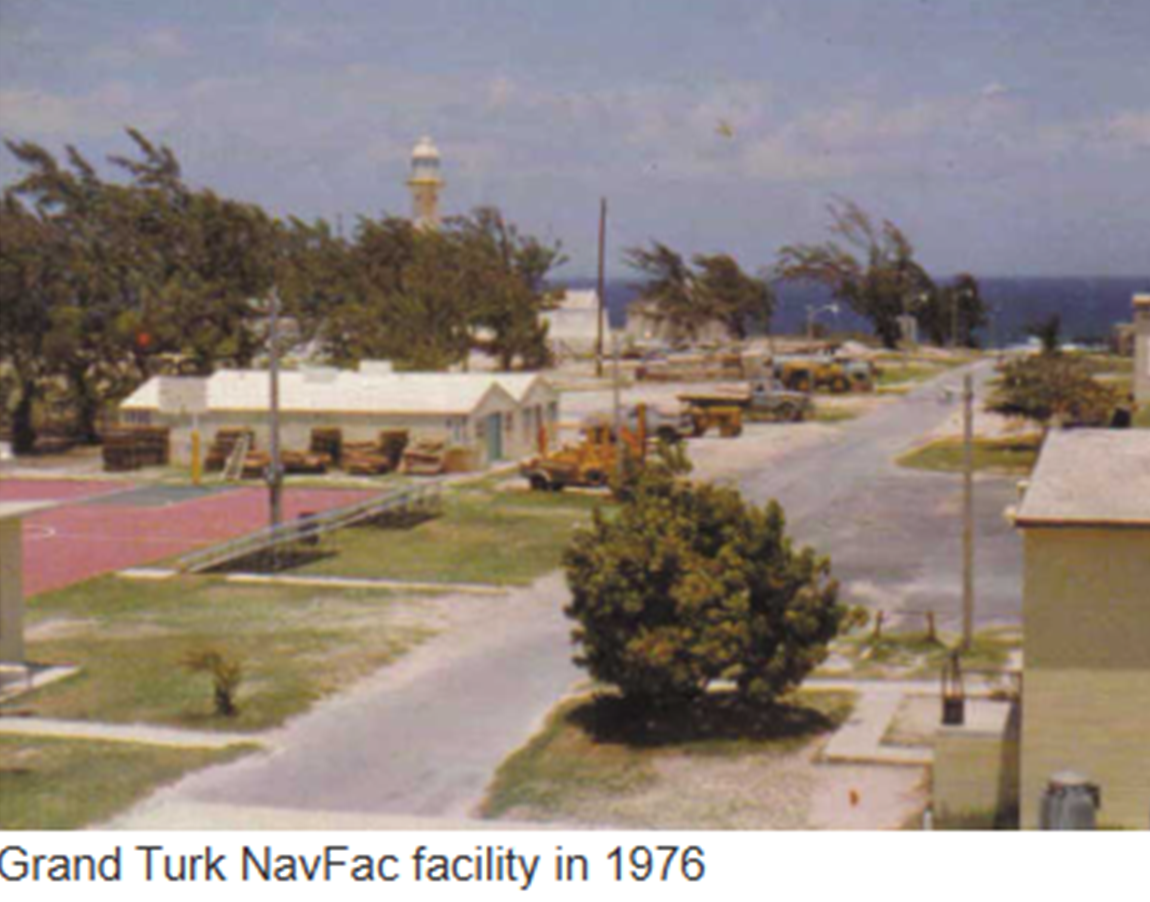
Turks and Caicos, March 30, 2026 – The Turks and Caicos Islands is preparing to mark a major political milestone, with Cabinet approving the establishment of a National Commemorative Committee to celebrate 50 years of ministerial government, a system first introduced under the 1976 Constitution.
The decision, confirmed in the February 10 Post Cabinet statement, signals a year of reflection on a governance model that fundamentally reshaped how the country is run — shifting from direct colonial administration toward locally led political leadership.
That shift was formalized in the Turks and Caicos Islands Constitution Order 1976, which laid the legal foundation for ministerial government and introduced a structured Executive and Legislative system.
At its core, the 1976 Constitution established an Executive Council, bringing together:
- a Governor,
- a Chief Minister elected by members of the Legislative Council,
- and Ministers appointed to assist in governing the Islands.
A Very Different Government Back Then
If today’s Cabinet feels crowded, the 1976 version would have seemed almost unbelievable. There were just three Ministers serving alongside the Chief Minister — a tight, compact leadership team responsible for the affairs of an entire country. No sprawling list of ministries, no long roster of portfolios — just a handful of individuals carrying the weight of governance.
Becoming a Minister wasn’t a direct vote of the people either. You first had to win a seat in the Legislative Council, and from there, the Chief Minister would recommend who should serve. The Governor then made the appointments. In other words, political trust and alignment mattered just as much as public support — and ultimate authority still rested above the local leadership.
And as for job security? There wasn’t much of it. Ministers served without fixed terms and could be removed if they lost their seat, resigned, or if the Governor revoked their appointment. Even the Chief Minister could be ousted through a vote of no confidence. Add to that the basic requirements — being at least 21, a British subject, and meeting residency rules — and it’s clear that ministerial government in 1976 was not only smaller, but far more tightly controlled.
This marked the first time elected representatives were formally given defined roles in the administration of national affairs.
Under the Constitution, the Governor retained overarching authority, but was required in many instances to act on the advice of the Executive Council, particularly in shaping policy and overseeing government operations.
The Chief Minister, meanwhile, was positioned as the central political leader, responsible for directing government business and advising on the appointment of Ministers.
Importantly, the Constitution also allowed for the assignment of responsibilities to Ministers, giving them oversight of specific areas of government — a structure that remains at the heart of today’s Cabinet system.
Section 13 of the Order made clear that Ministers could be assigned responsibility for the administration of departments or government business, embedding accountability and functional governance into the system.
The Legislative Council, established alongside the Executive, provided the law-making body, with elected and appointed members participating in debates, passing legislation, and representing the interests of the Islands.
Together, these provisions created the framework for what is now recognized as ministerial government — a hybrid system balancing local political leadership with constitutional oversight by the Governor.
The explanatory note of the 1976 Order describes it as introducing “new provisions for the Government of the Turks and Caicos Islands,” including the creation of a Legislative Council with elected members and Ministers appointed on the advice of the Chief Minister.
Fifty years on, that structure has evolved through subsequent constitutional changes, but its foundation remains rooted in the 1976 framework.
Cabinet’s decision to establish a commemorative committee suggests that the anniversary will not only celebrate political progress, but also invite reflection on how effectively the system has delivered on its promise of representation, accountability, and governance.
As the Islands approach this Golden Jubilee, attention is likely to turn not only to the achievements of ministerial government, but also to the ongoing question of how the system continues to serve a modern and rapidly developing Turks and Caicos Islands.
Developed by Deandrea Hamilton • with ChatGPT (AI) • edited by Magnetic Media.

Turks and Caicos, March 30, 2026 – The Turks and Caicos Islands Government has signaled changes to its tourism funding framework, with Cabinet approving draft amendments to the Destination Management Fee Act 2023.
The decision was confirmed in the Post Cabinet statement following the February 5 meeting, chaired by Governor Dileeni Daniel- Selvaratnam, where members agreed to move forward with revisions to the law governing the collection and administration of the fee.
The Destination Management Fee, introduced in 2023, is applied to travelers entering the country and is embedded within the cost of travel. The charge was designed to support tourism-related development, including marketing, infrastructure, and sustainability initiatives.
At the time of its introduction, the fee was linked to the establishment of a Destination Management and Marketing Organisation (DMMO), which was expected to coordinate tourism strategy and enhance the visitor experience.
However, recent developments have shifted that landscape.
The DMMO has since been discontinued, raising new questions about how funds generated through the fee are being managed and what structure will now guide tourism development efforts.
The Cabinet note does not outline what specific changes are being proposed under the amended legislation.
It also does not indicate whether adjustments will be made to:
- who pays the fee,
- how it is collected, or
- how the revenue is allocated and overseen.
The move to amend the law comes amid broader government efforts to strengthen revenue collection and compliance, including updates provided to Cabinet on the work of the Drag-Net Steering Committee — a multi-agency initiative focused on improving government revenue systems.
The lack of detail surrounding the amendments leaves several key questions unanswered, particularly given the fee’s direct impact on both visitors and residents and its role in supporting the country’s tourism economy.
Any changes to the Act would require further legislative steps, including presentation to the House of Assembly, before taking effect.
For now, the Cabinet’s approval signals that the government is moving to revise a policy that is already in force — but without yet disclosing how those revisions will alter the current system.
As tourism remains the backbone of the Turks and Caicos Islands economy, clarity on the future of the Destination Management Fee — and the framework it supports — is expected to be closely watched in the weeks ahead.
Developed by Deandrea Hamilton • with ChatGPT (AI) • edited by Magnetic Media.
Photo Credit: TCIAA





-

 News1 week ago
Password to Paradise Radio Remotes at Beaches Turks & Caicos continue to highlight the TCI as the preferred Caribbean destination
-

 News1 week ago
Beaches Turks & Caicos adds four new PADI Dive Instructors to the cadre of professionals in the watersports department
-
 News1 week ago
Beaches Turks & Caicos shares fine dining experiences to high school students in Providenciales
-

 Bahamas News7 days ago
Bahamasair Backs Surge as Bahamians Flood South Florida for V.J. Edgecombe Showdown
-

 News7 days ago
50 Years of Ministerial Government: Cabinet Moves to Mark Milestone Rooted in 1976 Constitution
-

 News7 days ago
Fuel Costs Rise Again as Pelican Energy Warns of Global Pressures
-

 News7 days ago
Government Moves to Amend Destination Management Fee Law
-

 News7 days ago
Flow TCI Empowers Local Communities with ‘Project EmpowerHER’