
Bahamas News
BAHAMAS: Minister Campbell Challenges to Men/Men’s Groups to Serve as Father Figures

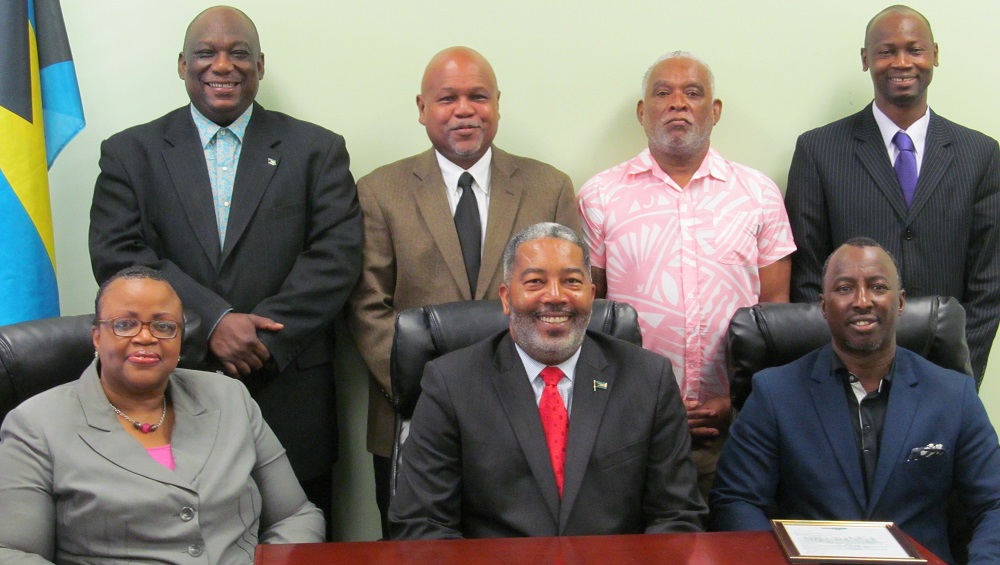
#Nassau, August 20, 2019 – Bahamas – Minister of Social Services and Urban Development, the Hon. Frankie A. Campbell, told executives of a visiting group of male organizations that one of the best ways they can partner with the Ministry to ensure equity and equality for women, and the protection of women across The Bahamas, is if they continue to provide positive influences/programmes geared towards the nation’s young men.
“There is a saying: ‘Bend the tree while it is young.’ Another is that ‘it is easier to build a boy, than repair a man.’ Both of those are very wise sayings that would be useless clichés if we do not put them into action,” Minister Campbell said.
“If we want to bring equity and equality to our girls and females; if we want to ensure the protection of our girls and women from gender-based violence, all of our efforts would be in vain if we do not ensure that there are similarly-minded Adams to partner with them and so our underlying efforts have to be to save Adam while we work to ensure that there is equality and equity and empowerment for our girls and women.
“What we have here is a tremendous opportunity to make a difference in the lives of our boys and men and by extension, our girls and women. I assure you of my personal commitment to this process as a man who has three daughters who someday are going to need husbands. Someday your daughters and the daughters of all of the other fathers in our Bahamas are going to need husbands, and so our jobs as men in this society, is to ensure that there are some good husbands out there from among whom they can select.
“This presents yet another connection – the depth of our obligation to be parents/fathers to as many young children, the boys in particular, since our statistics indicate that boys and men – for the most part – are the perpetrators of violence. If we father them now, we reduce the likelihood of encountering them in a violent capacity,” Minister Campbell added.
Minister Campbell’s charge came while addressing the men during a Working Meeting with members of the International Men’s Day Committee and executives of the Movement for Change, Dream Catchers and R.I.S.E. (Reform, Inspire, Strengthen and Educate) Programmes. The latter three operate year-round life and social skills enhancement programmes for males living in the urban communities.
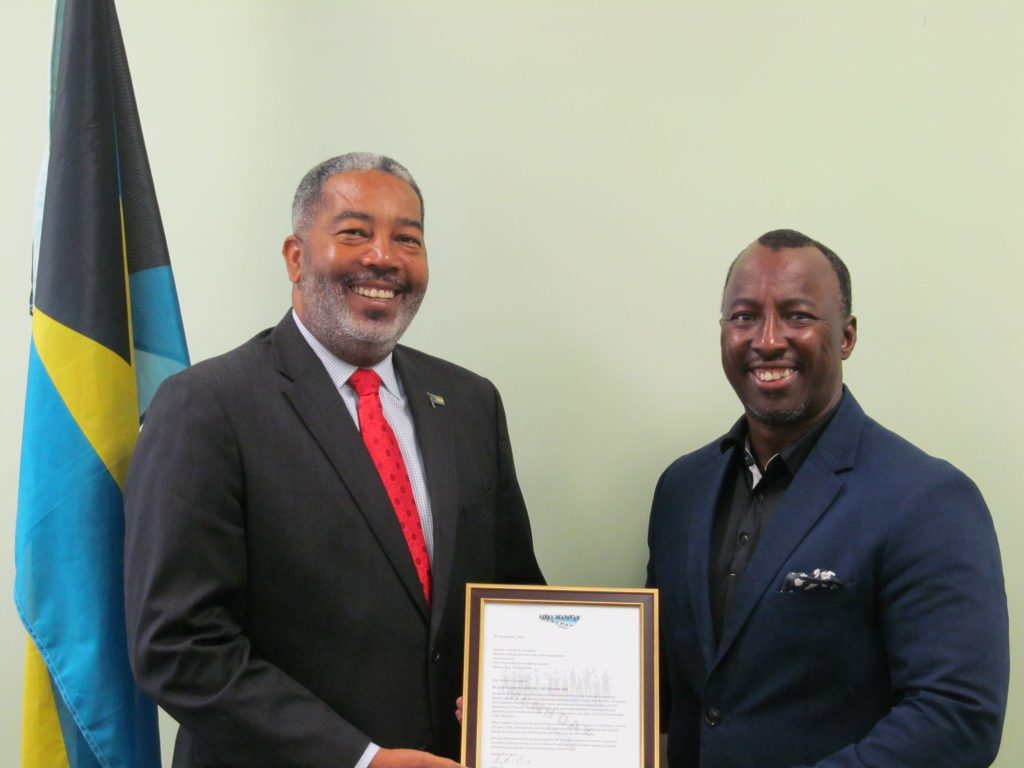
The group met with Minister Campbell to discuss a number of matters impacting males in The Bahamas, and to present the Minister with a plaque to show their appreciation for the establishment of a Male Desk at the Department of Gender and Family Affairs.
Minister Campbell told the group that while he appreciated the gesture, it was he who was thankful to them and the work they have been doing in the community.
(The International Men’s Day Committee has expanded its role from mainly organising activities to observe IMD annually in November, to focusing on addressing the social issues impacting men year-round through various partnerships.)

“I commend you for the plaque, (but) I am always pleasantly amused when I receive these acts of appreciation and gratitude, but the reality is that it is I who appreciate the opportunity to have this level of involvement. I thank you for thinking that I did something that deserves recognition, but it is I who want to thank you for allowing me to be a part of this opportunity to evoke change in our society.
“We have an opportunity here to ensure that if history is accurately documented, it would show that – as a team – we would have been able to leave one or two footprints in the sand as we move towards greater equity, equality and protection for our girls and women, while also empowering our boys and men to a greater degree of consciousness, and so I just want to thank you again for welcoming me as a part of it and to the extent that I can, both personally and with the office that I hold, I assure you of my support,” Minister Campbell added.
By: Matt Maura
Release: BIS
Photo Captions:
Header: Minister of Social Services and Urban Development, the Hon. Frankie A. Campbell (seated centre) with executives of the International Men’s Day Committee (IMDC) during a Working Meeting at the Ministry’s headquarters, Aventura Plaza. Also pictured (seated from left) are: Ethrice Cooper, Acting Deputy Permanent Secretary, Human Resource Unit, Ministry of Social Services and Urban Development and (at far right); Keith Cox, President, IMDC. Pictured (standing from left) are IMDC executives Pastor Henry Higgins, Terence Bethel, Dr. Eric Fox and Henry Johnson, Male Programme Coordinator, Department of Gender and Family Affairs.
Insert: Keith Cox, President of the International Men’s Day Committee IMDC), presents Minister of Social Services, the Hon. Frankie A. Campbell, with a plaque in recognition of the establishment of a Male Desk at the Department of Gender and Family Affairs, Ministry of Social Services and Urban Development. The desk is headed by Henry Johnson, a CARCOM certified Gender-based Violence Expert, who serves as Male Programme Coordinator.
(BIS Photo/Matt Maura)

Bahamas News
Dredging Is Not Just About Size — It Is About What Is Being Destroyed, Warns Save Exuma Alliance Regarding Yntegra’s Proposed Rosewood Resort
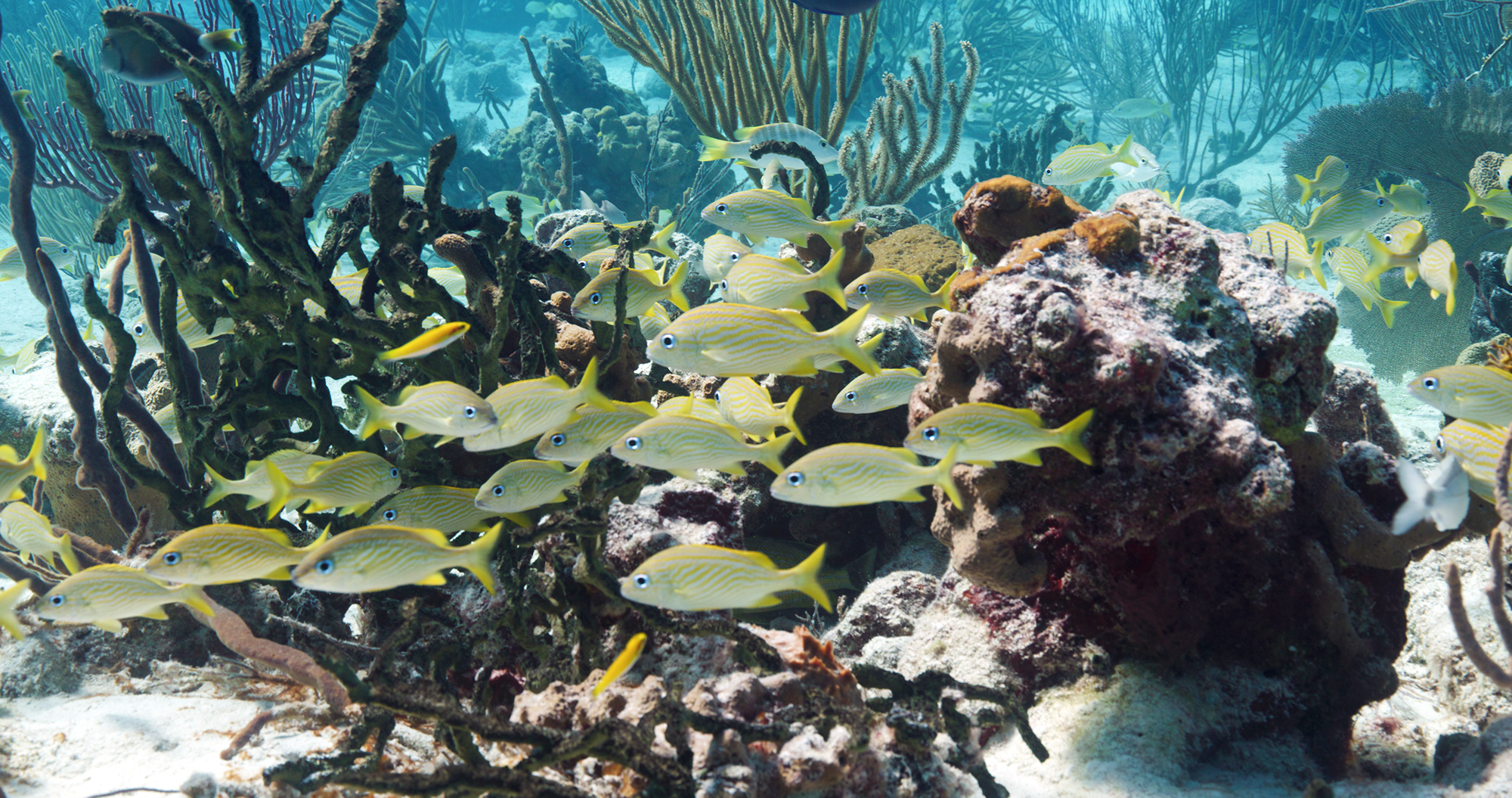
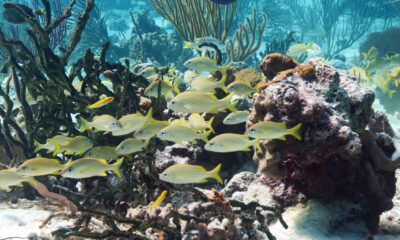
Save Exuma Alliance (SEA) — a coalition of Central Exuma business owners, tour operators and residents — has warned that the issue of dredging in the North Bay of Sampson Cay, Exuma, is not just about the number of acres being dredged – but what exists within the proposed dredge area. SEA describes the site as an ecological treasure trove filled with seagrass, coral, turtles and abundant marine life.
This comes after foreign developer Yntegra agreed to reduce the scope of its dredging following government warnings that it would impact The Bahamas carbon credit status, which shows the importance of the marine habitat.
“It is easy to point to other developments and say they are dredging more, but that is not comparing like with like,” SEA said in response to comparisons made by Yntegra. “If one area is largely sand with little marine life, that is very different from what we have in North Bay. Anyone who has spent time there can tell you it is filled with turtles, fish, and — critically — the seagrass and coral that provide essential habitat.”
Miami-based investment group Yntegra is seeking to construct a large-scale Rosewood-branded resort on Sampson Cay. Since its announcement, the project has generated environmental, social and economic concerns among residents and business operators in Central Exuma.
The proposed development includes dredging in North Bay, construction of a substantial seawall that would alter natural water flow, more than 100 structures, two mega yacht marinas, and an industrial dock serviced by fuel and supply ships in an area currently used by swimmers. Opponents argue that the scale and design of Yntegra’s Rosewood Exuma project are incompatible with the fragile ecosystem and cultural character of the Central Exumas.
SEA noted that the government’s Climate Change Unit has also raised concerns about the environmental cost of dredging associated with Yntegra’s Rosewood Exuma project.
“The government has acknowledged that this is an area of significant importance,” SEA said. “While the financial implications are serious, for us here in Exuma this is about more than money. It underscores how valuable this marine ecosystem is — the seagrass, coral and marine life that make Exuma exceptional. This is what attracts visitors from around the world. We should not minimize the concern by comparing this bay to areas that do not have the same remarkable underwater ecosystem. It is simply not the same.”
Experienced boat captain Tito Baldwin also questioned the feasibility of the marine infrastructure proposed as part of this plan. He warned that the dredging currently outlined would not be sufficient to accommodate the vessels required to service the project.
“It’s going to have to be at least four times larger than what has been proposed,” Baldwin said. “As designed, it is beyond possibility.”
He explained that vessels supplying fuel, construction materials and provisions for a projected 300-person workforce would require significantly greater depth and maneuvering space.
“For supply vessels delivering hundreds of thousands of gallons of diesel, you’re looking at ships with a 10-foot draft,” Baldwin said. “To operate safely, you would need at least 13 feet of depth. That means dredging far deeper than what has been proposed. With currents running east and west in that area, you would also need a much wider turning basin to maneuver safely. As it stands, it would be extremely difficult, if not impossible.”
SEA is urging individuals concerned about the environmental impact of dredging connected to Yntegra’s Rosewood Exuma project to visit www.saveexumaalliance.org for more information. A petition calling for a halt to approvals is also available on the site, with more than 7,100 signatures collected to date.
PM: Project delivers on promise and invests in youth, sports and national development
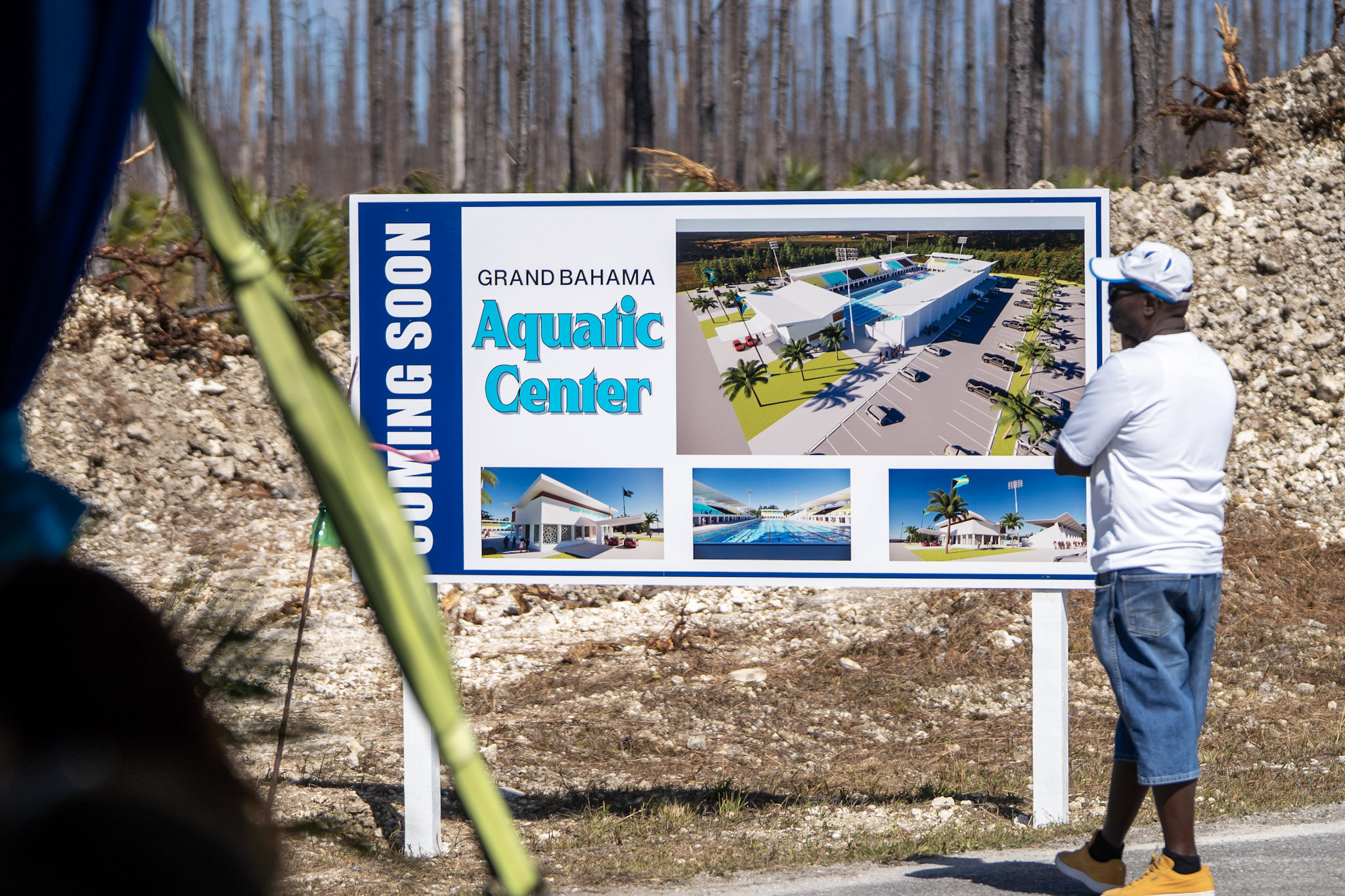
GRAND BAHAMA, The Bahamas — Calling it the fulfillment of a major commitment to the island, Prime Minister Philip Davis led the official groundbreaking for the Grand Bahama Aquatic Centre, a facility the government says will transform sports development and create new opportunities for young athletes.
Speaking at the Grand Bahama Sports Complex on February 12, the Prime Minister said the project represents more than bricks and mortar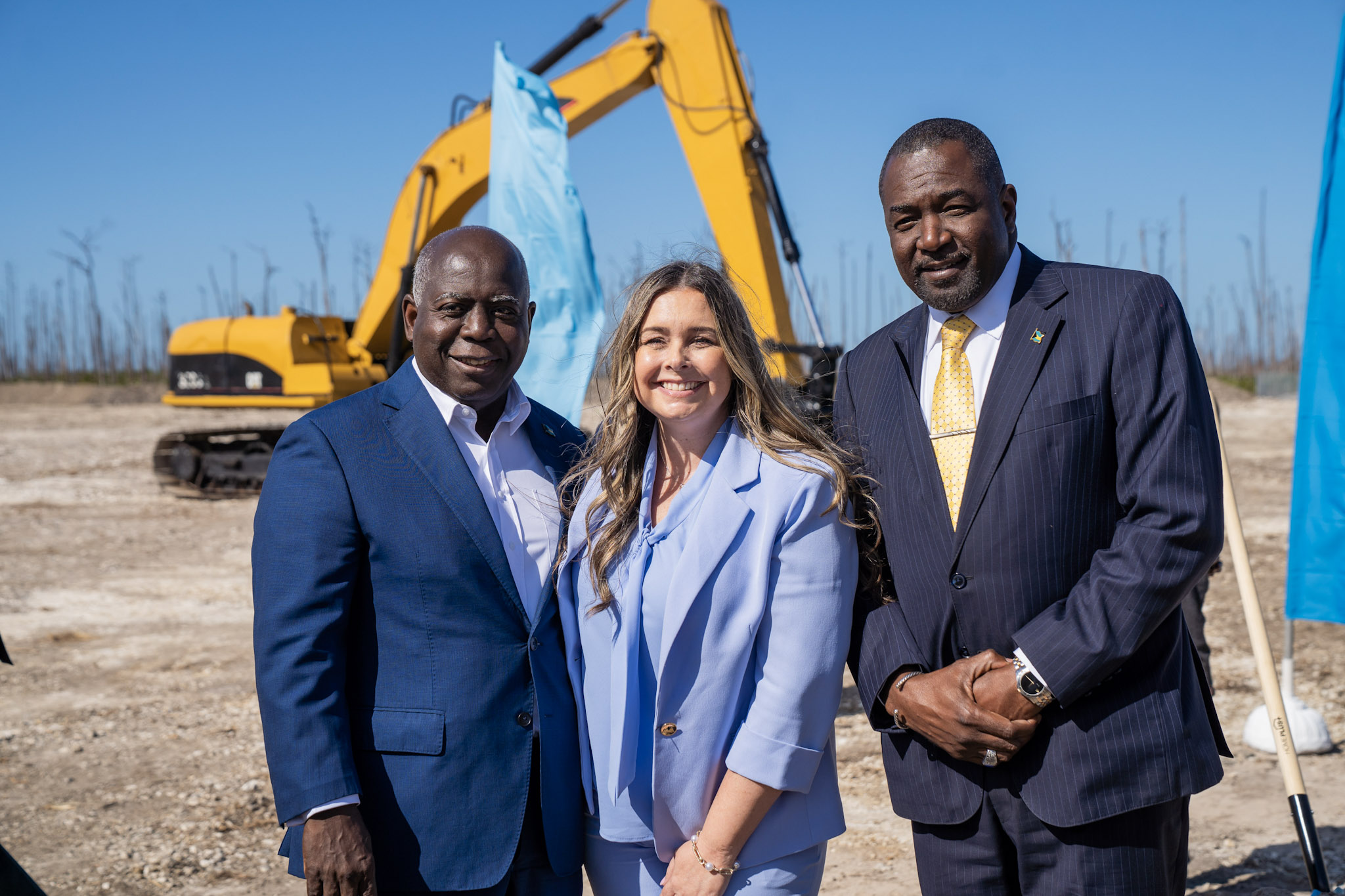 — it is an investment in people, national pride and long-term economic activity. The planned complex will feature a modern 50-metre competition pool, designed to meet international standards for training and regional and global swim meets. Davis said the facility will give Bahamian swimmers a home capable of producing world-class performance while also providing a space for community recreation, learn-to-swim programmes and water safety training.
He noted that Grand Bahama has long produced outstanding athletes despite limited infrastructure and said the new centre is intended to correct that imbalance, positioning the island as a hub for aquatic sports and sports tourism.
The Prime Minister also linked the development to the broader national recovery and revitalisation of Grand Bahama, describing the project as part of a strategy to expand opportunities for young people, create jobs during construction and stimulate activity for small businesses once operational.
The Aquatic Centre, he said, stands as proof that promises made to Grand Bahama are being delivered.
The project is expected to support athlete development, attract competitions, and provide a safe, modern environment for residents to access swimming and water-based programmes for generations to come.
Angle by Deandrea Hamilton. Built with ChatGPT (AI). Magnetic Media — CAPTURING LIFE.

The Bahamas, February 15, 2026 – For the better part of three years, Bahamians have been told that major Afreximbank financing would help transform access to capital, rebuild infrastructure and unlock economic growth across the islands. The headline figures are large. The signing ceremonies are high profile. The language is ambitious. What remains far harder to see is the measurable impact in the daily lives of the people those announcements are meant to serve.
The Government’s push to secure up to $100 million from Afreximbank for roughly 200 miles of Family Island roads dates back to 2025. In its February 11 disclosure, the bank outlined a receivables-discounting facility — a structure that allows a contractor to be paid early once work is completed, certified and invoiced, with the Government settling the bill later. It is not cash placed into the economy upfront. It does not, by itself, build a single mile of road. Every dollar depends on work first being delivered and approved.
The wider framework has been described as support for “climate-resilient and trade-enhancing infrastructure,” a phrase that, in practical terms, should mean projects that lower the cost of doing business, move people and goods faster, and keep the economy functioning. But for communities, that promise becomes real only when the projects are named, the standards are defined and a clear timeline is given for when work will begin — and when it will be finished.
Bahamians have seen this moment before.
In 2023, a $30 million Afreximbank facility for the Bahamas Development Bank was hailed as a breakthrough that would expand access to financing for local enterprise. It worked in one immediate and measurable way: it encouraged businesses to apply. Established, revenue-generating Bahamian companies responded to the call, prepared plans, and entered a process they believed had been capitalised to support growth. The unanswered question is how much of that capital has reached the private sector in a form that allowed those businesses to expand, hire and generate new economic activity.
Because development is not measured in the size of announcements.
It is measured in loans disbursed, projects completed and businesses expanded.
The pattern is becoming difficult to ignore. In June 2024, when Afreximbank held its inaugural Caribbean Annual Meetings in Nassau, Grand Bahama was presented as the future home of an Afro-Caribbean marketplace said to carry tens of millions of dollars in investment. What was confirmed at that stage was a $1.86 million project-preparation facility — funding for studies and planning to make the development bankable, not construction financing. The larger build-out remains dependent on additional approvals, land acquisition and further capital.
This distinction — between financing announced and financing that produces visible, measurable outcomes — is now at the centre of the national conversation.
Because while the numbers grow larger on paper, entrepreneurs still describe access to capital as out of reach, and communities across the Family Islands are still waiting to see where the work will start.
And in an economy where stalled growth translates into lost opportunity, rising frustration and real social consequences, the gap between promise and delivery is no longer a communications issue.
It is an inability to convert announcements into outcomes.
Angle by Deandrea Hamilton. Built with ChatGPT (AI). Magnetic Media — CAPTURING LIFE.





-
 Health1 week ago
Chile becomes the first country in the Americas to be verified by WHO for the elimination of leprosy
-
 Caribbean News3 days ago
Jamaica Joins Afreximbank Agreement, Strengthening Africa–Caribbean Partnership
-

 News1 week ago
Police Commissioner Honoured with Distinguished Civic Service Award at TCHTA Star Awards
-
 Bahamas News7 days ago
Dredging Is Not Just About Size — It Is About What Is Being Destroyed, Warns Save Exuma Alliance Regarding Yntegra’s Proposed Rosewood Resort
-
 News7 days ago
Flow TCI powers Inter-High Track and Field Championships
-

 Health1 week ago
TCI Hospital Celebrates Successful “Heart Strong TCI” Initiative During Heart Month
-

 Education6 days ago
Message from Hon. Rachel M. Taylor, Minister of Education, Youth, Sports & Culture
-

 News2 days ago
Rights Without Justice: How Weak Enforcement Fails Women and Girls