
Caribbean News
JAMAICA: Former Prime Minister Edward Seaga Passes

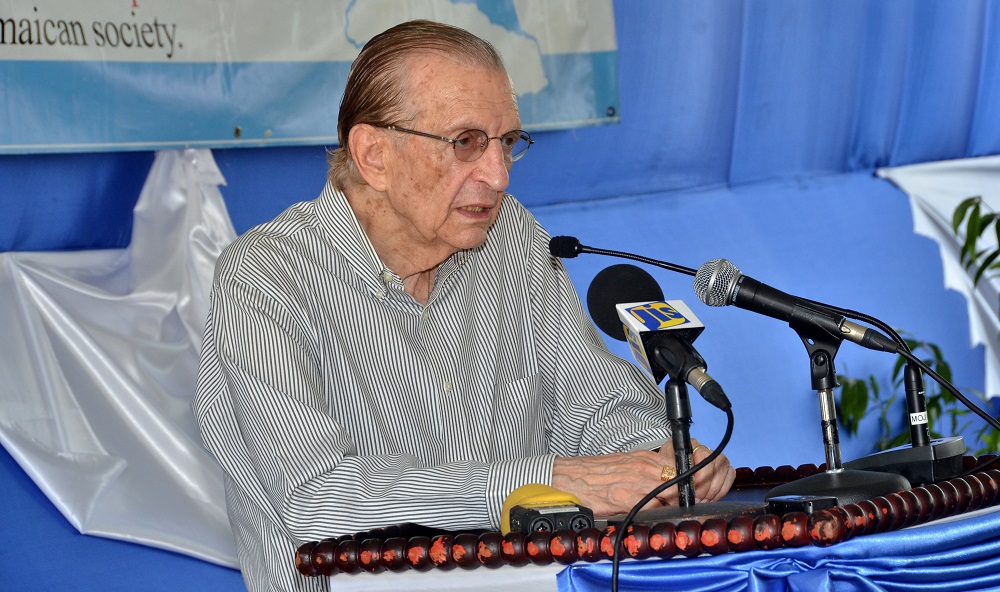
#Kingston, May 28, 2019 – Jamaica – Former Prime Minister, the Most Hon. Edward Seaga, died today (May 28), in the United States, where he was receiving treatment.
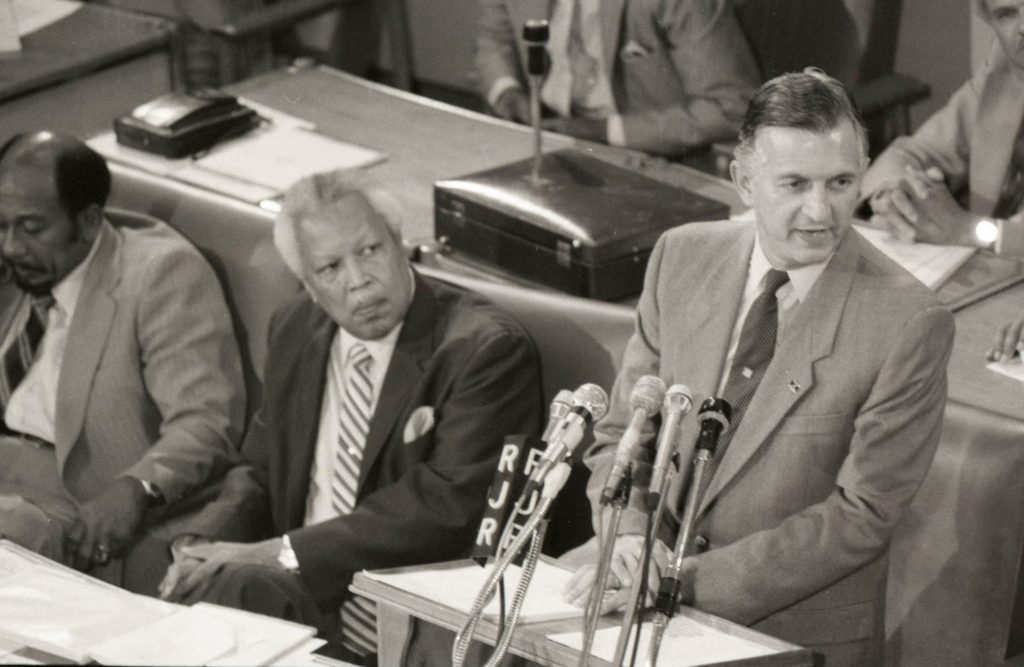
Mr. Seaga, aged 89, was Jamaica’s fifth Prime Minister, serving from October 1980 to February 1989.
Through 43 years of unwavering service to the nation, the former Prime Minister played a fundamental role in shaping Jamaica’s post-Independence parliamentary landscape.
Mr. Seaga was one of the founding fathers who framed the Jamaican Constitution in 1961. He initiated a rewrite of the Human Rights section of the Constitution to provide for a Charter of Fundamental Rights and Freedoms; and created the office of public defender. The former Prime Minister was also a member of the first Parliament of independent Jamaica.
Described as a prolific, transformational leader, he had the distinction of being the longest-serving Member of Parliament (MP) in the history of Jamaica and the Caribbean region. Mr. Seaga represented the constituency of West Kingston from 1962 until his retirement from active politics in 2005.
Mr. Seaga’s legacy in shaping the country’s political history began at age 29, when in 1959, founder of the Jamaica Labour Party (JLP), Sir Alexander Bustamante, nominated him to serve in the Upper House of Parliament – the Legislative Council (later the Senate). Mr. Seaga was the youngest member to be appointed to serve in this capacity.
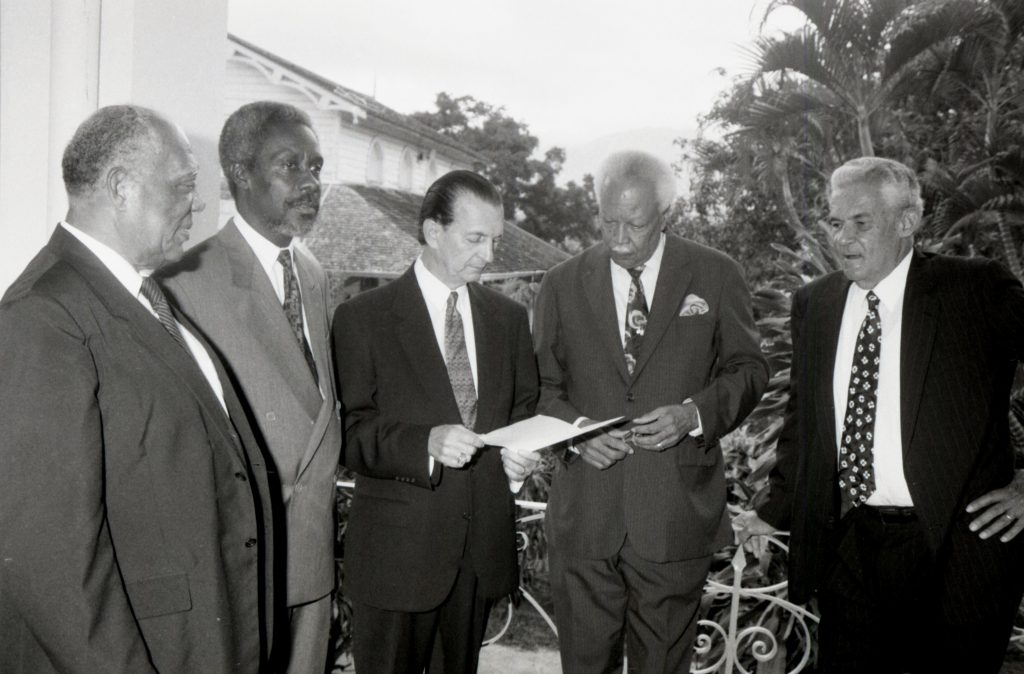
After winning his seat as MP in 1962, Mr. Seaga was appointed to the Cabinet as Minister of Development and Welfare. Following the 1967 General Election, he was appointed Minister of Finance and Planning and in 1974 became the Leader of the Jamaica Labour Party (JLP), a capacity in which he served for 30 years.
Mr. Seaga became Prime Minister following the General Election of October 30, 1980. The JLP again took the helm of Government at the 1983 General Election and Mr. Seaga remained Prime Minister until February 1989. During the course of his political life, Mr. Seaga made a significant impact on Jamaica’s growth and development through the introduction of various programmes and the establishment of institutions across the social, cultural, political and financial sectors.
Starting from as early as 1961 with Things Jamaican, Mr. Seaga also established the Jamaica Festival Movement, and spearheaded the repatriation of Marcus Garvey and his appointment as the country’s first National Hero.
The former Prime Minister also created the training institution, HEART Trust/NTA; and established the Urban Development Corporation, Jamaica Stock Exchange and Jamaica Unit Trust. Also to his credit was the creation of the Jamaica Mortgage Bank; Students’ Loan Bureau; National Development Bank; Agricultural Credit Bank; Jamaica National Investment Promotion Ltd., now Jamaica Promotions Corporation (JAMPRO); and the EXIM Bank. His interventions to enhance the lives of the most vulnerable were perhaps the areas in which Mr. Seaga made the most resounding impact.
In the 1960s, Mr. Seaga transformed his West Kingston constituency, then known as ‘Back-O-Wall’ into a modern, low-income residential community. It was renamed Tivoli Gardens and remains a model of successful urban community development.
“The little things can give me as big a moment of joy as the big things. I like to do things that can help people to develop, because when you help people to develop, you are helping the country to develop,” Mr. Seaga told JIS News in 2016.
Mr. Seaga launched the Golden Age Movement in the 1960s, which was a new concept in modern community care for the aged, and the first Golden Age Home was built in 1985.
Also, the Food Aid Programme was established by Mr. Seaga in 1983 to assist the poorest groups in the society by supplementing their food supply. Further, in 1970, Mr. Seaga launched the Student Revolving Loan Fund to assist needy students at the university level.
In recognition of his contributions, Mr. Seaga received several prestigious awards at the local and international levels. Among them were the Order of the Nation in 2002, the second highest honour in Jamaica; several Doctor of Law (LLD) degrees from international universities between 1981 and 1987; the United Nations Environmental Leadership Award; Dr. Martin Luther King Humanitarian Award; and the Gleaner’s Man of the Year award for 1980 and 1981.
The North South Highway was also named in honour of Mr. Seaga in 2018.
When Mr. Seagaretired from representational politics, he accepted a post as Senior Research Fellow at the University of the West Indies (UWI) Mona campus, and was later named Chancellor at the University of Technology in 2010. He served as President of the Tivoli Gardens Football Club, and chaired the Premier League Clubs Association.
The former Prime Minister also had several publications, including ‘Grenada Intervention: The Inside Story’; ‘Revelations: Beyond Political Boundaries, Lectures 2005-2009’; ‘Parent-Teacher Relationships’, published by the Institute of Social and Economic Research, UWI; and ‘Revival Spirit Cults’ (Jamaica Journal), published by the Institute of Jamaica.
There are also two volumes of his autobiography, titled, Edward Seaga: My Life and Leadership: Clash of Ideologies, Volume 1; and Edward Seaga: Shaping History: Hard Road to Travel, Volume 2.
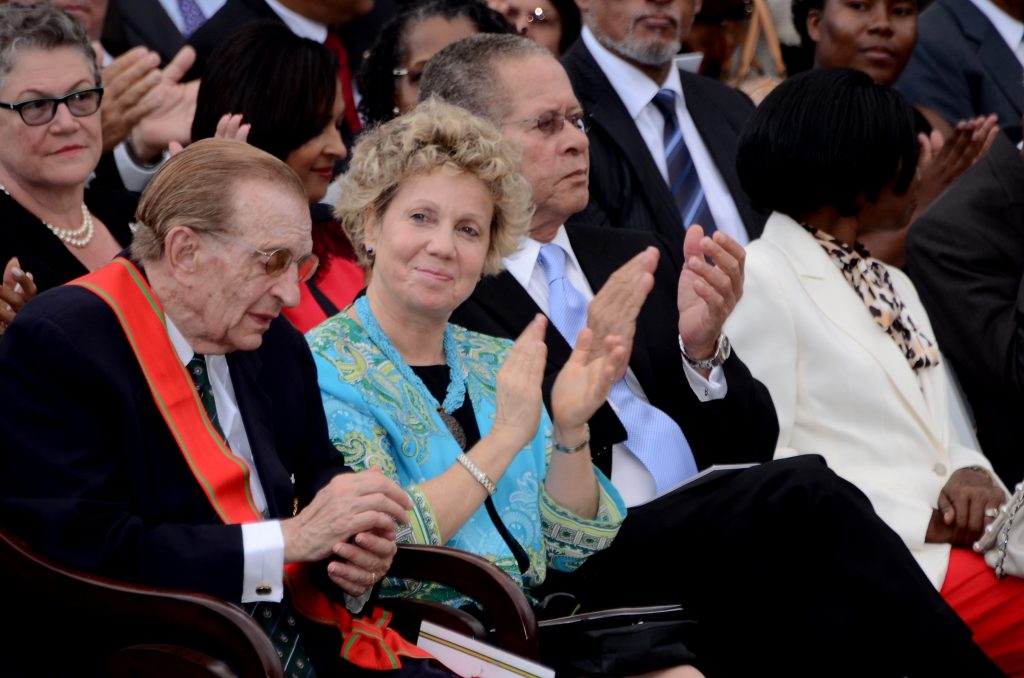
Mr. Seaga also did CD compilations of ‘Folk Music of Jamaica’ (album of music recorded by Ethnic Folkways Library), and ‘Origins of Jamaican Music: Reggae Golden Jubilee’, which was released in 2012. During his illustrious tenure, Mr. Seaga helped to shape many political minds, including Prime Minister, the Most Hon. Andrew Holness, upon whom he made a profound personal impact.
In a 2012 tribute to Mr. Seaga in Parliament when he was Leader of the Opposition, Mr. Holness referred to him as “one who mentored and, I dare say, fathered me politically”.
Mr. Holness, who said he had the privilege of working with Mr. Seaga during his early years in politics, said he was amazed by his capacity for work and his attention to detail.
Thanking him for dedicated and faithful service to Jamaica, Mr. Holness said that Mr. Seaga’s name is “indelibly etched on almost every facet of Jamaican life”.
By: Alecia Smith
Release: JIS
Photo Captions:
Header: The late former Prime Minister, the Most Hon. Edward Seaga, speaks at the opening of the Tivoli Gardens Restorative Justice Centre, in West Kingston, in 2017.
First Insert: The late former Prime Minister, the Most Hon. Edward Seaga, opens the 1983 Budget Debate in the House of Representatives. To his right is the late former Prime Minister, the Most Hon. Hugh Shearer.
Second Insert: The late former Prime Minister, the Most Hon. Edward Seaga (centre), peruses a programme at a ceremony at King’s House in 1992. Others (from left) are the late former Governor-General, His Excellency the Most Hon. Howard Cooke; former Prime Minister, the Most Hon. P. J. Patterson; the late former Prime Minister, the Most Hon. Hugh Shearer; and the late former Prime Minister, the Most Hon. Michael Manley.
Third Insert: The late former Prime Minister, the Most Hon. Edward Seaga (left), and Mrs. Carla Seaga, at a ceremony at King’s House in 2016.
JIS File Photos

By Deandrea Hamilton | Editor
September 28, 2026 – Wall Street initially flinched at the $3-billion handshake. But in a matter of days, it was smoother sailing.
Perhaps the bigger Caribbean business story is not what Sandals Resorts International is getting from the deal. It is who is writing the cheque — and what that says about what Gordon “Butch” Stewart built.
As reports of Royal Caribbean Group’s Sandals deal circulated Tuesday, RCL shares plunged 6.14 percent from Monday’s $250.25 close to $234.89, on sharply elevated trading.
When the agreement became official Wednesday — approximately $3 billion for a 50 percent equity interest in Sandals and Beaches Resorts — shares slipped another 1.95 percent to $230.30 and touched $222.22 intraday. Investors were digesting both the size of the investment and committed debt financing secured through Morgan Stanley.
But by Thursday, RCL rebounded 3.77 percent, with shares continuing their recovery Friday to finish the week around $243. Analysts were also looking ahead: JPMorgan reportedly raised its RCL price target from $345 to $394, while Citi placed the company on a 90-day positive catalyst watch.
And just who is RCL?
Royal Caribbean Group is a global vacation giant, publicly traded on the New York Stock Exchange with a market value of roughly $65 billion. Its portfolio includes Royal Caribbean International, Celebrity Cruises and Silversea, alongside private destinations and an expanding vacation platform.
So when a company of that scale commits $3 billion for only half of Sandals and Beaches Resorts, the transaction puts a striking financial marker on one of the Caribbean’s greatest home-grown hospitality success stories.
The deal, expected to close in early 2027, creates a 50-50 partnership with the Stewart family and takes Royal Caribbean deeper into the all-inclusive resort business.
Butch Stewart started Sandals in Jamaica in 1981 believing a Caribbean company could compete with the world’s best.
Forty-five years later, one of the world’s biggest vacation companies is prepared to pay $3 billion just to own half of what he built.
Now that’s the handshake that does more than seal a deal — it cements a legacy.
Caribbean News
Royal Caribbean Group and Sandals Resorts Announce Landmark Partnership to Accelerate Their Leading Vacation Experiences
Royal Caribbean Group Investment to Advance Sandals and Beaches’ Growth and Broaden the Group’s Vacation Portfolio
Montego Bay, Jamaica and Miami, September 24, 2026 – Royal Caribbean Group (NYSE: RCL) and Sandals Resorts today announced the signing of an agreement to form a partnership in the all-inclusive resort space with a 50% investment from Royal Caribbean Group. Building on Sandals and Beaches Resorts’ more than four decades of leadership in Caribbean hospitality, the joint venture will create new opportunities for continued resort growth while broadening the experiences across Royal Caribbean Group’s vacation platform.
The partnership brings together two of the travel industry’s most celebrated vacation companies, pairing Sandals and Beaches’ all-inclusive resort expertise with Royal Caribbean Group’s vacation platform, including industry-leading brands – Royal Caribbean, Celebrity Cruises and Silversea – a portfolio of private destinations, new river cruising offering, and an industry-first loyalty program. United in a shared history in the Caribbean and connected by a love for their communities, the companies will offer travelers an unparalleled collection of cruise, private destination and resort experiences, serving guests across more vacation occasions and establishing their undisputed leadership in Caribbean vacations.
The joint venture expands Royal Caribbean Group into an adjacent vacation category, growing its participation in the approximately $2 trillion global vacation market, and meets the growing global demand for Sandals and Beaches Resorts by accelerating their expansion. The partnership will include Sandals and Beaches’ collection of premier all-inclusive properties across the Caribbean, and the companies will explore opportunities to broaden distribution, deepen guest engagement, and make it easier for travelers to discover vacation experiences offered across both portfolios.
“For nearly 60 years, we’ve reimagined what a vacation can be, constantly expanding the ways we inspire our guests to explore, connect and create lifelong memories,” said Jason Liberty, Chairman and CEO, Royal Caribbean Group. “We have been building a vacation platform that brings joy to millions of people around the world and creates meaningful relationships that last with our guests. Our partnership with Sandals and Beaches Resorts is an important next step on that journey – bringing together two iconic leading vacation companies to further strengthen and grow one of the most admired resort portfolios in the world. The Stewart family has created powerful and beloved brands, and we are honored to build on that legacy. Together, we see tremendous opportunity to expand the reach of Sandals and Beaches Resorts and continue turning the vacation of a lifetime into a lifetime of vacations.”
“My father, Gordon ‘Butch’ Stewart, founded Sandals Resorts with the belief that a company built in the Caribbean could stand on the world stage alongside the most respected names in hospitality. Today is proof of how far that vision can go,” said Adam Stewart, Executive Chairman of Sandals Resorts and Beaches Resorts. “This partnership is the natural next step in building on that conviction. It gives us the ability to grow faster with a partner that shares our values of exceptional hospitality, long-term investment, and the power of enduring brands. Together, we will introduce more guests to Sandals and Beaches Resorts while creating even more extraordinary experiences for those who have made our resorts part of their lives for decades.” Stewart added, “As we continue to grow, we will remain true to what has always defined us: delivering authentic vacations that exceed expectations while creating opportunities for our team members, travel advisor partners and the communities we call home. The future has never been brighter, and I know this moment would make my father incredibly proud.”
The joint venture will be governed by a board under the shared leadership of Stewart and Liberty. Stewart will maintain a leadership role in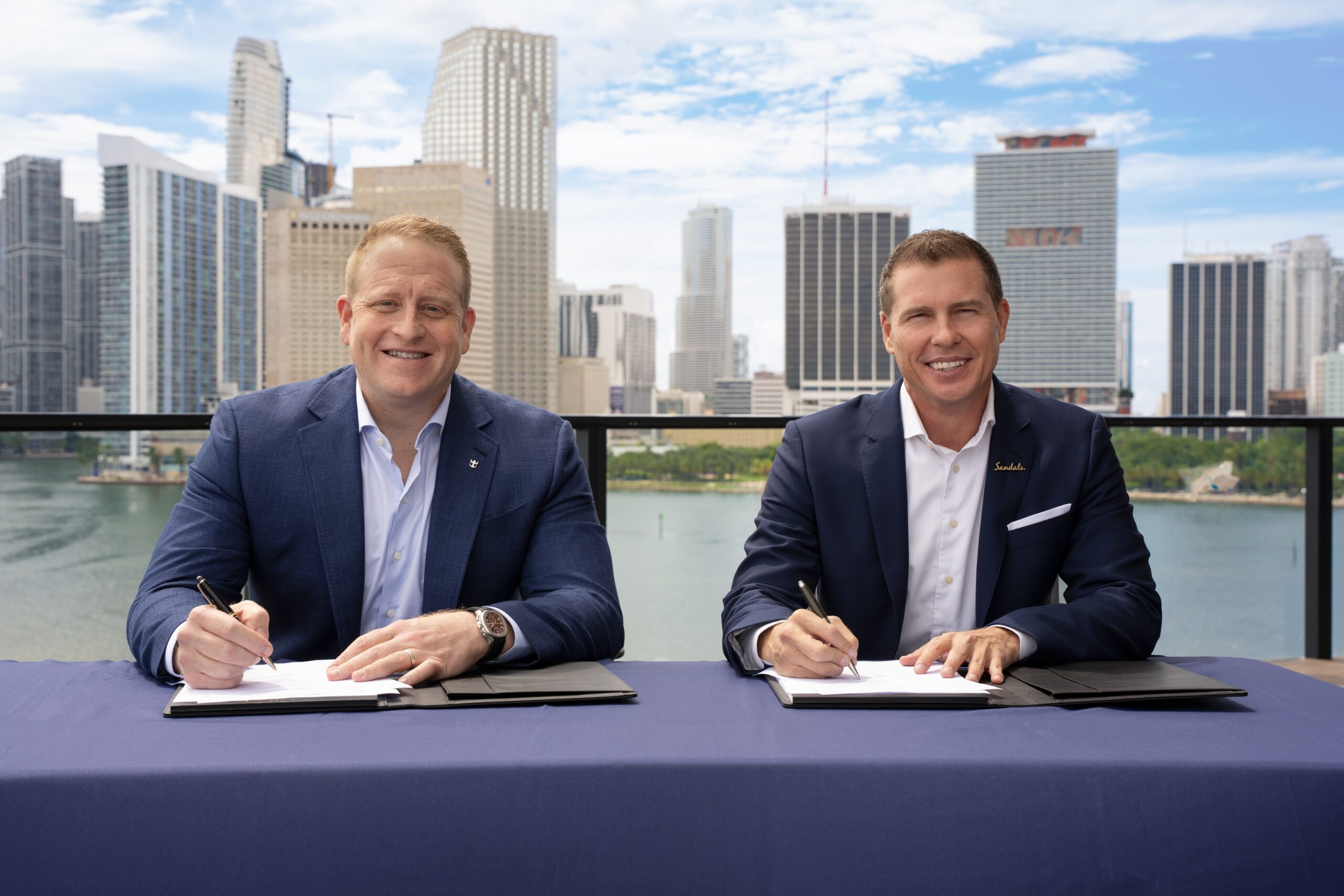 guiding the company’s long-term strategic growth as Executive Chairman of Sandals and Beaches Resorts. Existing reservations, loyalty programs, resort operations and cruise operations will continue as usual, with the partnership bringing additional resources to support future opportunities.
Under the terms of the agreement, Royal Caribbean Group will acquire a 50% equity interest in Sandals and Beaches Resorts for approximately $3 billion, representing a forward EBITDA multiple of approximately 10x. Royal Caribbean Group has secured committed debt financing from Morgan Stanley to fund the investment. The transaction is expected to close in early 2027, subject to customary approvals and closing conditions, and is expected to be accretive to earnings next year.
BofA Securities and PJT Partners acted as financial advisors, and Latham & Watkins and Jones Day acted as legal advisors to the Sandals Group. Perella Weinberg Partners and Morgan Stanley acted as financial advisors and Kirkland & Ellis LLP acted as legal advisor to Royal Caribbean Group.
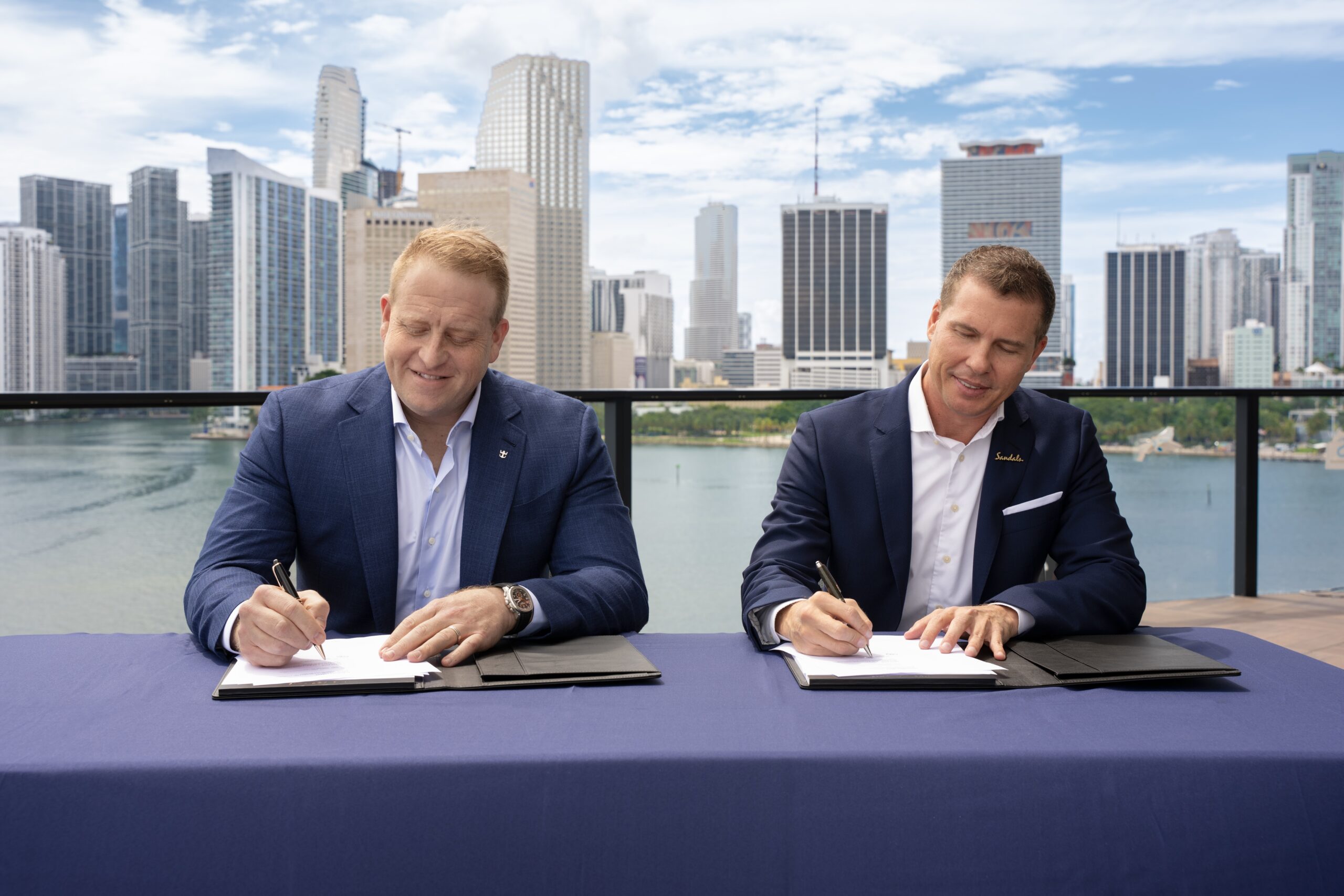
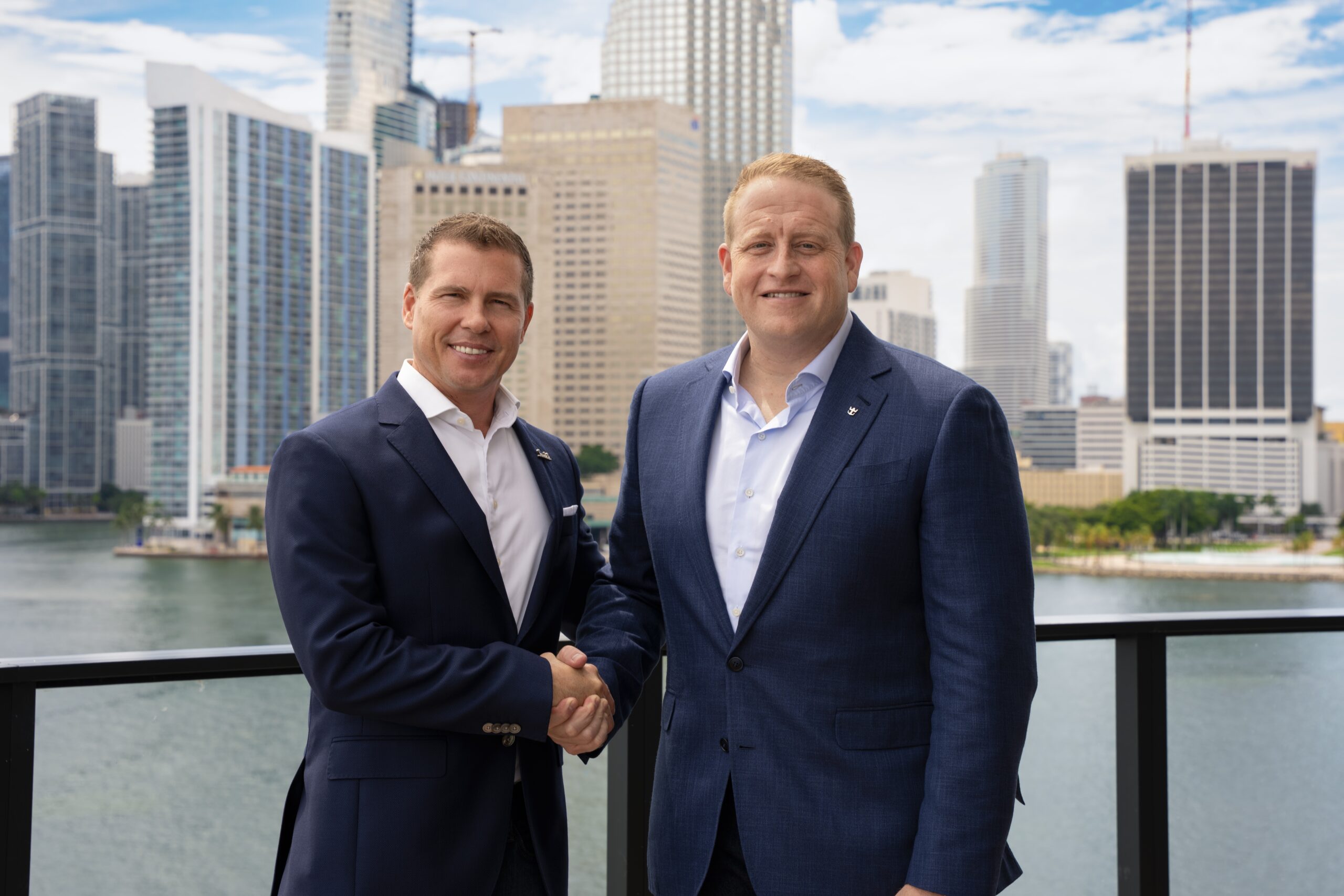
PHOTO CAPTION: Jason Liberty, Chairman and CEO of Royal Caribbean Group, and Adam Stewart, Executive Chairman of Sandals Resorts, mark the signing of an agreement to form a landmark partnership that expands Royal Caribbean Group into the all-inclusive resort space and supports the future growth of Sandals and Beaches Resorts. The signing took place at Royal Caribbean Group’s new headquarters in Miami, with the city’s skyline in the background.
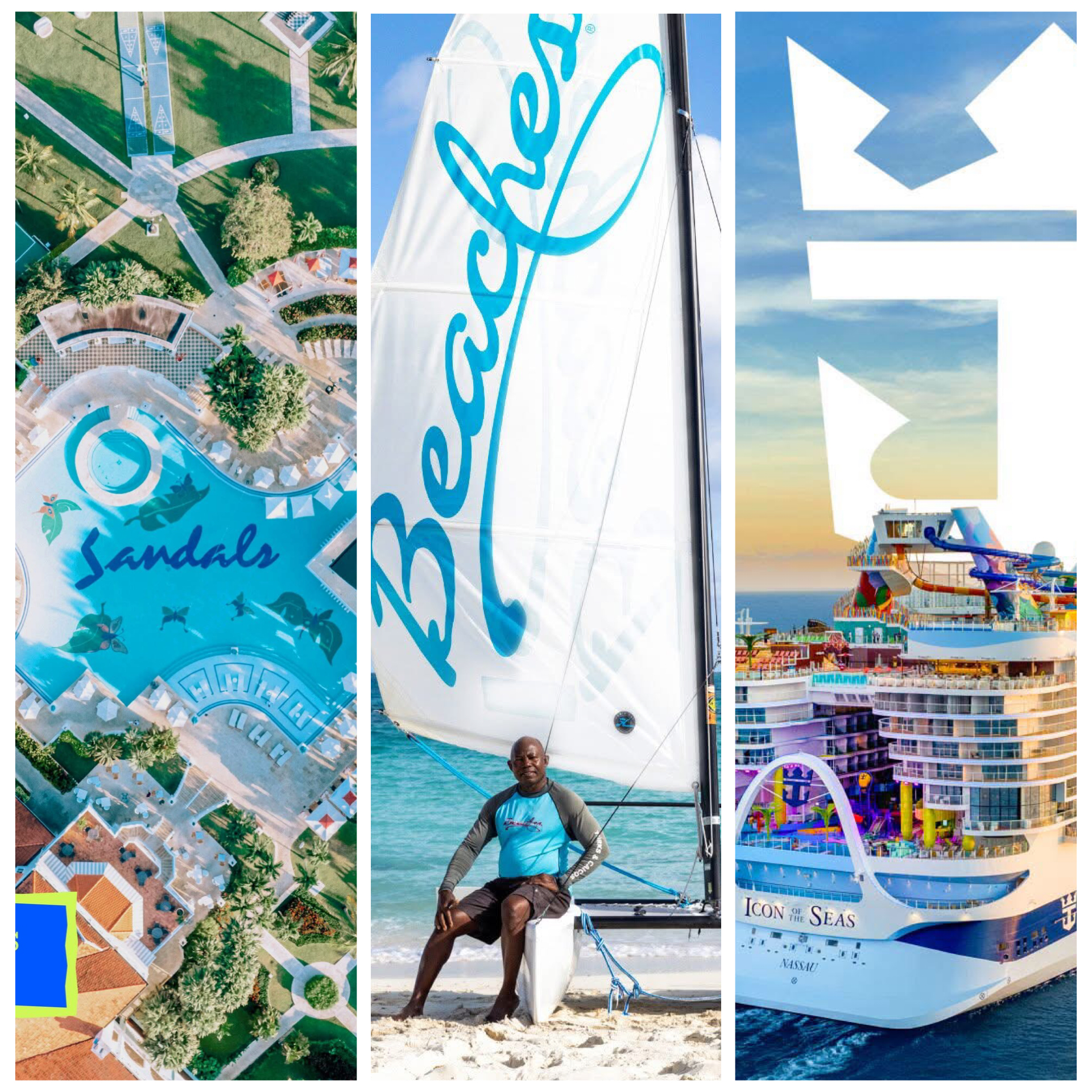
The Caribbean tourism deal first reported as a possibility on Tuesday is now a signed agreement. Royal Caribbean Group plans to pay approximately US$3 billion for a 50% stake in Sandals and Beaches Resorts, putting the value of the business at about US$6 billion. The purchase is expected to close in early 2027, subject to approvals.
Founded in Jamaica by the late Gordon “Butch” Stewart in 1981, the resort business has a presence across nine Caribbean destinations, including Jamaica, The Bahamas and Turks and Caicos. Sandals has described its workforce as nearly 20,000 people, most of them Caribbean nationals.
“My father, Gordon ‘Butch’ Stewart, founded Sandals Resorts with the belief that a company built in the Caribbean could stand on the world stage alongside the most respected names in hospitality,” said Adam Stewart in the announcement carried by PR Newswire. He will remain executive chairman, while the Stewart family retains a stake. The companies say existing reservations and resort operations will continue as usual.





-
 Bahamas News1 week ago
Walk for the Cure Every Saturday This October
-
 News1 week ago
Invest Turks and Caicos Officially Opened Caya Hico Collective, Grand Turk MSME Storefront
-

 Health1 week ago
TCI Hospital Marks Breast Cancer Awareness Month 2026 with “Know. Check. Act. Support.” Campaign
-

 Health6 days ago
Cleveland Clinic First in Ohio to Perform Robotic Nipple-Sparing Mastectomy