
TCI News
TCI: Commissioner James Smith on Yearly Crime Statistics for April 2018 – March 2019

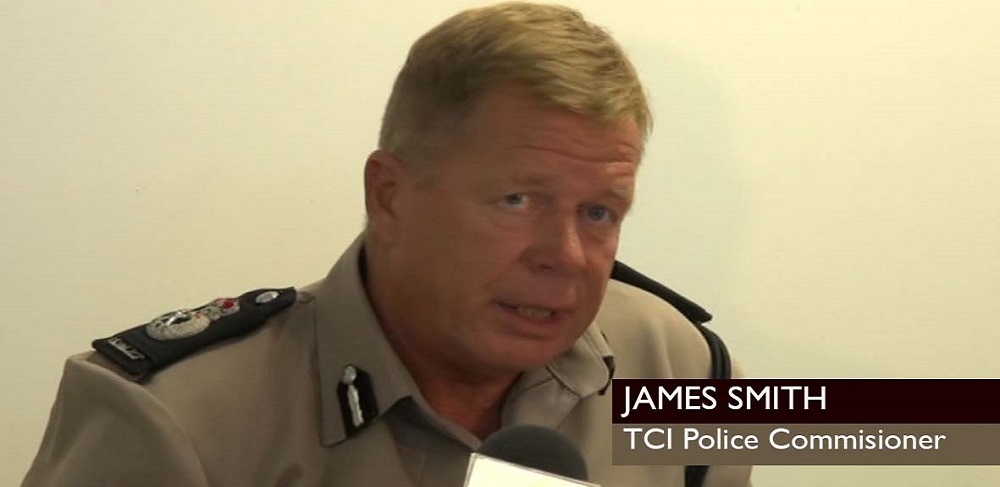
#Providenciales, April 30, 2019 – Turks and Caicos – The Royal Turks and Caicos Islands Police Force is pleased to report that we have seen a continued drop in crime overall when compared to the same period last year. We have achieved a reduction of 3% when compared to 2017/2018, with 94 fewer crimes reported. While we welcome this decrease, it is concerning that the murder count has risen from 4 in 2017/2018 to 8 reported during the 2018/2019 period. These crimes have a major impact on the country and we continue to use all available investigative means to arrest those responsible.

Burglaries and aggravated burglaries have also increased by 36 percent with 377 burglaries reported in 2017/2018, compared to 510 burglaries reported 2018/2019.
In drug-related crimes, persons reported for the possession of drugs has seen a decrease. In 2017/2018, 79 crimes were reported compared to 66 crimes in 2018/2019. Offences of possession of drugs with intent to supply are from 16 crimes to 13 crimes for the same period.
The use of firearms in committing crime puts citizens in fear and always has the potential to end in tragedy. I am pleased to report that firearms-related crimes are down by 48 percent with 137 reported in 2017/2018 compared to 72 from the period 2018/2019. In reference to the recovery of firearms, for the 2018/2019 period, a total of 13 firearms and 178 rounds of ammunition were recovered. We continue to look for ways to restrict the availability of illegal firearms coming into the country and work closely with partners in law enforcement to tighten control and make full use of our ballistic examination technology.
We are also pleased to report a 17 percent decrease in the number of Robberies across the country, these are down to 98 offences for the period 2018/2019 when compared to 2017/2018 when there were 118 offences reported. This decrease has been the trend over the last two years and we will be keeping a strong focus on these crimes to continue to bring these numbers down further.
Following the implementation of CCTV in Providenciales and the second phase due to commence in Grand Turk along with the application of other technology and our increased vehicle fleet numbers, we anticipate continued success in this regard.
We work very hard to protect our highly valued tourist sector and compile statistics to re-assure visitors and investors that the country remains a very safe destination. In this regard crimes against tourist have seen a modest reduction from 64 in 2017/2018 to 62 in 2018/2019. Again, this follows a downward trend from the year 2016/2017 when there were 108 incidents.
For the 2018/2019 financial year, a total of 214 persons were arrested and charged and have faced or are facing the courts for crimes committed, while a total of 230 persons were arrested on suspicion for crimes committed and further enquiries ongoing.

This year we have placed a strong focus on safeguarding children and vulnerable adults with the provision of a purpose built centre and specialist training. We continue to invest in training for our officers to ensure they are properly prepared to deal with the many and complex issues they face on a daily basis. We rely on the active participation of our communities to assist in the fight against crime and anti-social behavior.
I would ask householders and businesses to do everything they can to make it difficult for burglars to enter their property, perhaps by installing a home security system, keeping all doors and windows closed and secured when not at home or during the hours of darkness, and keep shrubbery and trees trimmed. Be a good neighbor and keep an eye on each other’s property, reporting anything suspicious to the Police.
Release: TCI Police

News
50 Years of Ministerial Government: Cabinet Moves to Mark Milestone Rooted in 1976 Constitution
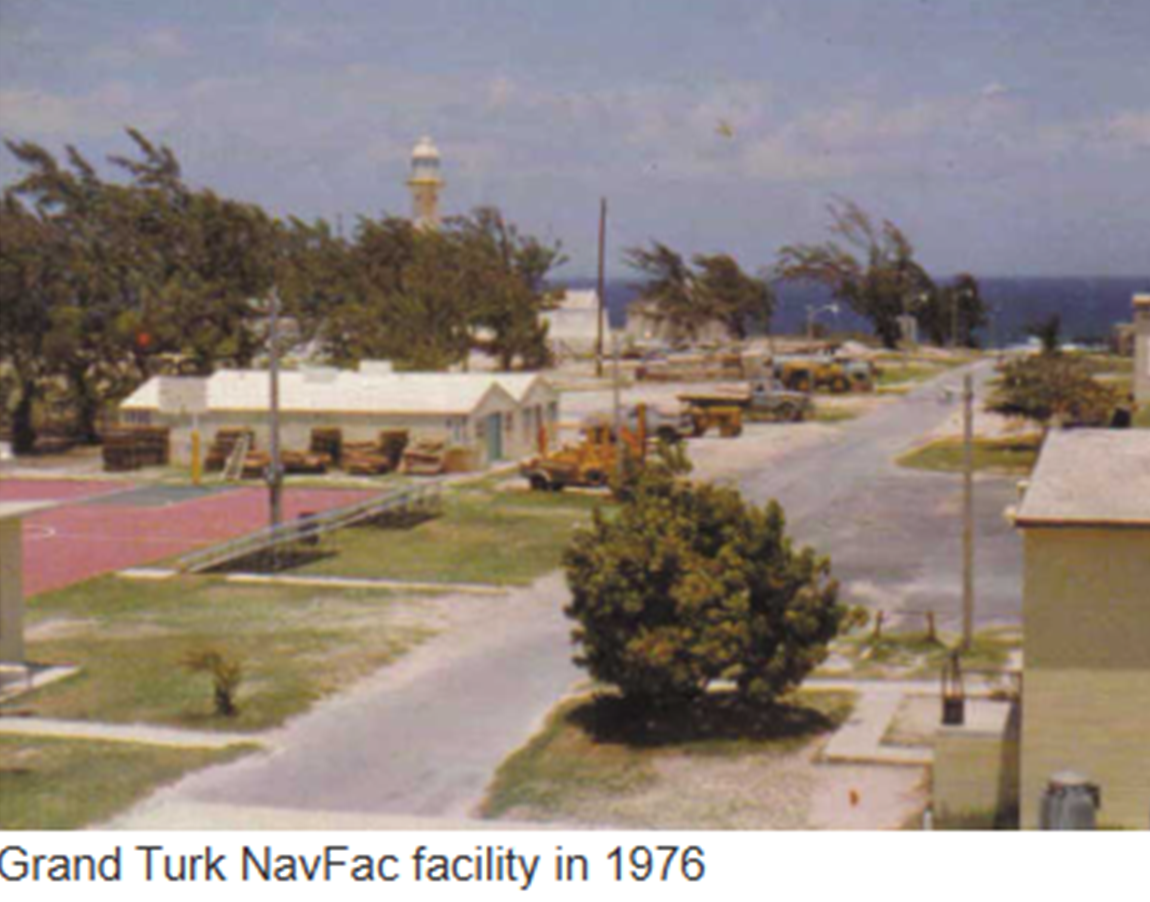
Turks and Caicos, March 30, 2026 – The Turks and Caicos Islands is preparing to mark a major political milestone, with Cabinet approving the establishment of a National Commemorative Committee to celebrate 50 years of ministerial government, a system first introduced under the 1976 Constitution.
The decision, confirmed in the February 10 Post Cabinet statement, signals a year of reflection on a governance model that fundamentally reshaped how the country is run — shifting from direct colonial administration toward locally led political leadership.
That shift was formalized in the Turks and Caicos Islands Constitution Order 1976, which laid the legal foundation for ministerial government and introduced a structured Executive and Legislative system.
At its core, the 1976 Constitution established an Executive Council, bringing together:
- a Governor,
- a Chief Minister elected by members of the Legislative Council,
- and Ministers appointed to assist in governing the Islands.
A Very Different Government Back Then
If today’s Cabinet feels crowded, the 1976 version would have seemed almost unbelievable. There were just three Ministers serving alongside the Chief Minister — a tight, compact leadership team responsible for the affairs of an entire country. No sprawling list of ministries, no long roster of portfolios — just a handful of individuals carrying the weight of governance.
Becoming a Minister wasn’t a direct vote of the people either. You first had to win a seat in the Legislative Council, and from there, the Chief Minister would recommend who should serve. The Governor then made the appointments. In other words, political trust and alignment mattered just as much as public support — and ultimate authority still rested above the local leadership.
And as for job security? There wasn’t much of it. Ministers served without fixed terms and could be removed if they lost their seat, resigned, or if the Governor revoked their appointment. Even the Chief Minister could be ousted through a vote of no confidence. Add to that the basic requirements — being at least 21, a British subject, and meeting residency rules — and it’s clear that ministerial government in 1976 was not only smaller, but far more tightly controlled.
This marked the first time elected representatives were formally given defined roles in the administration of national affairs.
Under the Constitution, the Governor retained overarching authority, but was required in many instances to act on the advice of the Executive Council, particularly in shaping policy and overseeing government operations.
The Chief Minister, meanwhile, was positioned as the central political leader, responsible for directing government business and advising on the appointment of Ministers.
Importantly, the Constitution also allowed for the assignment of responsibilities to Ministers, giving them oversight of specific areas of government — a structure that remains at the heart of today’s Cabinet system.
Section 13 of the Order made clear that Ministers could be assigned responsibility for the administration of departments or government business, embedding accountability and functional governance into the system.
The Legislative Council, established alongside the Executive, provided the law-making body, with elected and appointed members participating in debates, passing legislation, and representing the interests of the Islands.
Together, these provisions created the framework for what is now recognized as ministerial government — a hybrid system balancing local political leadership with constitutional oversight by the Governor.
The explanatory note of the 1976 Order describes it as introducing “new provisions for the Government of the Turks and Caicos Islands,” including the creation of a Legislative Council with elected members and Ministers appointed on the advice of the Chief Minister.
Fifty years on, that structure has evolved through subsequent constitutional changes, but its foundation remains rooted in the 1976 framework.
Cabinet’s decision to establish a commemorative committee suggests that the anniversary will not only celebrate political progress, but also invite reflection on how effectively the system has delivered on its promise of representation, accountability, and governance.
As the Islands approach this Golden Jubilee, attention is likely to turn not only to the achievements of ministerial government, but also to the ongoing question of how the system continues to serve a modern and rapidly developing Turks and Caicos Islands.
Developed by Deandrea Hamilton • with ChatGPT (AI) • edited by Magnetic Media.

Turks and Caicos, March 30, 2026 – The Turks and Caicos Islands Government has signaled changes to its tourism funding framework, with Cabinet approving draft amendments to the Destination Management Fee Act 2023.
The decision was confirmed in the Post Cabinet statement following the February 5 meeting, chaired by Governor Dileeni Daniel- Selvaratnam, where members agreed to move forward with revisions to the law governing the collection and administration of the fee.
The Destination Management Fee, introduced in 2023, is applied to travelers entering the country and is embedded within the cost of travel. The charge was designed to support tourism-related development, including marketing, infrastructure, and sustainability initiatives.
At the time of its introduction, the fee was linked to the establishment of a Destination Management and Marketing Organisation (DMMO), which was expected to coordinate tourism strategy and enhance the visitor experience.
However, recent developments have shifted that landscape.
The DMMO has since been discontinued, raising new questions about how funds generated through the fee are being managed and what structure will now guide tourism development efforts.
The Cabinet note does not outline what specific changes are being proposed under the amended legislation.
It also does not indicate whether adjustments will be made to:
- who pays the fee,
- how it is collected, or
- how the revenue is allocated and overseen.
The move to amend the law comes amid broader government efforts to strengthen revenue collection and compliance, including updates provided to Cabinet on the work of the Drag-Net Steering Committee — a multi-agency initiative focused on improving government revenue systems.
The lack of detail surrounding the amendments leaves several key questions unanswered, particularly given the fee’s direct impact on both visitors and residents and its role in supporting the country’s tourism economy.
Any changes to the Act would require further legislative steps, including presentation to the House of Assembly, before taking effect.
For now, the Cabinet’s approval signals that the government is moving to revise a policy that is already in force — but without yet disclosing how those revisions will alter the current system.
As tourism remains the backbone of the Turks and Caicos Islands economy, clarity on the future of the Destination Management Fee — and the framework it supports — is expected to be closely watched in the weeks ahead.
Developed by Deandrea Hamilton • with ChatGPT (AI) • edited by Magnetic Media.
Photo Credit: TCIAA

Turks and Caicos, March 30, 2026 – Electricity costs in the Turks and Caicos Islands are climbing again, with Pelican Energy reporting increases in the fuel factor for March, while warning that global instability could push prices even higher in the months ahead.
In its latest update to customers, the power provider confirmed that fuel factor rates — the portion of electricity bills tied directly to the cost of fuel — have risen across most service territories.
Providenciales, North Caicos and Middle Caicos will see a 3.4 percent increase, bringing the rate to $0.1658 per kilowatt hour, while Grand Turk and Salt Cay will experience a 2.8 percent rise to $0.1569 per kWh. The rate for South Caicos is still pending, though in February it climbed by 2.8 percent to $0.1728 per kWh.
The fuel factor is a variable charge, meaning it moves in response to international oil prices — and right now, those prices are under pressure.
Pelican Energy pointed to geopolitical tensions in the Middle East, including ongoing conflict affecting key global shipping routes such as the Strait of Hormuz, as a major driver of recent increases.
That narrow waterway near Iran is one of the world’s most critical oil transit corridors, with a significant share of global fuel supply passing through it daily. Any disruption — whether from conflict, threats, or shipping delays — has a direct impact on global prices.
Energy markets have remained volatile as a result, with production decisions by OPEC and its allies also influencing supply levels and pricing trends.
For the Turks and Caicos Islands, which relies heavily on imported fuel for electricity generation, the impact is immediate.
“Because we rely on imported fuel to generate electricity, these market conditions can influence fuel costs in TCI,” the company said, noting that it is closely monitoring developments.
While the upward movement in fuel costs is concerning, Pelican Energy also indicated that infrastructure upgrades are underway — projects that may cause short-term inconvenience but are expected to improve long-term energy reliability.
Those improvements could include enhancements to generation capacity and distribution systems, though in the near term, residents and businesses may experience disruptions, including traffic impacts linked to ongoing works.
The company emphasized that the fuel factor will continue to fluctuate in line with global trends, rising when international prices increase and falling when they decline.
For consumers already facing high utility costs, the latest adjustment reinforces how closely local electricity prices are tied to global events far beyond the region’s control.
With tensions in key oil-producing areas showing no clear resolution, and global supply routes remaining vulnerable, the outlook for fuel costs remains uncertain.
For now, Pelican Energy says it will continue to monitor international developments and keep customers informed — but the message is clear: what happens in global oil markets is being felt directly on electricity bills at home.
Developed by Deandrea Hamilton • with ChatGPT (AI) • edited by Magnetic Media.





-

 News3 days ago
Password to Paradise Radio Remotes at Beaches Turks & Caicos continue to highlight the TCI as the preferred Caribbean destination
-

 Health1 week ago
Turks and Caicos Islands Hospital Celebrates Patient Safety Awareness Month: “Team Up for Patient Safety”
-

 News4 days ago
Beaches Turks & Caicos adds four new PADI Dive Instructors to the cadre of professionals in the watersports department
-

 News4 days ago
Beaches Turks & Caicos shares fine dining experiences to high school students in Providenciales
-

 Health1 week ago
Turks and Caicos Islands Medical Association (TCIMA) Elects New Executive
-

 News7 days ago
Flow TCI supports ‘Stars of Tomorrow’ at Inter-Primary Track and Field Championships
-

 Bahamas News2 days ago
Bahamasair Backs Surge as Bahamians Flood South Florida for V.J. Edgecombe Showdown
-

 News7 days ago
The Turks and Caicos Islands Featured in Top Canadian Publications