
Caribbean News
JAMAICA: Ensure children are fully vaccinated against measles – Dr. Tufton

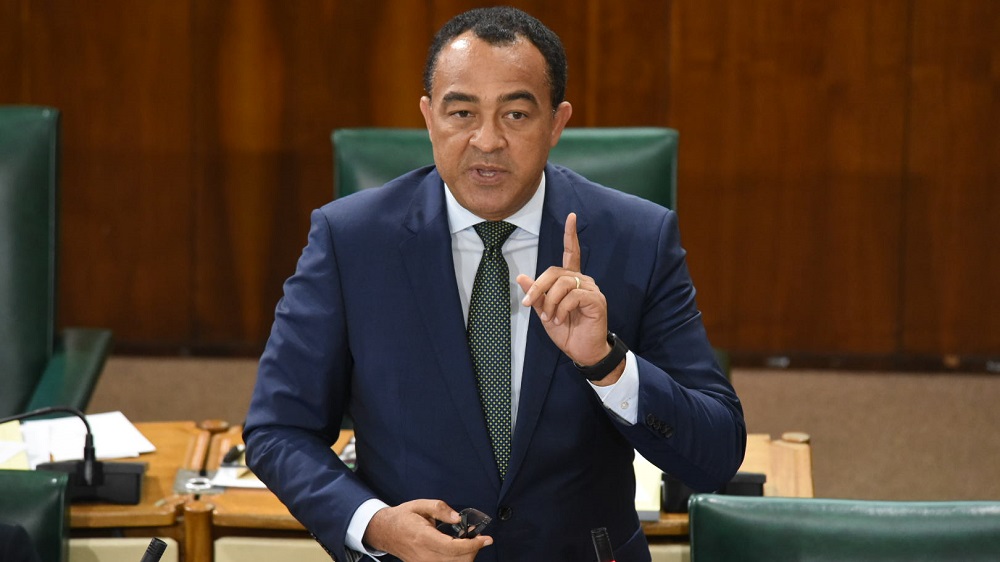
#Kingston, April 25, 2019 – Jamaica – Minister of Health, Dr. the Hon. Christopher Tufton, is encouraging parents to ensure that their children are fully vaccinated against measles. The advice comes against the background of the recent increase in cases of the disease in the United States and across the region.

Dr. Tufton said parents ought to take this precaution as measles kills more children than any other vaccine-preventable disease.
“In order to stop the disease from spreading, 95 per cent of children in Jamaica need to be fully vaccinated with the two doses – MMR1 at 12 months and MMR2 at 18 months,” he noted.
The Minister, who was making a statement in the House of Representatives on Tuesday (April 23), said the vaccines are available at all public health centres across the island free of cost. He lamented that there has been a decrease in uptake of the vaccines over the last few years, and in 2018, Jamaica had 89 per cent coverage of MMR1 and 82 per cent coverage of MMR2.
In the meantime, Dr. Tufton assured that there are no local or imported cases of measles in Jamaica.
“As at 30 March 2019, there were 3,674 suspected cases and 596 confirmed cases in the region of the Americas, with over 300 of the confirmed cases from the USA. In Europe, in January 2019, there were 881 cases of measles reported from 19 countries,” he said.
Measles is a highly contagious illness caused by a virus that replicates in the nose and throat of an infected child or adult. The virus circulates worldwide, and approximately 90 per cent of susceptible people (persons not vaccinated) who are exposed to someone with the virus will be infected.
Most cases of measles are mild and symptoms usually appear 10 to 12 days after exposure to an infected person, but may appear as early as seven days and as late as 21 days after exposure. Measles typically begins with a high fever, cough, runny nose and red, watery eyes.

Two or three days after symptoms begin, tiny white spots may appear inside the mouth. Three to five days after symptoms begin, a rash breaks out, usually as flat red spots that appear on the face at the hairline and spread downward to the neck, trunk, arms, legs and feet. Small raised bumps may also appear on top of the flat red spots.
The complications from measles include ear infection and diarrhea, while severe complications include pneumonia, swelling of the brain and death. Pregnant women may give birth prematurely or have a low-birth-weight baby.
Jamaica has had no local spread of measles since 1991. The last imported case of measles in Jamaica was in 2011. The Ministry of Health continues to monitor the island for imported cases of measles. Persons may call 888-ONE-LOVE (663-5683) or visit the nearest health centre for more information.
Contact: Alecia Smith
Release: JIS
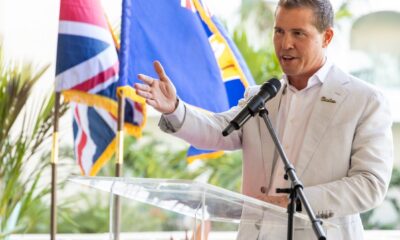
Photo Caption: Minister of Health, Dr. the Hon. Christopher Tufton.
Michael Sloley (File) photo


CARIBBEAN — Jamaica has become the 13th CARICOM member state to accede to the African Export-Import Bank Establishment Agreement, further strengthening economic ties between Africa and the Caribbean.
The development was confirmed during the 50th CARICOM Heads of Government Meeting, where an Afreximbank delegation led by George Elombi and Kanayo Awani met with Jamaica’s Prime Minister Andrew Holness to advance cooperation.
Prime Minister Holness thanked the bank for its support following Jamaica’s recent hurricane, noting that Afreximbank financing helped restore critical infrastructure including water, electricity, sewage systems and roads, while also assisting reconstruction efforts aimed at building stronger resilience to future disasters.
The meeting also focused on broader development opportunities tied to Jamaica’s membership in the agreement. Discussions included rebuilding and modernising infrastructure such as railways, hospitals and other public facilities, while strengthening regional transportation and trade networks to improve the movement of people and goods across the Caribbean.
Afreximbank has been expanding its presence in the Caribbean as part of its strategy to connect Africa with the region often referred to as “Global Africa.” The bank has already committed billions of dollars in financing and trade support to Caribbean economies in recent years, including funding for infrastructure, trade facilitation and private sector investment.
By joining the agreement, Jamaica gains expanded access to Afreximbank’s financial instruments, technical support and trade networks designed to promote commerce between Africa and CARICOM states.
Regional leaders say the growing partnership could unlock new opportunities in areas such as trade, logistics, tourism, manufacturing and cultural exchange, strengthening economic cooperation between the two regions with deep historical and diaspora ties.
Angle by Deandrea Hamilton. Built with ChatGPT (AI). Magnetic Media — CAPTURING LIFE.
Caribbean News
Liberty Caribbean Supports Regional Forum on AI, Cyber Resilience and Digital Inclusion

Port of Spain, TRINIDAD & TOBAGO (February 24, 2026) — Liberty Caribbean, the operators of Flow, Liberty Business and BTC, recently served as Gold-Level Partner of the two-day Trinidad and Tobago Internet Governance Forum (TTIGF), themed “The Innovation Paradox – Balancing Progress with Responsibility and Resilience”.
The Digital Divide is of particular interest to Liberty Caribbean and is being addressed through its Charitable Foundation across the region. Low broadband penetration in the Caribbean contributes to diminished opportunities for individuals, communities, and local economies, but with the support of funding partners, this gap can be addressed through a comprehensive programme – JUMP – that focuses on providing access, devices, and digital skills.
“Liberty Caribbean was proud to serve as Gold-Level Partner of the TTIGF because the conversations taking place here shape key digital policies for multiple stakeholders,” said Simone Martin-Sulgan, Vice President and General Manager, Flow Trinidad.
“As technology accelerates at an unprecedented pace, we must ensure that innovation strengthens our societies rather than fragments them. The theme, ‘The Innovation Paradox – Balancing Progress with Responsibility and Resilience,’ speaks directly to the work we do every day: building networks that are not only fast and reliable, but secure, inclusive and future-ready.”
Across the Caribbean, the digital divide remains one of the most pressing barriers to equitable growth. Low broadband penetration limits access to education, entrepreneurship and essential services, and that is why we are deeply committed to closing this gap.
Through the Liberty Caribbean Charitable Foundation and initiatives like the JUMP Programme, the company is expanding access to technology, affordable connectivity and digital skills training so that individuals and communities are empowered to participate fully in the digital economy.
Martin-Sulgan further stated “at Liberty Caribbean, we believe progress and responsibility must move in lock step. By investing in resilient networks, inclusive programmes and trusted partnerships, we are helping to build a Caribbean that is innovative, secure and prepared for the opportunities ahead.”
Topics covered during the Forum, with over 140 participants, included “Securing Critical Infrastructure”, Integrating AI into Digital Transformation”, “The Digital Divide”, The Human Cost of Innovation – Mental Health and Well-being in the Digital Age’, and AI, Cyber Resilience and Regional Innovation”.
Focused on the underlying mandate of the Conference theme thought leaders, innovators, policymakers, technologists, researchers, and community stakeholders were invited to explore how countries can evolve boldly without compromising values or long-term stability.
Photo Caption:
TTIGF – l-r Darren Campo, Regulatory & Compliance Officer; Yolande Agard-Simmons, Senior Manager Communications; and Kevon Swift, Senior Manager Government and Regulatory Affairs of Flow Trinidad in attendance at the Post Event Mixer at Caribbean Telecommunications Union’s Head Office in St Clair, Port of Spain
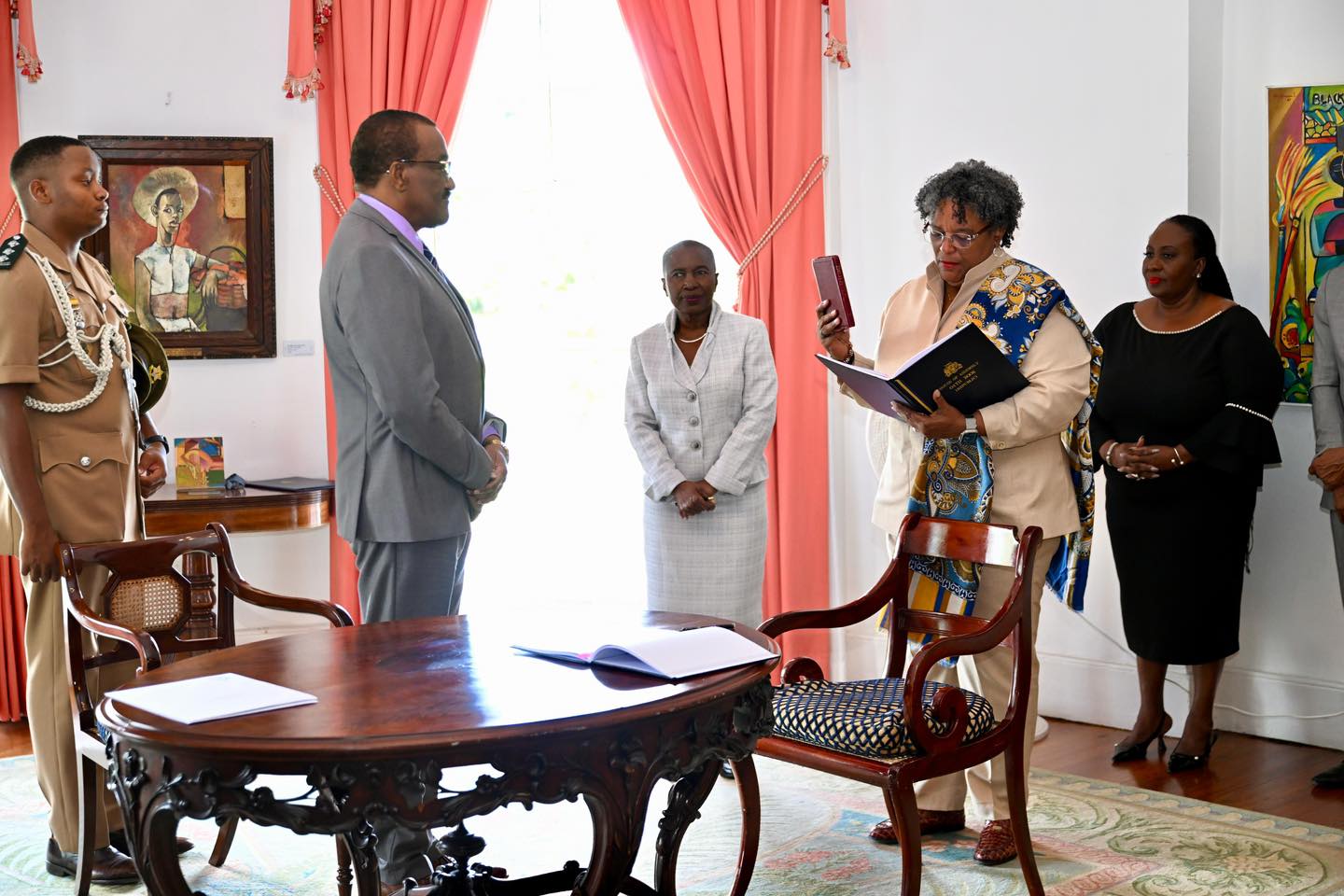
Barbados, February 12, 2026 – Prime Minister Mia Amor Mottley was this afternoon officially sworn in for a third consecutive term, hours after delivering one of the most emphatic election victories in Caribbean political history — another complete capture of all 30 seats in Barbados’ House of Assembly.
The ceremony, conducted by President His Excellency Lt. Col. The Most Honourable Jeffrey Bostic, marked the formal start of a new administration following the February 11, 2026 general election, which returned the Barbados Labour Party (BLP) to power with a renewed and overwhelming mandate.
In a statement after taking the oath, Mottley said she accepted the responsibility “with humility and resolve,” thanking the people of Barbados for placing their trust in her leadership once again and urging national unity as her government begins its new term. Attorney Wilfred Abrahams was also sworn in as Attorney General.
The result is historic not only for its scale but for its consistency. This is the third straight general election in which the BLP has won every constituency, reinforcing Mottley’s dominance in national politics and extending an unmatched era of one-party control in the modern democratic period.
Voting day unfolded under the watch of a CARICOM Election Observation Mission, led by Antigua and Barbuda’s Supervisor of Elections Ian Hughes and supported by senior electoral officials from Belize and Jamaica. The team engaged key institutions ahead of the poll and monitored the process across the island.
Regional leaders were swift in their congratulations.
Guyana’s President Irfaan Ali described the outcome as “emphatic and historic,” saying the clean sweep reflected how deeply Mottley’s leadership has connected with Barbadians and expressing optimism about strengthening ties between the two countries.
Jamaica’s Prime Minister Andrew Holness also hailed the victory, noting that her re-election provides an opportunity to deepen cooperation within CARICOM and advance shared regional priorities.
The scale of the win again leaves Barbados without a parliamentary opposition, a reality that has become a defining feature of the political landscape since 2018. Supporters argue the repeated mandate reflects public confidence in Mottley’s stewardship of economic reform, climate diplomacy, the transition to a republic, and Barbados’ expanding global influence.
Now, newly sworn in and backed by another unanimous parliamentary majority, Mottley begins a third term with both extraordinary political capital and equally high expectations at home and across the region.





-
 Health1 week ago
Chile becomes the first country in the Americas to be verified by WHO for the elimination of leprosy
-

 Caribbean News4 days ago
Jamaica Joins Afreximbank Agreement, Strengthening Africa–Caribbean Partnership
-

 News1 week ago
Police Commissioner Honoured with Distinguished Civic Service Award at TCHTA Star Awards
-

 Bahamas News1 week ago
Dredging Is Not Just About Size — It Is About What Is Being Destroyed, Warns Save Exuma Alliance Regarding Yntegra’s Proposed Rosewood Resort
-
 News1 week ago
Flow TCI powers Inter-High Track and Field Championships
-

 Education7 days ago
Message from Hon. Rachel M. Taylor, Minister of Education, Youth, Sports & Culture
-

 News3 days ago
Rights Without Justice: How Weak Enforcement Fails Women and Girls
-
 News5 days ago
Treasure Beach Village Opens at Beaches; Tourism Leaders Expect Surge in Bookings