
Bahamas News
BAHAMAS: Campbell wraps up weekend tour of southern-most islands

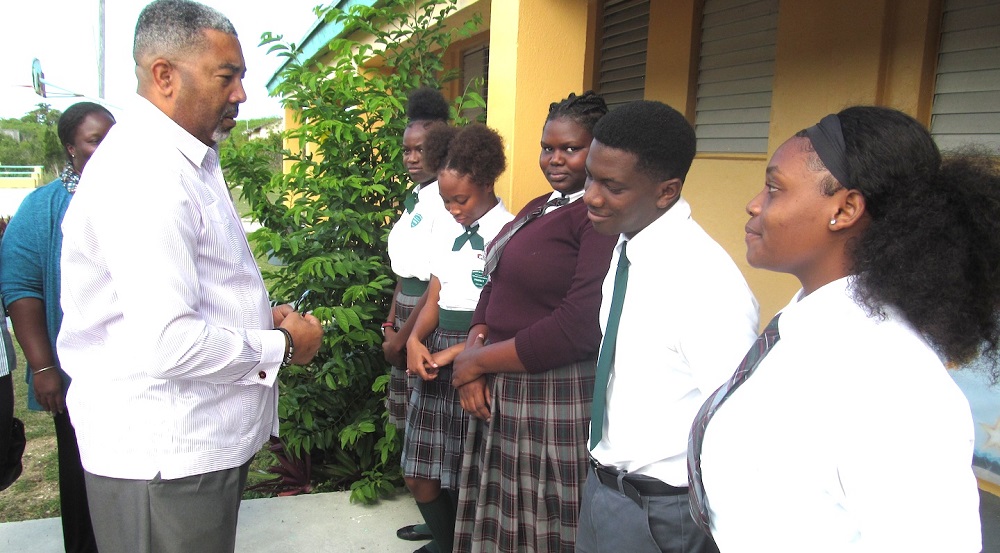
Matthew Town, Inagua – February 12, 2019 – Bahamas – Minister of Social Services and Urban Development, the Hon. Frankie Campbell concluded a three-day visit to the islands of Mayaguana and Inagua over the weekend with a stop at the Inagua All-Age School.

The Minister joined school officials and students for a Special Assembly recognizing Third Grade teacher Mrs. Tara Burrows as Teacher of the Year for the MICAL District, before returning to New Providence in the afternoon.
Minister Campbell also used the opportunity to celebrate International Day of Girls and Women in Science (IDGWS) with female students and teachers. IDGWS is a United Nations event that is celebrated annually around the globe.
Minister Campbell began his visit to the country’s two most southern islands in Mayaguana (Friday, February 8) where he addressed students at the Abraham’s Bay High School, before moving on to address students at the Pirate’s Well Primary School.
Officials of the Ministry of Social Services joined residents of Mayaguana at the finale of a week-long Revival Service on Friday night at the Church of God of Prophecy in Abraham’s Bay before hosting a Community Meeting on Saturday morning (February 9).
Minister Campbell and his team departed Mayaguana Saturday afternoon for Matthew Town, Inagua, where they hosted another Community Meeting, this time at the St. Philip’s Anglican Church Community Centre. The team also attended morning Mass at St. Philip’s where they were able to have a number of additional conversations regarding the ministry’s role, following the service.
Minister Campbell said the purpose of the visits was to personally explain how the various Departments and Divisions that help to form the Ministry of Social Services and Urban Development “come together to support the whole man/woman” so that the message can get to all Bahamians everywhere.
The Social Services Minister said the various on-island engagements also provided Social Services officials with an opportunity to address as many diverse groupings as possible – covering schools, church groupings, parents, guardians, business owners, non-governmental organizations and individual residents.
The team also performed a number of assessments where necessary, while also addressing the issue of developing greater public/private partnerships.
Officials explained that while the provision of assistance is an important part of the services they provide, the Ministry and its various Departments and Divisions are responsible for so much more.
The “coming together to support the whole man and woman” covers everything from child protection to gender equality; children and families services; rehabilitation and welfare programmes; rental, electricity, burial, food and appliances assistance programmes; community development; programmes for Senior Citizens; programmes for teen mothers; programmes to prevent violence against women and men, and ensuring equity for persons living with disabilities, among many others.
The Ministry also facilitates programmes for at-risk youth; sponsors After-School Programmes and facilitates Anger Management Programmes through the Urban Renewal Commission.
The Ministry is further responsible for reporting to the United Nations and its Committees, and several other regional and international bodies/conventions pertaining to all of the aforementioned.
Minister Campbell, who has been on the job for seven months, told the residents that it was “very important” to put “boots on the ground” and meet with them face-to-face, while also learning firsthand of any concerns they may have.
Minister Campbell took the opportunity to explain, step-by-step, the roles each Department and Division plays. He also outlined the programmes that exist for the benefit of Bahamians and detailed how both the services and programmes can be accessed.
“The Ministry of Social Services and Urban Development is one of those ministries that take responsibility for individuals who qualify for assistance from the womb to the tomb,” Minister Campbell said.
“Its mission, assignment, and goal, is to ensure that Bahamians everywhere know of all of the services/programmes that are available to them, and how they should go about accessing those services/programmes.
“I wanted to be here with you; my team wanted to be here with you to hold these discussions and advise you of all of the possibilities, face-to-face, where you live, in order for you to have a better understanding of all that we do.”

Minister Campbell outlined the “process” of accessing the various kinds of assistance available when needed, advising residents in both island-communities that the process was necessary to ensure that those persons most in need of the assistance, are able to benefit from that assistance.
Minister Campbell was accompanied by Mrs. Lillian Quant-Forbes, Director of Social Services; Dr. Jacintha Higgs, Director of the Department of Gender and Family Affairs; Ms. Maria Kelley, Executive Secretary of the Secretariat of the National Commission for Persons with Disabilities; and Ms. Sheryl Knowles, Programmes and Special Projects Coordinator for the Urban Renewal Commission.
By: Matt Maura
Release: BIS
Photo Captions:
Header: Student participants in the Mayaguana Junior Councilors Programme greet Minister of Social Servces and Urban development, the Hon. FrankieCampbell upon his arrival at the Abraham’s Bay High School Friday, February 8. Minister Campbell kicked off his visit to Mayaguana and Inagua with a stop at the High School.
Insert: Minister of Social Services and Urban Development, the Hon. Frankie A. Campbell uses the chalkboard to explain the functions of the ministry and its Departments and Divisions to students of the Pirates Well Primary School, Mayaguana, Friday, February 8, on the first leg of his weekend visit to Mayaguana and Inagua. Mr. Campbell concluded the visit with a stop at the Inagua All- Age School where he participated in a Special Assembly held at the school to honour Third Grade teacher Mrs. Tara Burrows as Teacher of the Year for the MICAL District.
(BIS Photo/Matt Maura)

USA, April 23, 2026 – A Bahamian man has been extradited to the United States to face serious drug charges stemming from alleged offences committed several years ago.
Lernis Cornish Jr. was handed over to U.S. authorities on April 17, 2026, following extradition proceedings in The Bahamas. The case was heard before Chief Magistrate Roberto Reckley, who ordered that Cornish be surrendered to American officials. Cornish did not challenge the order.
He has since been transferred to Florida, where he is expected to face trial in connection with alleged drug-related activity dating back23 to 2020.
According to reports, Cornish is accused of possession of cocaine with intent to supply and conspiracy to possess cocaine with intent to supply. Related U.S. law enforcement notices also indicate that the matter is being pursued in Collier County, Florida, where authorities have listed charges including trafficking in cocaine and conspiracy to traffic cocaine, involving quantities of 400 grams or more.
The case now falls under the jurisdiction of the Florida court system, where prosecutors are expected to advance the matter through pre-trial proceedings ahead of any potential trial.
Extradition from The Bahamas to the United States is governed by bilateral treaty arrangements, allowing individuals accused of serious offences to be transferred to face justice in the requesting country once a Bahamian court is satisfied that legal requirements have been met.
Cornish’s extradition marks the continuation of a multi-year case, moving it from preliminary proceedings in The Bahamas into the U.S. judicial system, where the allegations will now be tested in court.
Angle by Deandrea Hamilton. Built with ChatGPT (AI). Magnetic Media — CAPTURING LIFE.
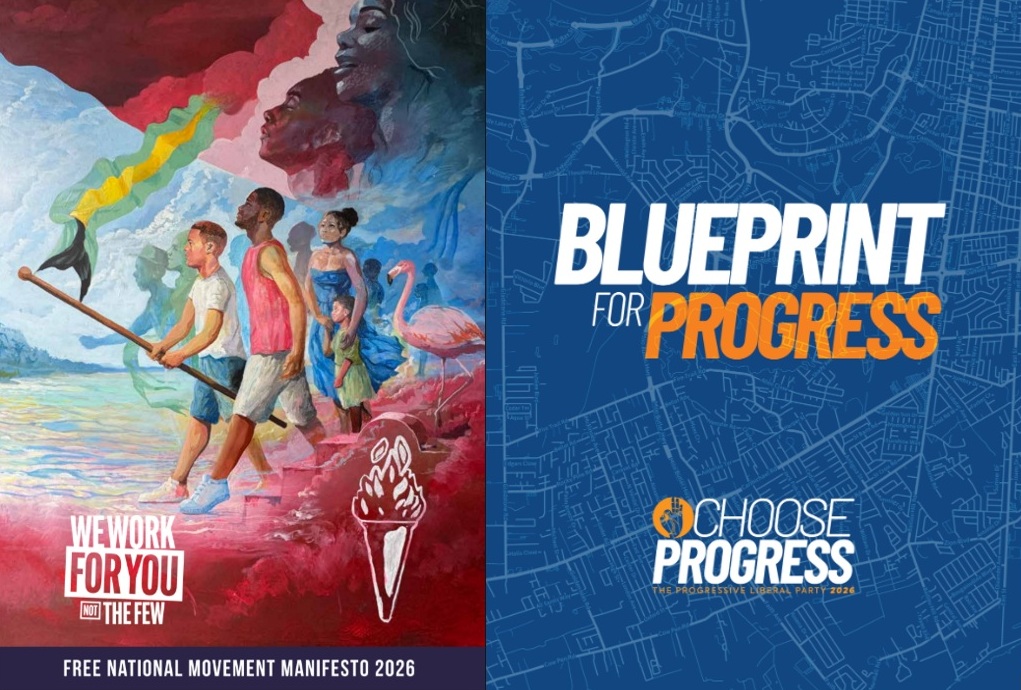
The Bahamas, April 14, 2026 – With the 2026 Bahamian general election set for May 12, the country’s major political parties have now formally placed their plans before the electorate, offering competing visions for governance, growth and relief.
The governing Progressive Liberal Party (PLP), led by Philip Davis, launched its “Blueprint for Progress 2026” on April 8, 2026, outlining a 46-page plan focused on long-term development and systems reform. The document places heavy emphasis on energy transition, digital government, workforce training and food security, positioning the party as one seeking continuity following its first term. The full plan is publicly available online through official PLP platforms for voters to review.
Just days later, on Sunday, April 12, the opposition Free National Movement (FNM), under Michael Pintard, unveiled its 2026 Manifesto at a major event in Nassau. Spanning 54 pages, the document centers on cost-of-living relief, tax reform, healthcare expansion and housing, offering what the party describes as a more immediate response to economic pressures facing Bahamian families. The FNM has also made its manifesto accessible online.
Beyond the two major parties, the Coalition of Independents (COI) had already entered the policy space earlier, formally unveiling its long-range Vision 2030 framework on Saturday, March 1, 2025, at the Fusion Superplex in Nassau during a packed national launch led by party leader Lincoln Bain. That framework has since been complemented by a 100-day action plan released in late March/early April 2026, adding a short-term policy layer to its long-range proposals.
These policy rollouts come as the country prepares for a pivotal vote, with the Parliamentary Registration Department confirming a voters’ register of approximately 203,000 eligible voters, one of the largest in the nation’s history. Key dates are now set, with Nomination Day on April 16, followed by advance polls on April 30, ahead of General Election Day on May 12.
With platforms now in the public domain and the timeline locked in, the focus shifts squarely to the electorate—who must now weigh the promises, examine the plans and decide the country’s direction at the polls.
Angle by Deandrea Hamilton. Built with ChatGPT (AI). Magnetic Media — CAPTURING LIFE.
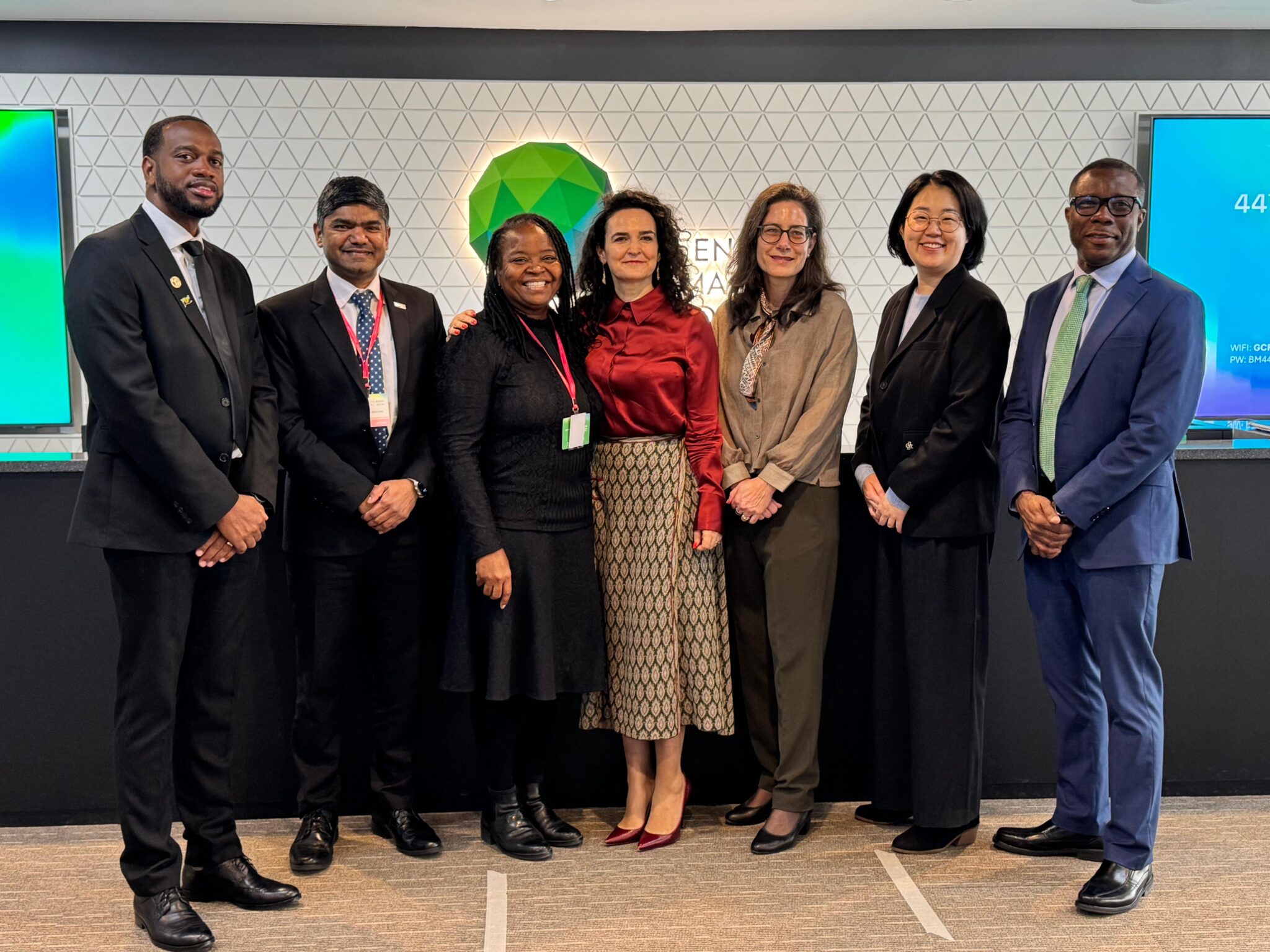
The Bahamas, April 14, 2026 – At its core, the $65 million water security project is designed to strengthen the reliability, safety and resilience of the water supply across The Bahamas.
If implemented as planned, the investment is expected to improve water quality, reduce contamination risks and support public health, while increasing supply reliability and limiting service disruptions during droughts or system failures. The project also aims to expand and upgrade infrastructure, including wellfields, pumping stations and storage capacity, and to protect freshwater resources from saltwater intrusion—an increasing threat for low-lying islands. In practical terms, that could mean cleaner, more consistent and more dependable access to water for residents across the country.
The project was first conceptualised in 2019 under the previous administration, when a proposal was submitted to the Green Climate Fund to strengthen the resilience of the country’s water systems. That early work came just months before Hurricane Dorian exposed the vulnerability of national infrastructure, including critical water and sanitation systems, particularly in the northern Bahamas.
The initial phase focused on developing the concept, identifying priority areas and engaging regional and international partners, including the Caribbean Development Bank, to support the design and preparation of a full funding proposal.
Following the change in government in 2021, the project advanced into its most technical and demanding stages. The current administration oversaw the completion of key requirements, including feasibility studies, environmental and social assessments, and detailed financing negotiations with international partners—steps necessary to move the proposal from concept to approval.
That multi-year process has now culminated in approval of a $65 million financing package, combining grant funding with concessional loans to support long-term upgrades to the country’s water infrastructure.
While the project brings significant international support, it is not entirely free money. The package is structured as a blended financing arrangement, combining grant funding with concessional loans—meaning a portion of the funding will ultimately need to be repaid. Based on information released by the Caribbean Development Bank, approximately $25 million of the total package is tied to loan financing, with the remaining portion provided as grant support.
Concessional loans typically carry more favourable terms than commercial borrowing, including lower interest rates and longer repayment periods. However, they still represent debt obligations that will be borne over time.
Notably, detailed terms of the loan components—including interest rates, repayment schedules and any associated conditions—were not disclosed in the initial announcement issued by the Office of the Prime Minister (Bahamas). Those details are expected to be outlined in formal financing agreements, but have not yet been made public.
For Bahamians, the project represents both investment and obligation. While the grant funding provides a significant boost to infrastructure development, the loan component adds to the country’s long-term financial commitments—making transparency around terms and implementation timelines especially important.
While the approval marks a significant milestone, the timeline for delivery remains a critical factor. Based on information available from project partners, implementation is not expected to begin immediately. The initiative is anticipated to move into its execution phase later in 2026, following finalisation of financing agreements and completion of preparatory requirements.
From there, the project is projected to unfold over several years, with estimates suggesting a multi-year implementation period of up to seven years to fully deliver the planned upgrades to water infrastructure across The Bahamas.
This means that while the funding has now been approved, the benefits will be realised gradually rather than all at once. A definitive completion date has not been publicly outlined, and detailed timelines tied to specific islands or phases of work have yet to be disclosed.
For Bahamians, the question now shifts from approval to execution—when funds are drawn down, when construction begins, and how consistently the project moves from plan to delivery.
Angle by Deandrea Hamilton. Built with ChatGPT (AI). Magnetic Media — CAPTURING LIFE.





-
 News1 week ago
Police Honour Retired Officers and Reach Out to Community in Grand Turk
-
 News1 week ago
NEW DESTINATION GUIDE BOOK ANNOUNCED FOR TURKS & CAICOS ISLANDS
-
 News1 week ago
TCI Real Estate Enters Buyer’s Market Phase as Luxury Demand Softens
-

 Independent writer1 week ago
Questions & Concerns About Integrity at TCI Immigration Department and the Department of Labour / Employment Services
-
 Government7 days ago
$94.1Mfor Health; Knowles Pushes to Keep Care at Home
-
 Government7 days ago
Digital Government Push Advances, but Reliability and Security Details Remain Unclear
-
 News1 week ago
Experience Turks and Caicos Launches Strategic Travel Advisor Education Program in Partnership with Travelview International
-
 News7 days ago
Key Projects and Community Investments Feature in Citizen’s Budget Guide