
Bahamas News
BAHAMAS: Teachers Key to Moving to Digital

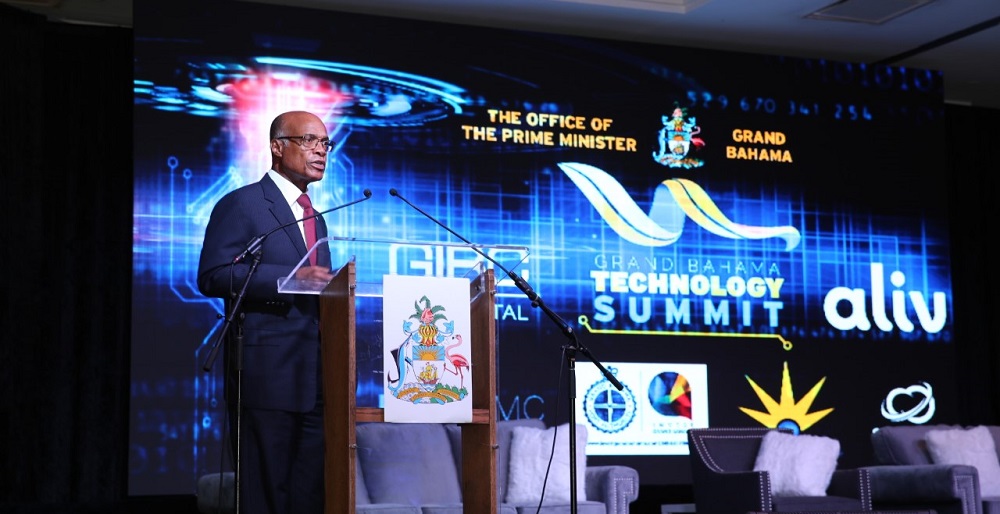
#Freeport, GB, November 17, 2018 – Bahamas – Teachers will be key to the success in ‘digitalizing’ learning institutions in the country, said Minister of Education, the Hon. Jeffrey Lloyd during the Grand Bahama Technology Summit on Friday, November 16, 2018.
 Being held under the theme, “The Future is Now,” the summit was officially opened by Prime Minister, Dr. the Most Hon. Hubert Minnis, on Wednesday. The event is being held at the Grand Lucayan and ends today.
Minister Lloyd further stated that the government’s education system is made up of 172 school campuses and 60 satellite buildings that provide support for schools all over the country’s islands and cays, and each island deserves the same quality of education and opportunities as those in the urban centres of Nassau and Freeport.
There are approximately 50,000 students from pre-k to grade 12 and 5,000 in tertiary institutions, along with about 25,000 in the private sector. It is challenging, said Minister Lloyd, to provide quality education with a cohort of between 4 to 6,000 teachers, especially specialized teachers in the areas of math and the sciences.
The government started the digitization of the educational system as soon as they came to office in 2017. He said, that in this day’s environment, the most effective tool for ensuring closure of the gap between performance and expection is technology.
The Minister of Education said that on September 9, 2018, the government formed a relationship with BTC and Cable Bahamas to provide fibre optic infrastructure to the 172 schools.
“This is a three-year, $17 million initiative; this year, we expect to spend approximately $8 million in this particular exercise.
“You will recognize that the intention is that we want every single school campus to be a smart school. That is, fully integrated utilizing the latest technology particularly as it relates to our far flung islands where we are not able, year after year, to provide those critical teachers in specialized areas — once again, like I indicated, in math and the sciences.”
The accomplish this, he continued, it will be done in phases. In the first phase, all districts will be linked with the fibre optic capability so that the schools and buildings will have full internet/Wi-Fi capacity. To date, many schools do not have full internet or Wi-Fi capability.
“So this fibre optic capability is going to provide internet access and Wi-Fi network — what we call the United  Unified Threat Management Security Solution — and will also give those campuses, those teachers, those institutions, those districts the ability for students to come with their own devices.”
Phase two has already begun, continued the Minister, in that pre-primary and primary school students are receiving tablets and laptops. Some 29,000 devices will be distributed over the next 12 to 18 months.
Phase three, or EMIS, Education Management Information System is the information that will enable personnel at the Ministry of Education the ability to “recognize, understand, manipulate as necessary and to plan effectively what the requirements are for our institutions, our school systems going forward next year, next five years, next 25 years.”
The system will also permit parents and stakeholders to engage with the educational system and allow the Minister himself to know what is going on with any given school, classroom or student and provide reports on where the Ministry is with regard to the delivery of education.
“This process will facilitate student enrolment, engagement with parents, and the opportunity for administration and administrators to know precisely what is going on throughout the system.”
Minister Lloyd said that with a population of over 400,000, the country has many people who may not have completed high school, and there are some adults who may want to further their education: for those people, he continued, this system will give them the opportunity.
Referred to as MOOC — Massive Open Online Courses, it will give people the opportunity to finish high school as well as those who feel they need to upgrade their skills.
“What we have found in our system is that we are introducing a tool with which many adults are not comfortable, I’m talking about teachers. They do not have the ease, the facility, that our younger people have and so they are, quite honestly, afraid.”
He continued, “At the centre of this transformation is the teacher. In fact, I prophet to you this. It is us older folks that need to close the gap with the younger children that we are teaching. Our three and four-year-olds are coming to school already somewhat technologically savvy.
 “[At] The heart of this transformation in digitizing our educational system — we can lay down all the fibre optic we want… but if our teachers do not come along, and in fact get ahead of the curve a little bit, then the system is going to fail.”
Many of the teachers in the system have not become comfortable with technology, and so there is now a “systematic sustained transition” so that teachers can move from analog to digital. He continued, “This for us is the most fundamental objective and process that we must undertake, and that’s not a tomorrow exercise or a next year or next five years. We’ve got to do that at the Mabel Walker Institute and other training environments, right now.
“The success of this roll out, this 21st century experience is dependent upon the teachers.”
While once the teachers stood at the blackboard and taught the class, it is no longer the case he said. Students are no longer taught to regurgitate, but solve problems, and teachers are the facilitators of this.
By Robyn Adderley
Release: BIS
DIGITIZING THE EDUCATION SYSTEM – Minister of Education, the Hon. Jeffrey Lloyd, told attendees of the 2nd Grand Bahama Technology Summit, November 16, 2018 that the government is in the process of digitizing the entire educational system in the country so that all students have access to the same quality of education. (BIS Photo/Andrew Miller)
ROBOTICS DEMONSTRATION – Students of the Bishop Michael Eldon High School, making up Northern Bahamas SECME, held a Vex Robotics demonstration during the 2nd Grand Bahama Technology Summit on Friday, November 16, 2018. (BIS Photo/Andrew Miller)

Bahamas News
Bahama Brass Band Invitation Sparks Heritage Debate Ahead of TCI Constitutional Holiday

Turks and Caicos, August 20, 2026 – The planned participation of the Bahama Brass Band in the Turks and Caicos Islands’ inaugural Constitutional Holiday celebrations on August 30 has sparked public debate over culture, heritage and the historical contributions of Turks and Caicos Islanders abroad.
Organizers defended the invitation, saying the band’s inclusion is intended to highlight the deep historical ties between the two countries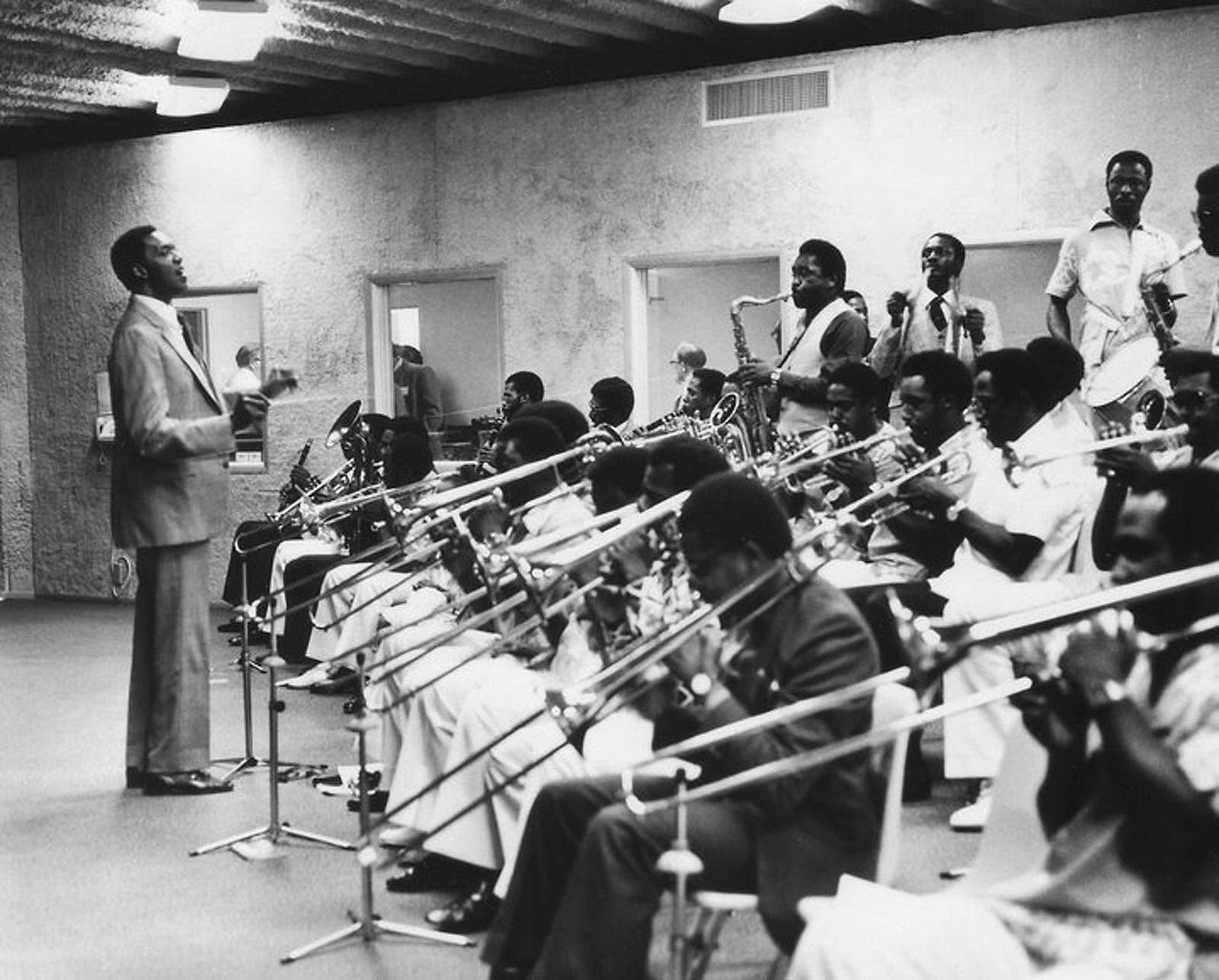 and honor Turks and Caicos men who helped establish and develop the institution in Grand Bahama.
According to the organizers, the Bahama Brass Band began in 1955 in Pine Ridge, Freeport, with Turks and Caicos Islanders, including the late Deacon Reuben Hall Sr. of Middle Caicos and Jenkins Williams and Mervin Hendfield of North Caicos, among those who helped build its foundation. The band eventually grew to more than 50 men.
The organizers also pointed to the participation of Turks and Caicos men in The Bahamas’ Independence celebrations on July 10, 1973, arguing that their contributions became part of Bahamian history while maintaining strong connections to their homeland.
Supporters say bringing the band home represents an opportunity to honor those pioneers, showcase their regional influence and expose younger generations to an important part of Turks and Caicos history.
However, concerns raised publicly described the invitation as potentially disrespectful to local culture and heritage. Organizers acknowledged those concerns, apologizing to anyone who felt overlooked or offended, while maintaining that no disrespect was intended.
The committee said the event should ultimately unite rather than divide, presenting the band’s history as evidence of the reach and resilience of Turks and Caicos heritage.
PHOTO CREDIT: Bahamas Brass Band
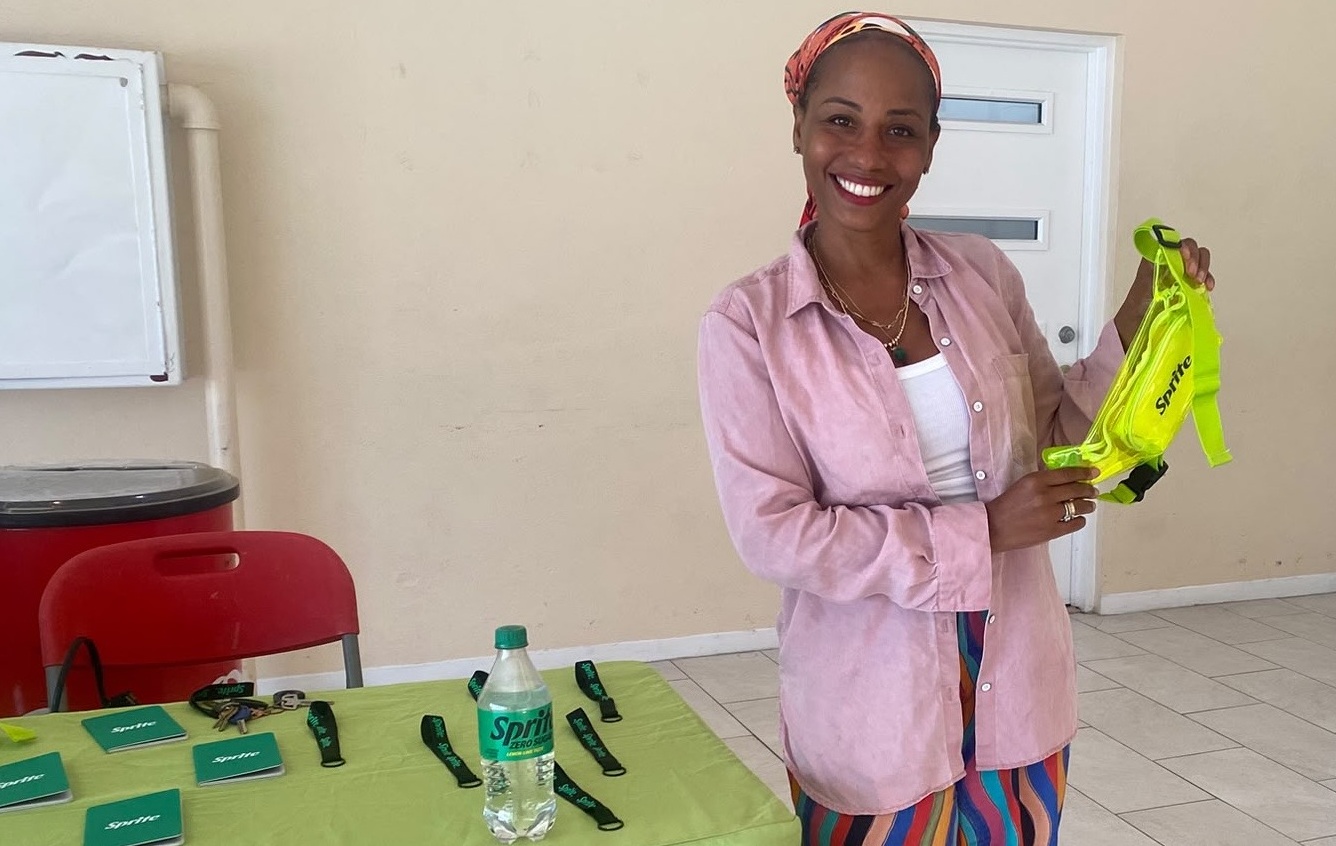
NASSAU, Bahamas — Caribbean Bottling Company (CBC), local producers of Dasani products, proudly sponsored the fifth annual, Caribbean Hoopfest.
The tournament brings together Bahamian high school basketball teams and visiting teams from the United States for a competitive showcase at the Kendal G. L. Isaacs Gymnasium. Following its inaugural year at the Kendal G. L. Isaacs gym and last year’s event at Loyola Hall, the tournament returned to the Kendal G. L. Isaacs gym this year.
During the weekend tournament, CBC kept athletes well hydrated with in-kind donations of Dasani Water, Powerade and Minute Maid Juices.
During the tournament’s final day, CBC provided additional support by offering Sprite No Sugar samples and inviting attendees to participate in its Spin the Wheel for a chance to win exciting prizes.
CBC was proud to support this incredible event, which provides young Bahamian athletes with valuable exposure to U.S. basketball scouts and coaches. This opportunity gives them the chance to earn scholarships, continue their education, and pursue their basketball careers in the United States.
Event organizer, Donald Francois shared his appreciation for CBC’s support.
“I want to express our sincere appreciation for Caribbean Bottling Company, who has been a tremendous supporter and an important part of the success of our program. Without CBC’s support, Caribbean Hoop Fest would not be able to function at the level it does today. And without Caribbean Hoop Fest, we would not have been able to provide the opportunities that have helped young Bahamian athletes gain exposure and pursue educational opportunities in the United States,” he expressed.
Since the program’s inception, several Bahamian student-athletes have been selected for scholarship opportunities, highlighting the tournament’s growing impact on the development and advancement of young basketball talent in The Bahamas.
They are: Kelvin McDowells – Guard, Wodson Antoine – Power Forward, Justin Lafleur – Guard and Sean John – Guard.
After another successful edition of the tournament, Francois shared what he hopes he and Caribbean Bottling Company can achieve in the future.
“Our vision is bigger than basketball. We want to use the platform of Caribbean Hoop Fest to educate, develop, and create opportunities for young people and their families throughout the Bahamas. With individuals and organizations committed to our mission, we believe we can continue to grow the program and make an even greater impact,” Francois said.
For more details on community support, events and new products visit Caribbean Bottling Company at www.cbcbahamas.com today.

NASSAU, Bahamas — More Bahamians are accessing HIV and sexually transmitted infection-related healthcare through National Health Insurance, a trend the NHI Authority says should be viewed positively.
NHIA stressed in an August 6 statement that its 2025 figures measure healthcare utilisation, not newly diagnosed infections. They include beneficiaries screened, treated, monitored or receiving follow-up care, including people diagnosed previously.
“Increased utilisation of these services should be viewed as a positive development,” NHIA said.
The Authority pointed to “greater enrolment and use of NHI, improved access to screening and testing, continued treatment and monitoring of existing conditions, and increased willingness to seek medical care.”
The development comes amid a mixed three-year HIV picture. New diagnoses rose from 130 in 2023 to 156 in 2024, before declining to 142 in 2025.
NHIA said increased utilisation demonstrates that more beneficiaries are accessing needed healthcare and actively managing their health, reinforcing the importance of screening, early diagnosis and continued treatment.





-

 News4 days ago
BermudAir Launches New York Area’s First Nonstop Service to South Caicos, Now Just a 3.5 Hour Flight from Newark
-

 News6 days ago
Salt Cay Water Shortage Unresolved as Residents Question Promised Relief
-

 Bahamas News4 days ago
Bahama Brass Band Invitation Sparks Heritage Debate Ahead of TCI Constitutional Holiday
-
 Bahamas News4 days ago
CBC Supports Opportunities for Young Bahamian Basketball Players
-
 Health6 days ago
Turks and Caicos Islands Hospital Celebrates Successful Completion of 2026 Summer READY Programme