
TCI News
TCIG Partners with Stakeholders to provide Hearing Assessments in TCI


#Providenciales, June 4, 2018 – Turks and Caicos – 21st-28th April 2018, the Ministry of Health, Agriculture, Sports and Human Services,  Special Needs Unit in collaboration with the Department of Education and Special Ed Officer welcomed Entheos, a group of volunteer audiologists through 1 World Foundation, an international non-profit charitable corporation comprised of volunteers from New York State, USA and Ontario, Canada. Their one week has truly been a success.
This initiative is in keeping with the Special Needs Units early detection and intervention strategy through the implementation of a national hearing assessment for all children aged four years plus, commencing with the Government schools. During this visit 358 persons were assessed, and persons requiring hearing devices were fitted with hearing aids. This visit was indeed successful. Of importance, foreign objects such as sea shells, beads, peas along with years of hard wax were removed from some individuals’ ears.
It is the belief of Entheos that everyone deserves access to hearing healthcare. This is done through three pillars:
- Leadership Through Service;
- Positive Objectivity &
- Community
According to the World Health Organization, more than 360 million people worldwide have a disabling hearing loss. Millions go without basic hearing healthcare which impact their lives. A teacher assisted by Entheos in Guatemala said it best, “not being able to hear is like being dead”. If an adult cannot hear, they tend to withdraw, potentially suffer from depression and disconnect from their community as well as it being a safety issue. For kids, it is even more important. If a child cannot hear, it impedes their ability to communicate and learn. Kids cannot go to school, make friends or have basic interaction. In many places throughout the world, this severely limits their future potential.
One of the most important programmes of Entheos’ is humanitarian hearing trips, providing sustainable hearing healthcare. This is done in three stages:
- Relief, Development and Empowerment. Entheos provides immediate relief in the aforementioned areas; as well as return for maintenance and upkeep as hearing devices need to be checked. Entheos believes in providing best practices for everyone they serve and that includes hearing aids maintenance.
- Development – Entheos works with local governments and healthcare providers so they can provide hearing healthcare services in between humanitarian trips.
- Empowerment allows local caregivers the ability to meet the needs of an area.
 Interim CEO Nora Stewart said; “Entheos Audiology Cooperative is honored to work with children and adults to screen and treat their hearing. In the past three days, we have seen 293 persons many of whom now hear better after receiving treatment. We have identified one of the largest problems to be people trying to clean their ears using cotton swabs. This does not clean their ears but rather has a negative impact by pushing the wax farther into their ears. We also saw returning patients who received hearing aids last year needing service and maintenance for their hearing aids. The Entheos team has enjoyed working on the beautiful islands in Turks and Caicos, but even more beautiful than the waters is the spirit of the people. We want to thank the government for the opportunity.”
Last year 88 persons were assessed and thirty-nine persons fitted with hearing aids. The Ministry of Health, Agriculture, Sports and Human Services, Ministry of Education, Youth, Culture and Library Services in collaboration with 1 World Foundation and are committed to developing sustainable programs for people with Special Needs in Turks and Caicos Islands.
For information please contact the Special Needs Unit at 338-2171.
Release: TCIG


Turks and Caicos Islands – March 10, 2026 – Commercial flights between Grand Turk and South Caicos have been temporarily discontinued, leaving residents without a direct air link between the two islands since March 1.
The Turks and Caicos Islands Government confirmed the suspension in a statement Tuesday, explaining that the route — which operates under a government subsidy — is currently under review as officials reassess the tender process used to award the service.
The Ministry of Finance, Economic Development, Investment and Trade said the government is “working diligently to assess available options” to restore reliable air service between the islands as quickly as possible.
While the statement did not identify which airline had been operating the route, historically Caicos Express Airways and interCaribbean Airways have provided flights between South Caicos and Grand Turk using small twin-engine aircraft.
Officials acknowledged the disruption has caused concern among residents, noting that inter-island air travel is critical for access to essential services, business activity and government operations.
The government emphasized that the suspension does not affect flights between Grand Turk and Salt Cay, which continue to operate normally.
The review now underway will determine the next provider for the subsidized route. Authorities say the process must be conducted in a “fair, transparent and efficient manner” before service can resume.
For residents of the two islands, however, the immediate issue remains transportation — with many now forced to reroute through Providenciales or rely on limited sea travel until the air connection is restored.
Further updates are expected once the government completes its review and awards a new operating arrangement.
Angle by Deandrea Hamilton. Built with ChatGPT (AI). Magnetic Media — CAPTURING LIFE.
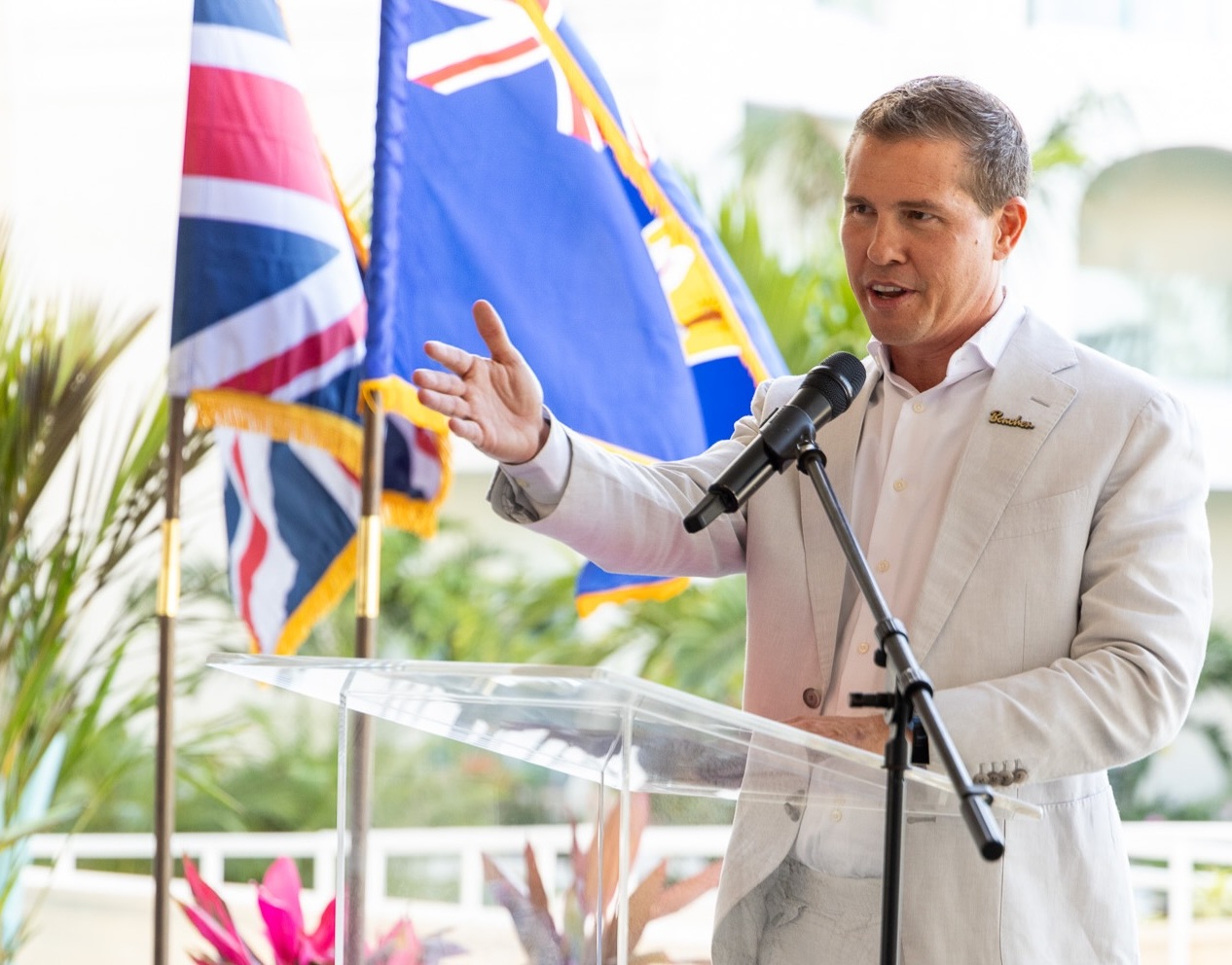
PROVIDENCIALES, Turks and Caicos Islands — A major new chapter in Caribbean tourism has begun in the Turks and Caicos Islands with the opening of Treasure Beach Village at Beaches Turks and Caicos, a $150 million expansion expected to drive increased bookings, air arrivals and tourism earnings for the country.
The new oceanfront development, officially opened on February 28, adds 101 luxury multi-bedroom suites to the resort and introduces new dining, entertainment and family experiences designed to strengthen the destination’s position in the global luxury family vacation market.
Tourism officials and resort executives say the expansion is expected to generate greater demand for the destination, which in turn translates to more flights, more visitor spending and increased government revenue from hotel and tourism taxes.
The development is part of an ongoing investment strategy by Sandals Resorts International, which continues to expand the Beaches brand across the Caribbean.
Executive Chairman Adam Stewart described the opening as a powerful signal of confidence in the Turks and Caicos tourism product.
“This moment reflects a partnership between Sandals and the Turks and Caicos Islands that has been built over decades,” Stewart said during the opening celebrations. The new village, he added, builds on the brand’s reputation for creating multi-generational travel experiences where families reconnect and spend meaningful time together.
The resort expansion reinforces Beaches’ reputation as the world’s leading luxury all-inclusive resort brand for families, and Beaches Turks and Caicos continues to stand as one of the Caribbean’s most prestigious properties.
Government officials attending the ribbon-cutting ceremony, including Tourism Minister Zhavargo Jolly, said the investment strengthens the destination’s international standing and highlights continued confidence in the Turks and Caicos Islands as a premier tourism market.
The new village significantly expands the resort’s accommodation offerings with spacious ocean-view suites and high-end villas designed to host larger families and groups. The property now includes luxury options such as the CrystalSky four-bedroom beachfront villas and a multi-level Chairman’s Penthouse suite capable of accommodating up to ten guests.
Treasure Beach Village also introduces six new dining concepts, including the Pinta Food Hall with multiple global cuisine stations and Butch’s Island Chop House, a signature steakhouse previously exclusive to the Sandals brand.
Additional amenities include a 15,000-square-foot lagoon pool, waterslides and splash zones for children, a swim-up bar, and the brand’s first Starfish Cinema, a theatre designed for family movie nights.
Guests staying in the new village will also have access to the full Beaches Turks and Caicos experience, including 28 restaurants, the 45,000-square-foot Pirates Island Water Park, unlimited water sports and supervised children’s programmes.
Industry observers say the investment not only enhances the visitor experience but also strengthens Turks and Caicos’ reputation as one of the Caribbean’s most sought-after luxury destinations.
Angle by Deandrea Hamilton. Built with ChatGPT (AI). Magnetic Media — CAPTURING LIFE.
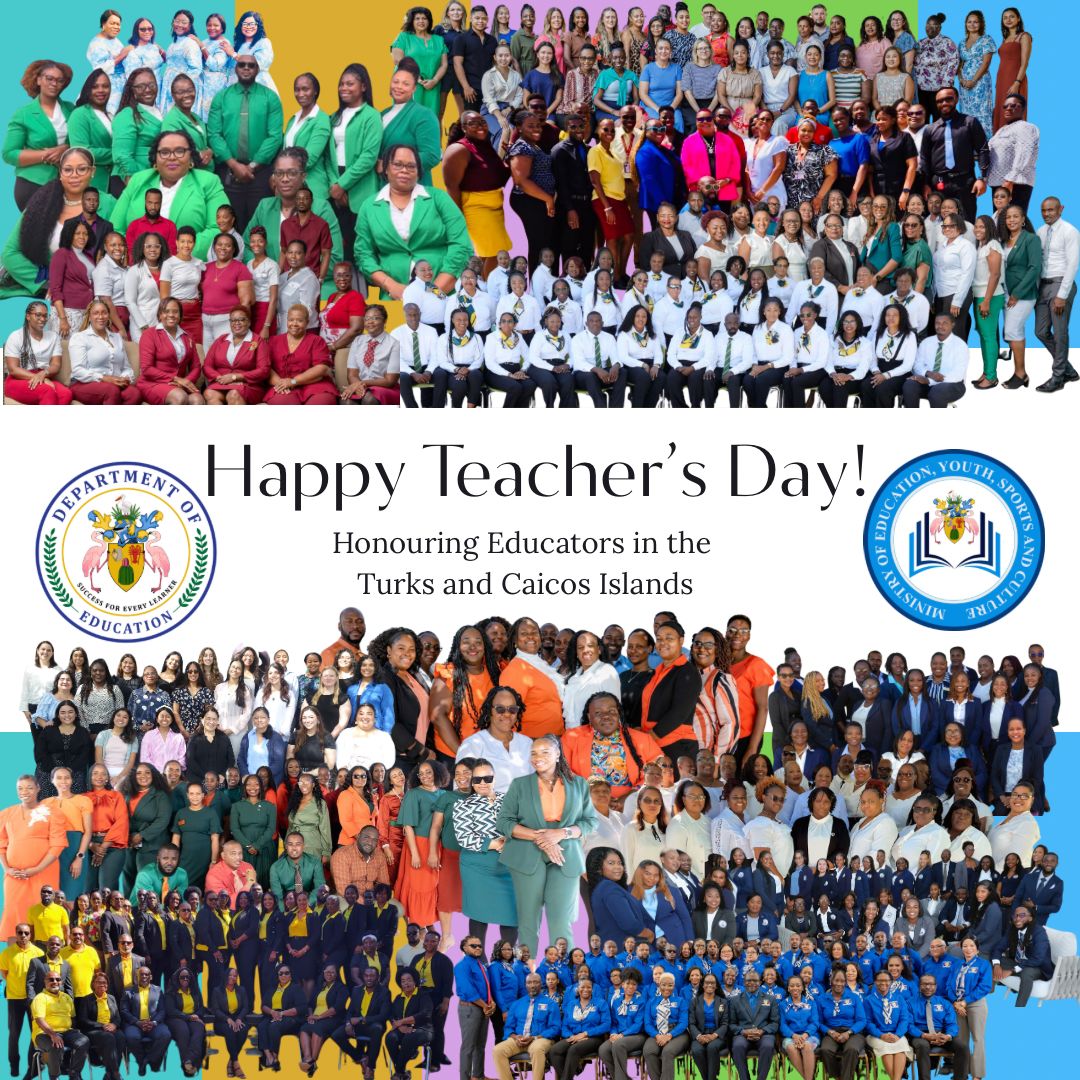
Providenciales, Turks and Caicos Islands – Friday, 6 March 2026: Education is the most powerful weapon which you can use to change the world.” Today, as we observe National Teachers’ Day, we pause to recognize and celebrate the remarkable contributions of our teachers and the dedicated leaders of our schools. Your commitment to shaping young minds, guiding character, and nurturing potential is a calling that reaches far beyond the classroom. Proverbs 22:6 reminds us, “Train up a child in the way he should go, and when he is old he will not depart from it.” Your daily efforts reflect the truth and wisdom of these words.
We also extend sincere appreciation to the leaders of our schools whose vision, guidance, and steady leadership create environments where both teachers and students can flourish. Your role in supporting educators and maintaining strong, positive learning communities is invaluable to the continued progress of our education system.
Teaching is not without its challenges. Yet, even in moments of stress and difficulty, our teachers continue to demonstrate genuine love, patience, and concern for their students. For this, we are deeply grateful. Your compassion, encouragement, and dedication help our children feel seen, valued, and inspired to reach their full potential. Truly, to teach is indeed to touch lives forever.
Education is strongest when it is supported by partnership. We must also recognize the important role of parents and families in the success of our children. When schools and homes work together, the results are powerful. As we often say, when parents lead, children succeed. This shared commitment creates a strong foundation for learning and growth.
As a Department and Ministry of Education, we reaffirm our commitment to supporting our teachers and school leaders. We will continue to invest in meaningful professional development, provide the resources necessary for effective teaching and learning, and strengthen the systems that empower educators to thrive in their profession. Your work matters deeply, and we remain dedicated to ensuring you have the support needed to continue making a lasting difference.
On behalf of the Ministry of Education, I thank you. Thank you for your dedication, your resilience, your leadership, and for the love and care you show to our children each and every day. Today we celebrate you and the incredible impact you have on our nation’s future.





-
 Health1 week ago
Chile becomes the first country in the Americas to be verified by WHO for the elimination of leprosy
-

 Caribbean News4 days ago
Jamaica Joins Afreximbank Agreement, Strengthening Africa–Caribbean Partnership
-

 News1 week ago
Police Commissioner Honoured with Distinguished Civic Service Award at TCHTA Star Awards
-
 Bahamas News1 week ago
Dredging Is Not Just About Size — It Is About What Is Being Destroyed, Warns Save Exuma Alliance Regarding Yntegra’s Proposed Rosewood Resort
-
 News1 week ago
Flow TCI powers Inter-High Track and Field Championships
-

 Education7 days ago
Message from Hon. Rachel M. Taylor, Minister of Education, Youth, Sports & Culture
-
 News5 days ago
Treasure Beach Village Opens at Beaches; Tourism Leaders Expect Surge in Bookings
-

 News3 days ago
Rights Without Justice: How Weak Enforcement Fails Women and Girls