
Uncategorized
BAHAMAS: PM Minnis ‘Tables’ Administration’s White Paper on Over-the-Hill Development Partnership Initiative

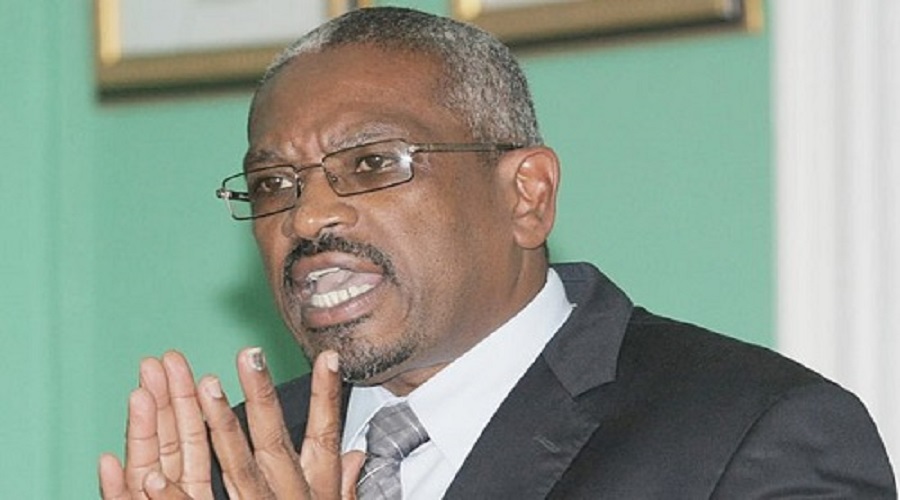
#Bahamas, April 26, 2018 – Nassau – Prime Minister, Dr. the Hon. Hubert A. Minnis tabled his Administration’s White Paper on the Over-the-Hill Community Development Partnership Initiative in the House of Assembly Wednesday, signaling the start of two months of broad-based consultations.
A Town Meeting has been scheduled for Wednesday, May 2, 2018, at the C.R. Walker Senior High School where the Prime Minister and members of his team will present the White Paper on the creation of an Economic Empowerment Zone to restore the Over-the-Hill Community (The OTH).
Officials will outline how the tax incentives and nuances of the programme will work to provide economic relief to the inner-city, in addition to the targeted programmes and initiatives to improve the lives of all residents in the inner-city communities.

The White Paper lays out the Minnis Administration’s policy objectives for the rejuvenation of the Over-the-Hill Community which was once “the epicentre of cultural and social development” in New Providence, particularly for those Bahamians of African descent.
The tabling of the document in the House of Assembly Wednesday (April 25, 2018) and the subsequent consultations that will take place, allows the Minnis Administration to begin the process of fulfilling a promise made prior to taking over the administration of governance, to “transform our inner-city communities in ways only dreamt about.”
Launched on December 4, 2017, with the distribution of tablets at the Willard Patton Pre-School, the Over-the-Hill Community Development Partnership Initiative (also known as the Over-the-Hill Rejuvenation Programme) is part of the Minnis Administration’s strategy of improving the lives and livelihoods of Over-the-Hill Communities.
Developed and facilitated by officials of the Economic Development and Planning Unit, Office of the Prime Minister, the Programme “strikes at the heart” of many of the problems facing inner-city communities and residents such as hard economic times and high incidences of crime and poverty that are exacerbated by poor infrastructure, the abandonment of the area by many traditional families and the increasing impoverishment of the environment by dilapidated housing and illegal garbage and waste disposal.
The Initiative is built on six pillars that include: Social Empowerment (through the implementation of Anti-poverty policies and practices); Economic Empowerment (through the creation of jobs and ownership opportunities for Bahamians), and Rejuvenation, improving the physical surroundings, including upgrades to historical and cultural assets.
Other initiatives include the Use of Smart, Green Technology; and the Empowerment of the Youth and Elderly by investing in social interventions.
“I am humbled to present this document to the Bahamian people,” Prime Minister Minnis told House Members. “In 2014, I uttered the words: ‘We can transform our inner city communities in ways only dreamt about.’ Upon becoming Prime Minister, it was therefore my time to act and not just to dream. This has been a key priority of the government.”
By: Matt Maura

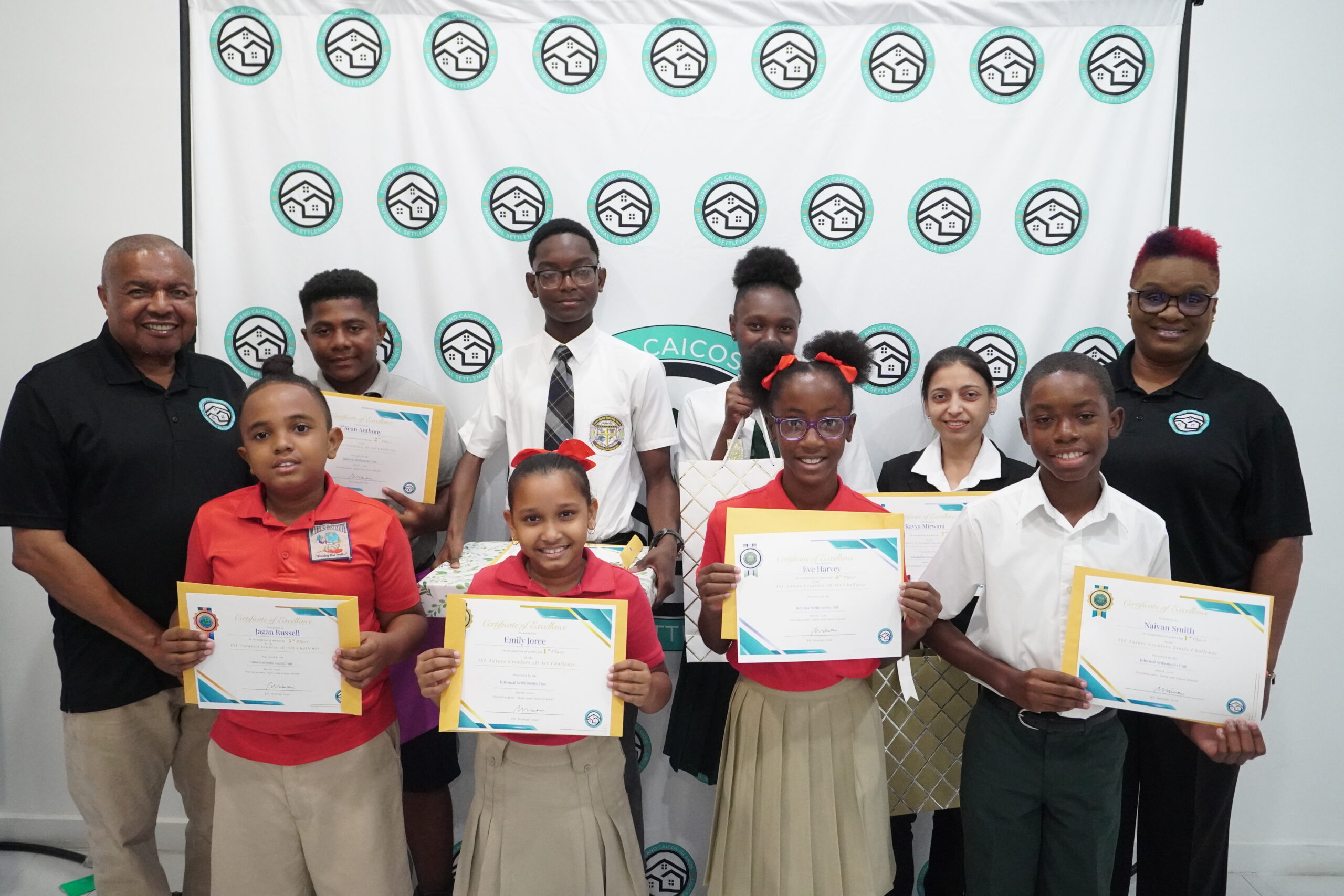
Providenciales, Turks and Caicos Islands – March 26, 2026 – The Informal Settlements Unit (ISU) successfully hosted its Future Creators Challenge Prize Distribution Ceremony on Wednesday, March 25, 2026, at its office in Providenciales, recognising outstanding student creativity and participation from across the Turks and Caicos Islands with winners hailing from Providenciales and North Caicos.
The Future Creators Challenge formed a central component of the ISU’s Youth Outreach Programme, an initiative designed to engage young people in understanding the challenges associated with informal settlements while encouraging critical thinking, creativity, and solution-oriented perspectives on national development. Through a combination of educational content, school engagement, and creative competitions, the programme provided students with an opportunity to explore issues of community development in accessible and meaningful ways.
Students competed across three categories: 2D Art, Essay Writing, and Jingle Creation, producing submissions that demonstrated both creativity and thoughtful engagement with the themes of the programme.
The following students were recognised for their outstanding performances:
2D Art Challenge
1st Place – Emily Joree – MILLS Institute
2nd Place – T’Sean Anthony – Thelma Lightbourne Primary School
3rd Place – Jagan Russell – MILLS Institute
4th Place – Eve Harvey – MILLS Institute
Essay Challenge
1st Place – Jordan Pierre – Louis Garland Thomas High School
2nd Place – Kavya Mirwani – British West Indies Collegiate
3rd Place – Mirsendy Obei – Raymond Gardiner High School
Jingle Challenge
1st Place – Naivan Smith – Raymond Gardiner High School
In addition to individual awards, MILLS Institute was presented with a special prize in recognition of submitting the highest number of entries to the ISU Future Creators Challenge, reflecting exceptional student participation and institutional support.
In remarks delivered during the session, ISU Strategic Lead Justice Carlos Simons KC underscored the importance of youth participation in shaping the future of the Turks and Caicos Islands, noting that “the future of the Turks and Caicos Islands depends on young people like you who are willing to engage, to imagine solutions, and to play a role in the development of your communities.” He further encouraged students to continue playing an active role in national development, expressing that he hoped “this is only the beginning of your journey as agents of change here in the TCI.”
The ISU extends its sincere appreciation to all participating schools, students, and teachers as well as the Ministry of Education, Youth, Sports and Culture, whose support contributed to the success of this inaugural Youth Outreach Programme initiative.
The Unit remains committed to expanding its engagement with young people across the Turks and Caicos Islands through innovative, inclusive engagement efforts that support awareness, education, and long-term national development.
Turks and Caicos, March 18, 2026 – Across the Turks and Caicos Islands, the skyline is changing. New resorts rise along the Northern coastline of Providenciales, promising luxury, exclusivity, and world-class experiences designed for the global traveler. These developments are often celebrated as progress, as evidence of economic growth and international relevance.
But beneath that narrative lies a quieter question: who is this development truly for, if it does not meaningfully include the culture of the place it occupies?
More specifically, where are the local artists?
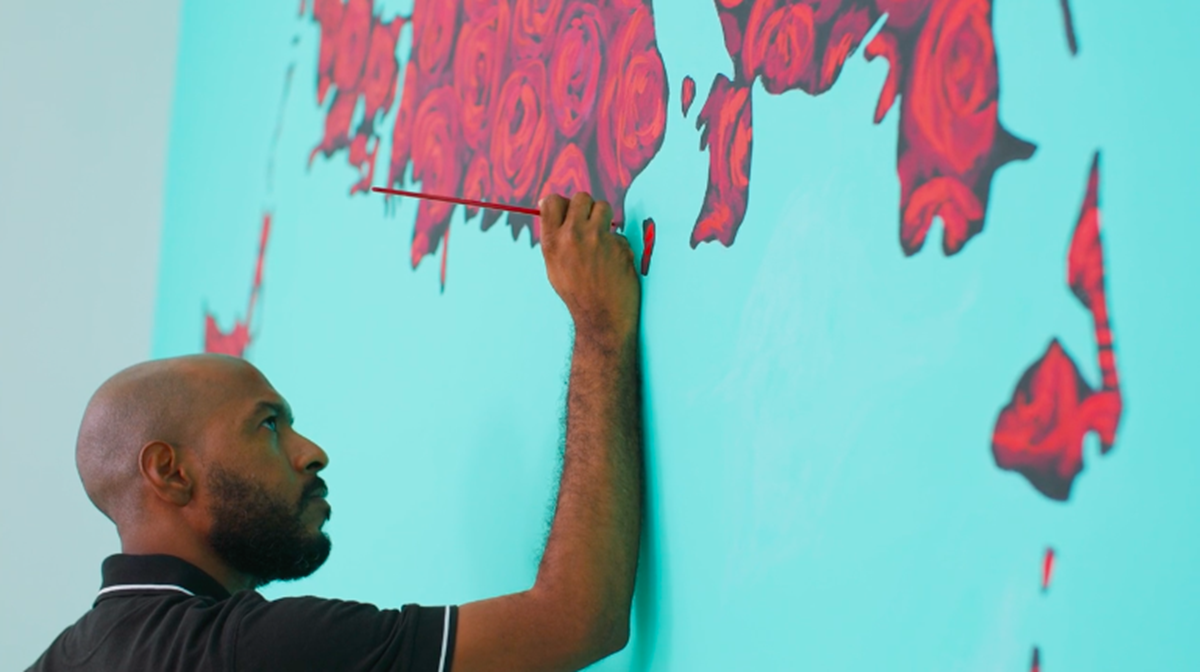
Modern tourism is no longer defined by architecture alone. Today’s traveler is not simply purchasing a room. They are seeking experience, identity, and connection to a place. In response, hospitality brands increasingly market authenticity as a defining feature of luxury.
Encouragingly, there are emerging examples within the Turks and Caicos Islands where this principle is present. Recent developments such as Beaches Resort’s new village extension, Treasure Beach and The Strand TCI have made intentional efforts to incorporate local visual artists into their properties, signalling an understanding that art is not an accessory, but an essential component of place-making.
These efforts demonstrate what is possible. Yet, across many developments, this level of integration remains inconsistent or non-existent. In comparison, the yet to open properties like the Andaz feature videos claiming to be rooted in culture while promoting Nigerian-Canadian and Trinidadian artists; whose work will adorn its walls and shape the narrative of “local culture” to its visitors. There are whispers of developments transporting artists all expenses paid to create and outfit their properties with art.
Instead of commissioning local artists, properties also rely on imported, mass-produced décor or artwork sourced from overseas. The result is a visual identity that could belong anywhere. A resort may sit on TCI Soil, but its interiors frequently tell no story of the islands themselves. This is more than an aesthetic oversight. It is a missed cultural and economic opportunity.
Local artists are not merely decorative contributors. They are interpreters of place, translating the land, its flora, and its lived experience into visual form. In a destination like the Turks and Caicos Islands, where identity is deeply tied to landscape and memory, art plays a critical role in shaping how a place is understood and remembered.
To exclude local artists from major developments is, in effect, to remove one of the most direct expressions of national identity from the visitor experience.
There is also a clear economic cost.
When developments bypass local creatives, funds that could circulate within the domestic economy instead flow outward. This is a form of economic leakage that is rarely discussed but widely felt. Commissioning local artists, licensing their work, and integrating it into design and branding are not acts of charity. They’re investments in a local creative economy with the potential to grow alongside tourism itself.
There remains an outdated assumption that meeting international standards requires looking outward rather than inward. But globally, the opposite is increasingly true. The most competitive destinations are those that embed local culture into their offerings in meaningful ways. Authenticity is no longer optional; it is expected.
The Turks and Caicos Islands should not aspire to look like everywhere else. Its value lies in being unmistakably itself. The positive steps taken by developments such as Beaches’ Treasure Beach and The Strand TCI should not be viewed as exceptions, but as a model. They show that integrating local artists is both achievable and beneficial, enhancing the guest experience while supporting the domestic economy.
This raises an important question for policymakers and developers alike: what would it look like to make this approach standard practice? Practical solutions already exist. Development frameworks/agreements can encourage or require a percentage of project budgets to be allocated to local art. Our newly launched national artist registry by the Department of Culture could streamline procurement and ensure professional standards. Partnerships between developers and cultural institutions could allow artists to be involved from the earliest design stages, rather than as an afterthought.
Hotels themselves can play a role by hosting exhibitions, supporting artist residencies, and incorporating locally produced work into their guest experience. Beyond one-time purchases, licensing agreements can allow artists to benefit from the continued use of their work across branding and digital platforms. None of this is radical. It is standard practice in destinations that understand the long-term value of cultural identity.
At its core, this issue is about more than art. It is about how a country chooses to represent itself, and who is included in that representation. The Turks and Caicos Islands is not simply a collection of beaches and luxery buildings. It is a living culture, shaped by its people, its history, and its environment. Its artists are part of that fabric, producing work that reflects and preserve what makes these islands distinct.
To build a tourism industry that does not meaningfully include them is to create a version of the country that is incomplete.
As development continues, the question is not whether the islands will grow. Growth is already underway. The question is whether that growth will be rooted in the identity of the place, or whether it will continue to operate around it.
In a global market where authenticity carries increasing value, the answer should be clear.
I leave you to ponder:
Turks and Caicos, where are YOUR artists?
About HezronH:
“We are all blended with a swath of experiences; walking, breathing, and thinking creatures full of insight and emotions expelled through every single pore. Our aura illuminates spaces of darkness and drives ideas through vision, endowing minds with fragments of personality shimmering through a kaleidoscope of colour.”
Turks and Caicos Islands’ artist Hezron Henry’s work is an exploration of this concept, via his practice. His body of work consists of oil stick, oil pastel and acrylic on paper, canvas, and digital painting, adapting both traditional and modern painting mediums to his signature style. His art is laden with vibrant colours and a link is established highlighting the emotive power of colour. Drawing inspiration from his youth, collecting comics, and his everyday interactions as an adult, he bridges youthful vibrancy and rule-breaking with the depth of an individual’s search for belonging in a region, still underrepresented, and overlooked.
Hezron infuses his portraits with introspection and longing while vivid colours harken to a palette present in Fauvism.
His passion is honest artistic expression, creating an experience people can enjoy and connect with on an ethereal level.
As one of Turks and Caicos’ most prolific artists he has exhibited in cities across Australia, New Zealand, the UK, Trinidad & Tobago at CARIFESTA, Portland (USA), and at Art Takes 2021 (NYC). Hezron has also had the pleasure of being featured in several publications: Beautiful Bizarre Magazine, Wacom’s “The Next Level,” Turks and Caicos Magazine, and selected as “Curators’ Picks: Emerging” on international art platform Artsy.
Select Achievements/Exhibitions/Publications/Projects
2024 – Indelible Imprints, Group Show, SaveArtSpace x Gallery 90220, Los Angeles
2024 – Feature, Cacique (interCaribbean In-Flight Magazine), Apr – Jun
2024 – Interview, Up and Away (Bahamasair In-Flight Magazine), Apr – Jun
2023 – Curators’ Picks: Emerging – Artsy
2023 – Curators’ Choice: Atlantic World Art Fair
2023 – Print It!, Group Exhibit, Leeds, UK
2022 – Caribbean Metaverse Art Week, Decentraland
2022 – Deus: The Quest for Divinity, Solo Show, Black Pony Gallery, Artsy Viewing Room
2021 – Expression Against Oppression, Group Exhibit, SaveArtSpace, Portland
2020 – Drawn Vol. 4: Leaders in Contemporary Illustration
2020 – Exclusive Evening of Art Exhibition, Group Show, Providenciales
2019 – Across Boundaries Exhibition, Group Show, Trinidad and Tobago National Museum
2019 – Apparel Collab, Konk
2018 – Fabric Prints, bēchë 2019 Collection
2017 – EP Cover, Maskanoo, Lady Livz
2017 – The Next Level Exhibition, Group Show: Sydney, Melbourne & Auckland
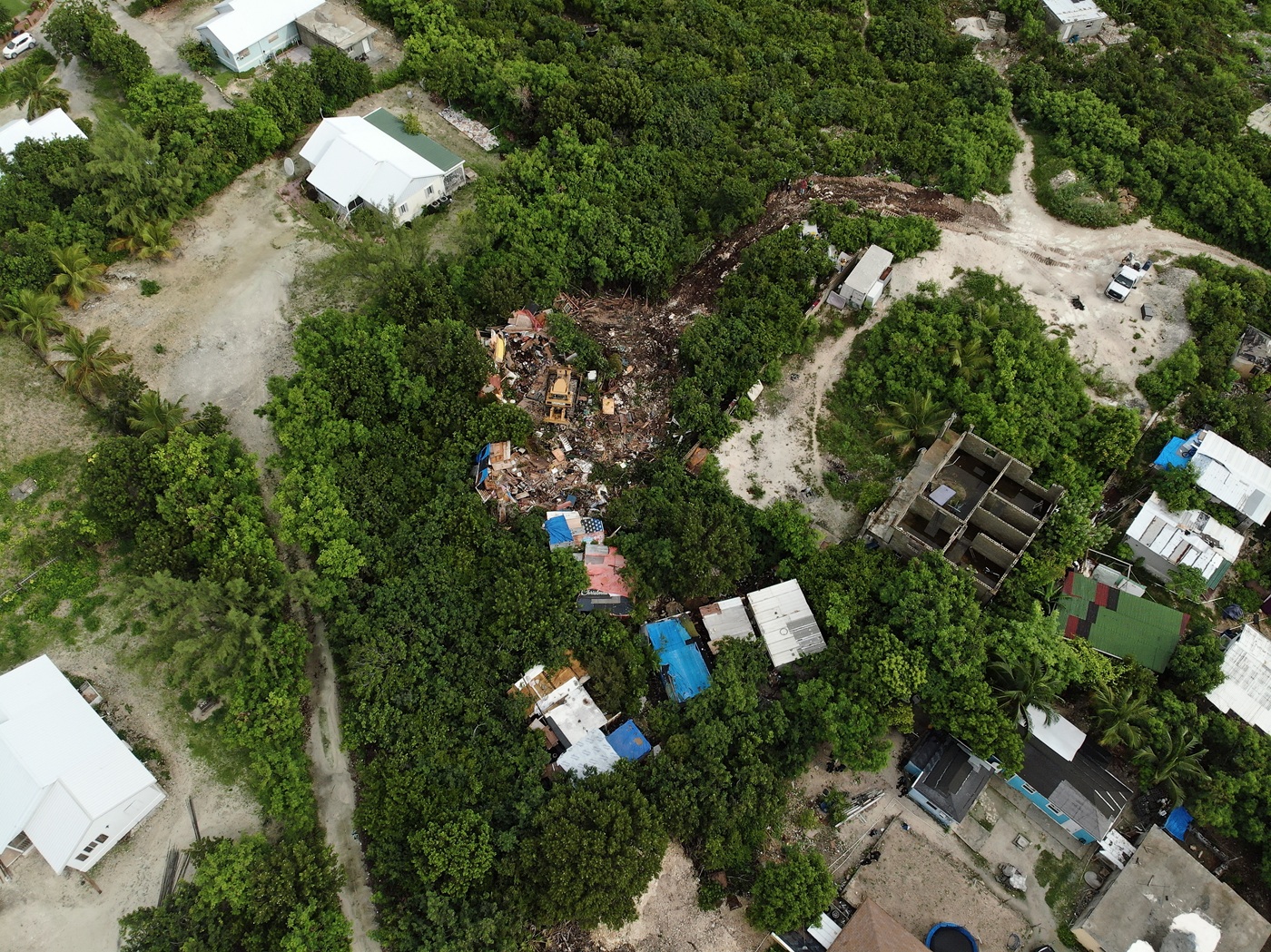
Providenciales, Turks and Caicos Islands, 23 October 2025 — The Crown Land Unit, supported by the Informal Settlements Unit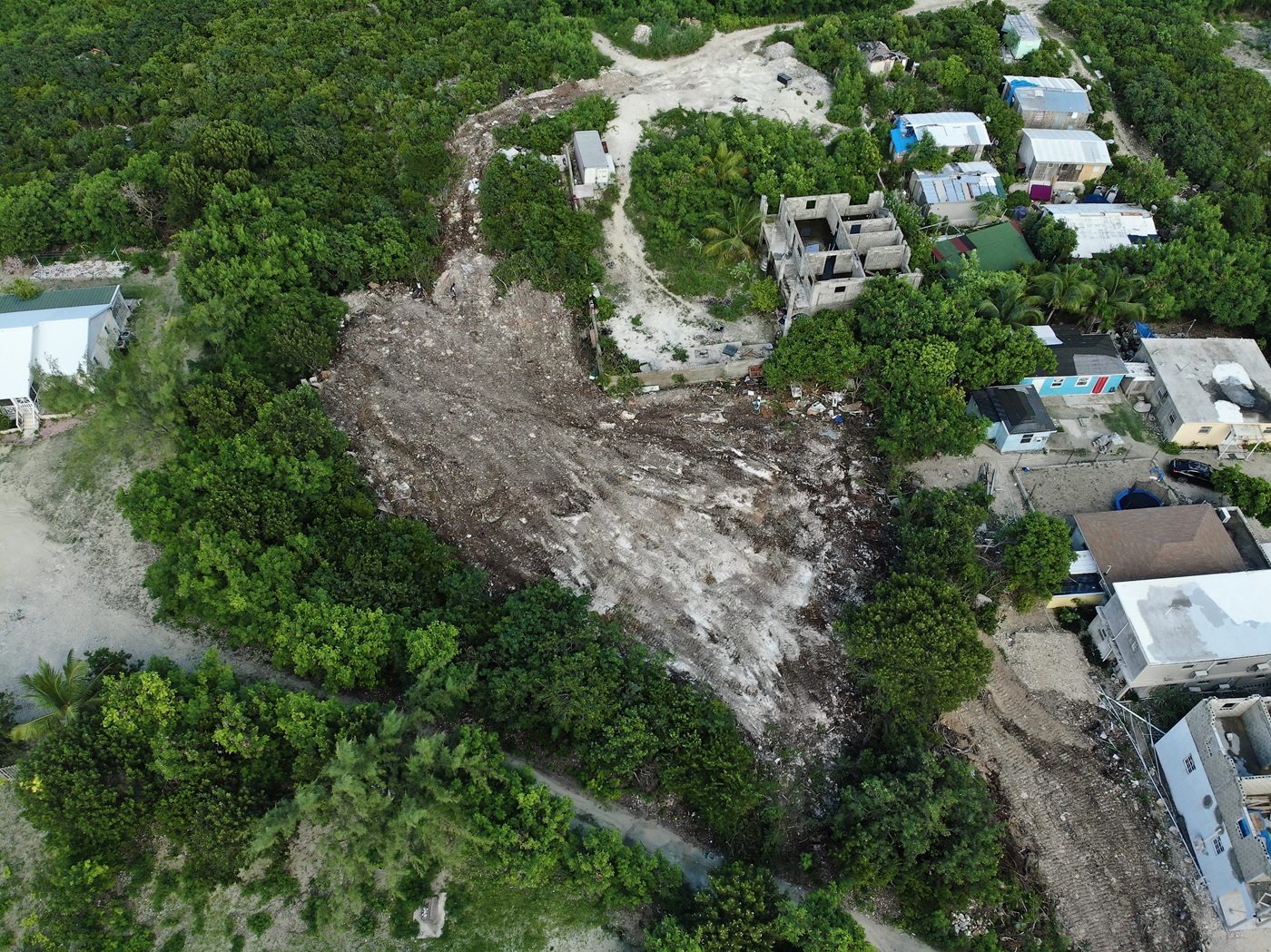 (ISU) and Immigration and Border Services, led the successful execution of a reclamation exercise in Blue Hills on Wednesday October 15, 2025. The Royal Turks and Caicos Islands Police Force provided security for the operation, which formed part of the Government’s ongoing mandate under the Crown Land Ordinance to prevent squatting and encroachment on Crown Land.
During inspections conducted by the Crown Land Unit, illegally constructed timber buildings were identified on parcels 60501/091 and
60501/092. Notices of Illegal Occupation were issued in accordance with the Crown Land Ordinance; however, the persons responsible for the construction failed to comply with the instructions contained in the notices. As a result, enforcement action was taken to remove the structures and reclaim the land.
The exercise resulted in the full reclamation of 0.84 acres of Crown Land, with the removal of sixteen unauthorized and unoccupied timber structures across the two parcels. Of these, four structures were located on parcel 60501/091 (measuring 0.49 acres) and twelve structures on parcel 60501/092 (measuring 0.35 acres).
The ISU reaffirms its commitment to supporting partner agencies in the coordinated management of Crown Land, ensuring that all enforcement actions are carried out lawfully, efficiently, and in the public interest.





-

 News4 days ago
Password to Paradise Radio Remotes at Beaches Turks & Caicos continue to highlight the TCI as the preferred Caribbean destination
-
 News5 days ago
Beaches Turks & Caicos adds four new PADI Dive Instructors to the cadre of professionals in the watersports department
-
 Health1 week ago
Turks and Caicos Islands Hospital Celebrates Patient Safety Awareness Month: “Team Up for Patient Safety”
-
 News5 days ago
Beaches Turks & Caicos shares fine dining experiences to high school students in Providenciales
-
 Health1 week ago
Turks and Caicos Islands Medical Association (TCIMA) Elects New Executive
-

 Bahamas News3 days ago
Bahamasair Backs Surge as Bahamians Flood South Florida for V.J. Edgecombe Showdown
-

 News1 week ago
Flow TCI supports ‘Stars of Tomorrow’ at Inter-Primary Track and Field Championships
-
 News1 week ago
The Turks and Caicos Islands Featured in Top Canadian Publications