
Bahamas News
Small business license fees in the Grand Bahama Port Area may soon change


#Bahamas, January 30, 2018 – Grand Bahama – Small business license fees may soon fall in line with the rest of The Bahamas, said Minister of State for Grand Bahama in the Office of the Prime Minister, Senator the Hon. J. Kwasi Thompson on Friday. Minister Thompson was addressing the Grand Bahama Chamber of Commerce Annual Installation of Officers and Directors 2017-2018.
Former GB Chamber President, Deputy Prime Minister and Minister of Finance, the Hon. K. Peter Turnquest, installed the new officers. Minister Thompson apologized for the absence of the Prime Minister, who was in Andros for the National Memorial Service for the plane crash victims. As the government believes in reform, modernization and transformation, soon after coming to office, an Ease of Doing Business Committee was appointed. They have made recommendations which are being reviewed and carried out.
“I commend the Deputy Prime Minister and his team for the improvements already made. It should also be noted that we intend for the changes to also apply to Freeport. As an example discussions have begun with the Grand Bahama Port Authority to express the Government’s desire to bring business license fees for very small businesses on the same level as the government’s fee, which is $100. It doesn’t seem right that a person wanting to start this type of business in the Port area has to pay sometimes 10 times as much than everyone else in the rest of The Bahamas. In addition we continue to work out arrangements for the One Stop Shop for Investment in Freeport.
“Small-and-medium sized Bahamian businesses are a critical part of our economy. These businesses employ thousands of Bahamians. They are critical for economic growth.
“To promote the ease of doing business for such enterprises, at the end of last year, after consultation with the Central Bank, the Government announced the relaxation of Exchange Controls on capital transactions, namely on capital (investment) and current account (trade) transactions.
“This was a reform long overdue. These changes come into effect as of 1 February 2018. Without prior reference to the Central Bank, Bahamian-owned businesses will be allowed to maintain operating deposit accounts with up to $100,000 in foreign currency at domestic commercial banks.

“These accounts will have to be funded exclusively from revenues earned in foreign currency. Central Bank approval will continue to be required for accounts with balances of more than $100,000 in foreign currency.”
Minister Thompson outlined another reform whereby upon application to the Central Bank, Bahamians and residents will be able to have foreign currency denominated deposits or investment assets outside of The Bahamas, or bring it back to the country and it remain in the same foreign currency.
“No penalties will be imposed on regularized accounts and investments. The owners of deposit facilities will be allowed to use the resources to finance domestic transactions, without restriction.
“Prohibitions will exist against either funding or augmenting these facilities with proceeds converted from Bahamian dollars.” He further stated, “Last year we passed the Commercial Enterprise Act, which promises enormous benefits to our economy.
“The intent of this Act is to offer incentives to Bahamian and international investors who establish businesses in the Bahamas, which will help to diversify the economy, and to create higher paying jobs and long-term job securit“Under this legislation, investors in captive insurance, reinsurance, arbitration, wealth management, computer programming, maritime trade, nanotechnology, biomedical industries, data storage, call centers, software design and writing will be given a number of concessions and incentives.
“Another reform that has already been announced is the creation of an independent board to review applications for work permits and citizenship. This will allow for less interference and more openness in the process of obtaining citizenship.”
The Minister said revitalizing Grand Bahama has been a priority of the government since the General Election in May, 2017, and stating that there is a long way to go, he added that the road to recovery has begun.
“To boost growth and employment we must stimulate domestic and foreign investment, as well as opportunities for large-scale and small- and medium-sized businesses.”
Listing some of the things done in an attempt to boost the local economy, Minister Thompson said the government negotiated the completion of a Letter of Intent on the sale of the Grand Lucayan Hotel, and is currently working diligently to complete the sale of the Grand Lucayan and Memories property.
“After they are reopened, the economy of Grand Bahama will improve significantly, including with a tremendous increase in employment and related business and economic opportunities.
“We also successfully negotiated with Bahamas Paradise on the return of the Grand Celebration, and the introduction of a new vessel, the Grand Classica, which will bring additional stopover visitors and more opportunities to Grand Bahama in April. We learned the painful effects of not having the Celebration vessel for a few months and therefore looking forward to the increased benefits of having both vessels.
“In conjunction with Ministry of Tourism, and our Minister of Finance DPM we also negotiated an airlift agreement with Sunwing, and now have the return of Vacation Express. It has been announced that a total of eight non-stop flights departing from various US cities, will begin their flight schedules in May 2018.”
Scheduled to begin in May are flights from Detroit, Chicago, Nashville, Pittsburgh, Newark, Baltimore, Cincinnati, and Dallas. These will be operated by Swift Air LLC., and the Ministry of Tourism projects a potential 16,800 passengers. Additionally, negotiations ongoing with the “Ginn Property” in West End, along with a new investment in East End involving an oil refinery. This announcement, said the Minister, will be made at the appropriate time.
Going over the advancements made in the area of technology, Minister Thompson told Chamber members that a Grand Bahama Technology Hub Steering Committee has been formed to establish Grand Bahama as a technology hub. Carnival Corporation is already assembling their Ocean Medallion Concierge System, and Grand Bahamians have been hired and are being trained.

“The Bahamas is also currently developing programs for block chain-based solutions, fin-tech and crypto-currency companies, and we intend to promote block chain as a sub-industry within ICT.”
Touting joint efforts between the government and the Chamber, Minister Thompson acknowledged the government’s summer job program where some 500 young people were placed in local businesses. There was also the Business to Business Initiative which began on September 28, 2017 designed to provide business opportunities to budding entrepreneurs.
“The initiative exposed existing entrepreneurs and small businesses to opportunities which exist already at the larger industrial companies. The first to participate were the Grand Bahama Shipyard and Buckeye. We intend to continue this initiative with other major companies.
“The Apiary Project began on 24 October which will help 30 young people to enter the honey production business here in Grand Bahama. These young people began training on the 2nd January 2018.
Each participant will receive a stipend during a 14-week training program, and will have access to funding and mentorship from Bahamas Development Bank.
“We look forward to your partnership with the our office and Deputy Prime Minister, Port Authority and the University of the Bahamas for the launch of the Small Business Development Center, which would provide support and research resources for entrepreneurs. We have also been most grateful for your support in our GB Micro and Small Business Economic Empowerment and Entrepreneurial Incentive Program launched last year.”
Minister Thompson said they will be calling on the business community once again on February 17th at the Ministry of Labour Job fair, where he hopes they will not only participate, but hire as many people as possible.
In closing, the Minister said, “The Chamber continues to be a great partner and [I] look forward to an even closer relationship. We have a talented creative and vibrant private sector. I believe you have what we need to reignite Grand Bahama’s economy. Within you lies the talent, ability, resources, and capacity we need for success. We as a government must create the environment that will motivate you to expand, invest and progress.
“I encourage you to seriously look at reinvesting, renovating, expanding, reshaping, re-tooling, and rehiring. Fixing Grand Bahama will not be easy or quick but I believe we all have what it takes and I stress, we all.”
By: Robyn Adderley
Photo caption: Senator the Hon. Kwasi Thompson.
(BIS Photo/Lisa Davis)


The Bahamas, March 30, 2026 – The voice of a proud mother captured the spirit of a nation Monday night, as Bendra Rolle shared heartfelt reflections on the overwhelming Bahamian support for her son, VJ Edgecombe, during the Philadelphia 76ers matchup against the Miami Heat in Miami.
“The patriotic support and scenery at my son, VJ Edgecombe’s NBA game… was overwhelming,” Rolle said in a statement issued following the game. “The arena in Miami was lit. Bimini and the Bahamas showed up and showed out.”
Her words come amid what has already been widely described as a remarkable showing of national pride, with Bahamians traveling in large numbers to South Florida to witness the young guard’s continued rise. For Rolle, however, the moment extended far beyond basketball.
“Beyond VJ’s basketball talents, I’m so moved by his magnetic personality and personal journey to inspire and excite an entire nation—our beloved Bahamas,” she said. “I thank God for VJ’s humility and for his hunger for greatness. He never forgets how far God has brought us.”
While the Sixers did not secure the win on the night, Edgecombe delivered a solid individual performance, finishing with 13 points and five assists. He made an early impact on the game, showing confidence and poise before foul trouble disrupted his rhythm, but still managed to leave his mark in meaningful minutes.
The game itself evolved into a cultural showcase, with Bahamian flags waving throughout the arena and chants ringing out in support of Edgecombe. Much of that presence was bolstered by a coordinated travel push from Bahamasair, which helped facilitate fan travel and added to the electric atmosphere in Miami.
Rolle said the emotional weight of the moment was deeply felt by her family, as they witnessed firsthand the unity and pride of the Bahamian people.
“Thanks and love for the tears and overwhelming joy on Monday, Bahamas,” she expressed. “The Bahamian flags were love, loud, and proud. On my own behalf, VJ, and the entire family, I am ever grateful for the indescribable experience.”
Her closing words underscored what many have described as the true victory of the night—not the final score, but the powerful display of national pride and support surrounding one of The Bahamas’ rising stars.

PHOTO BY SIXERS NATION
Bahamian pride is already on full display in South Florida, with fans arriving in strong numbers ahead of tonight’s highly anticipated NBA matchup featuring VJ Edgecombe and the Philadelphia 76ers.
Helping to power that movement was Bahamasair, which rolled out a strategic promotion to facilitate travel, turning the game into a full-scale national showing.
And the celebration started early.
A “Bahamas Invades Florida” pre-party over the weekend set the tone, with Bahamian fans, DJs and supporters converging in Fort Lauderdale to build momentum ahead of the game. The event, marketed as a major cultural gathering, has spilled into Miami, where a strong Bahamian presence is expected inside the arena tonight.
This is no ordinary road game.
The Sixers enter the matchup healthy and are favoured to win, adding to the anticipation surrounding what many expect to be a standout performance by the Biminite guard.
Edgecombe, the third overall pick in the 2025 NBA Draft, has been electric in his rookie season — delivering high-scoring performances and quickly establishing himself as one of the league’s most exciting young talents.
But beyond the stats, it’s the moment that matters.
With South Florida just a short flight away, Bahamians have seized the opportunity to show up in force — flags, energy and all — transforming the game into something far bigger than basketball.
A national turnout.
A rising star.
And a night where the Bahamas is expected to be felt — from tip-off to final buzzer.
Angle by Deandrea Hamilton. Built with ChatGPT (AI). Magnetic Media — CAPTURING LIFE.
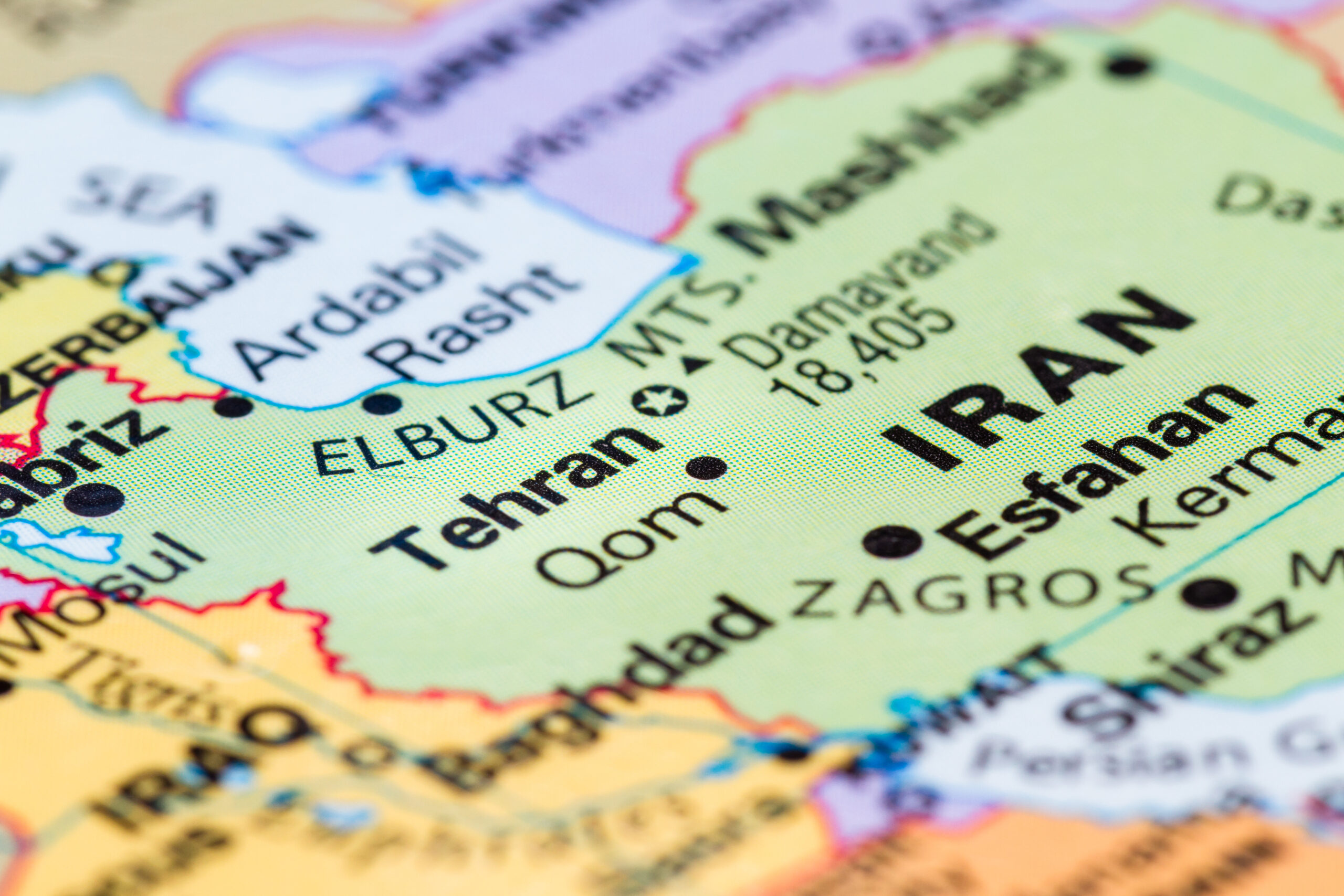
The Bahamas, March 18, 2026 – Twenty days into the latest Middle East escalation, the United Nations is warning the conflict is spreading beyond its original battlefield, as the death toll rises and governments around the world issue urgent travel advisories — including The Bahamas.
In a March 17 statement, the UN Secretary-General’s office said the war must stop and called for all Security Council resolutions to be respected, noting with concern that countries in the Gulf continue to be targeted, raising fears of a wider regional confrontation.
The current round of fighting began February 28 with strikes involving the United States, Israel and Iranian-linked forces, followed by missile and drone attacks across Iraq, Lebanon and parts of the Gulf.
International monitors report more than 1,300 people killed in Iran alone, with additional casualties reported in Lebanon, Israel and Gulf states. U.S. officials confirm at least 13 American service members have died since the escalation began, while reports indicate additional senior Iranian military leaders were killed in recent strikes.
Despite the growing violence, several NATO countries including the United Kingdom, France and Germany have not joined offensive operations, instead calling for diplomacy to prevent the conflict from widening.
The Bahamas Ministry of Foreign Affairs has also issued a travel advisory, warning Bahamian nationals to avoid travel to Israel, Palestine, Iran and Lebanon and to reconsider travel across much of the Gulf region due to the risk of sudden escalation, flight disruptions and security threats.
Officials say Bahamians already in the region should remain vigilant and be prepared for rapidly changing conditions.
Angle by Deandrea Hamilton. Built with ChatGPT (AI). Magnetic Media — CAPTURING LIFE.





-

 News5 days ago
Password to Paradise Radio Remotes at Beaches Turks & Caicos continue to highlight the TCI as the preferred Caribbean destination
-

 News6 days ago
Beaches Turks & Caicos adds four new PADI Dive Instructors to the cadre of professionals in the watersports department
-
 News6 days ago
Beaches Turks & Caicos shares fine dining experiences to high school students in Providenciales
-

 Bahamas News4 days ago
Bahamasair Backs Surge as Bahamians Flood South Florida for V.J. Edgecombe Showdown
-

 Uncategorized1 week ago
ISU Future Creators Challenge Celebrates Youth Creativity and Intellect
-

 News1 week ago
Flow TCI supports ‘Stars of Tomorrow’ at Inter-Primary Track and Field Championships
-
 News4 days ago
50 Years of Ministerial Government: Cabinet Moves to Mark Milestone Rooted in 1976 Constitution
-

 News1 week ago
The Turks and Caicos Islands Featured in Top Canadian Publications