
Bahamas News
BAHAMAS: Environmental Activists, Biminites Decry South Cat Cay Development, Document Evidence

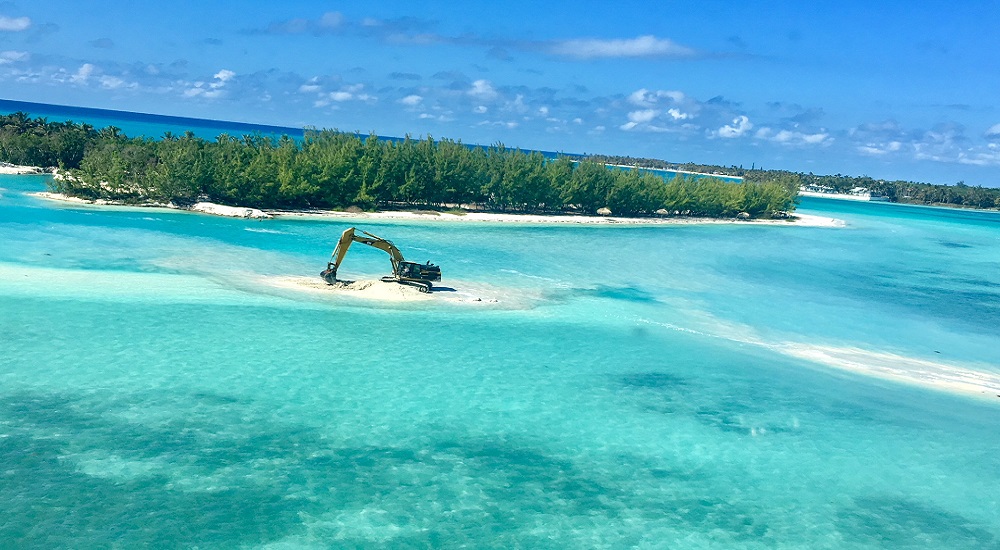
 #Bahamas, November 17, 2017 – South Cat Cay – A small plane circled slowly, flying over the blue-green waters of the northern Bahamas. It should have been a day of sightseeing, photographing an island under carefully managed development with its fragile marine resources protected as the gems that will lure those who will eventually visit, live there or leave their yachts.
Instead, what they saw as they flew over South Cat Cay sent chills down their spines and cries of outrage and despair from their hearts. The group in the plane included representatives from Save Our Home, a Bimini-based organisation, Save The Bays and Waterkeepers Bahamas.
Save The Bays Chairman Joe Darville said what he saw convinced him more than ever of the urgency of creating comprehensive environmental protection legislation and placing an environmental watchdog on every project.
“It takes hundreds, sometimes thousands, of years to create coral reefs and minutes with heavy equipment to destroy it,” said Darville. “We are pleading, not asking, pleading with government. When will you listen? When will we begin to take these gifts that God gave us seriously and stop allowing uncaring people to eviscerate them in the name of progress? This is not progress. This is evil.”
The story below is their story, in their words. Save Our Home wrote it at the close of their aerial and land inspection during early November, 2017. Their words have not been edited. The introduction, they said, was gleaned from previously published reports:
In 2009, the Government of the Bahamas under PM (Hubert) Ingraham gave full environmental approval for the 85-acre privately owned South Cat Cay for an exclusive, high end, hospitality and marina project. The project will comprise a 53 room five star branded boutique hotel with related amenities, 29 marina condo units, 37 residential units, a 137 slip marina, restaurants, shops and recreational facilities. This high-end resort will also include an upmarket residential community.
 During the course of construction in two phases it is estimated that some 75 Bahamians will be employed, and upon completion and build out some 170 permanent jobs will be created. In addition to the $94 million capital investment by the developers, their economic impact assessment projects over $200 million in real estate sales over the first five years, which will significantly benefit government revenues, suppliers and employment. The developer said the project will bring considerable benefit to Biminites in the form of employment and entrepreneurial opportunities generated by proposed retail space and excursions in the marina village. They said they plan to purchase Bimini built skiffs for bone-fishing excursions led by Bahamian guides. A Bahamian will operate a ferry service to and from Bimini; an artist in residence program will expose Bahamian artists to new techniques; a recording space will dedicate studio time for local musicians and local cooks will be provided with classical training. Additionally, a fund is being established for primary and secondary educational facilities in Bimini to further long-term environmental awareness. It is also proposed that a marine sanctuary will be created to the south east of South Cat Cay to complement the educational initiative.
But there comes a point when you start to feel like it’s just Deja-vu, that we have heard all this before, been promised jobs for Biminites, been told the highest environmental impact studies are being adhered to, but the reality is, to those of us who live here, it’s all just “hot air” and what they think people want to hear to sell us another story of jobs, progress and investment, but at what expense is the big question?
On Thursday, November 9 the Save Our Home-Bimini Environmental Activist group was invited along with members of the Save The Bays team and Waterkeepers Bahamas to fly over South Cat Cay and witness for ourselves what is really going on. Pictures and videos never lie and there before our very eyes was proof that the development is taking place as we speak, without the relevant silt barriers in place, the kind that actually work and contain the silt that is, properly installed without gaps and without proof of the silt drifting for miles. Memories of the same devastation at the hands of RW (Resorts World) Bimini in 2014 during the dredging of the cruise ship pier spring to mind, with the same ineffectual yellow silt curtains that within two weeks of being installed broke open, covering the ocean in drifting polystyrene and the beaches to this day, covered in yellow plastics. The cruise ship was rendered obsolete in a year. Meanwhile, we lost 12 main dive sites off the west coast of Bimini, smothered in silt, which suffocated the corals and partially buried the stones of Atlantis, sites that divers come from all over the world to see and that locals earn their living from in dive tours. Marine life dwindled to a point that some species are no longer seen in these waters.
In the past couple of weeks, more than one hundred Bahamians have been fired from RW, leaving people wondering if the resort is going bankrupt over rumors that they are losing in excess of $26,000 a day. And whilst the resort here in Bimini conjures images of a sinking ship, long predicted by those of us in the know due to the size of the development being too big for the infrastructure on such a small island, the Government is meanwhile playing out the same story all over again in South Cat Cay.
 Large populations of turtles used to be seen on the cays around South Cat, just like they did offshore from RW Bimini. Now the water is so muddy with silt, nothing can be seen and in Bimini an annual Power Boat Grand Prix is organized around the very reefs that are home to turtles and sharks.
Bimini and South Cat Cay has a blessing and curse, a blessing that it is at the top of the Bahamas chain and so brings an abundance of tourism to these shores, but a curse that successive governments seem to cash in on in taxes from such large scale developments, none of which is seen invested back into the local communities. As Fred Smith QC has pointed out, until we have local governance and taxes made on these islands invested back into local community developments, instead of going into the countries capital never to be seen again, the family islands will continue to deteriorate and decline.
One would think, that when heads of agreement come together, that a budget could be put in place with the developers to financially cover the employment of an on-site environmental advisor to monitor the development and provide weekly reports that all is in keeping with plans laid out, providing jobs for Bahamians and protecting our shores. Instead, developers seems to think they have carte blanche to do whatever they like while no one is watching. Accountability seems sadly lacking throughout the Bahamas development. At the end of the day, we are left with our natural resources ransacked and foreign developers pulling out, once the damage is already done. New legislation is needed putting the environment first in order to save one of the most beautiful parts of the world before it’s too late. With the Bahamas being such low lying islands and global warming and sea levels rising, it makes no sense not to put new environmental legislation at the top of the priorities list moving forward.
Release: DPA News
Photo captions:
Header: Sand and silt from dredging and excavating on South Cat Cay can smother coral reefs and kill the life that depends on the marine habitat. Already, say representatives of three organizations that inspected the development site this week, the once plentiful sea turtles in the area are no more.
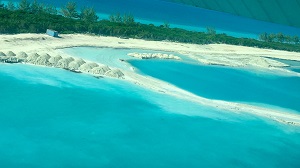
1st insert: Dredging and infrastructure work is underway at South Cat Cay where a hotel and marina were approved for the 85-acre site under the former FNM government, but environmentalists want to know where is the protection for marine resources?
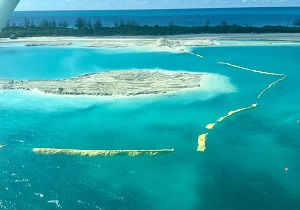
2nd & 3rd inserts: Inadequate silt barriers allow disturbed sand and silt to float over open waters, smothering coral reefs and suffocating the life that depends upon the habitat, potentially endangering grouper, hogfish and reef species and upsetting the full eco-cycle in a fragile eco-system. The above image was taken from a small plane flying over a development underway at South Cat Cay in the northern Bahamas. Environmentalists from three groups want to know where are those who are supposed to be protecting the marine environment of The Bahamas? They fear the project will mirror the tragedies of nearby Bimini where world-famous dive sites were destroyed by a massive dredger to make way for a cruise ship dock. The cruise ship does not call on Bimini anymore and more than 150 people have been laid off from their jobs at the resort it was intended to serve.

Bahamas News
Dredging Is Not Just About Size — It Is About What Is Being Destroyed, Warns Save Exuma Alliance Regarding Yntegra’s Proposed Rosewood Resort
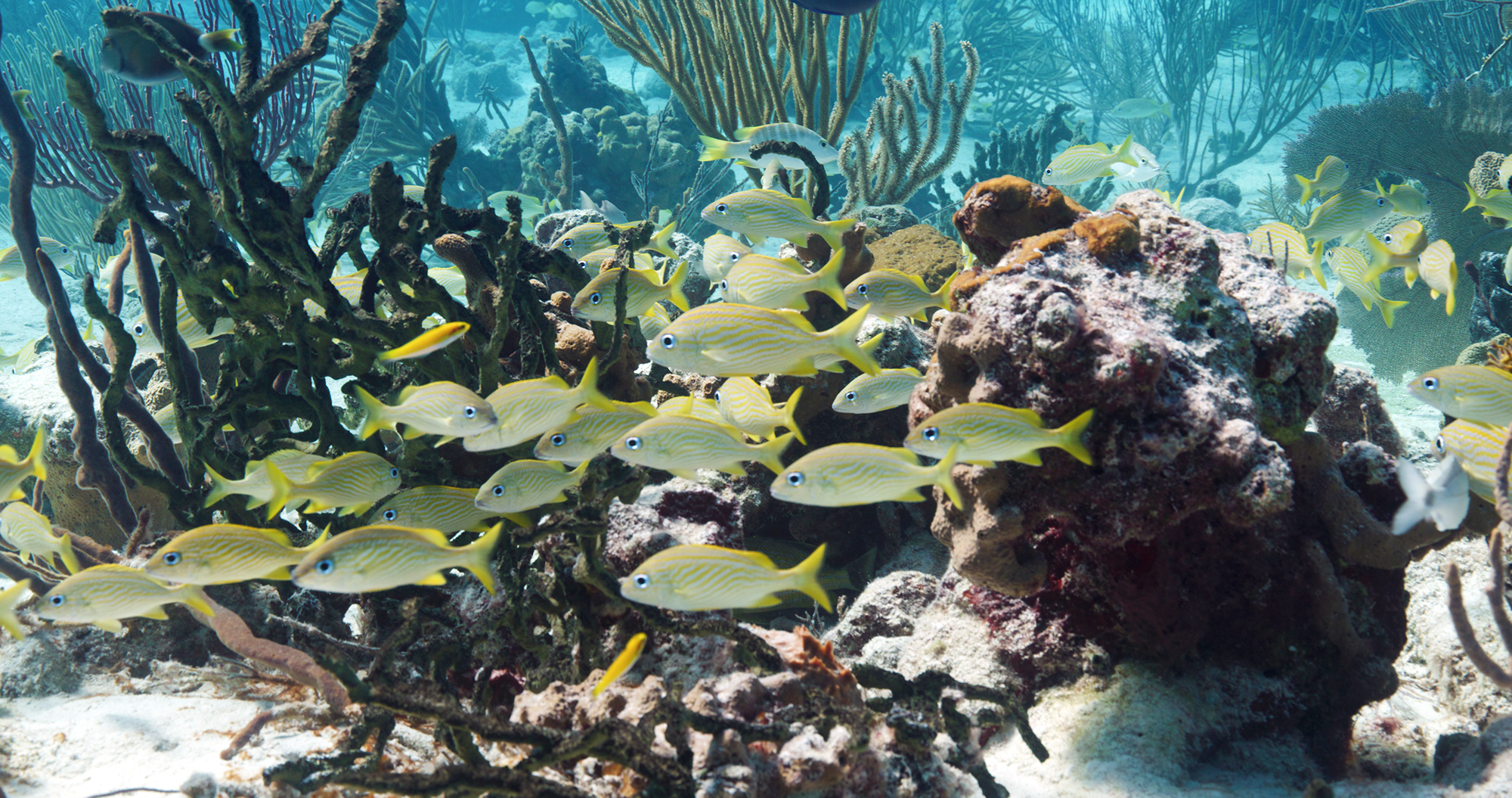
Save Exuma Alliance (SEA) — a coalition of Central Exuma business owners, tour operators and residents — has warned that the issue of dredging in the North Bay of Sampson Cay, Exuma, is not just about the number of acres being dredged – but what exists within the proposed dredge area. SEA describes the site as an ecological treasure trove filled with seagrass, coral, turtles and abundant marine life.
This comes after foreign developer Yntegra agreed to reduce the scope of its dredging following government warnings that it would impact The Bahamas carbon credit status, which shows the importance of the marine habitat.
“It is easy to point to other developments and say they are dredging more, but that is not comparing like with like,” SEA said in response to comparisons made by Yntegra. “If one area is largely sand with little marine life, that is very different from what we have in North Bay. Anyone who has spent time there can tell you it is filled with turtles, fish, and — critically — the seagrass and coral that provide essential habitat.”
Miami-based investment group Yntegra is seeking to construct a large-scale Rosewood-branded resort on Sampson Cay. Since its announcement, the project has generated environmental, social and economic concerns among residents and business operators in Central Exuma.
The proposed development includes dredging in North Bay, construction of a substantial seawall that would alter natural water flow, more than 100 structures, two mega yacht marinas, and an industrial dock serviced by fuel and supply ships in an area currently used by swimmers. Opponents argue that the scale and design of Yntegra’s Rosewood Exuma project are incompatible with the fragile ecosystem and cultural character of the Central Exumas.
SEA noted that the government’s Climate Change Unit has also raised concerns about the environmental cost of dredging associated with Yntegra’s Rosewood Exuma project.
“The government has acknowledged that this is an area of significant importance,” SEA said. “While the financial implications are serious, for us here in Exuma this is about more than money. It underscores how valuable this marine ecosystem is — the seagrass, coral and marine life that make Exuma exceptional. This is what attracts visitors from around the world. We should not minimize the concern by comparing this bay to areas that do not have the same remarkable underwater ecosystem. It is simply not the same.”
Experienced boat captain Tito Baldwin also questioned the feasibility of the marine infrastructure proposed as part of this plan. He warned that the dredging currently outlined would not be sufficient to accommodate the vessels required to service the project.
“It’s going to have to be at least four times larger than what has been proposed,” Baldwin said. “As designed, it is beyond possibility.”
He explained that vessels supplying fuel, construction materials and provisions for a projected 300-person workforce would require significantly greater depth and maneuvering space.
“For supply vessels delivering hundreds of thousands of gallons of diesel, you’re looking at ships with a 10-foot draft,” Baldwin said. “To operate safely, you would need at least 13 feet of depth. That means dredging far deeper than what has been proposed. With currents running east and west in that area, you would also need a much wider turning basin to maneuver safely. As it stands, it would be extremely difficult, if not impossible.”
SEA is urging individuals concerned about the environmental impact of dredging connected to Yntegra’s Rosewood Exuma project to visit www.saveexumaalliance.org for more information. A petition calling for a halt to approvals is also available on the site, with more than 7,100 signatures collected to date.
PM: Project delivers on promise and invests in youth, sports and national development
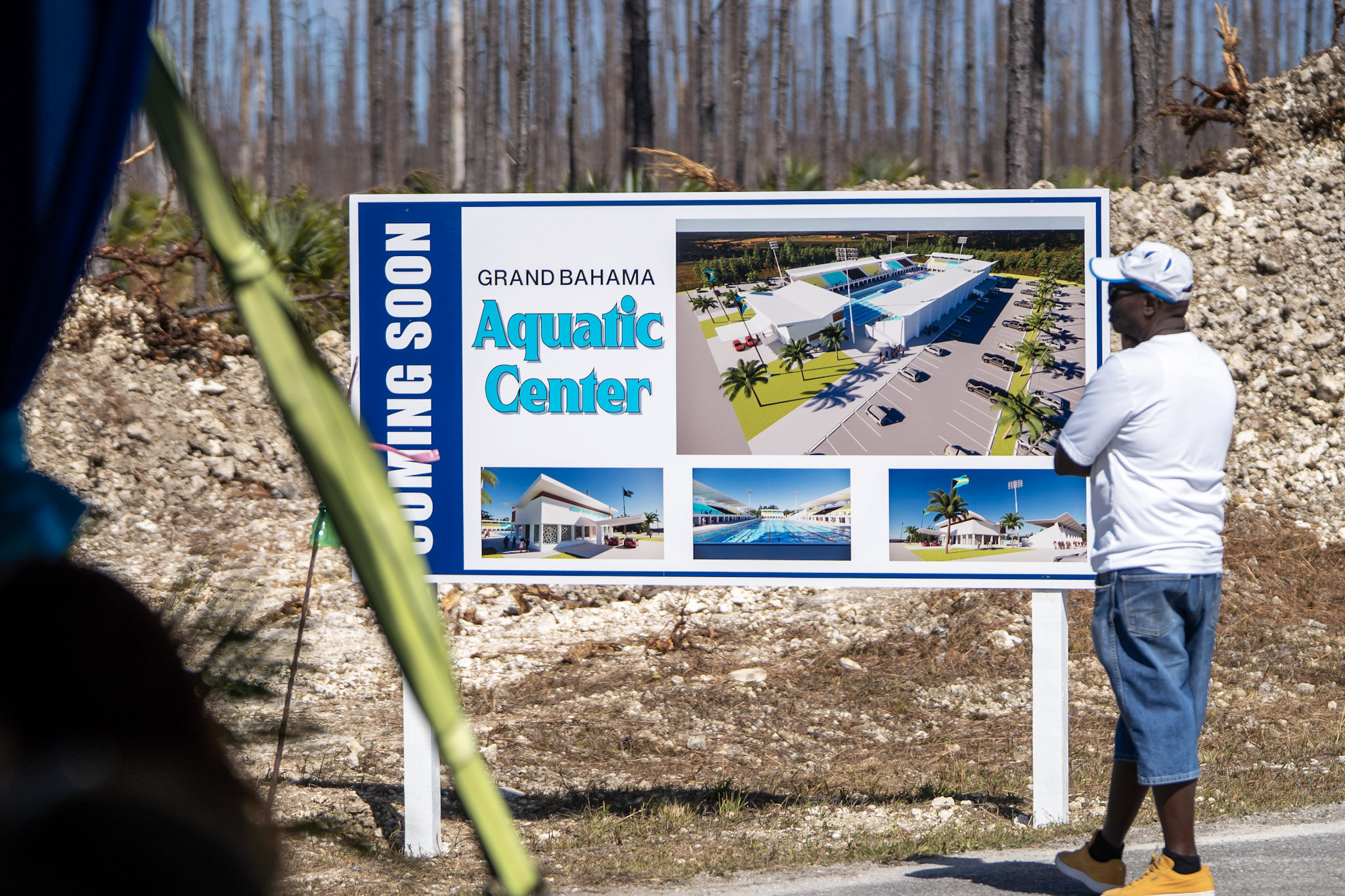
GRAND BAHAMA, The Bahamas — Calling it the fulfillment of a major commitment to the island, Prime Minister Philip Davis led the official groundbreaking for the Grand Bahama Aquatic Centre, a facility the government says will transform sports development and create new opportunities for young athletes.
Speaking at the Grand Bahama Sports Complex on February 12, the Prime Minister said the project represents more than bricks and mortar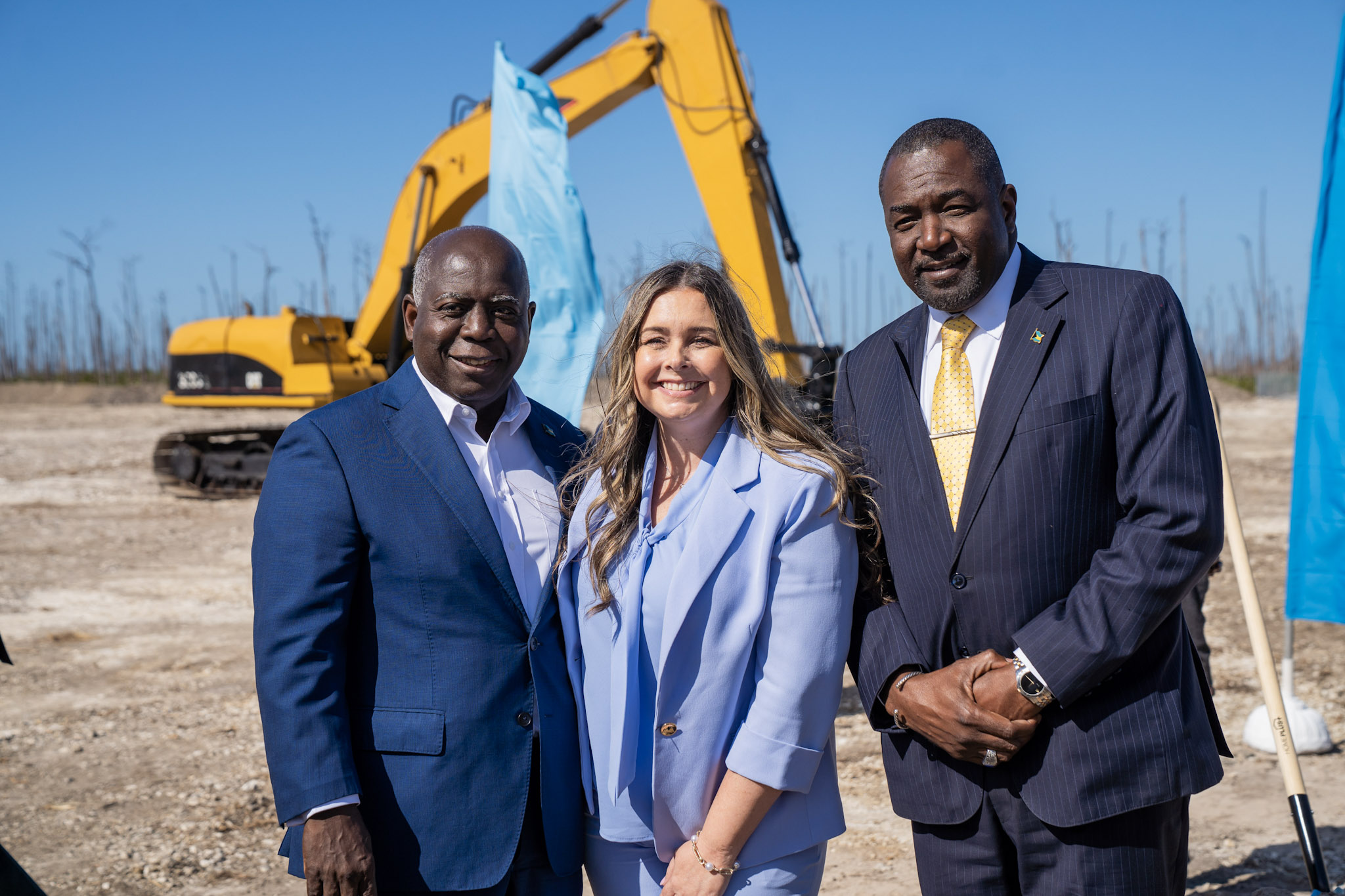 — it is an investment in people, national pride and long-term economic activity. The planned complex will feature a modern 50-metre competition pool, designed to meet international standards for training and regional and global swim meets. Davis said the facility will give Bahamian swimmers a home capable of producing world-class performance while also providing a space for community recreation, learn-to-swim programmes and water safety training.
He noted that Grand Bahama has long produced outstanding athletes despite limited infrastructure and said the new centre is intended to correct that imbalance, positioning the island as a hub for aquatic sports and sports tourism.
The Prime Minister also linked the development to the broader national recovery and revitalisation of Grand Bahama, describing the project as part of a strategy to expand opportunities for young people, create jobs during construction and stimulate activity for small businesses once operational.
The Aquatic Centre, he said, stands as proof that promises made to Grand Bahama are being delivered.
The project is expected to support athlete development, attract competitions, and provide a safe, modern environment for residents to access swimming and water-based programmes for generations to come.
Angle by Deandrea Hamilton. Built with ChatGPT (AI). Magnetic Media — CAPTURING LIFE.

The Bahamas, February 15, 2026 – For the better part of three years, Bahamians have been told that major Afreximbank financing would help transform access to capital, rebuild infrastructure and unlock economic growth across the islands. The headline figures are large. The signing ceremonies are high profile. The language is ambitious. What remains far harder to see is the measurable impact in the daily lives of the people those announcements are meant to serve.
The Government’s push to secure up to $100 million from Afreximbank for roughly 200 miles of Family Island roads dates back to 2025. In its February 11 disclosure, the bank outlined a receivables-discounting facility — a structure that allows a contractor to be paid early once work is completed, certified and invoiced, with the Government settling the bill later. It is not cash placed into the economy upfront. It does not, by itself, build a single mile of road. Every dollar depends on work first being delivered and approved.
The wider framework has been described as support for “climate-resilient and trade-enhancing infrastructure,” a phrase that, in practical terms, should mean projects that lower the cost of doing business, move people and goods faster, and keep the economy functioning. But for communities, that promise becomes real only when the projects are named, the standards are defined and a clear timeline is given for when work will begin — and when it will be finished.
Bahamians have seen this moment before.
In 2023, a $30 million Afreximbank facility for the Bahamas Development Bank was hailed as a breakthrough that would expand access to financing for local enterprise. It worked in one immediate and measurable way: it encouraged businesses to apply. Established, revenue-generating Bahamian companies responded to the call, prepared plans, and entered a process they believed had been capitalised to support growth. The unanswered question is how much of that capital has reached the private sector in a form that allowed those businesses to expand, hire and generate new economic activity.
Because development is not measured in the size of announcements.
It is measured in loans disbursed, projects completed and businesses expanded.
The pattern is becoming difficult to ignore. In June 2024, when Afreximbank held its inaugural Caribbean Annual Meetings in Nassau, Grand Bahama was presented as the future home of an Afro-Caribbean marketplace said to carry tens of millions of dollars in investment. What was confirmed at that stage was a $1.86 million project-preparation facility — funding for studies and planning to make the development bankable, not construction financing. The larger build-out remains dependent on additional approvals, land acquisition and further capital.
This distinction — between financing announced and financing that produces visible, measurable outcomes — is now at the centre of the national conversation.
Because while the numbers grow larger on paper, entrepreneurs still describe access to capital as out of reach, and communities across the Family Islands are still waiting to see where the work will start.
And in an economy where stalled growth translates into lost opportunity, rising frustration and real social consequences, the gap between promise and delivery is no longer a communications issue.
It is an inability to convert announcements into outcomes.
Angle by Deandrea Hamilton. Built with ChatGPT (AI). Magnetic Media — CAPTURING LIFE.





-

 Health1 week ago
Chile becomes the first country in the Americas to be verified by WHO for the elimination of leprosy
-

 Caribbean News4 days ago
Jamaica Joins Afreximbank Agreement, Strengthening Africa–Caribbean Partnership
-
 Bahamas News1 week ago
Dredging Is Not Just About Size — It Is About What Is Being Destroyed, Warns Save Exuma Alliance Regarding Yntegra’s Proposed Rosewood Resort
-

 News1 week ago
Police Commissioner Honoured with Distinguished Civic Service Award at TCHTA Star Awards
-
 News1 week ago
Flow TCI powers Inter-High Track and Field Championships
-

 Education1 week ago
Message from Hon. Rachel M. Taylor, Minister of Education, Youth, Sports & Culture
-
 News5 days ago
Treasure Beach Village Opens at Beaches; Tourism Leaders Expect Surge in Bookings
-

 News3 days ago
Rights Without Justice: How Weak Enforcement Fails Women and Girls