
News
Money transfer centers in TCI, are they supporting or inhibiting potential economic growth?


#TurksandCaicos, July 20, 2022 – Shocked but not surprised. This is how I would describe the amount of outgoing remittances from TCI. I never grasped the gravity nor the dynamics of these independent financial outlets until recently. This sector continues to evolve, but not necessarily in the best interest of our country.
Financial remittances have long been recognized as an important developmental vehicle associated with migration. It is commonly known as the money or goods that migrants send back to families and friends in countries of origin.
Remittances is a very lucrative business and over the years has been an integral part of the Caribbean culture. It could also be considered a major contributor to the economies in the region.
I would imagine, for some countries, remittance flows for many migrant families can become an economic lifeline.
New platforms such as online transfer services, digital wallets and mobile money applications are becoming more and more prevalent. With these online platforms, it will be even more difficult to monitor the true outflow of remittances.
In the latter part of 2019, the Financial Services Commission(FSC) website provided information from three institutions and the numbers were staggering. The institutions are CAM, NCS eMoney Services (which operates as MoneyGram) and The Money Centre by Fidelity, which is also known as Western Union. Vigo®, a Western Union money transfer brand.
According to a report published in 2021 by TCIsun newspaper, despite the downturn in the economy, in 2020, a staggering $105 million USD was sent out of the Turks and Caicos Islands through money transfers.
The FSC figures revealed, the majority of the transactions, $36.3 million was sent to Haiti, followed by $26 million to the Dominican Republic, $11.4 million to Jamaica, $10.3 million to the Philippines, $1.3 million to the Bahamas, $1.2 million to the United Kingdom (UK), $9 million to the United States of America (USA) and $8.1 million to other countries.
Haiti and the Dominican Republic were again the largest receivers of outbound funds, together accounting for over 50 percent of the figures.
Most remittances are primarily used for consumption, including, for instance the purchases of food, consumer goods, health care and housing. However, based on the significance of the cash outflow in addition to the increase in illegal immigration, it calls into question the relationship between illegal entry and outgoing remittances.
Due to privacy laws and the way data is collected and reported, it may not provide as much information to identify the true receivers and end users. With the level of outgoing financial activity, it makes our local banks look like check checking centers or staging area before transfer.
It would be intriguing to see what the remittance figures represented in terms of the impact on total gross domestic product (GDP) for TCI.
As a country, how do we slow down the outflow of funds precisely at a time when we want individuals and businesses to get out there and spend, so more of the money is circulating within our own economy?
As a way to heighten more awareness around this issue, why not set up a think tank committee to conduct a comprehensive study? This could help to determine the driving force behind immigrants not wanting to reinvest a larger portion of their earnings in TCI.
Generally speaking, owning real estate is a sign of progress for many immigrant families. Perhaps, the hesitation to invest in this area could be in part due to some local land owners allowing squatting for a nominal fee.
Furthermore, the lack of adequate code enforcement and or allowing low accommodation standards in the country, this makes it easier for renters to live in substandard housing.
As a result, there is no compelling need for any real individual investment, while allowing more money to be sent out of the country.
In my opinion, it goes right back to the fundamentals, failure to set strict industry standards, improving housing regulations and inspecting what is expected etc.
Would a more comprehensive immigration reform benefit in one form or another in terms of citizenship eligibility?
Offering Amnesty or any sort of immunity is a quagmire for any country. Although, I believe at some point it will become inevitable in TCI. This is one way to ensure the working class is paying their fair share into the system to offset medical expenses and the cost of other social services.
With TCI recently introducing a new form of indirect taxation, it is evident that the money transfer sector would be a prime source from which the Ministry of Finance can consider increasing levy on.
The last report that was made available by TCI FSC, the vast discrepancy between total inflows and total outflows underscores the shortcomings of remittance data, and leaves one to believe the loyalty to our country for some is rather marginal.
What would be even more impactful is, if Government required more transparency on these institutions, like source of funds etc.
Albeit, this will need to be accross the board, to include white-collar workers and capitalist who move money freely through bank wire transfers and drafts.
With TCI having a free enterprise market, pundits would argue there are a plethora of reasons why this would be socially unjust to foreigners.
Consequently, at the end of the day, you can’t have your cake and eat it too.
I concur with a recent statement made by Premier Washington Misick, in which he said “The TCI has to develop a robust internal economy that allows money to pass through as many hands as possible”. To his point, this is not happening.
The government must create an enabling environment to encourage work permit holders and other foreign nationals to stem the outflow of remittances so more of the money is spent toward productive sectors of our economy.
The burning question is, do we have a bold enough politician with the political will to introduce such initiative in the house of assembly?
My final thought is, in order to leverage the true development benefits of financial and social remittances, a comprehensive and in-depth financial analysis must be done.
I’m afraid that without the ability to reign in this level of outflow activity, over time, it could become damaging to our country’s competitiveness in the world market place or the broader economy.
Ed Forbes,
Concerned citizen of Grand Turk

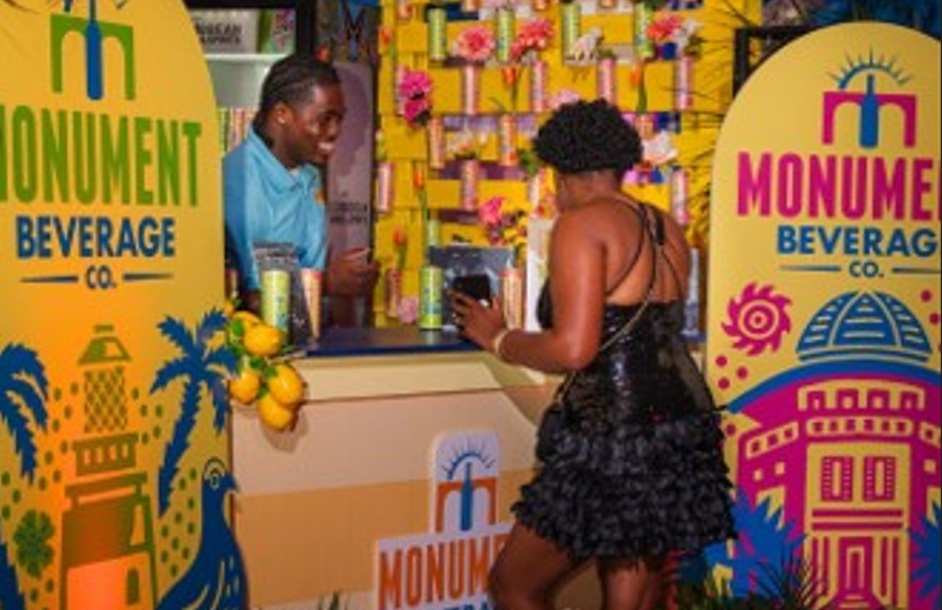
NASSAU, Bahamas — Caribbean Wines & Spirits (CWS), The Bahamas’ leading wine and spirits distributor, proudly supported Paradise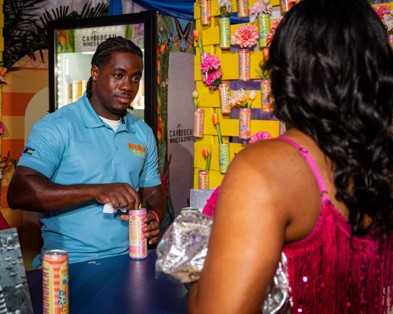 Plates, Hands for Hunger annual fundraiser with a flavorful offering of its newest product, Monument Beverage Co.
Monument, which launched this July and is available across six major islands, made its Paradise Plates debut. Guests enjoyed three bold flavors: Peach Passion, Ginger-Lime and Melon Fizz as they socialized throughout the evening.
Monument brand ambassadors engaged guests with knowledge on the ready-to-drink beverage’s unique taste and look. Many attendees were delighted to learn that Monument is 100% Bahamian-made and owned and enjoyed seeing the various national landmarks on the packaging.
The booth was adorned with vibrant brand colors, striped arches, tropical florals and a photo worthy backdrop featuring Monument cans filled with florals cascading down the wall.
At the end of the event, the entire Monument inventory had finished, making Monument’s Paradise Plates debut a huge success.
For more details on Caribbean Wines & Spirits, new products and specials, visit www.cwsbahamas.com today.

NASSAU, Bahamas — Schweppes, in collaboration with Nemiroff Vodka dazzled guests with handcrafted cocktails during Paradise Plates, Hands for Hunger’s annual fundraiser held at Atlantis’ Imperial Ballroom.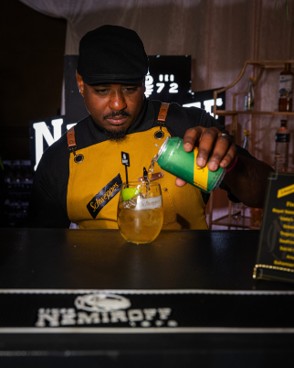
The evenings’ theme, 70’s: Paradise Disco, inspired bold and delicious sips from Schweppes and Nemiroff. The beautiful disco themed Schweppes booth, adorned with LED signs, lush greenery and hanging black and gold metallic orbs shined throughout the room.
Schweppes’ brand representatives and mixologists dressed in chic 70’s speakeasy attire engaged attendees throughout the night. Guests enjoyed receiving knowledge of each product and experiencing the vibrant energy of brand representatives.
Nemiroff Vodka, which is locally distributed by Caribbean Wines and Spirits (CWS), The Bahamas’ premier wines and spirits distributor; offered a unique variety of vodkas which made the perfect blend with Schweppes. Guests enjoyed, Nemiroff’s Honey Pepper, De Luxe, Burning Pear, Wild Cranberry, and Bold Orange vodkas throughout the night.
Fan favorite cocktails of the night were: the Wild Cranberry Tonic and the Bold Orange Fizz.
Following a positive response at Paradise Plates, CWS is offering Nemiroff and Schweppes specials at local liquor stores for the entire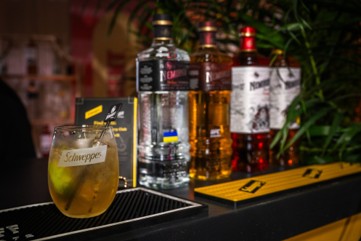 month. With the purchase of any 1-liter Nemiroff vodka, enjoy a complimentary three-pack of Schweppes mixers, to recreate the magic of Schweppes and Nemiroff.
Cara Douglas-Adderley, Senior Marketing Director for Caribbean Bottling (CBC), local producers and distributors of Coca-Cola and Dasani products and CWS shared the inspiration behind the Schweppes and Nemiroff promotion.
“We are thrilled to have paired Schweppes and Nemiroff for Paradise Plates this year, creating a premium cocktail experience for guests. After receiving such positive feedback, we wanted to extend that experience to consumers at home. Throughout October, consumers can visit their favorite watering hole, buy any 1-liter Nemiroff bottle and receive a free three-pack of Schweppes.”
Caribbean Bottling Company is proud to offer Schweppes, Coca-Cola’s premier mixer in collaboration with Caribbean Wines & Spirits and Nemiroff Vodka at Paradise Plates in support of Hands for Hunger’s mission.
For more information on CBC’s philanthropic work, new products and specials, visits www.cbcbahamas.com today.
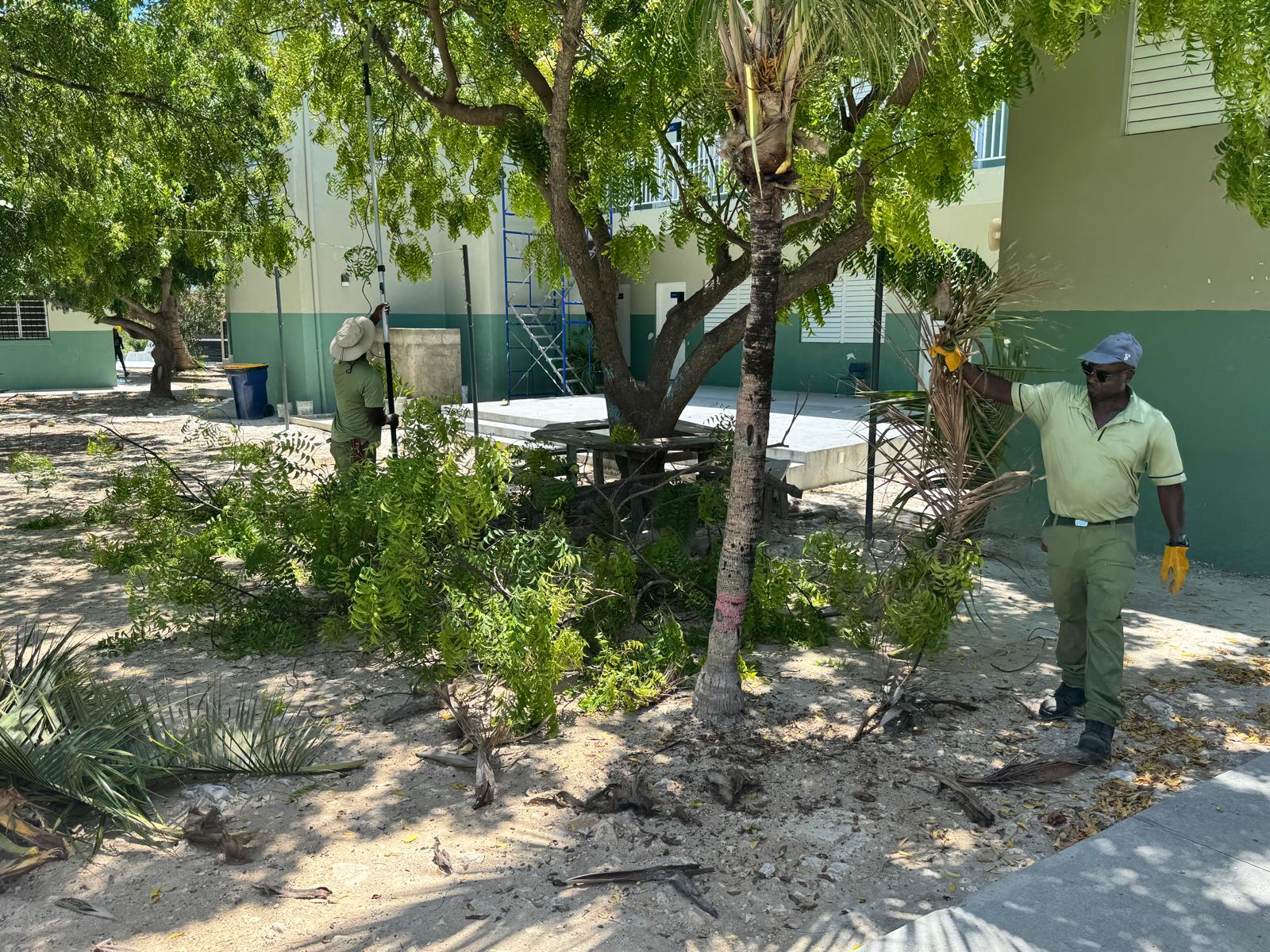
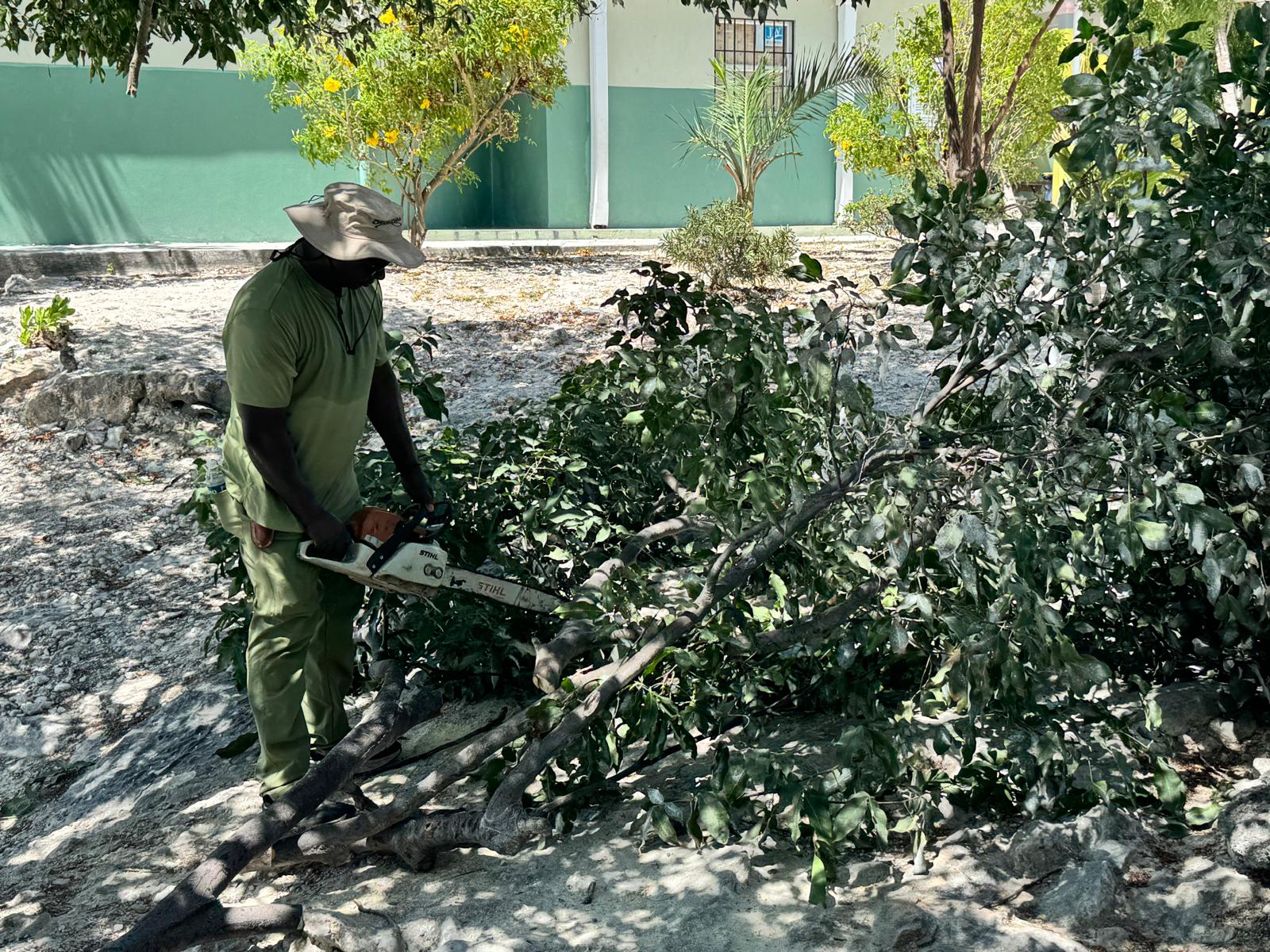
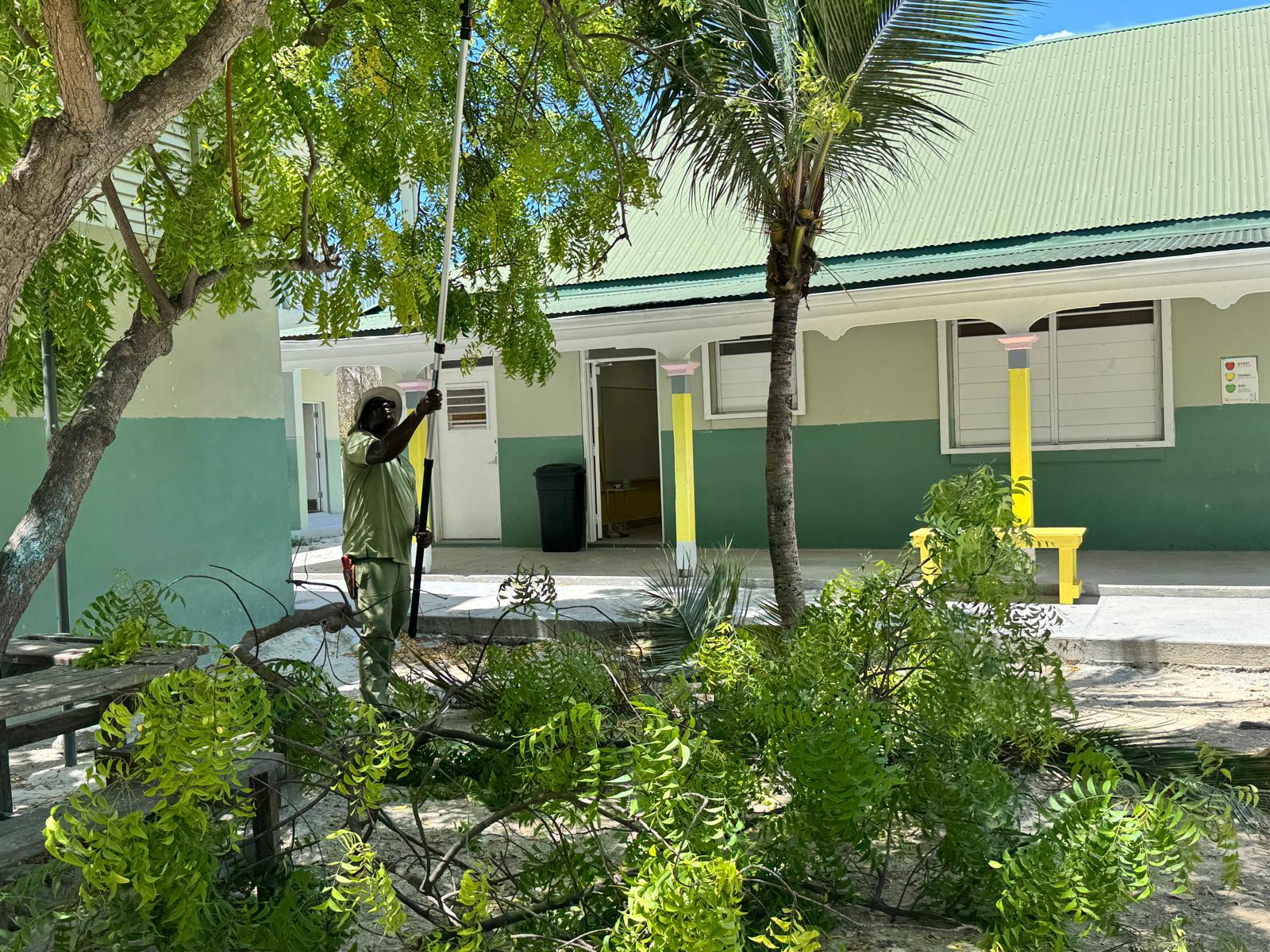
PROVIDENCIALES, Turks & Caicos Islands: — Beaches Turks and Caicos has refreshed the grounds of Enid Capron Primary School in Five Cays, Providenciales, ahead of the new school year, with a landscaping team from the resort, pruning and cutting back overgrown branches to give the campus a cleaner, safer look.
The project focused on the school’s exterior plantings, where tangled growth had begun to encroach on walkways and outdoor learning areas. The team spent time trimming hedges, thinning dense shrubs and removing deadwood to improve sightlines and airflow around the buildings.
Assistant Landscaping Manager, Kemar Jones said the work at Enid Capron is a regular priority for the department, which views community giving as a core part of its mandate. He noted that supporting local schools, particularly through hands-on environmental work, has long been a focus area for his team.
Jones, said the effort reflects the group’s wider commitment to the islands. “As a team, our goal is to give back to our communities and especially providing support for the environment and education,” Jones noted. “The team is always ready to share our skills with making the school environment more comfortable for our students and teachers.”
General Manager Deryk Meany framed the project as part of Beaches’ broader approach to working alongside the community beyond the resort gates. “At Beaches Turks and Caicos, we operate as a team not only within the confines of the resort but also with our communities,” Meany added. “Being able to share our varied skills is always our main focus. Providing a comfortable learning environment allows for a greater relationship with our educational collaborators.”
He added that the resort seeks opportunities to support range of school-based initiatives, from environmental and leadership clubs to creative programmes.
Minister of Education, Youth, Sports and Culture Hon. Rachel Taylor described the landscaping mission as a continuation of a long- standing relationship between the Ministry and Beaches Turks and Caicos. “This mission from our major private sector supporter, Beaches Turks and Caicos is a long standing activity,” Taylor said. “At Enid Capron Primary School, we are treated as family. Once we reach out to the resort, they have always responded in a positive way.”
Hon. Taylor said the support is particularly valuable in the areas of education and community development, where consistent private-sector engagement can amplify government efforts.
Nelene Swann, vice principal at Enid Capron Primary welcomed the refreshed grounds as a boost to morale before classes resume. “This is what true collaboration looks like,” she noted. “This is more than a facelift for the school. The team from Beaches Turks and Caicos has shown true commitment in adding to this learning environment for our students and teachers.”
She said the improved landscaping contributes to a more comfortable and inviting campus for all stakeholders. “This is a good way to start the new school year. This facelift will certainly make the facilities here at the school more appealing to our students, teachers and parents.





-

 News1 week ago
Beaches Turks & Caicos strengthens year-round commitment with local craft vendors and transport operators
-
 News1 week ago
Beaches Turks & Caicos gives Enid Capron Primary a pre-term facelift
-
 News1 week ago
Stakeholders Strengthen Collaboration on Housing and Informal Settlements at World Habitat Day Roundtable
-

 Independent writer5 days ago
Born Here, Raised Here, but Still Unable to Vote: Is this a Conundrum for TCI Electorate?
-

 Bahamas News3 days ago
Monument Supports Hands for Hunger With Paradise Plates Debut
-

 Education1 week ago
TCICC Earns International Recognition at Ignition Community Conference 2026
-

 Bahamas News5 days ago
Schweppes ‘the Art of Mixology’ Dazzles at Paradise Plates with Nemiroff Vodka
-
 News1 week ago
Something Fantastic is happening – and MSME’s are driving it