
Bahamas News
BAHAMAS: PM touts Maritime Industry as another means to diversify the economy

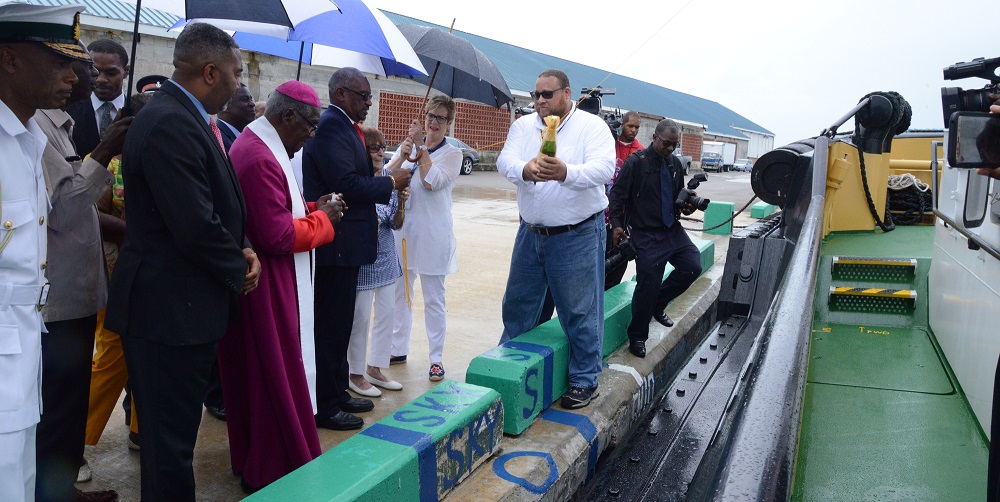
#Bahamas, May 15, 2018 – Nassau – Prime Minister, Dr. the Hon. Hubert A. Minnis has extolled the potential of the maritime sector as another way to diversify the economy. He made the observation during the Official Christening Ceremony of Tugboats Samson and Rose at Prince George Dock on Monday, May 14, 2018.
“The maritime sector holds great promise for The Bahamas, and is another sector for increased diversification,” the Prime Minister said. “There are approximately 5,000 jobs Bahamians can be trained for in the international maritime industry.”
The new-state-of-the art vessels valued at $15 million, will complement the Government’s tugboats fleet in rendering service to cruise ships coming in port and emergency services to smaller vessels.
The Prime Minister deemed it an honour to participate in the christening ceremony. And he particularly noted that Tug Samson was named in honour of the late Sir Durward Knowles – the first Bahamian to win an Olympic medal, for sailing. He died at age 100.

“Today would not have been possible without Sir Durward Knowles, who departed this life just this past February,” the Prime Minister said. “Sir Durward’s memory and legacy will live on in many ways and in many places, including with the inauguration of the new service provided by these 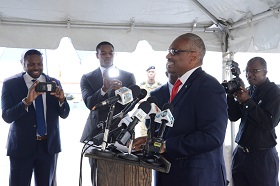 state of the art tug boats,” he added.
Tugs Samson and Rose will be operated by Tug Services Limited, a 100 percent Bahamian-owned and operated company. The Government of The Bahamas entered into a 15-year contractual lease arrangement with Tug Services Limited, which began April 1, 2018.
“These are the kinds of public/private partnerships which help to provide certain necessary services,” the Prime Minister said.
The agreement calls for Tug Services Ltd. to provide two 50-ton bollard pull, Azimuth Stern Drive, tug boats, on a daily timed charter. It also includes management services, crew, firefighting, oil spill recovery; salvage capabilities and vessel maintenance for tug services at Nassau Harbour and Clifton Pier.
With its world-class equipment and experienced Bahamian staff, Tug Services Limited has the task of providing tugboat services 24 hours per day, 365 days per year for the next 15 years to “ensure the safety and enhance the competitiveness” of Nassau Harbour and Clifton Pier. This also includes reliable service during poor weather and in emergencies.

Tugs Rose and Samson are on the cutting edge of technology. They are a 60-ton vessel and a 70-ton vessel, respectively. Both contain life jackets, immersion suit life rafts, portable fire extinguishers, lifebuoys and other emergency equipment. The tugboats also contain an external firefighting system, which is powered by a Caterpillar C32 engine, with two general service pumps that can be used for bilge/ballast/internal firefighting.
The Prime Minister congratulated Tug Boat Services Ltd. and its management and staff for this milestone. He also thanked the officials in his administration and in the former administration, who were involved in negotiating and finalizing this agreement.
The Government is reviewing other possible public/private partnerships in a number of areas in the maritime and transport sectors.
“This is all a part of our program of modernization of public services, including in the generation of electricity; the installation of fibre optics throughout the government-operated school system and solarization and renewable energy projects,” the Prime Minister said.
By: Lindsay Thompson (BIS)
Photo Captions:
Header: Christening of the tugboats – pictured from left: Commander of the Royal Bahamas Defence Force Commodore Tellis Bethel, the Right Reverend Gilbert Thompson, Prime Minister, Dr. the Hon. Hubert Minnis, Lady Holly Knowles, Charlotte Albury, and Captain Ritchie.
Insert: Prime Minister Minnis, during his address.
BIS Photos/Peter Ramsay

Bahamas News
Bahama Brass Band Invitation Sparks Heritage Debate Ahead of TCI Constitutional Holiday
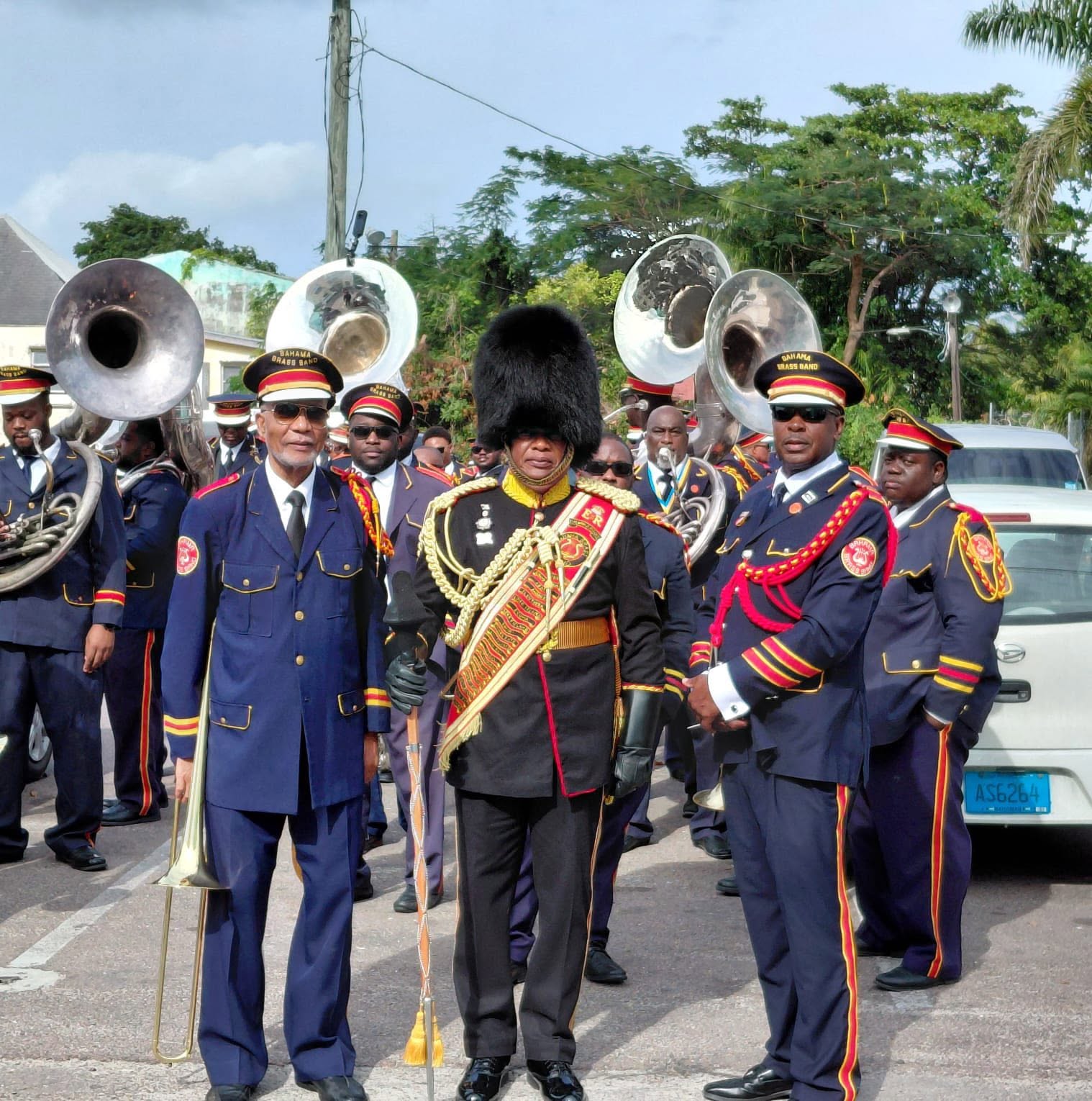
Turks and Caicos, August 20, 2026 – The planned participation of the Bahama Brass Band in the Turks and Caicos Islands’ inaugural Constitutional Holiday celebrations on August 30 has sparked public debate over culture, heritage and the historical contributions of Turks and Caicos Islanders abroad.
Organizers defended the invitation, saying the band’s inclusion is intended to highlight the deep historical ties between the two countries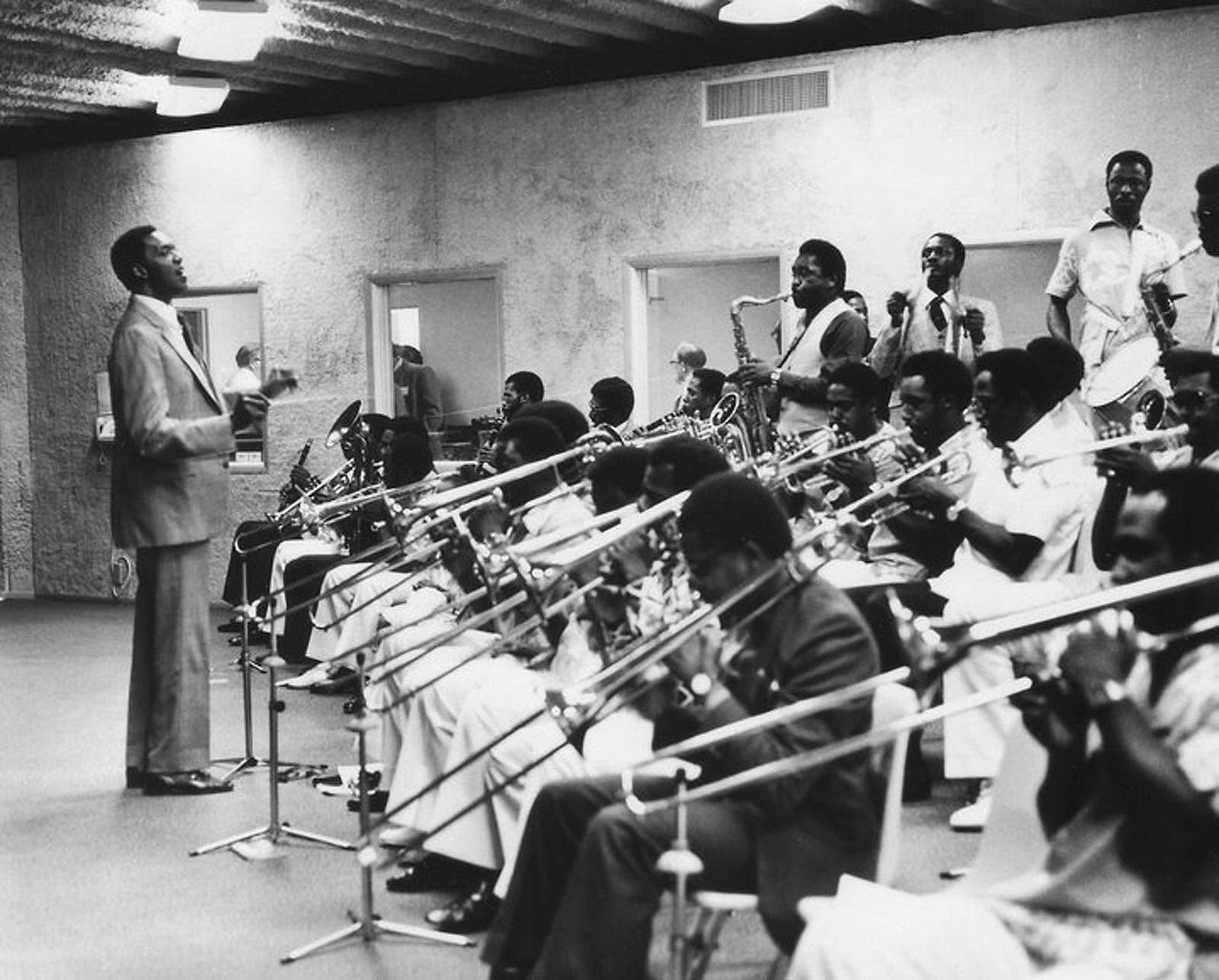 and honor Turks and Caicos men who helped establish and develop the institution in Grand Bahama.
According to the organizers, the Bahama Brass Band began in 1955 in Pine Ridge, Freeport, with Turks and Caicos Islanders, including the late Deacon Reuben Hall Sr. of Middle Caicos and Jenkins Williams and Mervin Hendfield of North Caicos, among those who helped build its foundation. The band eventually grew to more than 50 men.
The organizers also pointed to the participation of Turks and Caicos men in The Bahamas’ Independence celebrations on July 10, 1973, arguing that their contributions became part of Bahamian history while maintaining strong connections to their homeland.
Supporters say bringing the band home represents an opportunity to honor those pioneers, showcase their regional influence and expose younger generations to an important part of Turks and Caicos history.
However, concerns raised publicly described the invitation as potentially disrespectful to local culture and heritage. Organizers acknowledged those concerns, apologizing to anyone who felt overlooked or offended, while maintaining that no disrespect was intended.
The committee said the event should ultimately unite rather than divide, presenting the band’s history as evidence of the reach and resilience of Turks and Caicos heritage.
PHOTO CREDIT: Bahamas Brass Band
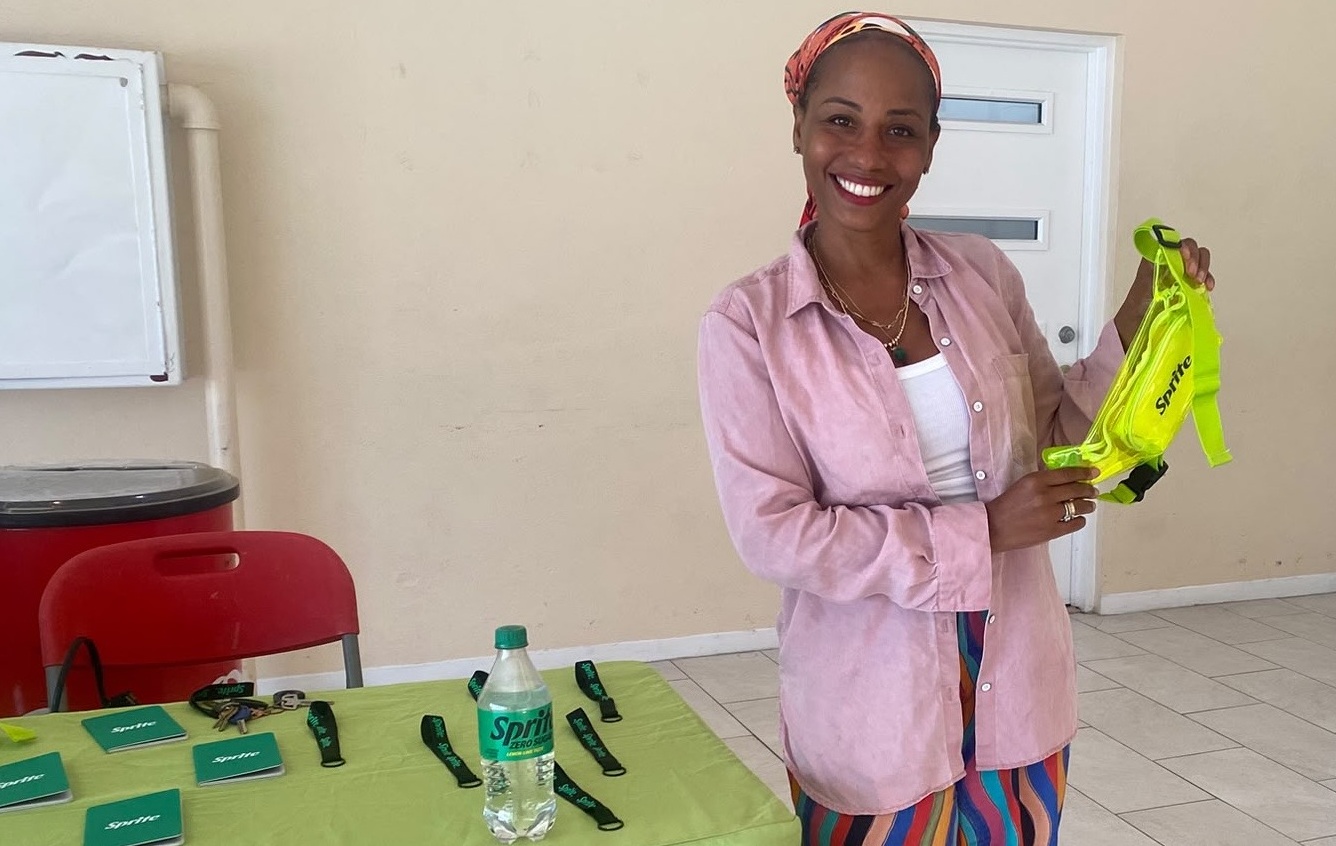
NASSAU, Bahamas — Caribbean Bottling Company (CBC), local producers of Dasani products, proudly sponsored the fifth annual, Caribbean Hoopfest.
The tournament brings together Bahamian high school basketball teams and visiting teams from the United States for a competitive showcase at the Kendal G. L. Isaacs Gymnasium. Following its inaugural year at the Kendal G. L. Isaacs gym and last year’s event at Loyola Hall, the tournament returned to the Kendal G. L. Isaacs gym this year.
During the weekend tournament, CBC kept athletes well hydrated with in-kind donations of Dasani Water, Powerade and Minute Maid Juices.
During the tournament’s final day, CBC provided additional support by offering Sprite No Sugar samples and inviting attendees to participate in its Spin the Wheel for a chance to win exciting prizes.
CBC was proud to support this incredible event, which provides young Bahamian athletes with valuable exposure to U.S. basketball scouts and coaches. This opportunity gives them the chance to earn scholarships, continue their education, and pursue their basketball careers in the United States.
Event organizer, Donald Francois shared his appreciation for CBC’s support.
“I want to express our sincere appreciation for Caribbean Bottling Company, who has been a tremendous supporter and an important part of the success of our program. Without CBC’s support, Caribbean Hoop Fest would not be able to function at the level it does today. And without Caribbean Hoop Fest, we would not have been able to provide the opportunities that have helped young Bahamian athletes gain exposure and pursue educational opportunities in the United States,” he expressed.
Since the program’s inception, several Bahamian student-athletes have been selected for scholarship opportunities, highlighting the tournament’s growing impact on the development and advancement of young basketball talent in The Bahamas.
They are: Kelvin McDowells – Guard, Wodson Antoine – Power Forward, Justin Lafleur – Guard and Sean John – Guard.
After another successful edition of the tournament, Francois shared what he hopes he and Caribbean Bottling Company can achieve in the future.
“Our vision is bigger than basketball. We want to use the platform of Caribbean Hoop Fest to educate, develop, and create opportunities for young people and their families throughout the Bahamas. With individuals and organizations committed to our mission, we believe we can continue to grow the program and make an even greater impact,” Francois said.
For more details on community support, events and new products visit Caribbean Bottling Company at www.cbcbahamas.com today.
NASSAU, Bahamas — More Bahamians are accessing HIV and sexually transmitted infection-related healthcare through National Health Insurance, a trend the NHI Authority says should be viewed positively.
NHIA stressed in an August 6 statement that its 2025 figures measure healthcare utilisation, not newly diagnosed infections. They include beneficiaries screened, treated, monitored or receiving follow-up care, including people diagnosed previously.
“Increased utilisation of these services should be viewed as a positive development,” NHIA said.
The Authority pointed to “greater enrolment and use of NHI, improved access to screening and testing, continued treatment and monitoring of existing conditions, and increased willingness to seek medical care.”
The development comes amid a mixed three-year HIV picture. New diagnoses rose from 130 in 2023 to 156 in 2024, before declining to 142 in 2025.
NHIA said increased utilisation demonstrates that more beneficiaries are accessing needed healthcare and actively managing their health, reinforcing the importance of screening, early diagnosis and continued treatment.





-
 News1 week ago
Beaches Turks & Caicos shares dining etiquette training at Provo youth summer camp
-

 News4 days ago
BermudAir Launches New York Area’s First Nonstop Service to South Caicos, Now Just a 3.5 Hour Flight from Newark
-

 News6 days ago
Salt Cay Water Shortage Unresolved as Residents Question Promised Relief
-

 Bahamas News4 days ago
Bahama Brass Band Invitation Sparks Heritage Debate Ahead of TCI Constitutional Holiday
-
 Bahamas News4 days ago
CBC Supports Opportunities for Young Bahamian Basketball Players