News
TCIFRS and TCIAA Fire Teams Represent Turks and Caicos at 2025 Caribbean Fire Chiefs Conference in Jamaica


PRESS RELEASE
FROM THE TURKS AND CAICOS ISLANDS FIRE AND RESCUE SERVICE (TCIFRS)
Providenciales, Turks and Caicos Islands, 23rd May 2025 – The Turks and Caicos Islands Fire and Rescue Service (“TCIFRS”), in partnership with the Fire Service Division of the Turks and Caicos Islands Airports Authority (“TCIAA”), proudly represented the Turks and Caicos Islands at the 2025 Caribbean Association of Fire Chiefs (CAFC) Conference and Leadership Symposium. The event was held in Negril, Jamaica from May 11th to 17th under the theme “Fostering Regional Collaboration for Enhanced Emergency Response.”
This premier regional gathering brought together senior leaders, operational officers, and strategic partners from across the Caribbean to refine emergency response strategies, reinforce inter-agency cooperation, and elevate leadership standards within fire services.
Representing the Turks and Caicos Islands were:
- Adderley Selver, Chief Fire Officer, TCIFRS

- Acharo Harvey, Deputy Chief Fire Officer, TCIFRS
- Carlon Bassett, Fire Safety Officer, TCIFRS
- Kenrick Hackett, Executive Fire Services Manager, TCIAA
- Iverson Richards, Aerodrome Firefighter, TCIAA
- Tyrone Bishop, Aerodrome Firefighter, TCIAA

Delegates participated in the Senior Officers Leadership Academy (“SOLA”) and Junior Officers Leadership Academy (“JOLA”), which featured training modules on strategic decision-making in high-risk environments, legal and ethical responsibilities in fire service management, psychological resilience, and advanced incident command simulations. Complex scenarios including high-rise structure fires and airport emergencies formed part of rigorous tabletop and tactical response exercises.
A key highlight of the conference was the prominent role played by Kenrick Hackett, Executive Fire Services Manager and current President of the Caribbean Association of Fire Chiefs, who served as a lead panellist on regional leadership integration and strategic incident command. His contributions reflected the Turks and Caicos Islands’ rising leadership in shaping regional fire and rescue protocols.
The delegation returned home with sharpened technical skills, innovative strategies, and a renewed vision for improving emergency preparedness and public safety. Both TCIFRS and TCIAA are now integrating key insights from the symposium into local training regimens and operational procedures, with an emphasis on measurable performance improvements.
Equally important is a reinvigorated commitment to public education and engagement. The services will be intensifying island-wide community outreach programs to raise awareness on fire prevention, household preparedness, and emergency planning which is part of a broader initiative to instil a culture of safety that begins long before any alarm is sounded.
In a joint statement, Chief Fire Officer Adderley Selver and Deputy Chief Fire Officer Acharo Harvey emphasized:
“The CAFC 2025 Conference marks a significant milestone in our ongoing mission to advance professional standards, reinforce inter-agency collaboration, and lead with integrity. Our participation—alongside our skilled colleagues from the Airports
Authority—has equipped us with insights and practical tools to refine our protocols and elevate leadership within our ranks. As we implement these lessons, we are equally committed to deepening public understanding of fire safety. Education and engagement are pillars of resilience. By fostering awareness and personal responsibility among our citizens, we build stronger, safer communities together.
We return from Jamaica not only better prepared, but deeply motivated to lead that effort from the front.”
The Honourable Otis Morris, Minister of Public Safety and Utilities, commended the delegation, stating:
“I extend heartfelt congratulations to the men and women of our Fire and Rescue Services for proudly representing the Turks and Caicos Islands on the regional stage. Their active involvement in the Caribbean Fire Chiefs Conference is not only a testament to their professionalism, but also reflects our government’s unwavering commitment to strengthening public safety institutions. This type of regional engagement enriches our frontline capabilities, exposes our officers to world-class best practices, and brings back lessons that enhance both response time and public trust. I am especially proud of the leadership role played by Mr. Kenrick Hackett, whose contributions reinforce that the Turks and Caicos Islands are not only participants, but leaders in Caribbean fire safety.”
The Ministry of Public Safety and Utilities added:
“We recognize the vital role that fire and rescue services play in safeguarding life, property, and national resilience. The Ministry is proud to support the professional development of our officers and remains committed to ensuring that the necessary resources, policies, and partnerships are in place to sustain high standards of excellence across the sector.”
This participation at the CAFC 2025 Conference is not just an achievement for the services involved it is a national accomplishment. It signifies growth, vision, and the deepening of a professional culture that places service, safety, and leadership at its core.











Head to bed in a bra to reduce breast pain, nipple irritation and stretch marks
When you think about sleeping in a bra, “comfort” probably isn’t the first word that comes to mind — it may not even make the Top 10. But is it bad to sleep with a bra on?
Breast surgical oncologist Margaret Thompson, MD, explains the upsides and downsides of wearing a bra while you snooze.
Should you sleep in a bra?
Several factors may affect your decision to wear a bra to bed, but Dr. Thompson emphasizes that the risk of breast cancer should not be one of them.
“There’s no evidence that wearing a bra while sleeping increases your risk for breast cancer,” she states. “It really comes down to comfort and personal preference.”
But there are also other health issues to consider. Dr. Thompson lays out the pros and cons of sleeping in a bra.
Pros: Why sleeping in a bra might be good for you
Should you wear a bra to bed? There are some benefits, especially if you’re recovering from surgery or breastfeeding.
Lessens breast pain
Having the support of a bra day and night may help relieve breast pain (mastalgia). That’s good news, because up to 70% of women in the United States deal with it at some point in their lives.
Common causes include:
- Hormonal changes, which often occur as part of your menstrual cycle
- Locally advanced breast cancer, including inflammatory breast cancer
- Lactation (producing milk), which may cause your breasts to ache
- Large breasts, which may strain breast ligaments and tissue
- Recent surgery related to your heart or breasts
- Underwires, especially if your bras are too tight
“When somebody reports breast pain, one of the first things we ask is whether they wear an underwire bra,” shares Dr. Thompson. “It can dig into your skin or breast tissue, leaving you sore and tender.”
A soft sleep bra can keep your breasts from shifting and causing discomfort while you snooze.
Protects lactating breasts
If you’re breastfeeding, you know all too well that your mammary glands don’t care if you’re trying to rest. Swollen or full breasts can be painful, especially as you move during sleep or change positions. Wearing a clean and supportive bra while sleeping:
- Holds nursing pads in place
- Keeps nipples dry and free from bacteria
- Reduces nipple chafing
- Supports the structure of your breasts
Make sure your sleep bra is supportive, but not too tight. Wearing a bra that’s too tight while breastfeeding can lower your milk production and possibly lead to clogged milk ducts and mastitis — inflammation of the breast tissue.
Prevents fungal infections
Everyone loves to be warm and cozy in bed. But do you know what else loves a warm environment? Fungus.
“There’s a lot of skin-on-skin contact underneath your breasts, especially if you have larger breasts,” notes Dr. Thompson. “If you’re also covered in blankets and sweating, it becomes a perfect environment for fungal or yeast infections.”
Wearing a bra to bed helps absorb moisture beneath your breasts and reduce friction. A camisole with a built-in shelf bra can also help.
Reduces nipple irritation
Friction is a common reason for nipple pain — ask any avid runner. You may not be running a marathon in your sleep, but your nipples can still get sore from rubbing against:
- Tight shirts, especially if they’re textured or have a graphic design that can be felt inside the shirt
- The fabric of your pajama top or sheets
- A sleep bra that’s too loose
Wearing a sleep bra can limit movement, easing nipple irritation.
Helps with recovery after surgery
It’s important to keep your breasts compressed after certain surgeries involving your chest. Restricting breast movement helps protect stitches and incisions. The added compression can also:
- Decrease fluid collection
- Minimize pain
- Hold gauze and drains in place
“Most cardiac and breast surgeons want you to wear a bra for some time after surgery, even while sleeping,” emphasizes Dr. Thompson. “Always follow their advice.”
Diminishes stretch marks
Stretch marks on breasts are common, especially if your breasts change size during pregnancy. Bras support your skin’s structure, which helps prevent stretch marks.
“There’s no proof that wearing a bra at any time of day will decrease breast sagginess,” Dr. Thompson clarifies. “But it may help decrease stretch marks.”
Cons: Why it’s bad to sleep with a bra on
Looking for a reason to sleep without strapping on a bra? Dr. Thompson points out a few potential disadvantages of sleeping in a bra.
Causes skin irritation and infection
A sleep bra can protect your skin from irritation and infection. But it can also cause those issues if it has an underwire or it’s:
- Dirty
- Too tight
- Too loose
Restricts circulation
“Bras that are too tight or contain underwires may cause you to wake up with some discomfort,” reiterates Dr. Thompson. “They can restrict your circulation while you sleep.”
Nobody wants to wake up to find that their bra left angry red indents in its wake. That’s why selection is key.
Tips for wearing a bra to bed
If you decide to sleep in a bra, choose one that’s comfortable and fits well — not too tight, not too loose. And be sure to replace your bras every six to 12 months, or whenever your breast size changes. Measure yourself or ask the fitter at your lingerie store or undergarments department for help finding the right size.
For the best experience with your sleep bra, Dr. Thompson recommends that you:
- Choose a gentle fabric. Avoid lace or scratchy fabrics that may be rough on your nipples. Choose a natural material like cotton or something silky and soft.
- Consider a shelf bra. Some camisoles and tank tops have a built-in shelf bra that may help you feel supported while sleeping.
- Skip the underwire. Underwire can restrict circulation and cause pain while you sleep.
- Wear a clean bra. Don’t wear a bra you’ve worn all day, and wash your sleep bras regularly — after every two or three wears.
Bottom line? If you choose to sleep in a bra, you want one that’s supportive and comfortable. If it interferes with your sleep, it’s not the right fit.

The Bahamas, August 27, 2026 – The Royal Bahamas Police Force wishes to inform members of the public that several individuals are scheduled to appear before the Magistrate’s Court on Thursday, 27th August 2026, at 12:00 noon.
The individuals and charges are as follows:
An 18-year-old female is scheduled to be arraigned on the following charges:
Three (3) counts of Murder
Three (3) counts of Attempted Murder
Three (3) counts of Possession of a Firearm with Intent to Endanger Life
Three (3) counts of Possession of an Unlicensed Firearm
Two (2) counts of Possession of Ammunition
Armed Robbery
Abetment to Armed Robbery
Stealing
Receiving
The charges stem from three separate shooting incidents and an armed robbery that occurred on Friday, 21st August 2026, and Saturday, 22nd August 2026.
The first shooting occurred in the area of Soldier Road and Baillou Hill Road, resulting in the death of a 51-year-old male.
The second shooting occurred in the area of Joe Farrington Road, resulting in the death of a 52-year-old male.
The third shooting occurred in the area of Gladstone Road, resulting in the death of a 36-year-old male.
The armed robbery occurred at a business establishment in the area of Carmichael Road and Baillou Hill Road.
A 21-year-old male is scheduled to be arraigned on one charge of:
- Murder
The charge stems from a shooting incident that occurred on Tuesday, 21st July 2026, in the area of Samson Street, Nassau Village, which resulted in the death of a 28-year-old male.
A 32-year-old male is scheduled to be arraigned on the following charges:
- Murder
- Attempted Murder
These charges stem from a shooting incident that occurred on Wednesday, 24th December 2025, in the area of Graham Drive, Yellow Elder, which resulted in the death of a 25-year-old male.
RBPF, PACD
by Deandrea Hamilton | Editor
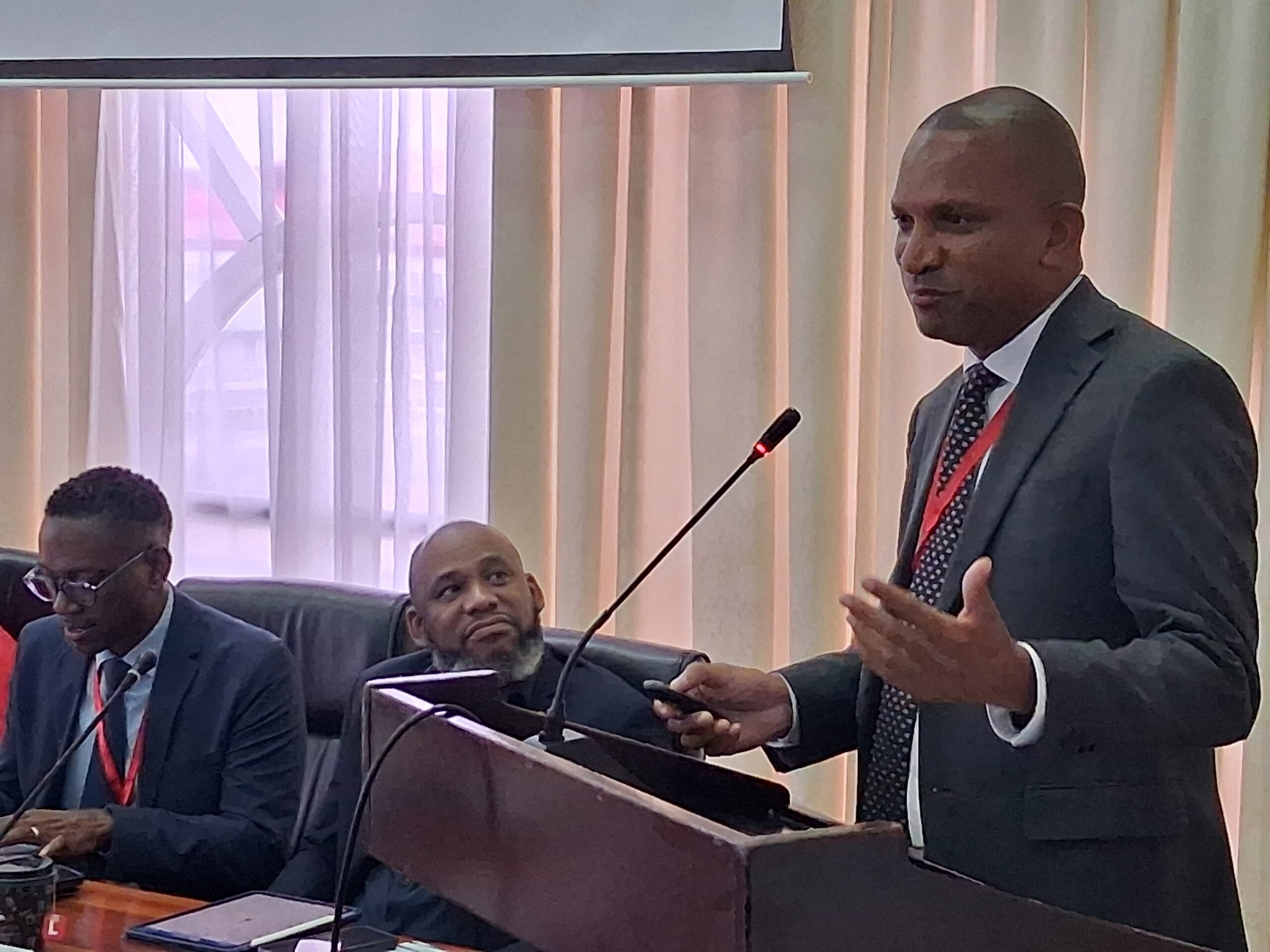
PROVIDENCIALES, TCI — In a country where government press conferences are virtually non-existent, ministers are often difficult for journalists to access and regular broadcast television news has disappeared, TCI Innovation, Technology and Energy Minister E. Jay Saunders has challenged Caribbean media to become “impossible to ignore.”
Speaking at the Caribbean Broadcasting Union gathering, Saunders argued that the Caribbean does not have a relevance problem but a “discoverability and positioning problem.”
Discoverability is precisely the issue in Saunders’ home country. Even Government’s own attempts at video news broadcasting have struggled against the realities of consistently producing a daily, weekly or even monthly newscast.
The difficulties confronting TCI media extend well beyond algorithms: limited advertising revenue, underfunding, shortages of trained professionals and insufficient human capacity leave newsrooms struggling for both staff and stamina.
Then there is the reality of operating in one of the region’s smallest societies. Politicians, journalists, advertisers, businesses and the subjects of stories often exist within the same tight economic and social circles. A controversial report that might create a ripple elsewhere can produce a tsunami in TCI, intensifying concerns among journalists about commercial and professional victimisation.
Saunders believes AI can help.
He urged Caribbean media to use the technology to transform one original story into television, radio, web, podcast, social and translated content without multiplying newsroom workload.
He also wants regional journalism structured so AI systems can find, understand and trust Caribbean sources, moving media beyond traditional SEO into Answer Engine Optimisation.
His ultimate message was emphatic: “Use AI not to make Caribbean media more artificial — but to make Caribbean voices more visible.”
For Turks and Caicos media, however, becoming visible may require more than technology. It requires an environment in which journalism can survive.
That last sentence is where I think we land the plane. It acknowledges that EJ actually has some us