Health
Cleveland Clinic First in Ohio to Perform Robotic Nipple-Sparing Mastectomy

Health system is among only a handful in the U.S. to offer the minimally invasive robotic procedure Cleveland Clinic is among the first hospitals in the country – and the first in Ohio – to perform a robotic nipple-sparing mastectomy procedure, following recent clearance by the U.S. Food and Drug Administration.
Stephanie Valente, D.O., and a surgical team recently performed the first robotic nipple-sparing mastectomy with immediate breast cancer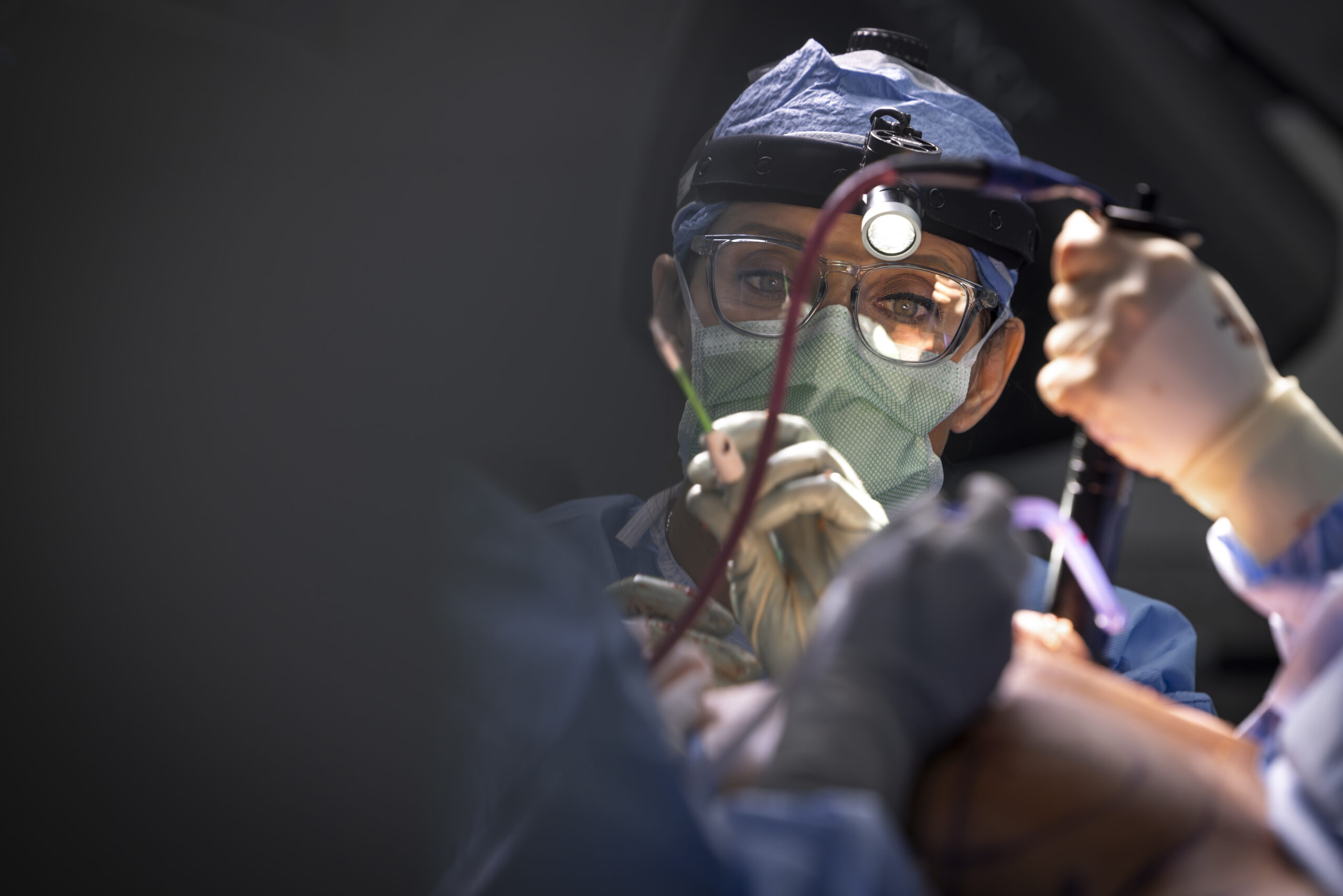
This milestone places Cleveland Clinic among a select group of centers nationwide offering the advanced technology and brings one of the newest innovations in breast cancer surgery to patients in Northeast Ohio.
“This robotic approach offers greater precision through a much smaller incision, which can mean less visible scarring and faster recovery,” said Dr. Valente, director of the Cleveland Clinic Breast Surgery Fellowship Program and director of the West Region Multidisciplinary Breast Program. “Compared with the traditional procedure, which requires a larger incision, this approach can improve cosmetic outcomes, preserve the skin and nipple, and support a more natural appearance after surgery.”
During the procedure, surgeons use a 3D camera and robotic instruments inserted through a small incision of one inch, typically hidden along the side of the breast rather than across the underside, to remove breast tissue while preserving the nipple, areola and skin. The robotic platform, the da Vinci SP Surgical System, provides enhanced visualization and precision while minimizing disruption to the overlying skin.
Robotic surgery gives the surgeon better visualization of the operative field in what is typically a technically challenging procedure. This
The robotic approach removes the same breast tissue as a conventional mastectomy, while changing how the surgeon accesses the breast. For some patients, breast reconstruction can be performed during the same operation.
This approach is designed to reduce scarring, enhance cosmetic outcomes, preserve the natural skin envelope and nipple, improve sensation and accelerate recovery. For some patients, the less visible incision may also support confidence and body image after surgery. The procedure further expands Cleveland Clinic’s minimally invasive breast surgery options, which include endoscopic nipple-sparing mastectomy.
“As a field, we haven’t had many new options for patients with breast surgery for a decade now, so we are pleased to now have these minimally invasive procedures available for our patients,” said Dr. Valente. “Innovations like this support a more patient-centered experience as they allow us to address both the physical and emotional realities of breast cancer.”