News
CARICOM – A Regional Club With Benefits; Turks & Caicos Wants In

Turks and Caicos, March 18, 2026 – Public reaction across the Turks and Caicos Islands was immediate and, in some cases, heated after the Government confirmed in the House of Assembly on Friday, March 13, that it is exploring a move from Associate Member to full member of the Caribbean Community (CARICOM).
The announcement, delivered by Acting Premier and Minister of Immigration and Border Services Jamell Robinson, sparked strong concern among residents, particularly over fears that full membership could require the territory to accept free movement of labour or weaken its immigration controls.
Social media commentary over the weekend questioned why there had been no public consultation and whether the move signaled a shift in
However, a review of the official statement and follow-up remarks made by Robinson this week shows the proposal is not sudden, is not final, and would require approval from all fifteen CARICOM member states before the Turks and Caicos Islands could become a full member.
NOT A NEW IDEA
In his ministerial statement to Parliament, Robinson confirmed that discussions about full membership have been taking place within regional forums for some time.
“As an Associate Member of CARICOM, the Turks and Caicos Islands also participated in caucus meetings and discussions among Overseas Territories and Associate Members regarding regional cooperation and the continued advancement toward full membership within the CARICOM Community,” he told the House.
He added that full membership would allow the territory to engage more directly in decisions affecting the region.
“Full membership in CARICOM would present meaningful opportunities for the Turks and Caicos Islands. It would strengthen our ability to engage more fully in regional decision-making… and ensure that the Turks and Caicos Islands is better positioned to benefit from collective advocacy and coordinated action on issues of common concern.”
The idea of deeper integration is not new. Since the return of elected government in 2012, successive administrations have promoted stronger ties with CARICOM.
Former Premier Dr. Rufus Ewing regularly attended Heads of Government meetings and spoke openly about the importance of regional cooperation, even suggesting that long-term political development for the territory would likely place it closer to the Caribbean than to Britain.
Premier Sharlene Cartwright-Robinson also maintained active participation in CARICOM during her term, focusing on security cooperation, economic recovery, and regional partnerships, though her administration did not pursue full membership.
Under the current administration, Premier Charles Washington Misick has repeatedly said stronger regional integration is necessary for economic stability, security cooperation, and food supply resilience.
FREE MOVEMENT FEARS ADDRESSED
Much of the public backlash centered on the belief that full membership would force the Turks and Caicos Islands to accept the CARICOM free movement of labour provisions.
Speaking Monday to Cheryl Forman, host of First Edition on Radio Turks and Caicos, Robinson said that is not the position being taken by the Government.
“We’re looking for full membership, and just to be clear right off the bat, the Turks and Caicos is not looking to sign on to the free movement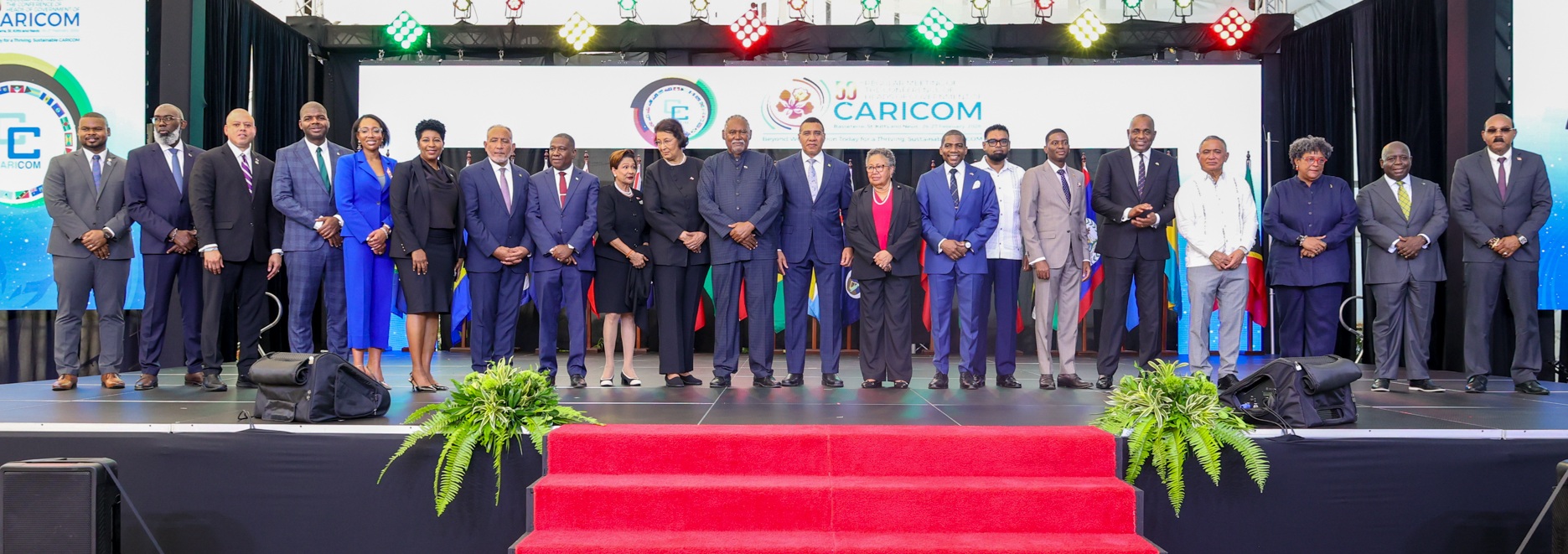
He noted that other British Overseas Territories and even some CARICOM members have negotiated exemptions.
“Just like Bermuda, just like the BVI… The Bahamas did not sign off on that portion. Free movement across the region does not even exist in the way people think. It applies only to certain skills and professions.”
Robinson stressed that any agreement would be negotiated and would not remove the territory’s ability to control immigration.
“The full membership process isn’t going to be a case where we lose our ability to determine our immigration and labour policies. Those are things that will form part of our negotiated position.”
WHY GOVERNMENT WANTS FULL MEMBERSHIP
Robinson outlined several reasons the administration believes deeper integration could benefit the territory.
One argument is that Associate Members can participate in discussions but do not have voting power.
“You can think of it as being part of a club. As an associate member, you don’t get all the benefits. You can sit in the room, but you don’t always have a final say in decisions that may impact you.”
He also said regional partnerships have already proven critical in national security.
“If it were not for the ability of our Premier to pick up the phone and speak to Prime Minister Davis in The Bahamas and Prime Minister Holness in Jamaica, our crime situation would be completely different,” Robinson said, referring to the deployment of tactical officers from both countries to assist local police operations.
He added that closer ties could also help reduce the cost of living through regional trade.
“In some cases, the very same products we import from the United States originate in the Caribbean, go to the US to be repackaged, and
Robinson also pointed to discussions within CARICOM about improving regional shipping, food production, and transportation links, including plans for Guyana to become a major agricultural supplier for the region.
NOT A GUARANTEE
Despite the public debate, Robinson emphasized that full membership is not automatic.
Any application must be negotiated and approved by all CARICOM member states, meaning the Turks and Caicos Islands cannot simply decide to join on its own terms.
That reality, he said, is why the Government is still developing its negotiating position, including work on population policy, immigration strategy, and labour planning before any final step is taken.
The debate now unfolding across the territory reflects more than a policy proposal.
It highlights a deeper question that has existed for more than a decade — whether the future of the Turks and Caicos Islands lies primarily with the United Kingdom, or increasingly with the Caribbean region to which it is geographically, economically, and culturally connected.
For now, full CARICOM membership remains only a possibility — but one that has clearly stirred strong emotions in a country still deciding how far regional integration should go.
Angle by Deandrea Hamilton. Built with ChatGPT (AI). Magnetic Media — CAPTURING LIFE.