
USA
Narco-Terrorist Take Down by US Gutting Caribbean Gang-Crime


Deandrea Hamilton — Editor
October 25, 2025 – The sea lanes that weave through the Caribbean have long served a dual purpose: paradise for tourists and pipeline for poison. But this year, the pathway of drugs and violence may finally be facing its reckoning — thanks to a sharp change in U.S. policy at sea.
Since early September 2025, the U.S. military has carried out multiple lethal strikes on vessels suspected of moving narcotics through the region’s waters. One strike killed 11 crew members on a boat allegedly heading to the U.S., and as of mid-October, at least seven vessel attacks in the Caribbean have claimed 32 lives. The U.S. has labelled the traffickers “narco-terrorists,” asserting the same logic used against Al-Qaeda: hunt, strike, eliminate.
Why does this matter for the Caribbean? Because gang violence, drug addiction and firearm flows are integral to the region’s misery and economic drag. The murder rate across Latin America and the Caribbean runs three times the global average, with much of the gun violence tied to smuggled U.S. weapons and cartel money.
When U.S. warships strike speed-boats and subs loaded with fentanyl, they aren’t just a ripple on the ocean — they’re a blow to the supply chain. That’s the supply chain which funds gangs in Kingston, Nassau, Providenciales, Port au Prince, Port-of-Spain and every island in between. Crack that pipeline, and you shift incentives, break recruitment, and give our youth a fighting chance beyond the street.
Some critics rightly question legality, sovereignty and the optics of warships in the Caribbean. But from the vantage of someone who’s long called for action — not just words — this is the kind of bold move we needed. Caribbean lives count. Addiction, murder, guns must stop being collateral damage.
What we’re seeing now is more than a U.S. campaign—it’s a regional opportunity. Imagine a Caribbean where the narco-route is choked, where fewer weapons reach our shores, where fewer young lives are lost. That vision doesn’t just help the United States—it saves us. The countdown to quieter seas and safer streets may just have begun.

News
Birthright Citizenship Unchanged as U.S. Supreme Court Weighs Case, Majority of Americans Oppose Ending Policy
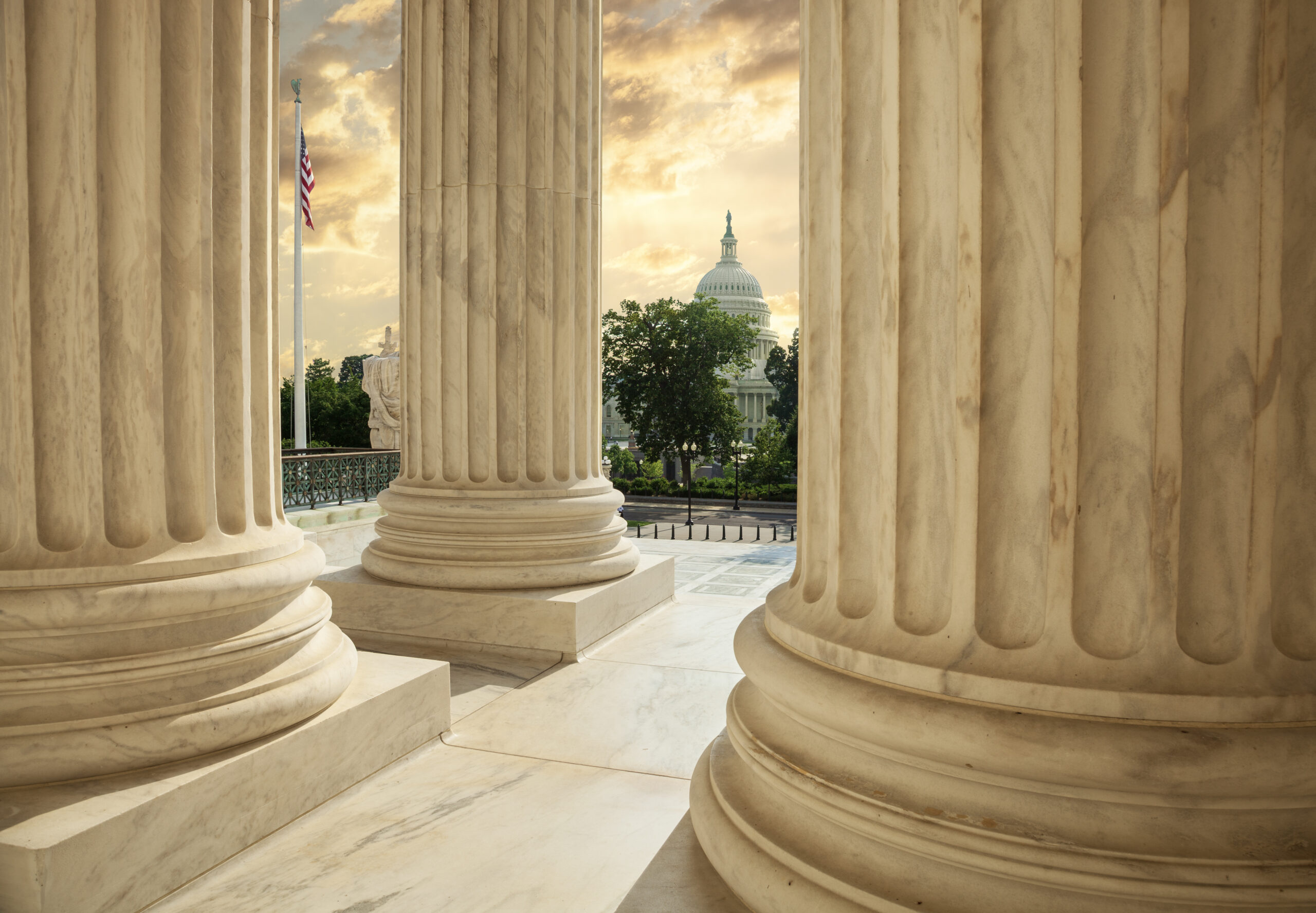
WASHINGTON, D.C. — Birthright citizenship in the United States remains fully intact, as the legal battle over efforts to restrict the long-standing constitutional right continues before the U.S. Supreme Court.
Despite intense political attention, no ruling has yet been issued, and the executive order seeking to limit citizenship for some children born in the U.S. remains blocked by lower courts.
At issue is an order backed by U.S. President Donald Trump, which seeks to reinterpret the 14th Amendment and deny automatic citizenship to children born to certain non-citizen parents.
However, during oral arguments in early April, several justices — including members of the conservative majority — appeared skeptical of overturning more than a century of legal precedent.
That precedent, established in 1898, has long guaranteed citizenship to nearly all individuals born on U.S. soil.
For now, nothing has changed.
Birthright citizenship remains the law of the land, and the court is expected to deliver a decision later this year, likely by June 2026.
Meanwhile, public opinion in the United States is largely aligned in favor of maintaining the policy.
Recent polling shows that roughly two-thirds of Americans support keeping birthright citizenship, while only a minority favor ending it.
Another survey found that 67 percent of U.S. adults oppose eliminating the practice, reinforcing broad national support.
Still, opinion becomes more divided when the issue is narrowed to children born to undocumented immigrants, with Americans nearly split on that specific question.
The case now before the Supreme Court represents one of the most significant legal challenges to U.S. citizenship rules in generations.
But as it stands today, the legal and constitutional framework remains unchanged — and the outcome now rests with the nation’s highest court.
Angle by Deandrea Hamilton. Built with ChatGPT (AI). Magnetic Media — CAPTURING LIFE.
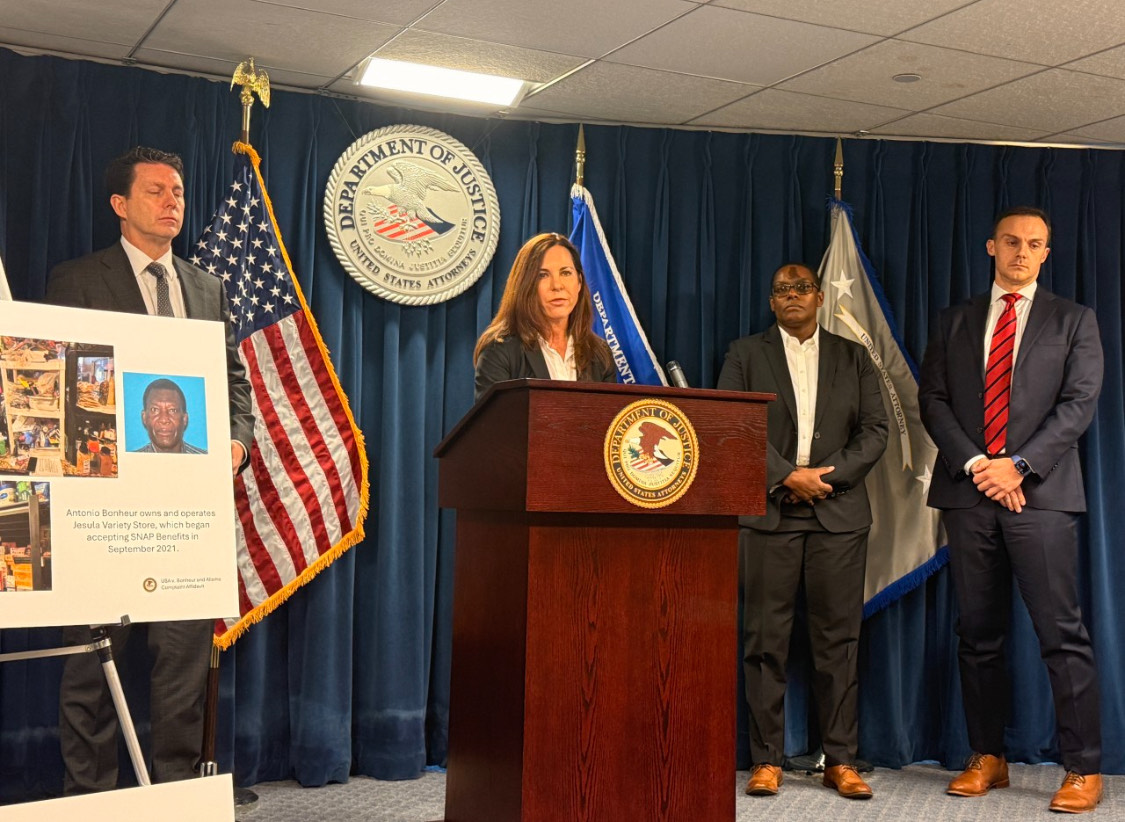
BOSTON — Two men originally from Haiti are facing federal criminal charges in Massachusetts after authorities alleged they orchestrated a years-long scheme to illegally traffic nearly US$7 million in Supplemental Nutrition Assistance Program (SNAP) benefits while also selling donated food products intended for the international charity Feed My Starving Children.
Federal prosecutors announced the charges in mid-December 2025, following a lengthy investigation by the U.S. Department of Agriculture’s Office of Inspector General and other federal agencies. The case centers on two small retail businesses operating in the Mattapan section of Boston, which investigators say processed extraordinarily high volumes of SNAP transactions inconsistent with legitimate grocery sales.
The defendants were identified as Antonio Bonheur, 74, of Mattapan, and Saul Alisme, 21, of Hyde Park. Prosecutors said both men are originally from Haiti. Bonheur is a naturalized U.S. citizen, while Alisme is a lawful permanent resident of the United States. Court filings did not specify when either man first entered the country.
According to charging documents, Bonheur owned and operated Jesula Variety Store, a small neighborhood shop that began accepting SNAP benefits in September 2021. Despite having a very limited inventory and a storefront measuring only a fraction of the size of a typical grocery store, the business allegedly redeemed millions of dollars in SNAP benefits over several years.
Federal authorities estimate that between 2021 and 2025, Jesula Variety Store redeemed approximately $6.8 million in SNAP benefits — an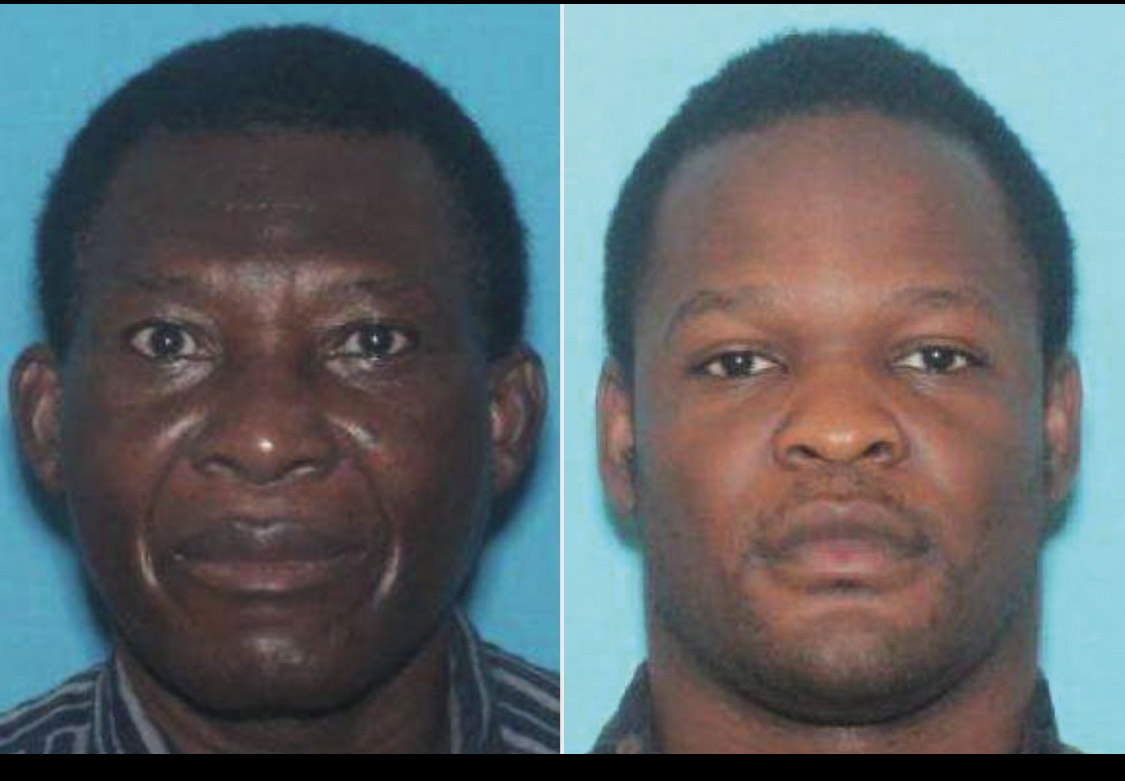 amount prosecutors say is impossible for a store of its size and stock. By comparison, investigators noted that a full-service supermarket in the same area would typically redeem a small fraction of that amount each month.
Alisme is accused of operating a second business, Saul Mache Mixe Store, located adjacent to Bonheur’s shop. That store began accepting SNAP benefits in May 2025 and allegedly trafficked more than $120,000 in benefits within a matter of months, raising immediate red flags for investigators monitoring redemption data.
Prosecutors allege the men engaged in SNAP trafficking, a felony offense that involves exchanging food assistance benefits for cash or other non-approved items. In undercover operations, law-enforcement agents allegedly observed customers receiving cash in exchange for swiping their SNAP cards, often at a discounted rate, while the merchants later redeemed the full value from the federal government.
In addition to the food stamp fraud, authorities allege the defendants sold donated food products manufactured by the nonprofit Feed My Starving Children. The meals, which are funded entirely through charitable donations, are intended for distribution to malnourished children in impoverished countries and are not authorized for retail sale in the United States. Prosecutors say the products were instead offered for sale inside the stores, generating illicit profit from food meant for humanitarian relief.
Federal officials described the alleged conduct as a serious abuse of both taxpayer-funded assistance programs and charitable goodwill.
“This case represents a dual betrayal,” prosecutors said, noting that the scheme not only diverted public funds from families in need but also exploited donations intended to fight hunger abroad.
Bonheur and Alisme are each charged with food stamp fraud, a federal offense that carries a potential sentence of up to five years in prison, fines of up to $250,000, and permanent disqualification from participating in federal nutrition programs. Additional penalties could include asset forfeiture if the defendants are convicted.
The criminal complaints were filed in U.S. District Court in Massachusetts in October 2025, though the arrests and public announcement came weeks later. Authorities allege the core of the scheme spanned more than three years, beginning in 2021 and continuing into 2025.
As of the announcement, neither defendant had entered a plea. Attorneys for Bonheur declined to comment publicly, while counsel for Alisme did not immediately respond to media inquiries. No formal defense arguments have yet been presented in court, and both men are presumed innocent unless and until proven guilty.
Federal officials emphasized that SNAP fraud undermines confidence in one of the nation’s most important social safety-net programs, which serves millions of low-income families, seniors, and people with disabilities. The case, they said, underscores ongoing efforts to strengthen oversight and prevent abuse of both government assistance programs and charitable food aid.
The investigation remains ongoing.
USA
U.S. Attorney Jeanine Pirro Condemns ‘King’ of Haitian 400 Mawozo Gang – Life in Prison for Kidnapping Children, Missionaries
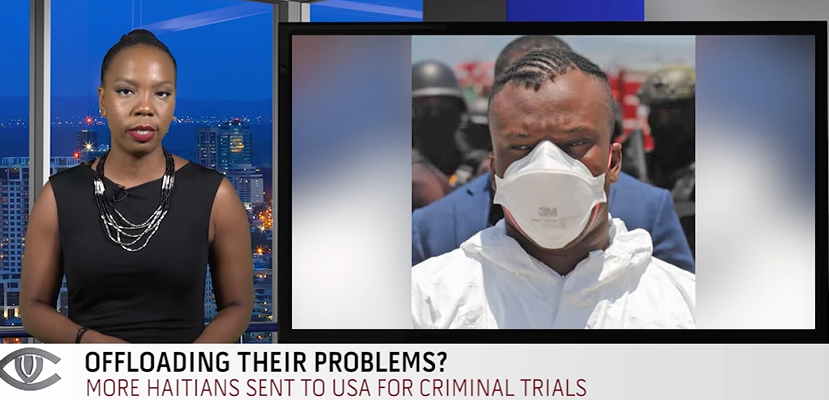
U.S.A, December 4, 2025 – U.S. Attorney for Washington, D.C., Jeanine Pirro delivered a blistering summary of one of Haiti’s most disturbing gang cases, confirming in a December 3 video message that the self-proclaimed “king” of the 400 Mawozo gang has been sentenced to life in prison for orchestrating the kidnapping of 17 Christian missionaries — including three children aged six, three, and just eight months old.
Pirro detailed how the hostages were held for 62 days, terrorized, and used as bargaining chips as the gang demanded US$1 million per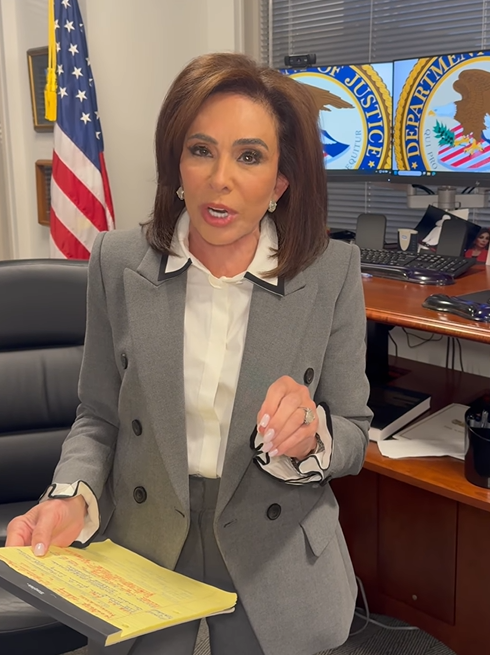 person for their release. “They were ultimately able to escape,” she said, adding that the man responsible “will never see the light of day.”
The defendant — Joly “Yonyon” Germine — directed the entire operation from inside a Haitian prison, Pirro said. Despite being incarcerated on prior charges tied to trafficking, weapons smuggling, and money laundering, Germine continued to run gang finances, coordinate kidnapping operations, and even oversee weapons purchases using ransom proceeds. U.S. prosecutors previously showed that he used contraband phones to command 400 Mawozo gunmen on the outside.
According to court documents, the October 2021 kidnapping targeted a group from Christian Aid Ministries traveling near Port-au-Prince. Sixteen were Americans and one Canadian. Some hostages described being moved between gang safehouses at gunpoint, sleeping on floors, and hearing constant gunfire. A few eventually escaped on foot under cover of darkness; others were released only after partial ransom payments totaling roughly US$350,000.
Federal prosecutors framed the case as a window into Haiti’s violent kidnapping economy, where ransom money funds the purchase of U.S.-sourced assault rifles that fuel the country’s spiraling gang wars. Germine had already received a 35-year sentence in an earlier weapons-trafficking case before this week’s life sentence was imposed.
Pirro, summarizing the outcome, said simply: “Now he’ll never see the light of day.”
Angle by Deandrea Hamilton. Built with ChatGPT (AI). Magnetic Media — CAPTURING LIFE.





-

 Bahamas News1 week ago
Bahamasair Backs Surge as Bahamians Flood South Florida for V.J. Edgecombe Showdown
-
 News1 week ago
50 Years of Ministerial Government: Cabinet Moves to Mark Milestone Rooted in 1976 Constitution
-

 News1 week ago
Fuel Costs Rise Again as Pelican Energy Warns of Global Pressures
-
 News1 week ago
Government Moves to Amend Destination Management Fee Law
-

 News1 week ago
Flow TCI Empowers Local Communities with ‘Project EmpowerHER’
-

 Bahamas News1 week ago
Mother’s Pride Headlines Bahamian Takeover at Sixers-Heat Clash in Miami
-

 News1 week ago
Millions Unspent, Projects Stalled as Astwood Questions Government Efficiency
-
 News3 days ago
Beaches Turks & Caicos, FIU train next generation of hospitality leaders in Providenciales