
News
Why Clean Energy Keeps Getting a Dirty Deal


Magnetic Media | Editorial Team
Despite record investments, growing public demand, and remarkable technological advances, clean energy is still not winning fast enough. Why? The reasons are more political and structural than scientific. This is a breakdown of what’s really holding back the clean energy revolution—even as the planet cries out for relief.
- Fossil Fuel Subsidies Are Still King
Globally, fossil fuels received over $7 trillion in subsidies in 2023 alone (IMF). That means oil, gas, and coal are still heavily underwritten by governments, keeping their prices artificially low. Clean energy has to compete on a tilted playing field.
Even with solar and wind now cheaper than fossil fuels in most markets, they aren’t winning on price alone because the global economy still props up carbon-heavy industries.
- Grids Weren’t Built for Solar and Wind
Much of the world’s energy infrastructure is outdated and designed around centralized, fossil fuel-based power plants. Renewables are decentralized and intermittent, requiring new, smarter grids.
The IEA estimates that for every dollar spent on renewables, only $0.60 is spent upgrading grid infrastructure. As a result, there’s a growing backlog: solar and wind projects are ready to plug in, but there’s no place to plug them.
- Upfront Costs & Finance Gaps
Solar panels may be cheap, but setting up large-scale renewable projects requires big upfront capital. Developing countries, where the sun shines brightest, often lack access to affordable finance.
Africa, for instance, holds 60% of the world’s best solar resources, but gets just 2% of global clean energy investment.
- The Fossil Fuel Lobby Is Strong and Well-Funded
From legal challenges to PR campaigns, the fossil fuel lobby remains one of the most powerful political forces worldwide. They fund misinformation, push back on regulation, and block clean energy initiatives through litigation and influence. And in many countries, fossil fuel giants are deeply entangled in politics, making meaningful change economically risky and politically unpopular.
- Clean Energy Jobs Are Rising—But So Are Fears
While clean energy now supports nearly 35 million jobs globally, many workers in oil, gas, and coal industries fear losing their livelihoods. Without serious retraining and transition plans, politicians are reluctant to pull the plug on fossil sectors that support entire communities.
Just transitions are slow, complex, and expensive. But avoiding them stalls progress.
- No Global Enforcement = Slow Global Action
Climate goals like those in the Paris Agreement are mostly voluntary. There are no penalties for missing clean energy targets, and no global enforcement mechanisms.
The result? Countries pledge but rarely deliver. Progress is patchy, and ambition often dissolves after an election cycle.
- Clean Tech Access Is Not Equal
Clean energy tech—batteries, solar panels, EV components—is manufactured mostly in a few countries. Developing nations often can’t afford or access it, locking them out of the transition.
Trade barriers, outdated financial risk models, and monopolized supply chains make clean energy a rich nation’s luxury, not a global solution.
Still, There Is Hope
The 2025 UN Climate Address noted that over 90% of new power added last year came from renewables. Solar is now 41% cheaper than fossil fuels, and countries like India, China, and even Texas are seeing massive economic growth from clean energy.
But the transition must speed up—and clean energy must get a fair shot.
That means cutting fossil subsidies, modernizing grids, financing developing nations, and enacting just transition plans.
The future is sun-powered. But only if we stop throwing shade.







News
Beaches Turks & Caicos adds four new PADI Dive Instructors to the cadre of professionals in the watersports department
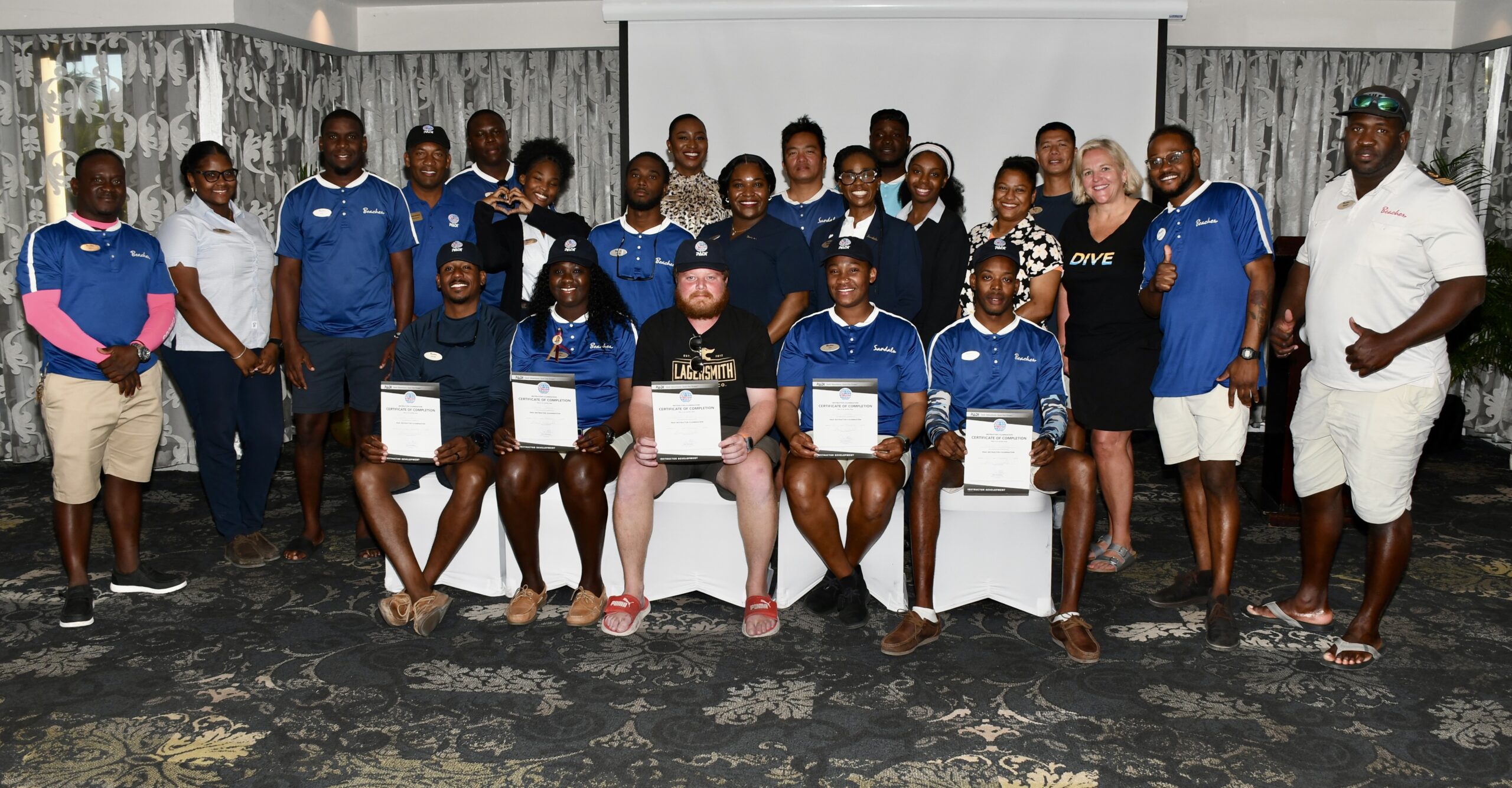
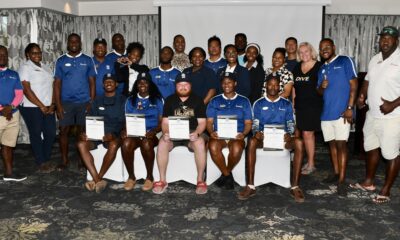
PROVIDENCIALES, Turks & Caicos Islands: — Beaches Turks & Caicos, a PADI-certified dive resort in Providenciales, continues to invest in its watersports team by training and certifying four team members to become qualified dive instructors to its operation. The resort operates one of the most comprehensive resort diving programmes in the region, offering on-site PADI courses and daily dives for guests of varying experience levels.
These latest certifications were conducted under the supervision of PADI Course Director and Dive Shop Manager Leonard Suckrajh, who is among an elite group of PADI professionals in the Caribbean. His role as course director allows the resort to deliver instructor-level training on property, further elevating the standard of safety, education and guest experience at the resort’s dive centre.
Suckrajh expressed his satisfaction with the commitment and professionalism demonstrated by the four new instructors, Almina Browne, Cicely Clarke, Andrew Dunkley and Boat Captain Tryston Sang throughout their training and assessment. “I am extremely proud of them,” he said. “They have invested significant time and effort in developing their technical competence and instructional skills and their achievement reflects a deep commitment to delivering safe, high-quality dive experiences for our guests.”
He noted that their performance reflects a strong culture of excellence within the watersports department and aligns with the resort’s long-standing emphasis on safety and training. “At Beaches Turks and Caicos, our objective is not only to train divers, but to develop highly responsible professionals who understand that every dive is grounded in safety, teamwork and respect for the marine environment,” he added. Suckrajh, whose own progression to course director spans more than two decades in watersports and diving within the Sandals and Beaches brands, said the new instructors represent “the next generation of leaders within our dive operation.”
General Manager, Deryk Meany, commended the level of collaboration required to guide four new instructors through the rigorous PADI process. “Attaining PADI instructor status is a demanding accomplishment that cannot be realized in isolation,” Meany said. “It requires the coordinated support of the dive shop, the wider watersports team, and the broader resort operation to ensure candidates have the necessary resources, time and mentorship to succeed.”
He emphasized that strengthening the cadre of certified instructors supports the resort’s commitment to excellence in guest service. “Each additional instructor enhances our capacity to offer guests a greater range of options, a higher degree of personal attention and consistently high safety standards,” Meany continued. “This milestone reinforces our position as a leading provider of family-friendly diving experiences in the Caribbean.”
Beaches Turks and Caicos is recognized for providing a wide spectrum of PADI courses on site, from Discover Scuba Diving and Open Water certification to advanced and specialty programmes. Previous training initiatives at the resort have resulted in many team members achieving PADI instructor status, significantly increasing both certification capacity and in-water safety oversight.
News
Beaches Turks & Caicos shares fine dining experiences to high school students in Providenciales
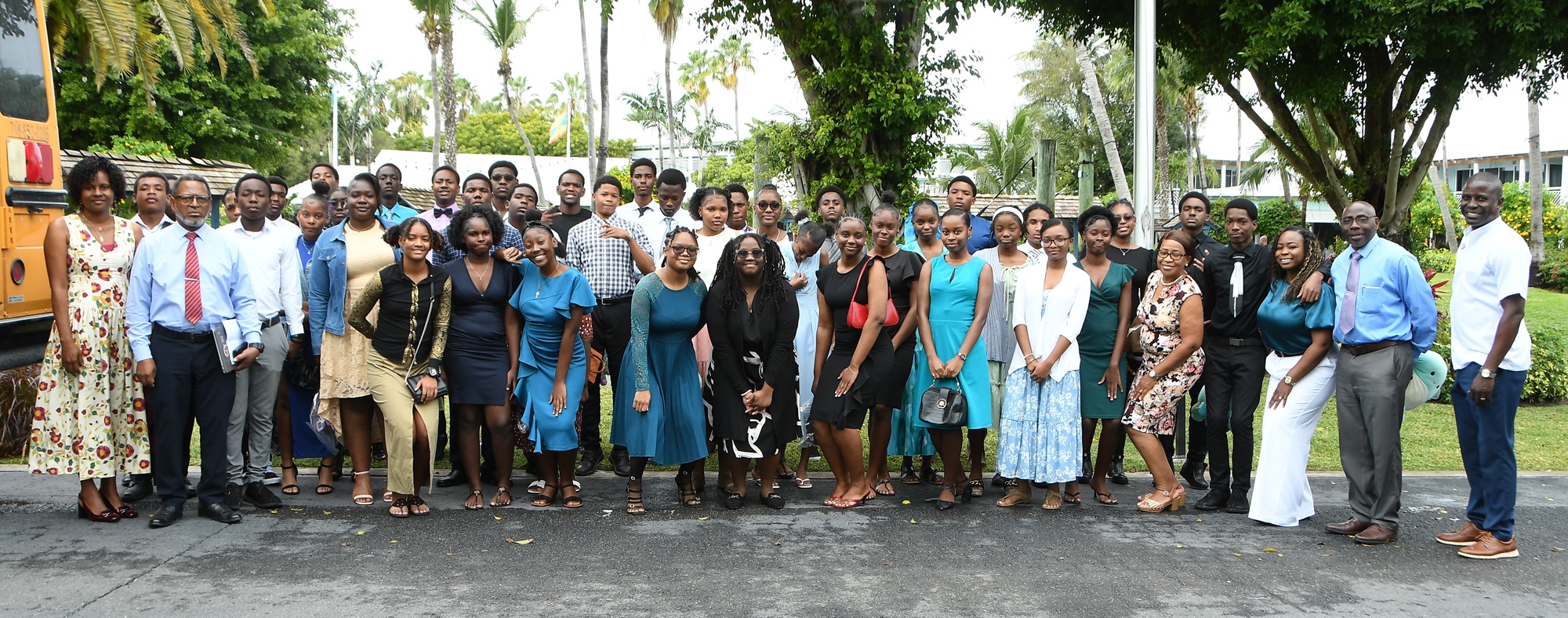
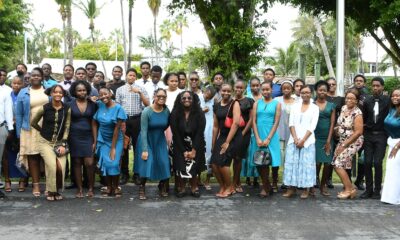
PROVIDENCIALES, Turks & Caicos Islands: — Students from the Clement Howell High School were recently welcomed to Beaches Turks and Caicos for an immersive fine dining and etiquette session at one of the resort’s signature à la carte restaurants. For the second consecutive year, the resort’s learning and development, public relations and food and beverage teams designed and delivered practical training that exposed students to the standards and expectations of a world‑class hospitality environment.
General Manager of Beaches Turks and Caicos, Deryk Meany, said the resort is committed to making the experience a fixture on the school calendar. “We are honoured to once again open our doors to the students of Clement Howell High School,” Meany added. “As one of the largest employers and training grounds in the Turks and Caicos Islands, we see it as our responsibility to help prepare the next generation with the skills, confidence and professional support they need to succeed in hospitality and beyond.”
He added that the partnership aligns with the values of both Beaches Resorts and the Sandals Foundation. “This programme is about more than a single day at the resort,” Meany continued. “It is about creating a consistent pathway for young people to see themselves in this industry, to understand the standards we uphold, and to recognise that there is a place for them at every level of the tourism sector.”
During the session, the resort’s learning and development and food and beverage professionals guided students through the full fine‑dining experience—from greeting and seating, to understanding multi‑course menus, cutlery placement, napkin etiquette and appropriate table conversation. Students also learned about body language, professional dress, and how to conduct themselves confidently in formal and semi‑formal settings such as interviews, scholarship dinners and official functions.
Learning and Development Manager Phildreka Mayham explained that the training was deliberately structured to blend technical knowledge with life skills. “Our goal is to demystify the fine dining environment for these students,” Mayham noted. “We want them not only to know which fork to use, but to understand that etiquette is really about respect for others, respect for themselves, and the ability to move comfortably in any social or professional space.”
She added that the programme is also a platform to introduce students to career possibilities. “Through this engagement, they get to interact directly with our team members, ask questions about different roles, and see first‑hand that hospitality offers diverse pathways—from culinary arts and service to training, management, and leadership,” Mayham shared.
For Clement Howell High School, the partnership with Beaches Turks and Caicos and the Sandals Foundation has become an important extension of the Health and Family Life Education (HFLE) curriculum. Guidance Counsellor Tanisha Graham said the experience supports the school’s broader focus on personal development and career readiness. “Our students are learning about self‑presentation, communication, and social responsibility in the classroom,” Graham noted. “Being able to step into a professional fine dining setting and put those lessons into practice is incredibly powerful for them.”
Graham emphasised the impact on students’ self‑confidence. “Many of our students are experiencing this kind of setting for the very first time,” she explained. “To see them sit up a little straighter, engage in conversation, and realise that they belong in these spaces—that is transformational. It reinforces the message that their potential is limitless.
Public Relations Manager, Orville Morgan added, “this initiative forms part of the resort’s ongoing investment in education and skills development across the Turks and Caicos Islands, complementing previous support to Clement Howell High, including enhancements to hospitality‑related clubs and programmes. The fine dining and etiquette training is expected to continue as an annual feature, with plans to refine and expand the experience based on feedback from students and teachers.”
As the second cohort of HFLE students completed their training, teachers expressed optimism that the collaboration will continue to grow and inspire even more young people to consider careers in hospitality. For Beaches Turks and Caicos, the hope is that today’s students will return in the years ahead as interns, team members, and leaders—bringing with them the confidence, poise and professionalism first nurtured at a carefully set table in one of the resort’s restaurants.
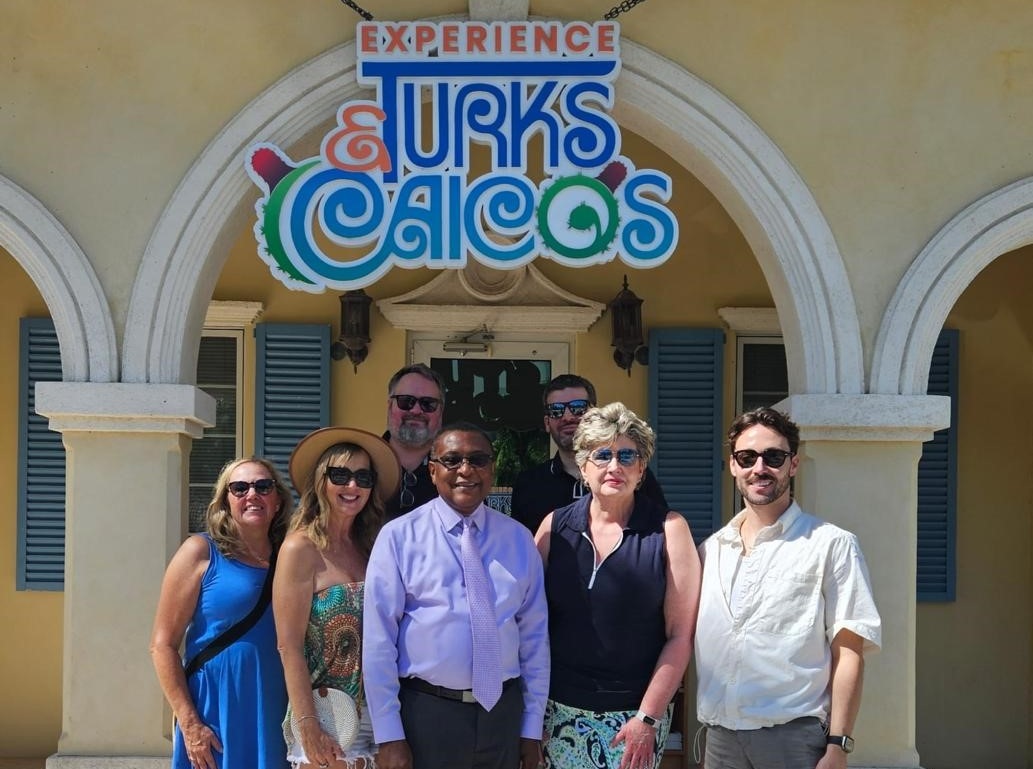
PROVIDENCIALES, TURKS AND CAICOS ISLANDS – (March 25th, 2026) The Turks and Caicos Islands has been enjoying increased visibility across Canadian media, as Experience Turks and Caicos continues to strengthen the destination’s presence in that key market.
In recent months, Experience Turks and Caicos hosted several Canadian travel writers who have since been highlighting the beauty and diversity of the destination across a range of key publications.
“Inviting and hosting writers from both travel trade and consumer publications is a key part of our public relations strategy to boost the visibility of the Turks and Caicos Islands,” said Interim CEO Consultant, Mr. Paul Pennicook. “As a result of this exposure, combined with our efforts to train travel advisors and increased airlift out of Canada, we have seen an uptick in arrivals from what is one of our top source markets. I would like to thank those journalists who continue to showcase the beauty of our multi-island destination.”
Among the most recent coverage are articles by Patricia Lee and Jennifer Bain, who visited the islands in early March. Bain journeyed to Little Water Cay alongside Jasmine Thomas, Executive Director of the Turks and Caicos National Trust, and Senior Visitor Experience Officer Luis Serpas. Her feature, published in National Parks Traveller, explores the Trust’s work to protect the endangered rock iguana in an article titled “Protecting Endangered Rock Iguanas in the Turks and Caicos Islands”.
Both writers also visited South Caicos, with Bain highlighting the destination’s charm in her piece “South Caicos: Away from the Crowds in Turks and Caicos”, published in A Taste for Travel, where she outlined eleven experiences in what is affectionately known as the Big South.
Lee, who also explored North Caicos and Middle Caicos, captured the essence of the country’s lesser-visited islands in her Vancouver Sun feature, “Beyond the Beach: Discover the slower, gentler beauty and charm of Turks and Caicos’ less-visited islands”.
Last November, Experience Turks and Caicos hosted a group of five Canadian travel writers on a familiarization trip. The group visited Providenciales and South Caicos, and experienced the luxury of Ambergris Cay Private Island Resort.
That visit resulted in a four-page spread in the March issue of Châtelaine Magazine, a leading French-Canadian women’s publication popular in Quebec. In the feature, “L’archipel du lâcher-prise (The Archipelago of Letting Go)”, writer Philippe Lépine explores the beauty, luxury, and spirit of the islands. From indulgent dining experiences to the discovery of a candle at Island Organics that transforms into massage oil, the article paints a vivid picture of relaxation and discovery. Reflecting on the Island Fish Fry, Lépine writes, “People eat, talk loudly, dance, and leave satisfied, with light hearts and, no doubt, a lovely creation found at one of the kiosks run by a local artisan.”
Writer Tim Johnson, also part of that group, chronicled his experience in South Caicos in the Toronto Star, Canada’s largest-circulation daily. In his article title “A Sleepy Caribbean Dream”, he highlighted the flourishing wildlife, excellent diving and pristine waters.





-

 News1 week ago
CARICOM – A Regional Club With Benefits; Turks & Caicos Wants In
-

 Health1 week ago
Gut Health Linked to Lower Colorectal Cancer Risk According to Cleveland Clinic Dietitian
-

 Caribbean News1 week ago
Fighting the fungus foe of the beloved banana
-
 Health6 days ago
Turks and Caicos Islands Hospital Celebrates Patient Safety Awareness Month: “Team Up for Patient Safety”
-
 Health6 days ago
Turks and Caicos Islands Medical Association (TCIMA) Elects New Executive
-
 News10 hours ago
Beaches Turks & Caicos adds four new PADI Dive Instructors to the cadre of professionals in the watersports department
-
 News11 hours ago
Beaches Turks & Caicos shares fine dining experiences to high school students in Providenciales
-
 News4 days ago
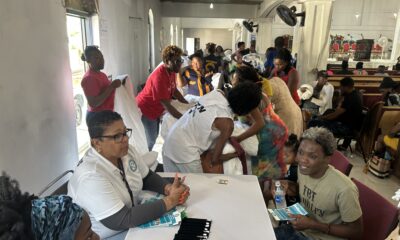
ISU Community Caravan Delivers Essential Services to Granny Hill North