
News
Officially Sworn In; Commissioner Fitz Bailey Vows Action, Reform and Trust in Police Leadership


Deandrea Hamilton
Editor
Turks and Caicos, April 25, 2025 – Newly appointed Commissioner of Police Fitz Bailey delivered a resolute and wide-ranging address, pledging transformative leadership of the Royal Turks and Caicos Islands Police Force.
Standing before government officials, officers, and the public, Bailey described his appointment as not merely a personal achievement but a national milestone—one fueled by the shared longing for justice, safety, and stability.
Commissioner Bailey emphasized that policing is a sacred calling, not just a profession, and promised to lead not from behind a desk but from the frontlines—as a builder of trust and a servant of the people. Acknowledging every role within the force—from tactical and marine units to translators and cleaners—he affirmed the importance of unity and mutual respect at all levels.
Mr Fitz Bailey, originally from Jamaica was brought in as a special edition to the Police Force. He was officially sworn in as Deputy Commissioner back on October 7, in a ceremony led by H.E. Governor Dileeni Daniel-Selvaratnam; a month later he was named the interim or acting commissioner of police. Six months later, on April 10, the governor confirmed that Bailey would fill the commissioner post permanently.
It was a critical spot left vacant when Edvin Martin, a retired police chief from Grenada resigned after five months at the helm of the Force and amidst speculation about his ailing health. That was last November.
“Following a competitive recruitment process, I have appointed Mr. Fitz Bailey as the next Commissioner of the Royal Turks and Caicos Islands Police Force. This appointment signals a renewed commitment to safety, public confidence and the rule of law in every community. The security of our Islands requires bold leadership, modern policing strategies and the development of our capabilities. Having led the RTCIPF as Acting Commissioner for the past several months, I am confident that Mr Bailey brings the necessary depth of experience, vision and determination needed to lead this effort and ensure the safety of our communities,” said Her Excellency, Dileeni Daniel-Selvaratnam, TCI Governor.
On Friday April 25, 2025 at the swearing in ceremony held at the Gus Lightbourne Sports complex, Commissioner Bailey aimed for a posture of resolve, touting his work ethic and his faith.
Determined to confront rising crime and rebuild public confidence, Bailey unveiled a 30-day plan focused on increased patrols, joint task force operations, safety audits, and a visible leadership presence. “This is not symbolic,” he said. “We are a Force in action—not in waiting.”
Bailey also called out longstanding imbalances, vowing to address gender inequality in the force’s leadership and champion professional development. He promised an inclusive, modern police service rooted in values, not just enforcement.
“My leadership will be measured by results, not rhetoric,” he declared. “Together, we rise.”
Premier Misick Calls Appointment of New Police Commissioner a “Pivotal Moment” in TCI’s Fight Against Crime
Premier Charles Washington Misick hailed the appointment of Commissioner Fitz Bailey as the beginning of a new chapter in the Turks and Caicos Islands’ fight for public safety, accountability, and trust.
Speaking at the formal installation ceremony, which was attended by the Commissioners of Police from both The Bahamas and Jamaica; the Premier declared the moment “pivotal,” emphasizing the government’s commitment to strengthening law enforcement leadership and transforming the Royal Turks and Caicos Islands Police Force.
Commissioner Bailey, a seasoned Jamaican crime-fighter with over 40 years of experience, was praised for his frontline leadership in gang suppression, financial crimes, and counterterrorism. “This is not a ceremonial role—it is a calling,” the Premier said, urging Bailey to lead boldly, justly, and with measurable results.
The Premier charged Bailey with restoring public trust, dismantling criminal networks, and ensuring officer wellbeing. He also called for the modernization of the force through education, technology, and capacity building.
Addressing the nation’s officers, Premier Misick assured them of the government’s support, noting that Bailey, having “stood where you stand,” would lead from the front. “The country is watching,” he said. “And we believe you are ready.”
The speech concluded with a vision of legacy—one rooted in law, order, and lasting transformation.







The Bahamas, March 30, 2026 – The voice of a proud mother captured the spirit of a nation Monday night, as Bendra Rolle shared heartfelt reflections on the overwhelming Bahamian support for her son, VJ Edgecombe, during the Philadelphia 76ers matchup against the Miami Heat in Miami.
“The patriotic support and scenery at my son, VJ Edgecombe’s NBA game… was overwhelming,” Rolle said in a statement issued following the game. “The arena in Miami was lit. Bimini and the Bahamas showed up and showed out.”
Her words come amid what has already been widely described as a remarkable showing of national pride, with Bahamians traveling in large numbers to South Florida to witness the young guard’s continued rise. For Rolle, however, the moment extended far beyond basketball.
“Beyond VJ’s basketball talents, I’m so moved by his magnetic personality and personal journey to inspire and excite an entire nation—our beloved Bahamas,” she said. “I thank God for VJ’s humility and for his hunger for greatness. He never forgets how far God has brought us.”
While the Sixers did not secure the win on the night, Edgecombe delivered a solid individual performance, finishing with 13 points and five assists. He made an early impact on the game, showing confidence and poise before foul trouble disrupted his rhythm, but still managed to leave his mark in meaningful minutes.
The game itself evolved into a cultural showcase, with Bahamian flags waving throughout the arena and chants ringing out in support of Edgecombe. Much of that presence was bolstered by a coordinated travel push from Bahamasair, which helped facilitate fan travel and added to the electric atmosphere in Miami.
Rolle said the emotional weight of the moment was deeply felt by her family, as they witnessed firsthand the unity and pride of the Bahamian people.
“Thanks and love for the tears and overwhelming joy on Monday, Bahamas,” she expressed. “The Bahamian flags were love, loud, and proud. On my own behalf, VJ, and the entire family, I am ever grateful for the indescribable experience.”
Her closing words underscored what many have described as the true victory of the night—not the final score, but the powerful display of national pride and support surrounding one of The Bahamas’ rising stars.
News
50 Years of Ministerial Government: Cabinet Moves to Mark Milestone Rooted in 1976 Constitution
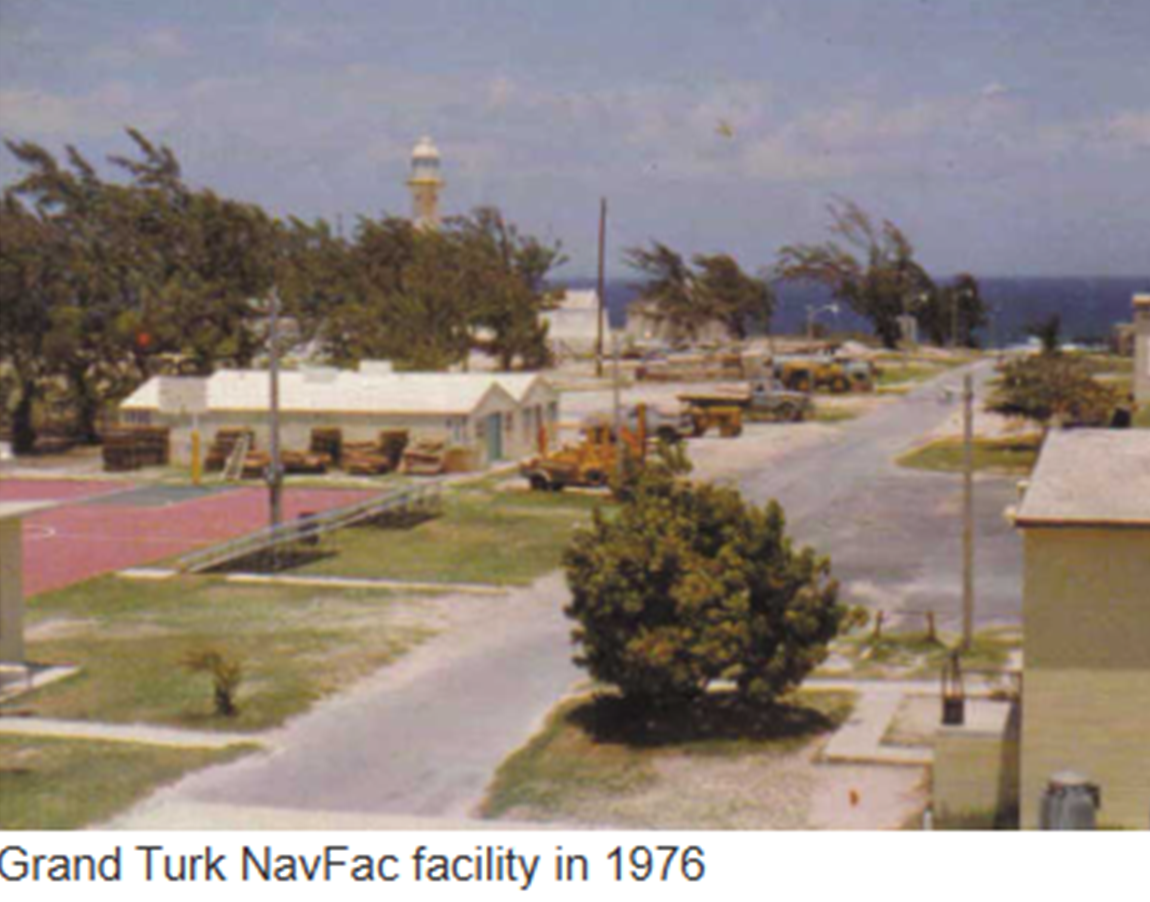
Turks and Caicos, March 30, 2026 – The Turks and Caicos Islands is preparing to mark a major political milestone, with Cabinet approving the establishment of a National Commemorative Committee to celebrate 50 years of ministerial government, a system first introduced under the 1976 Constitution.
The decision, confirmed in the February 10 Post Cabinet statement, signals a year of reflection on a governance model that fundamentally reshaped how the country is run — shifting from direct colonial administration toward locally led political leadership.
That shift was formalized in the Turks and Caicos Islands Constitution Order 1976, which laid the legal foundation for ministerial government and introduced a structured Executive and Legislative system.
At its core, the 1976 Constitution established an Executive Council, bringing together:
- a Governor,
- a Chief Minister elected by members of the Legislative Council,
- and Ministers appointed to assist in governing the Islands.
A Very Different Government Back Then
If today’s Cabinet feels crowded, the 1976 version would have seemed almost unbelievable. There were just three Ministers serving alongside the Chief Minister — a tight, compact leadership team responsible for the affairs of an entire country. No sprawling list of ministries, no long roster of portfolios — just a handful of individuals carrying the weight of governance.
Becoming a Minister wasn’t a direct vote of the people either. You first had to win a seat in the Legislative Council, and from there, the Chief Minister would recommend who should serve. The Governor then made the appointments. In other words, political trust and alignment mattered just as much as public support — and ultimate authority still rested above the local leadership.
And as for job security? There wasn’t much of it. Ministers served without fixed terms and could be removed if they lost their seat, resigned, or if the Governor revoked their appointment. Even the Chief Minister could be ousted through a vote of no confidence. Add to that the basic requirements — being at least 21, a British subject, and meeting residency rules — and it’s clear that ministerial government in 1976 was not only smaller, but far more tightly controlled.
This marked the first time elected representatives were formally given defined roles in the administration of national affairs.
Under the Constitution, the Governor retained overarching authority, but was required in many instances to act on the advice of the Executive Council, particularly in shaping policy and overseeing government operations.
The Chief Minister, meanwhile, was positioned as the central political leader, responsible for directing government business and advising on the appointment of Ministers.
Importantly, the Constitution also allowed for the assignment of responsibilities to Ministers, giving them oversight of specific areas of government — a structure that remains at the heart of today’s Cabinet system.
Section 13 of the Order made clear that Ministers could be assigned responsibility for the administration of departments or government business, embedding accountability and functional governance into the system.
The Legislative Council, established alongside the Executive, provided the law-making body, with elected and appointed members participating in debates, passing legislation, and representing the interests of the Islands.
Together, these provisions created the framework for what is now recognized as ministerial government — a hybrid system balancing local political leadership with constitutional oversight by the Governor.
The explanatory note of the 1976 Order describes it as introducing “new provisions for the Government of the Turks and Caicos Islands,” including the creation of a Legislative Council with elected members and Ministers appointed on the advice of the Chief Minister.
Fifty years on, that structure has evolved through subsequent constitutional changes, but its foundation remains rooted in the 1976 framework.
Cabinet’s decision to establish a commemorative committee suggests that the anniversary will not only celebrate political progress, but also invite reflection on how effectively the system has delivered on its promise of representation, accountability, and governance.
As the Islands approach this Golden Jubilee, attention is likely to turn not only to the achievements of ministerial government, but also to the ongoing question of how the system continues to serve a modern and rapidly developing Turks and Caicos Islands.
Developed by Deandrea Hamilton • with ChatGPT (AI) • edited by Magnetic Media.

Turks and Caicos, March 30, 2026 – The Turks and Caicos Islands Government has signaled changes to its tourism funding framework, with Cabinet approving draft amendments to the Destination Management Fee Act 2023.
The decision was confirmed in the Post Cabinet statement following the February 5 meeting, chaired by Governor Dileeni Daniel- Selvaratnam, where members agreed to move forward with revisions to the law governing the collection and administration of the fee.
The Destination Management Fee, introduced in 2023, is applied to travelers entering the country and is embedded within the cost of travel. The charge was designed to support tourism-related development, including marketing, infrastructure, and sustainability initiatives.
At the time of its introduction, the fee was linked to the establishment of a Destination Management and Marketing Organisation (DMMO), which was expected to coordinate tourism strategy and enhance the visitor experience.
However, recent developments have shifted that landscape.
The DMMO has since been discontinued, raising new questions about how funds generated through the fee are being managed and what structure will now guide tourism development efforts.
The Cabinet note does not outline what specific changes are being proposed under the amended legislation.
It also does not indicate whether adjustments will be made to:
- who pays the fee,
- how it is collected, or
- how the revenue is allocated and overseen.
The move to amend the law comes amid broader government efforts to strengthen revenue collection and compliance, including updates provided to Cabinet on the work of the Drag-Net Steering Committee — a multi-agency initiative focused on improving government revenue systems.
The lack of detail surrounding the amendments leaves several key questions unanswered, particularly given the fee’s direct impact on both visitors and residents and its role in supporting the country’s tourism economy.
Any changes to the Act would require further legislative steps, including presentation to the House of Assembly, before taking effect.
For now, the Cabinet’s approval signals that the government is moving to revise a policy that is already in force — but without yet disclosing how those revisions will alter the current system.
As tourism remains the backbone of the Turks and Caicos Islands economy, clarity on the future of the Destination Management Fee — and the framework it supports — is expected to be closely watched in the weeks ahead.
Developed by Deandrea Hamilton • with ChatGPT (AI) • edited by Magnetic Media.
Photo Credit: TCIAA





-

 News3 days ago
Password to Paradise Radio Remotes at Beaches Turks & Caicos continue to highlight the TCI as the preferred Caribbean destination
-

 News4 days ago
Beaches Turks & Caicos adds four new PADI Dive Instructors to the cadre of professionals in the watersports department
-

 Health1 week ago
Turks and Caicos Islands Hospital Celebrates Patient Safety Awareness Month: “Team Up for Patient Safety”
-

 News4 days ago
Beaches Turks & Caicos shares fine dining experiences to high school students in Providenciales
-

 Health1 week ago
Turks and Caicos Islands Medical Association (TCIMA) Elects New Executive
-

 Bahamas News3 days ago
Bahamasair Backs Surge as Bahamians Flood South Florida for V.J. Edgecombe Showdown
-

 News1 week ago
Flow TCI supports ‘Stars of Tomorrow’ at Inter-Primary Track and Field Championships
-

 News1 week ago
The Turks and Caicos Islands Featured in Top Canadian Publications