
Government
Turnpike, Traffic Lights and Digital Gov’t feature in PNP Five Year Plan


Danae Dennie
Staff Writer
Turks and Caicos, February 8, 2025 – The Progressive National Party has won the 2025 election and now the clock starts ticking. As they take office, with their manifestos as their guide, the people of the Turks and Caicos Islands (TCI) now await an improved society.
The Progressive National Party (PNP) has shared a plethora of plans in its Citizen’s Contract 2.0, their manifesto which will be used as a blueprint for their five-year tenure for the TCI.
The question now looms, will they follow through on their promises or will they fall short?
The PNP has a track record of establishing beneficial initiatives within the country; they have instituted free education at the Turks and Caicos Islands Community College for all citizens, introduced a national minimum wage and increased public service pay.
So, what’s next? According to the PNPs’s Manifesto their vision is to build a society where social and economic progress is guaranteed for all citizens with equity, transparency and integrity as their guiding principles.
In the next five years the PNP shares that they will strive for sustainable economic growth and development. They plan to create more employment and income opportunities for Turks and Caicos Islanders and boost the TCI’s potential.
Examples of these plans include supporting youth entrepreneurs through venture capital and equity investments, and they plan to develop Agro Parks to boost the agricultural industry.
The PNP has also pledged to expand infrastructure.
As the TCI Tourism Industry booms, the infrastructure has to grow as well. The PNP hopes to expand the Howard Hamilton International Airport, South Dock and other ports.
Other developments include redeveloping the Millennium Highway to a four lane dual-carriage in each direction, developing a series of parallel roads to Leeward Highway to ease traffic congestion and facilitate traffic flow in emergencies.
As well as developing the “Caicos Turnpike” from Providenciales to South Caicos.
They also plan to install a traffic light system in Providenciales to help regulate the flow of traffic, ease congestion and improve safety.
Energy reform is also on the list to be championed.
The PNP shares that it is committed to transforming the energy landscape of the Turks and Caicos Islands to ensure sustainability, affordability, and reliability. With plans to upgrade the power grid to accommodate an expanding renewable energy infrastructure.
A Digital Government is also being pushed for the TCI. They plan to ensure that every citizen and resident of the Turks and Caicos Islands has access to faster, more convenient, and more transparent government services through new technological advancements like AI and smart technology. They also plan to offer high-quality online courses and training to equip the young people of the TCI with the digital skills they need for the jobs of the future.
One of the major topics of discussion in this election was the state of healthcare.
In the PNP Manifesto, they shared that they plan to build a better healthcare system that is resilient, prioritizes prevention, and embraces innovation. They will do this by establishing a National Health Services Authority (NHSA) and a National Health Information System (NHIS), this would provide Electronic Health Records, and a National Disease Surveillance System for tracking communicable diseases.
The PNP administration also vows to rid the TCI of unregulated jitneys and provide reliable, safe and cost-effective public transportation. Other plans include improvement on waste management. For social provision they plan to establish new benchmarks and make provisions in the TCI budget to ensure that both equity and need are given full weight to improve the quality of life for TC Islanders. This will be done through initiatives like expanding the Children Nutritional Programme and providing high quality education at all levels as well as improving the sporting industry.
The PNP believes that every citizen should have access to adequate, affordable housing in safe fully serviced communities. In their next term, the PNP Administration will set up an independent New Towns Taskforce, as part of a long-term vision to create economically viable communities of at least 1,000 new homes each. Their goal is to complete three communities with 3,000 homes over the next five years.
Today’s youth are the future of tomorrow. The PNP acknowledges this and has vowed to increase access to tertiary education, skills and vocational training; expand the National Youth Service to offer apprenticeship, mentorship and subsidized training with the private sector as well as establish accessible mental health facilities and services tailored to young people in every community, including counselling and crisis support hotlines.
The major aim of the PNP government is to meet the goals put in place in their Vision 2040 plan. The PNP shares that they are committed to the rule of law, control of corruption, government effectiveness, political stability, better regulatory quality, and accountability in order to reach these goals.
To build on this foundation, the PNP highlights its track record of keeping promises and its commitment to delivering on new plans that will drive the country forward. The PNP emphasized that the promises made over the past four years were fulfilled. With a vision for a better future for the TCI, delivering on their new plans is essential for the country’s progress. The nation has chosen to keep the boat steady, hoping for smooth waters and steady sailing in the years ahead.





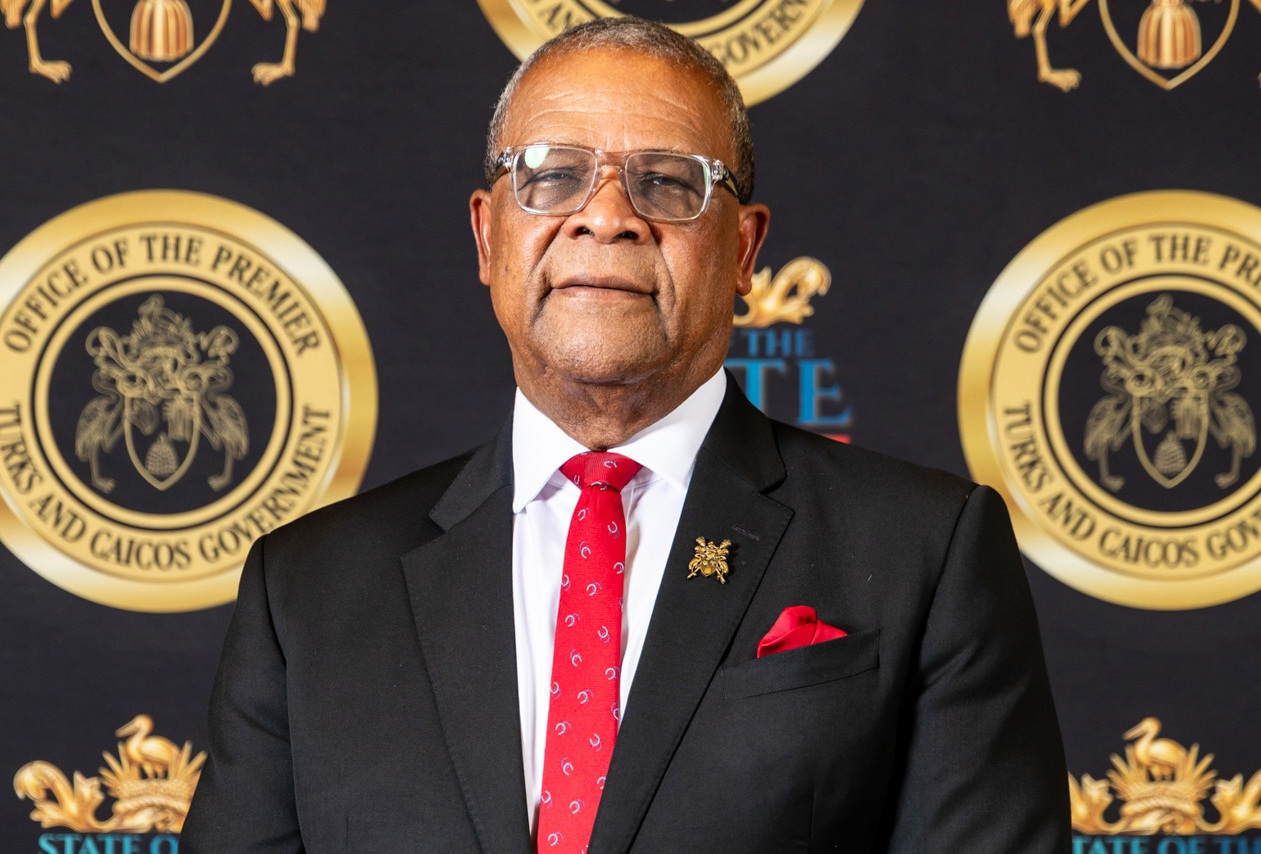
Turks and Caicos, March 18, 2026 – Despite securing significant constitutional reforms within the past year — including new powers that allow for a national referendum — Premier Charles Washington Misick made no mention of independence or any vote on the country’s political future during his 2026 State of the State Address, signalling what appears to be a continued strategy of building institutional strength before raising the question with the electorate.
The absence of any reference to a referendum stood out, particularly after the Turks and Caicos Islands successfully negotiated constitutional changes with the United Kingdom that expanded the authority of elected leaders and modernised the structure of Government.
Those reforms, which took effect last year, increased the size of Parliament, allowed for more Cabinet ministers, extended the life of a government from four to five years, and strengthened the role of elected officials in domestic affairs. The amendments also included provisions allowing for a referendum to be held on matters of national importance, a change widely viewed as giving the territory greater flexibility in determining its future political direction.
In his address, the Premier spoke of the reforms as moving the country toward “fuller self-government,” noting that the changes deliver a fully elected Parliament, widen delegated responsibility in external affairs and give elected leadership clearer authority and accountability to the people.
However, while the speech emphasised sovereignty, national security and stronger local institutions, it stopped short of any suggestion that the Government intends to call a referendum on independence or any other change in constitutional status.
Instead, the tone of the address suggested a focus on strengthening systems at home before considering further political steps.
The Premier outlined plans to expand the Police Force, strengthen the Border Force, increase the role of the Turks and Caicos Islands Regiment, modernise government through digital transformation, and improve immigration control through biometric border technology — all measures he said are necessary to secure the country’s future.
He also pointed to economic stability, infrastructure development and expanded investment as priorities, repeatedly framing the Government’s approach as one of building a stronger and more secure nation before taking on larger challenges.
The 2024 constitutional amendments, agreed between the Turks and Caicos Islands Government and the United Kingdom, formally expanded the number of elected members in the House of Assembly, increased the number of Ministers who may serve in Cabinet, extended the Parliamentary term to five years, strengthened Cabinet authority in domestic matters, and introduced provisions allowing for a referendum to be held on issues of national importance. The changes also widened delegated responsibility to local leaders in key areas of governance, marking one of the most significant steps toward greater self-government in recent decades.
The constitutional reforms achieved last year were seen by many observers as laying the groundwork for greater autonomy, and potentially future debate on independence, but the latest State of the State suggests the Government is moving cautiously.
For now, the message from the Premier appears clear: before any question of political status is put to the people, the country must first strengthen its institutions, its economy and its capacity to govern itself.
Angle by Deandrea Hamilton. Built with ChatGPT (AI). Magnetic Media — CAPTURING LIFE.
Government
$6M Digital Transformation Drive to expand E-Government, National ID and Biometric Borders
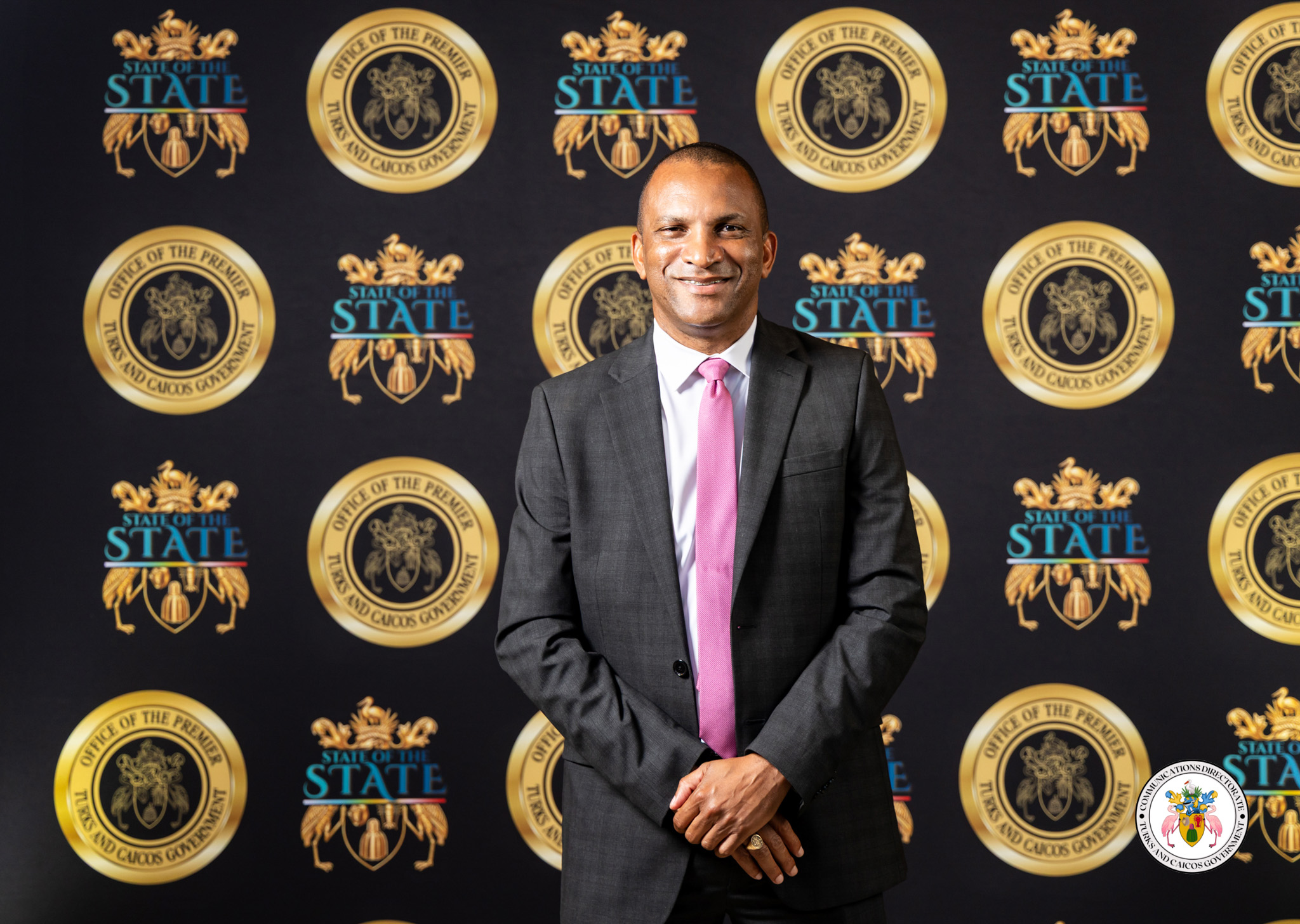
Turks and Caicos – A $6 million digital transformation programme launched after the 2024 government cyber breach is now driving a major push toward e-government in the Turks and Caicos Islands, with new systems planned for online payments, national digital identification and biometric border controls.
In his 2026 State of the State Address, Premier Charles Washington Misick said weaknesses exposed by the cyber-attack made it clear that government technology systems must be modernised to improve security, efficiency and public service delivery.
The Premier said the three-year digital agenda includes stronger network security, a redesigned government data system, new identity management tools and the creation of a National Security Operations Centre to monitor threats.
He told the country that modernising government services through digital transformation and e-governance is no longer optional but necessary for transparency, accountability and national progress.
One of the centrepieces of the plan is the National Digital ID Programme, which the Government says will modernise civil registration, establish a national population register and make it easier for residents to access public services while strengthening national security and election integrity.
The Premier also pointed to early success with the new E-Pay system, reporting that more than $1 million in government payments had already been made online within days of its launch in February, reducing long lines, paperwork and processing delays while improving transparency in public transactions.
Digital transformation is also extending to the country’s borders.
The Government confirmed that a multi-million-dollar Digital Borders Programme will introduce biometric screening and automated E-Gate technology at ports of entry, allowing citizens and low-risk travellers to move more quickly through immigration while giving authorities real-time access to identity and status information.
The move aligns with wider security standards being implemented across British Overseas Territories, where upgraded border technology is being introduced to strengthen immigration control and improve passenger processing.
Officials say the changes are part of a broader effort to create a more modern, secure and efficient public service, with additional digital systems planned across government departments over the next several years.
Angle by Deandrea Hamilton. Built with ChatGPT (AI). Magnetic Media — CAPTURING LIFE.





-

 News2 days ago
Password to Paradise Radio Remotes at Beaches Turks & Caicos continue to highlight the TCI as the preferred Caribbean destination
-

 Health1 week ago
Turks and Caicos Islands Hospital Celebrates Patient Safety Awareness Month: “Team Up for Patient Safety”
-

 News3 days ago
Beaches Turks & Caicos adds four new PADI Dive Instructors to the cadre of professionals in the watersports department
-
 Health1 week ago
Turks and Caicos Islands Medical Association (TCIMA) Elects New Executive
-
 News3 days ago
Beaches Turks & Caicos shares fine dining experiences to high school students in Providenciales
-

 News7 days ago
Flow TCI supports ‘Stars of Tomorrow’ at Inter-Primary Track and Field Championships
-

 Bahamas News2 days ago
Bahamasair Backs Surge as Bahamians Flood South Florida for V.J. Edgecombe Showdown
-

 News7 days ago
The Turks and Caicos Islands Featured in Top Canadian Publications