
Caribbean News
CARPHA and TEPHINET Sign MoU to Increase Technical Skills of Public Health Professionals in the Caribbean


Port of Spain, Trinidad and Tobago – The Caribbean Public Health Agency (CARPHA) and Training Programs in Epidemiology and Public Health Interventions Network (TEPHINET), recently signed a Memorandum of Understanding (MoU) renewing their commitment to increase the skills of public health professionals in applied epidemiological interventions, including outbreak detection, emergency response and surveillance analyses.
Field epidemiology is often described as “applied” or “intervention” epidemiology. It seeks to rapidly address priority public health issues in the community by using the appropriate resources and epidemiologic methods to investigate a problem and make recommendations for public health action, for immediate and longerterm control and prevention.
Dr Lisa Indar, Ad Interim Executive Director, CARPHA reiterated the importance of Field Epidemiology Training Programmes (FETPs) to the Region, ”CARPHA’s novel FETP has the laboratory component added to it and is regarded as a ‘boots on the ground’ programme. It has built much needed human resources capacity for health (HRH) in the small island developing states of the Caribbean. Participants’ work contributes to the strengthening of the national public health system as a whole, by providing evidence-based information for public health action”.
Dr Carl Reddy, Programme Director, TEPHINET expressed his satisfaction with the outcomes of the regional programme, “TEPHINET is proud to have the Caribbean Regional FELTP as a member of its global network, given the sterling job that it has done in building field epidemiology capacity in an underserved region susceptible to climate change and prone to public health emergencies such as natural disasters”.
Dr Laura Lee Boodram, Head, Caribbean Regional Field Epidemiology and Lab Training Programmes (CRFELTP), CARPHA said, “The tiered training programme is based on a model of building practical competencies, which enables trainees to apply classroom-based learning to solve real world situations”. CR-FELTP training content and learning projects address priority public health issues in the Caribbean, such as communicable and non-communicable diseases including HIV/AIDS; emerging health threats including Chikungunya and Ebola viruses; and laboratory surveillance.
Key objectives of the MOU are:
- Developing public health human resource capacity through Field Epidemiology Training (FETP)
- Implementing, following up and supporting epidemiological surveillance activities in communicable diseases, non-communicable diseases, injuries and emergency preparedness and response
- Promoting networking opportunities to support further programme development and sustainability
- Collaborating holistically by coordinating efficiently on activities, identifying synergies, optimising resources and opportunities, and mitigating contradictory or duplicative efforts.
In January 2017 a technical partnership was formed between Centers for Disease Prevention and Control (CDC)/TEPHINET and CARPHA in order to implement Frontline training as a pilot initiative, against the framework of the CR-FELTP. To date, 18 CARPHA Member States have benefitted from the Programme.
Background:
CARPHA is the sole regional public health agency for the Caribbean, legally established in 2011 by an Intergovernmental Agreement signed by the Caribbean Community member states. CARPHA is responsible for providing strategic direction and analysing, defining and responding to the public health priorities of the Caribbean in order to prevent diseases, promote and protect health and to respond to public health emergencies.
TEPHINET, formed in 1997, is a professional network of 83-member field epidemiology training programs (FETPs) working in more than 100 countries. With a mission to empower and mobilise a competent field epidemiology workforce to serve all people through standardised training, experiential learning, training program quality improvement, mentoring, and knowledge exchanges in order to connect epidemiologists better, faster, and with quality across the globe.
Photo Captions
Header: Dr Lisa Indar, CARPHA Ad Interim Executive Director signs the MOU between CARPHA and TEPHINET to strengthen public health and disease surveillance systems management in the Caribbean, while Dr Mark Sami, CARPHA Director Corporate Services looks on
Insert: Dr Carl Reddy, TEPHINET Programme Director, at his office in Atlanta, GA, after signing the MoU between TEPHINET and CARPHA


April 14, 2026 – Team Trinidad and Tobago delivered one of the most commanding performances at the 2026 CARIFTA Aquatics Championships, finishing third overall in swimming and second in athletics, signaling a powerful resurgence on the regional stage.
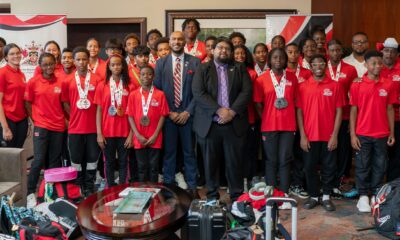
Competing in Martinique, the swim team amassed an impressive 747 points and 59 medals—20 gold, 19 silver and 20 bronze—in what officials are calling a historic showing. The result marks a significant step forward from previous years, reinforcing the country’s growing strength across disciplines and age groups.
Standout performances came from a deep and talented squad. Zahara Anthony led the charge with 72 points, dominating the Girls 11–12 division across freestyle, butterfly and individual medley events. Liam Carrington followed closely with 69 points, delivering a near-flawless campaign in the Boys 15–17 category, while Marena Martinez, Xaiden Valentine and Serenity Pantin added critical points with consistent podium finishes.
The team’s strength was not limited to individual brilliance. Athletes like Micah Alexander, Ethan McMillan-Cole and Jaden Mills showcased versatility and depth, while relay contributions from swimmers including Julius Ennals and Anpherne Bernard helped secure the team’s overall standing.
The performance drew high praise from the Ministry of Sport and Youth Affairs in Trinidad and Tobago, which welcomed the team home in celebration of what was described as a defining moment for the programme.
Minister Phillip Watts noted, “This success is not accidental. It is the result of hard work, structure, vision, and belief. Our young athletes are proving that Trinidad and Tobago is rising again.”
He added that every performance sent a clear message across the region that the country is “not standing still… we are moving forward.”
The showing in Martinique underscores the impact of sustained investment in youth development, coaching and systems, with Team TTO emerging as one of the most complete and competitive squads at CARIFTA 2026.
With momentum now firmly on their side, Trinidad and Tobago’s swimmers are not just competing—they are setting the pace for the future of Caribbean aquatics.
Developed by Deandrea Hamilton • with ChatGPT (AI) • edited by Magnetic Media.

Barbados, April 14, 2026 – Barbados’ Prime Minister Mia Mottley rolled out a hero’s welcome for the island’s CARIFTA athletes, celebrating a team that delivered one of the most talked-about moments of the 2026 championships.
At a reception held at Ilaro Court, Mottley met with the returning team, including the country’s Under-20 men’s 4x400m relay squad—Kyle Gale, Demario Prince, Akeem Sirjue and Jamar Marshall—whose electrifying performance at the Kirani James National Stadium stunned regional powerhouses.
The Barbadian quartet surged to gold in a dramatic finish, toppling both The Bahamas—long dominant in the event—and Jamaica, whose athletes have historically controlled the CARIFTA track scene with decades of relay success.
The victory capped a high-energy night and is already being described as a defining moment for Barbadian athletics.
Speaking after the team’s return, Mottley underscored the national pride sparked by the athletes’ achievements.
“This afternoon filled me with pride. To welcome our CARIFTA athletes to Ilaro Court, to see their smiles, feel their joy and thank them personally for what they have done for Barbados, was deeply special,” she said.
The Prime Minister also announced a $1 million investment to support athlete development, including enhancements to sporting infrastructure, sports science, nutrition and training systems.
“Our young people are soaring already. Barbados must now make sure they have every tool to go even higher,” Mottley added.
The reception signaled not just celebration, but commitment—positioning Barbados to build on a breakthrough moment that has shifted the regional athletics conversation.
Angle by Deandrea Hamilton. Built with ChatGPT (AI). Magnetic Media — CAPTURING LIFE.
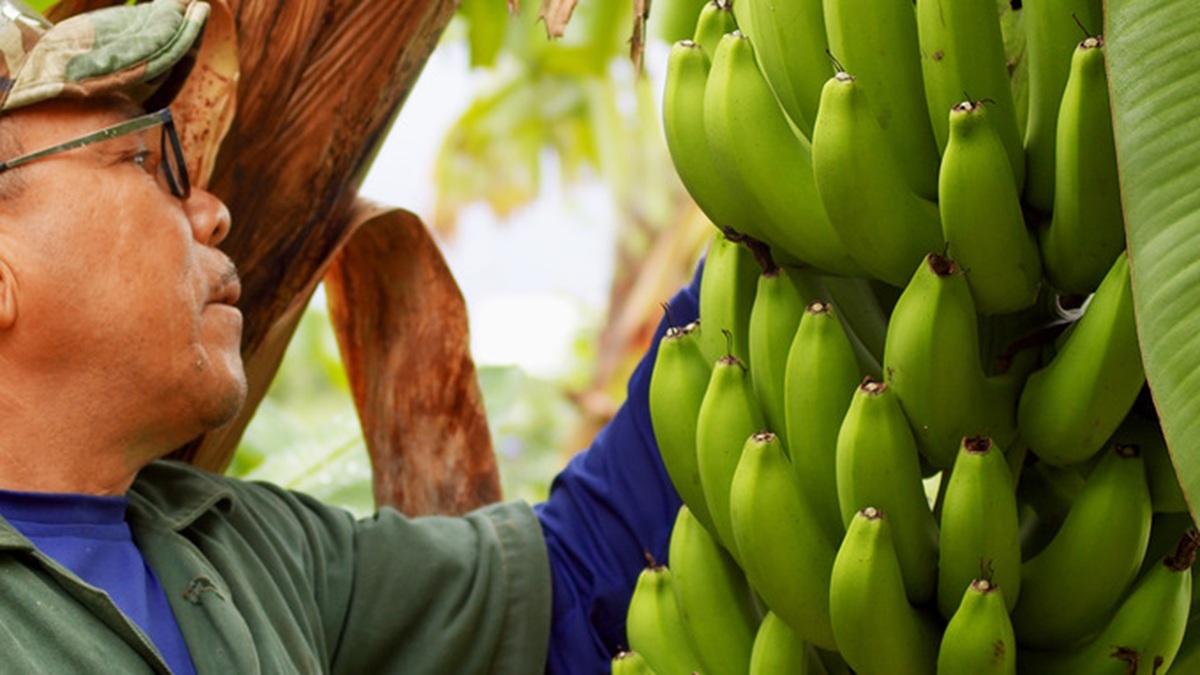
How Venezuelan farmers are learning to grow and live with a devastating plant disease
In the fields of Venezuela, where the banana has been for generations a symbol of sustenance and tradition, a shadow fell across the land. In 2023, Venezuela’s National Institute of Integral Agricultural Health (INSAI) declared a phytosanitary emergency: the fungus Fusarium Tropical Race 4 (TR4) (Fusarium oxysporum f. sp. cubense tropical race 4; syn. Fusarium odoratissimum) had arrived in producing areas in the states of Aragua, Carabobo and Cojedes.
This fungus, considered a devastating disease of banana and plantain (Musaceae) trees, can remain in the soil for more than two decades, threatening production and the lives of those who depend on it.
In the state of Aragua in the north of the country, the Renacer community had been growing bananas and plantains on 20 hectares since 2018. Then Fusarium arrived.
“When the disease hit, the entire plantation began to deteriorate. We refused to ‘die’ with the trees because that was our livelihood. The visits of INSAI confirmed that we had to chop down the banana trees. I cried a lot because I had worked with my banana trees for years,” recalls woman farmer, Lesbia Margarita García, with a broken voice.
In response, INSAI implemented measures to eliminate the affected plantations and improve the soil health by changing to other crops that allow agricultural production to recover. The Food and Agriculture Organization of the United Nations (FAO) offered assistance by providing corn seeds, tools, biosecurity inputs and training, with teams of experts helping farmers to start again.
“Planting corn, thanks to the INSAI-FAO programme, gave us a harvest that benefited everyone. We have been improving the soil,” says Lesbia Margarita with a smile. “Now we rotate crops, observe soil health and have learned how to use natural fertilizers. Expert assistance has been key.”
The pilot project works directly with affected producers in high-risk areas, promoting alternative crops such as cereals and vegetables, delivering inputs and tools to mitigate damage and applying biosecurity measures for safe and effective containment.
“Beyond the corn received, we have already planted cassava, chili peppers, beans and pumpkin. We hope that by the end of the year [2025] we will be diversified and that each season we will have something to sell. These lands do not give up,” says Lesbia Margarita with conviction.
The Renacer community is beginning to see fruits. Their products are reaching local markets, generating income and rebuilding their livelihoods.
Key actions to manage Fusarium TR4 are ongoing, including regular monitoring, continuous training, inter‑institutional coordination, updates to the national plan, information campaigns and producer impact assessments. INSAI is sustaining regulatory, surveillance measures and training —with FAO support—as part of a comprehensive long‑term strategy.
At the global level, FAO supports awareness raising, capacity building and international collaboration in the fight against Fusarium TR4 by facilitating the World Banana Forum and its Global Network on TR4.
“The objective is for countries to strengthen their operational and technical capacity, articulating actions between the public sector, the private sector and family farmers,” says Raixa Llauger, FAO Agriculture Officer in Mesoamerica. “FAO and local partners have promoted this approach in Venezuela.”
As an essential part of the activities, a comprehensive training programme was developed with activities that taught farmers how to identify the disease contain it and protect crops. In addition, FAO has distributed laboratory equipment, biosecurity tools and a multispectral drone to INSAI. Drones are an efficient and cost‑effective tool for phytosanitary surveillance, offering rapid, high‑resolution monitoring and early detection of plant pests and diseases.
Overall, the project strengthened biosecurity measures against the Fusarium fungus through the adoption of the National Action Plan and the establishment of partnerships with national and international institutions. In addition, the pilot initiative supporting smallholder farmers in key production areas and a nationwide awareness campaign with broad outreach improved surveillance, diagnosis and phytosanitary response capacities across the country.





-
 News5 days ago
Community Emergency Response Training – Blue Hills & Wheeland
-
 News5 days ago
HAITIANS FLEE HOME AS PUSH FACTORS MOUNT; LANDINGS SURGE IN TCI, AGAIN
-
 News5 days ago
TCI Selected from 59 Countries for World Bank AI Programme as Officials Attend Washington Meetings
-
 Caribbean News4 days ago
Team Trinidad & Tobago Makes Waves with Historic CARIFTA Aquatics Performance
-

 News5 days ago
What Planning Board Meeting Exposes about Housing Development in Providenciales
-
 News5 days ago
Multi-Agency Enforcement Action Conducted at Caicos Lodge
-

 Caribbean News4 days ago
Mottley Celebrates CARIFTA Champions After Stunning Relay Upset
-

 Bahamas News4 days ago
New Manifestos Released as Bahamas Heads to Historic May 12 Vote