
Bahamas News
CIBC Caribbean FirstStars Awards Showers Praise on Outstanding Employees


Bridgetown, Barbados, – CIBC Caribbean has hit on a winning formula with its digital transformation, with Chief Executive Officer Mark St. Hill recently declaring that 94 per cent of transactions across the regional bank are now done digitally.

Nedra Woodside
An upbeat St. Hill told staff and clients gathered at the Wyndham Grand, Sam Lord’s Castle Hotel in Barbados for the bank’s annual FirstStars Awards Ceremony that Personal and Business Banking Online and Mobile Banking transaction volumes were up 27 percent over the previous year as well as Corporate Online Banking transaction volumes which rose by 11 percent while Over-The-Counter transaction volumes dropped by 23 percent, when compared to the previous year.”
The awards ceremony under the theme Radiating Excellence saw nine of the bank’s shining stars from across the region rewarded for stellar performance. Corporate and Investment Banking dominated the awards with winners Nedra Woodside (Bahamas), Sonia Rutherford (Bahamas), Mikeila Carrington-Eliebox (Barbados), and Priscilla Leonce (Antigua). Sonia Rutherford is a three-time winner of the annual award and Nedra Woodside a double awardee.
St. Hill said the bank has “left most of the old issues behind” and was creating a new legacy. “The majority of our customers in 2024 see and experience an omni-channel bank, providing a first-class service that delivers loans in 10 minutes or less, cards that are printed on the spot, online account opening, online local and international wires – and should I even have to say it – instant payments such as our hugely popular 1st Pay.” He also noted the bank also continued to deliver strong financial results adding that “at the end of our first quarter, our net income was up 16% over last year, and we are continuing to keep a tight rein on our operating expenses”.
He added that it was “safe to say, therefore, that CIBC Caribbean is leading the charge to create a modern digital banking experience that puts the control of being able to do your banking from anywhere at any time firmly in the hands of the client.”

Sonia Rutherford
The CEO who inducted the award winners into the bank’s Hall of Fame hailed them for their commitment to excellence and teamwork noting they were “our bank’s best examples of what happens when you display a winning attitude”.
Chief Human Resources Officer Janine Billy said, “recognition for a job well done is a part of the “Culture of Care” we are working so hard to enshrine as a way of life at CIBC Caribbean”.
She thanked all of the bank’s employees across the region for their hard work and commitment noting “though they may not be standing here this evening receiving one of these awards, their hard work and commitment have not gone unnoticed. We see you and thank you for all that you bring to the table every day”.
Billy praised the night’s awardees as “shining examples of the best that CIBC Caribbean has to offer, and I salute each and every one of you”.
Adrian Gomes (Barbados), Caryl Fontaine (St. Lucia), Frederica Green-Brazier (St Maarten) were winners from the Personal and Business Banking segment. Enterprise Security and Fraud Management, Technology had two winners both from Barbados, Rosalind Waterman and Dona Estwick. Thunderous applause filled the room and fireworks exploded on the giant screens as Caryl Fontaine was announced the winner of the CEO’s Award of Distinction, the highest accolade the bank bestows on an employee.


PHOTO BY SIXERS NATION
Bahamian pride is already on full display in South Florida, with fans arriving in strong numbers ahead of tonight’s highly anticipated NBA matchup featuring VJ Edgecombe and the Philadelphia 76ers.
Helping to power that movement was Bahamasair, which rolled out a strategic promotion to facilitate travel, turning the game into a full-scale national showing.
And the celebration started early.
A “Bahamas Invades Florida” pre-party over the weekend set the tone, with Bahamian fans, DJs and supporters converging in Fort Lauderdale to build momentum ahead of the game. The event, marketed as a major cultural gathering, has spilled into Miami, where a strong Bahamian presence is expected inside the arena tonight.
This is no ordinary road game.
The Sixers enter the matchup healthy and are favoured to win, adding to the anticipation surrounding what many expect to be a standout performance by the Biminite guard.
Edgecombe, the third overall pick in the 2025 NBA Draft, has been electric in his rookie season — delivering high-scoring performances and quickly establishing himself as one of the league’s most exciting young talents.
But beyond the stats, it’s the moment that matters.
With South Florida just a short flight away, Bahamians have seized the opportunity to show up in force — flags, energy and all — transforming the game into something far bigger than basketball.
A national turnout.
A rising star.
And a night where the Bahamas is expected to be felt — from tip-off to final buzzer.
Angle by Deandrea Hamilton. Built with ChatGPT (AI). Magnetic Media — CAPTURING LIFE.
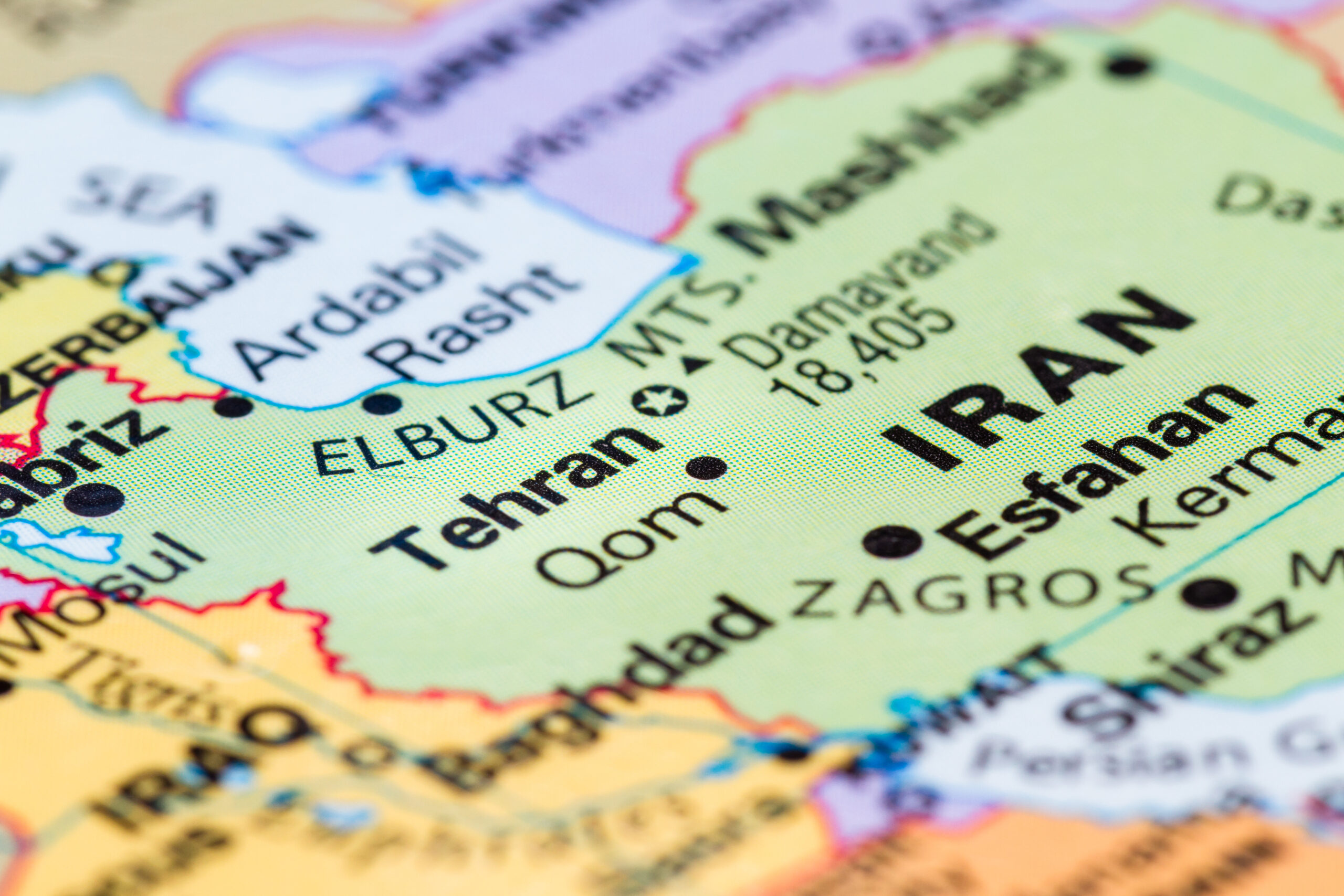
The Bahamas, March 18, 2026 – Twenty days into the latest Middle East escalation, the United Nations is warning the conflict is spreading beyond its original battlefield, as the death toll rises and governments around the world issue urgent travel advisories — including The Bahamas.
In a March 17 statement, the UN Secretary-General’s office said the war must stop and called for all Security Council resolutions to be respected, noting with concern that countries in the Gulf continue to be targeted, raising fears of a wider regional confrontation.
The current round of fighting began February 28 with strikes involving the United States, Israel and Iranian-linked forces, followed by missile and drone attacks across Iraq, Lebanon and parts of the Gulf.
International monitors report more than 1,300 people killed in Iran alone, with additional casualties reported in Lebanon, Israel and Gulf states. U.S. officials confirm at least 13 American service members have died since the escalation began, while reports indicate additional senior Iranian military leaders were killed in recent strikes.
Despite the growing violence, several NATO countries including the United Kingdom, France and Germany have not joined offensive operations, instead calling for diplomacy to prevent the conflict from widening.
The Bahamas Ministry of Foreign Affairs has also issued a travel advisory, warning Bahamian nationals to avoid travel to Israel, Palestine, Iran and Lebanon and to reconsider travel across much of the Gulf region due to the risk of sudden escalation, flight disruptions and security threats.
Officials say Bahamians already in the region should remain vigilant and be prepared for rapidly changing conditions.
Angle by Deandrea Hamilton. Built with ChatGPT (AI). Magnetic Media — CAPTURING LIFE.
Bahamas News
The Bahamas Celebrates Andrew Young at 94 – A Legend Honoured with Love at Baha Mar Gala
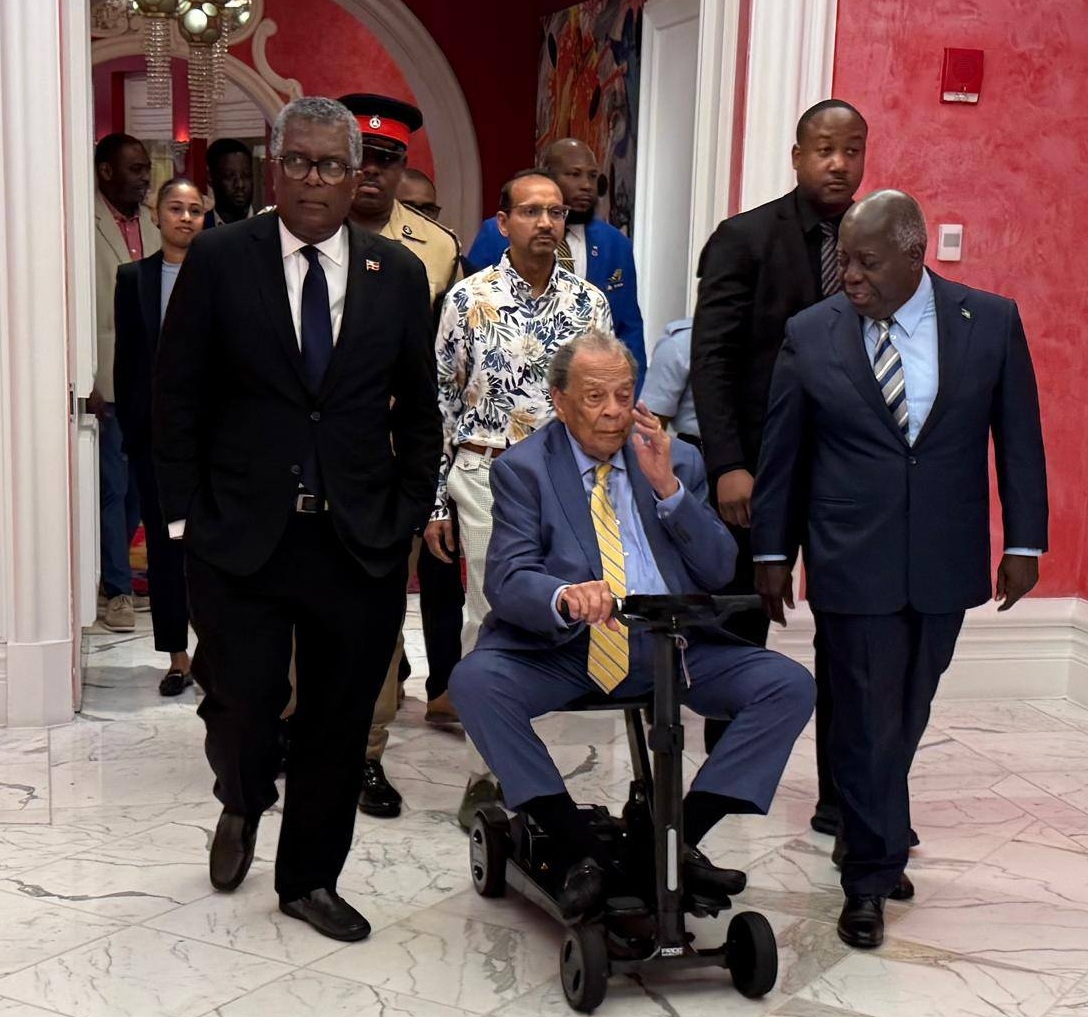
The Bahamas, March 18, 2026 – The Bahamas showed its deep affection for one of the world’s most respected civil rights leaders as Ambassador Andrew Jackson Young Jr. celebrated his 94th birthday in grand style at a gala held at the Eccho Art Gallery, Grand Hyatt Baha Mar on March 12, 2026.
The evening was filled with tributes, laughter and cultural pride, reflecting what many guests described as a genuine bond between Young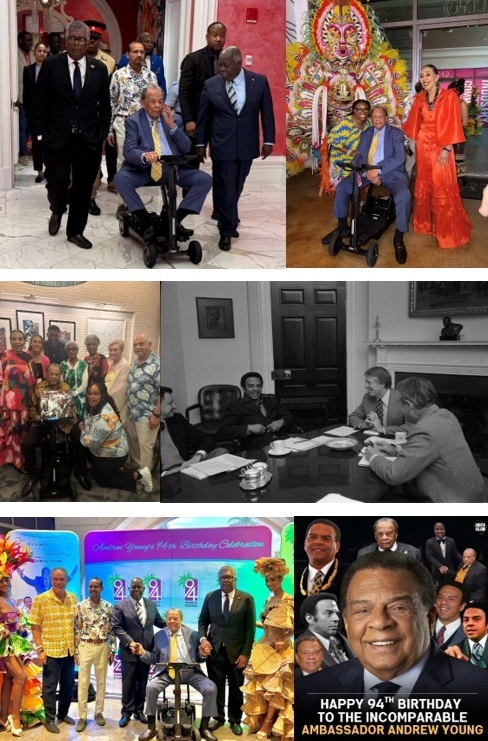 and The Bahamas — a country he has long admired and visited often. Those in attendance said the celebration felt less like a formal event and more like a heartfelt tribute to a man whose life has helped shape modern history.
Prime Minister Philip Davis, Foreign Affairs Minister Fred Mitchell, Bahamas Ambassador to the United States Wendall Jones, and U.S. Ambassador to The Bahamas Herschel Walker were among the dignitaries offering remarks, along with Andrew Young Foundation President Gaurav Kumar and other international guests.
The event was co-hosted by veteran broadcaster Karyn Greer of WSB-TV Channel 2 Action News and Bahamian journalist Dr. Deborah Bartlett, who both reflected on Young’s lifelong commitment to justice, diplomacy and public service.
Born in 1932, Andrew Young is widely regarded as one of the most influential figures of the American civil rights movement. He worked closely with Dr. Martin Luther King Jr., served as a key leader in the Southern Christian Leadership Conference, and later became a U.S. Congressman, U.S. Ambassador to the United Nations under President Jimmy Carter, and Mayor of Atlanta.
Over the decades, Young has been honoured by multiple U.S. presidents, including receiving the Presidential Medal of Freedom, the nation’s highest civilian award, from President Bill Clinton. His diplomatic work, civil rights leadership and global humanitarian efforts have earned him recognition across the world.
Guests noted that even at 94, Young remains active, engaged and passionate about international cooperation and human rights, continuing to inspire new generations.
His wife, Carolyn McClain Young, delivered the vote of thanks, expressing gratitude for what she called the warmth and love shown by the Bahamian people.
The celebration ended in true island fashion with a Junkanoo rush-out, bringing guests to their feet in a joyful close to an evening that blended history, culture and admiration.
For many in attendance, the message of the night was simple — Andrew Young loves The Bahamas, and The Bahamas loves him right back.
Developed by Deandrea Hamilton • with ChatGPT (AI) • edited by Magnetic Media.





-

 News1 week ago
CARICOM – A Regional Club With Benefits; Turks & Caicos Wants In
-

 News1 day ago
Password to Paradise Radio Remotes at Beaches Turks & Caicos continue to highlight the TCI as the preferred Caribbean destination
-
 Health1 week ago
Turks and Caicos Islands Hospital Celebrates Patient Safety Awareness Month: “Team Up for Patient Safety”
-
 News2 days ago
Beaches Turks & Caicos adds four new PADI Dive Instructors to the cadre of professionals in the watersports department
-
 Health1 week ago
Turks and Caicos Islands Medical Association (TCIMA) Elects New Executive
-
 News2 days ago
Beaches Turks & Caicos shares fine dining experiences to high school students in Providenciales
-

 News5 days ago
Flow TCI supports ‘Stars of Tomorrow’ at Inter-Primary Track and Field Championships
-
 News5 days ago
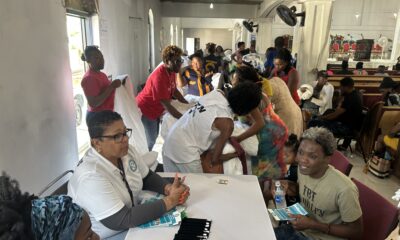
ISU Community Caravan Delivers Essential Services to Granny Hill North