
News
Guilty for Vehicle Theft, two men allege TCI and Bahamian Police shot and beat them, though unarmed


Wilkie Arthur
Freelance Court Reporter
#TurksandCaicos, November 9, 2023 – Police reported that on Thursday September 21st, 2023 they shot two unarmed men in a stolen vehicle. They admitted discharging their firearm and both men received gunshot wounds. The men were apprehended, hospitalized and later released in police custody after surgeries, now the duo has had their day in court.
Magnetic Media was at court on Monday October 16th, 2023 when police pulled up some 25 days after the shooting with two properly bandaged, limping, wounded, handcuffed and shackled individuals for court, they were brought to answer charges concerning that early morning police shooting and taking motor vehicle without authority incident.
Charged with “taking motor vehicle without authority, vehicle interference and other motor vehicle offenses” are JAMES FONTAINE and SHALDIN VYNDIKE DELANCY; the charges are not considered very serious offenses in TCI law and courts.
JAMES FONTAINE was granted $7,000.00 bail but is presently in prison as he has no one to sign surety for him and SHALDIN VYNDIKE DELANCY was not granted bail because he has other pending matters in court that he failed to attend and answer when they were called before the Magistrate’s court previously.
Both accused have entered guilty pleas in the matter of a stolen flatbed Mac truck on the shooting night/early morning of September 21st, and have also pleaded guilty to vehicle interference of a small yellow Nissan March on September 8th, 2023 in Five Cays, Providenciales.
Speaking to Magnetic Media whilst waiting for Court to commence, James Fountaine said he was shot nine times and Shaldin Delancy claimed to have been shot five times.
Ahead of the hearing, both men shared with us that they were going to plead guilty for their roles or involvement in the vehicle offenses but explained the “Police didn’t have to shoot us up like that. We didn’t have no gun, we didn’t try shoot them, man them dudes was trying to kill us. Only God got us still alive today. We had to lose control of the vehicle and had to dodge down and hide underneath the inside of the vehicle to avoid instant death bullets. Thankfully it was a big Mac truck, we could of hide from some the bullets but we still got hit a lot. After that they still dragged us out the vehicle and finished beating us up so bad, leaving us on the ground bleeding for a while before taking us to hospital. They wanted to kill us man.”
Fountaine and Delancy also said, in response to a question that some of the officers were locals, others were Bahamians.
The demeanor of the men, in sharing their account of alleged events on the night/morning in question was a very emotional Delancy; seriously crying and Fontaine was loud, angered by the ordeal.
The escorting police officers did attempt to muzzle the men by telling them to stop talking to the media however, neither man paid the warning any mind and spoke freely as they are constitutionally entitled to do.
We also asked them just before they were called into Court to be arraigned in the charges, if they shared their account with anyone and they told us, yes.
“Some Cayman Island police officers came and told us they are investigating our shooting but we know police don’t go against police. They told us if we get a lawyer, our lawyers could get the shooting documents and their findings or results from the investigation.”
The stolen vehicle offenses case against the duo was adjourned.
Representing both accused regarding the vehicle offenses is Latisha Williams-Bruce.


April 14, 2026 – Team Trinidad and Tobago delivered one of the most commanding performances at the 2026 CARIFTA Aquatics Championships, finishing third overall in swimming and second in athletics, signaling a powerful resurgence on the regional stage.
Competing in Martinique, the swim team amassed an impressive 747 points and 59 medals—20 gold, 19 silver and 20 bronze—in what officials are calling a historic showing. The result marks a significant step forward from previous years, reinforcing the country’s growing strength across disciplines and age groups.
Standout performances came from a deep and talented squad. Zahara Anthony led the charge with 72 points, dominating the Girls 11–12 division across freestyle, butterfly and individual medley events. Liam Carrington followed closely with 69 points, delivering a near-flawless campaign in the Boys 15–17 category, while Marena Martinez, Xaiden Valentine and Serenity Pantin added critical points with consistent podium finishes.
The team’s strength was not limited to individual brilliance. Athletes like Micah Alexander, Ethan McMillan-Cole and Jaden Mills showcased versatility and depth, while relay contributions from swimmers including Julius Ennals and Anpherne Bernard helped secure the team’s overall standing.
The performance drew high praise from the Ministry of Sport and Youth Affairs in Trinidad and Tobago, which welcomed the team home in celebration of what was described as a defining moment for the programme.
Minister Phillip Watts noted, “This success is not accidental. It is the result of hard work, structure, vision, and belief. Our young athletes are proving that Trinidad and Tobago is rising again.”
He added that every performance sent a clear message across the region that the country is “not standing still… we are moving forward.”
The showing in Martinique underscores the impact of sustained investment in youth development, coaching and systems, with Team TTO emerging as one of the most complete and competitive squads at CARIFTA 2026.
With momentum now firmly on their side, Trinidad and Tobago’s swimmers are not just competing—they are setting the pace for the future of Caribbean aquatics.
Developed by Deandrea Hamilton • with ChatGPT (AI) • edited by Magnetic Media.
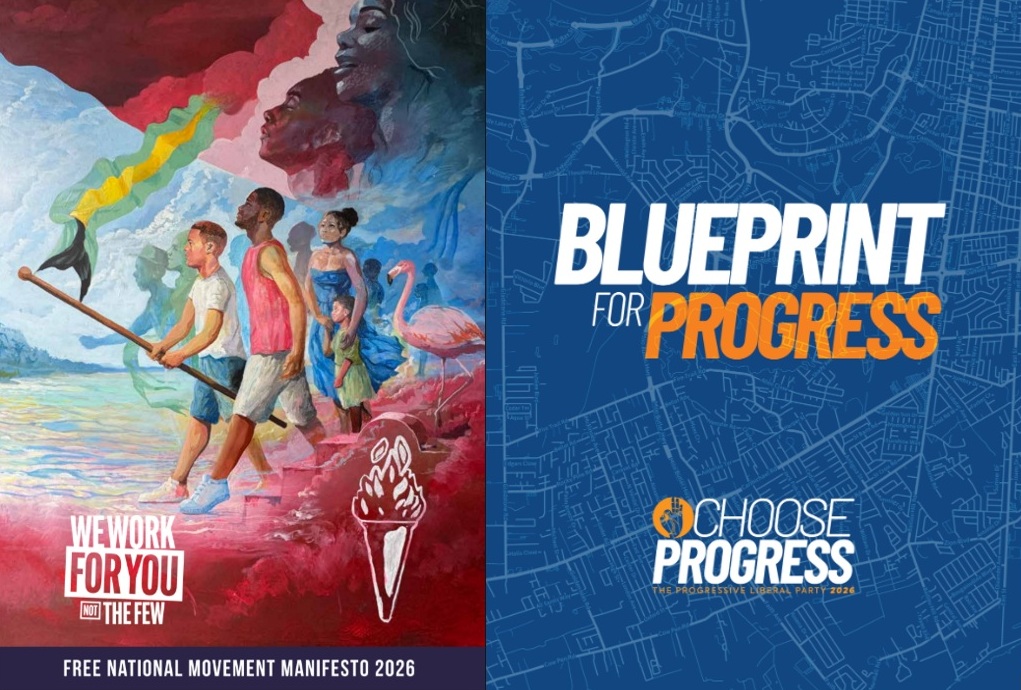
The Bahamas, April 14, 2026 – With the 2026 Bahamian general election set for May 12, the country’s major political parties have now formally placed their plans before the electorate, offering competing visions for governance, growth and relief.
The governing Progressive Liberal Party (PLP), led by Philip Davis, launched its “Blueprint for Progress 2026” on April 8, 2026, outlining a 46-page plan focused on long-term development and systems reform. The document places heavy emphasis on energy transition, digital government, workforce training and food security, positioning the party as one seeking continuity following its first term. The full plan is publicly available online through official PLP platforms for voters to review.
Just days later, on Sunday, April 12, the opposition Free National Movement (FNM), under Michael Pintard, unveiled its 2026 Manifesto at a major event in Nassau. Spanning 54 pages, the document centers on cost-of-living relief, tax reform, healthcare expansion and housing, offering what the party describes as a more immediate response to economic pressures facing Bahamian families. The FNM has also made its manifesto accessible online.
Beyond the two major parties, the Coalition of Independents (COI) had already entered the policy space earlier, formally unveiling its long-range Vision 2030 framework on Saturday, March 1, 2025, at the Fusion Superplex in Nassau during a packed national launch led by party leader Lincoln Bain. That framework has since been complemented by a 100-day action plan released in late March/early April 2026, adding a short-term policy layer to its long-range proposals.
These policy rollouts come as the country prepares for a pivotal vote, with the Parliamentary Registration Department confirming a voters’ register of approximately 203,000 eligible voters, one of the largest in the nation’s history. Key dates are now set, with Nomination Day on April 16, followed by advance polls on April 30, ahead of General Election Day on May 12.
With platforms now in the public domain and the timeline locked in, the focus shifts squarely to the electorate—who must now weigh the promises, examine the plans and decide the country’s direction at the polls.
Angle by Deandrea Hamilton. Built with ChatGPT (AI). Magnetic Media — CAPTURING LIFE.
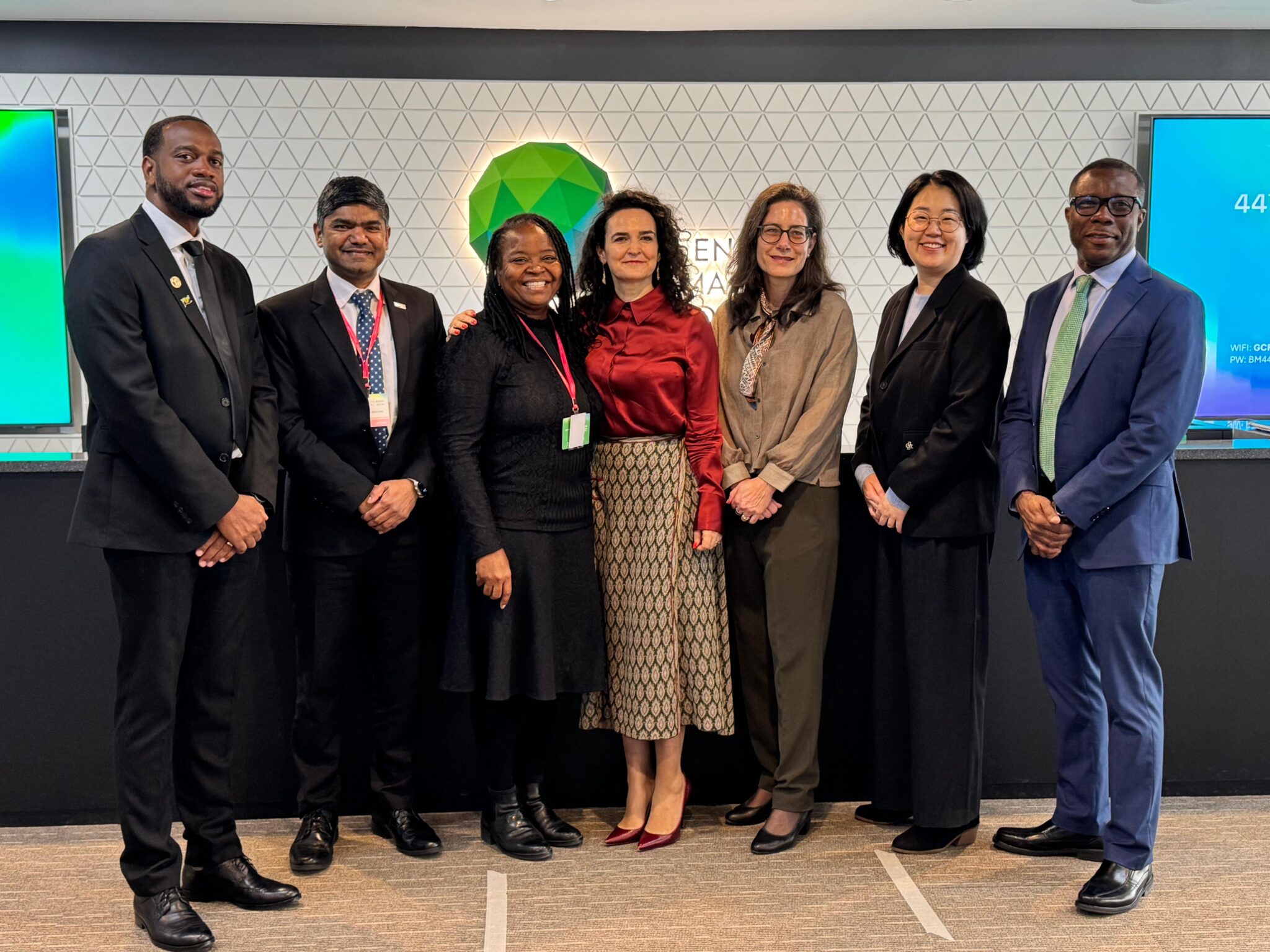
The Bahamas, April 14, 2026 – At its core, the $65 million water security project is designed to strengthen the reliability, safety and resilience of the water supply across The Bahamas.
If implemented as planned, the investment is expected to improve water quality, reduce contamination risks and support public health, while increasing supply reliability and limiting service disruptions during droughts or system failures. The project also aims to expand and upgrade infrastructure, including wellfields, pumping stations and storage capacity, and to protect freshwater resources from saltwater intrusion—an increasing threat for low-lying islands. In practical terms, that could mean cleaner, more consistent and more dependable access to water for residents across the country.
The project was first conceptualised in 2019 under the previous administration, when a proposal was submitted to the Green Climate Fund to strengthen the resilience of the country’s water systems. That early work came just months before Hurricane Dorian exposed the vulnerability of national infrastructure, including critical water and sanitation systems, particularly in the northern Bahamas.
The initial phase focused on developing the concept, identifying priority areas and engaging regional and international partners, including the Caribbean Development Bank, to support the design and preparation of a full funding proposal.
Following the change in government in 2021, the project advanced into its most technical and demanding stages. The current administration oversaw the completion of key requirements, including feasibility studies, environmental and social assessments, and detailed financing negotiations with international partners—steps necessary to move the proposal from concept to approval.
That multi-year process has now culminated in approval of a $65 million financing package, combining grant funding with concessional loans to support long-term upgrades to the country’s water infrastructure.
While the project brings significant international support, it is not entirely free money. The package is structured as a blended financing arrangement, combining grant funding with concessional loans—meaning a portion of the funding will ultimately need to be repaid. Based on information released by the Caribbean Development Bank, approximately $25 million of the total package is tied to loan financing, with the remaining portion provided as grant support.
Concessional loans typically carry more favourable terms than commercial borrowing, including lower interest rates and longer repayment periods. However, they still represent debt obligations that will be borne over time.
Notably, detailed terms of the loan components—including interest rates, repayment schedules and any associated conditions—were not disclosed in the initial announcement issued by the Office of the Prime Minister (Bahamas). Those details are expected to be outlined in formal financing agreements, but have not yet been made public.
For Bahamians, the project represents both investment and obligation. While the grant funding provides a significant boost to infrastructure development, the loan component adds to the country’s long-term financial commitments—making transparency around terms and implementation timelines especially important.
While the approval marks a significant milestone, the timeline for delivery remains a critical factor. Based on information available from project partners, implementation is not expected to begin immediately. The initiative is anticipated to move into its execution phase later in 2026, following finalisation of financing agreements and completion of preparatory requirements.
From there, the project is projected to unfold over several years, with estimates suggesting a multi-year implementation period of up to seven years to fully deliver the planned upgrades to water infrastructure across The Bahamas.
This means that while the funding has now been approved, the benefits will be realised gradually rather than all at once. A definitive completion date has not been publicly outlined, and detailed timelines tied to specific islands or phases of work have yet to be disclosed.
For Bahamians, the question now shifts from approval to execution—when funds are drawn down, when construction begins, and how consistently the project moves from plan to delivery.
Angle by Deandrea Hamilton. Built with ChatGPT (AI). Magnetic Media — CAPTURING LIFE.





-
 News5 days ago
Community Emergency Response Training – Blue Hills & Wheeland
-
 News5 days ago
HAITIANS FLEE HOME AS PUSH FACTORS MOUNT; LANDINGS SURGE IN TCI, AGAIN
-
 News5 days ago
TCI Selected from 59 Countries for World Bank AI Programme as Officials Attend Washington Meetings
-
 Caribbean News4 days ago
Team Trinidad & Tobago Makes Waves with Historic CARIFTA Aquatics Performance
-

 News5 days ago
What Planning Board Meeting Exposes about Housing Development in Providenciales
-
 News5 days ago
Multi-Agency Enforcement Action Conducted at Caicos Lodge
-

 Caribbean News4 days ago
Mottley Celebrates CARIFTA Champions After Stunning Relay Upset
-

 Bahamas News4 days ago
New Manifestos Released as Bahamas Heads to Historic May 12 Vote