
News
45 Year since JAGS became Chief; his Unity Speech begs the question: How far have we come on the things which matter most?

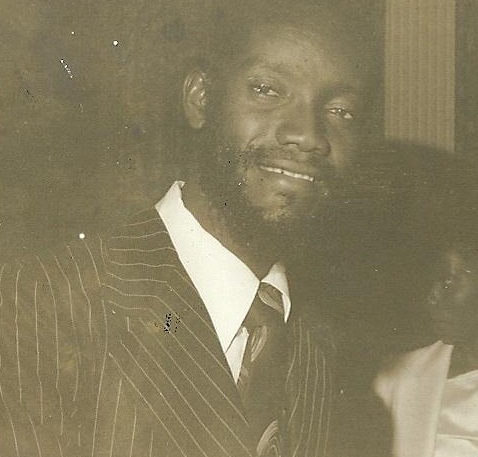
#TurksandCaicos, May 27, 2021 – James Alexander George Smith McCartney is the founding father of democratic, representative governance in the Turks and Caicos Islands and for that feat, achieved in the late 1970’s, JAGS has been crowned ‘National Hero’.
This year marks 45-years since Grand Turk-born, James became the first Chief Minister of the country. James was only 31-years old at the time of his ascent to the role and continues to be one of the youngest democratically elected leaders in the world.
In 1980, after serving as Chief Minister for a mere four years, the Turks and Caicos Islands lost JAGS; he died in a mysterious plane crash over New Jersey, history explains. The enormity of the loss was felt regionally; his body was never recovered.

If the Rt. Most Excellent JAGS McCartney were with us today, he would be 76-years old. A husband, a father, grand-father, friend and iconic political leader who was the founder of the People’s Democratic Movement.
Forty-five years later and he is still being remembered; rightly so. There is still no one who has measured up to his towering political legacy and on Monday, May 31 – JAGS Day – Rt Most Excellent McCartney will be saluted by the nation he loved best.
His Unity Speech, delivered in 1979 is among his most treasured remarks.
“Some people tend to think that it is an impossible job bringing all our Islands together because of the separation by water and distance, but we must come together if only for survival. Divided we are weak, united, Turks and Caicos could become one of the greatest young nation in this hemisphere for good in the world,” said the first Chief Minister in an apparent attempt to bridge any lingering divide.
In the speech, it is clear JAGS was acquainted with the ‘divide and conquer’ tactic often used to derail goals and dilute energies; he spoke unapologetically.
“If anything binds us, it is the fact that if nothing else, we are Turks and Caicos Islanders and have a common interest, because we have distinct qualities; so if the need for political union is agreed by us then the will to create it is born, and where is a will, there is a way. Where there is disunity on the political activities of a nation, that nation is left at the mercy of powerful, foreign commercial interests which seek to exploit the situation by pouring vast sums of money into the various factions to ensure conflicts among them and therefore secure their positions in the society, where they could wield their might and guarantee control over that nation; because the truth is, while the people are fighting one another, the real enemies, the controllers from outside, are picking up the pieces, so therefore we the people are losing the nation as being pushed backward.”
Forty-five years since the Turks and Caicos, then home to 7,015 people, was admonished to end the squabbling and forge an impenetrable foundation upon which to build a unique nation. The question often emerges: ‘Has anything changed?’
In his Unity Speech, JAGS offers that this dis-unity would be the undoing of the great goals for Turks and Caicos Islands. The Chief was said he was captaining a ship optimistically determined to outwit the strategists and overcome the obstacles.
“My party and Government are completely devoted to the achievement of political, economic and social advancement of this country and we will not stop until this attained. This is not an idle dream, it is not impossible, I see it, I feel it, it is real, indeed I am living in it already.”
Fast-forward four decades to 2021, with the globally powerful striving of the Black Lives Matter movement still looming large as a driver to end social injustices and inequalities; the sound of JAGS’ voice and the melody of JAGS’ heart beats stronger than ever.
“A few years back a lot of people in our Islands referred to this great movement as “Black Power” well, I would not agree more because to me Black Power is a part of the world rebellion of the oppressed against the oppressor of the exploited against the exploiter. It is a vanguard movement of Black People, and it is characterized by four fifths of the world’s population which has been systematically damned into a state of un-development by colonialism and Neo-colonialism. Black Power is the sum total of economic, cultural and political power which the Black man must have in order to achieve his survival in a highly developed technical society and the world savaged by imperialism, Colonialism, Neo-colonialism and Fascism.”
This speech, given 42 years ago proves that JAGS was a man exposed to deep insights and unafraid to say out loud, what in his hay day was damming and dangerous. This speech, given 42-years ago demonstrates that the Rt. Most Excellent JAGS McCartney was a HERO without question. He took on titans, charged into danger, fueled by an unshakable love for people and fully confident that they were worth the fighting for, worth the dying for.
He saw the future, was ahead of his time when he recommended that the way out of the ‘isms’ was through the empowerment of the predominantly black people who made up the Turks and Caicos Islands.
“In other words Black Power epitomizes a new stage of the yearning and aspiration of the Black man and tells the world what it means. That is exactly what we as Turks and Caicos Islands people take it to mean.”

Bahamas News
Bahama Brass Band Invitation Sparks Heritage Debate Ahead of TCI Constitutional Holiday
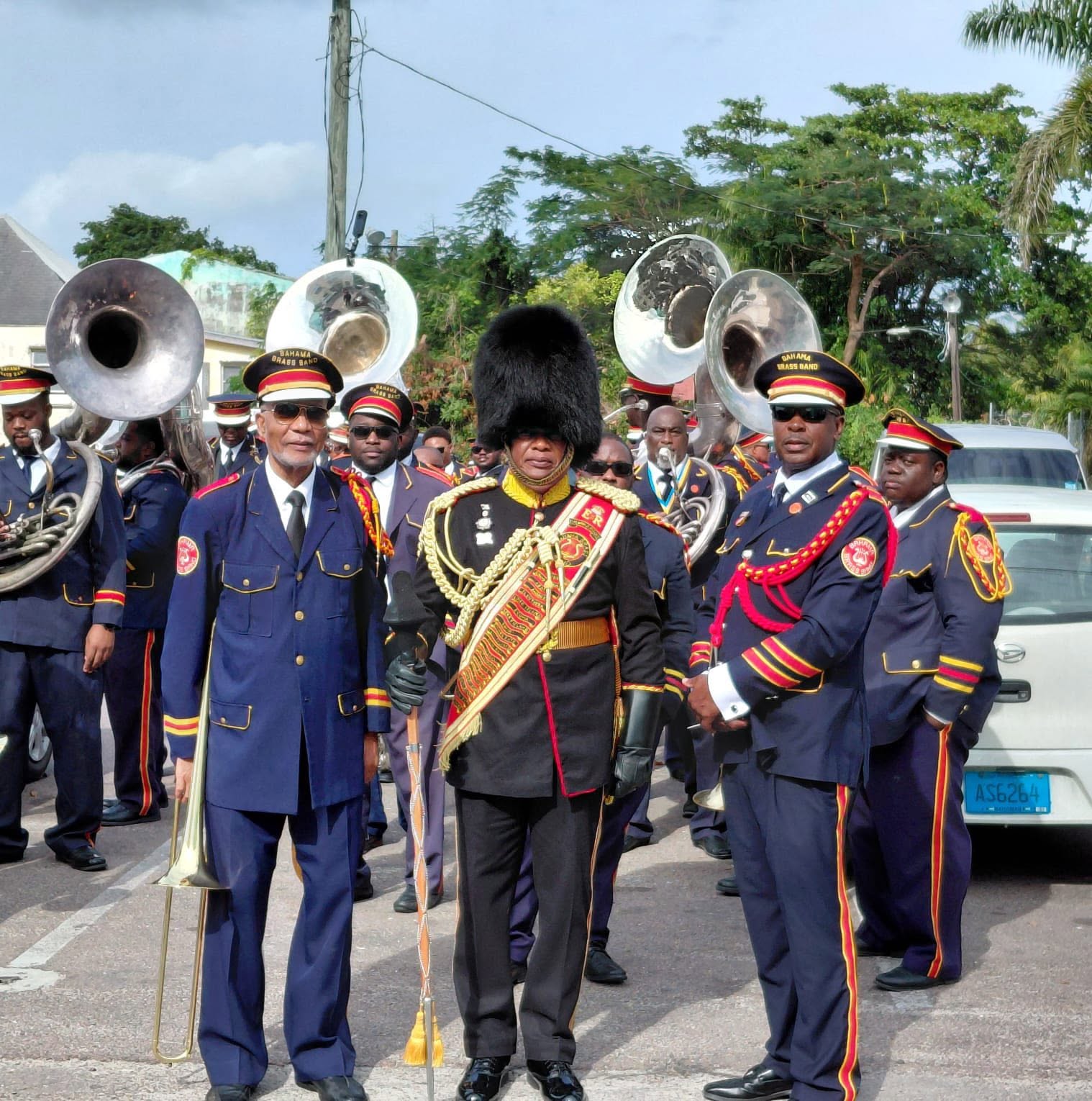
Turks and Caicos, August 20, 2026 – The planned participation of the Bahama Brass Band in the Turks and Caicos Islands’ inaugural Constitutional Holiday celebrations on August 30 has sparked public debate over culture, heritage and the historical contributions of Turks and Caicos Islanders abroad.
Organizers defended the invitation, saying the band’s inclusion is intended to highlight the deep historical ties between the two countries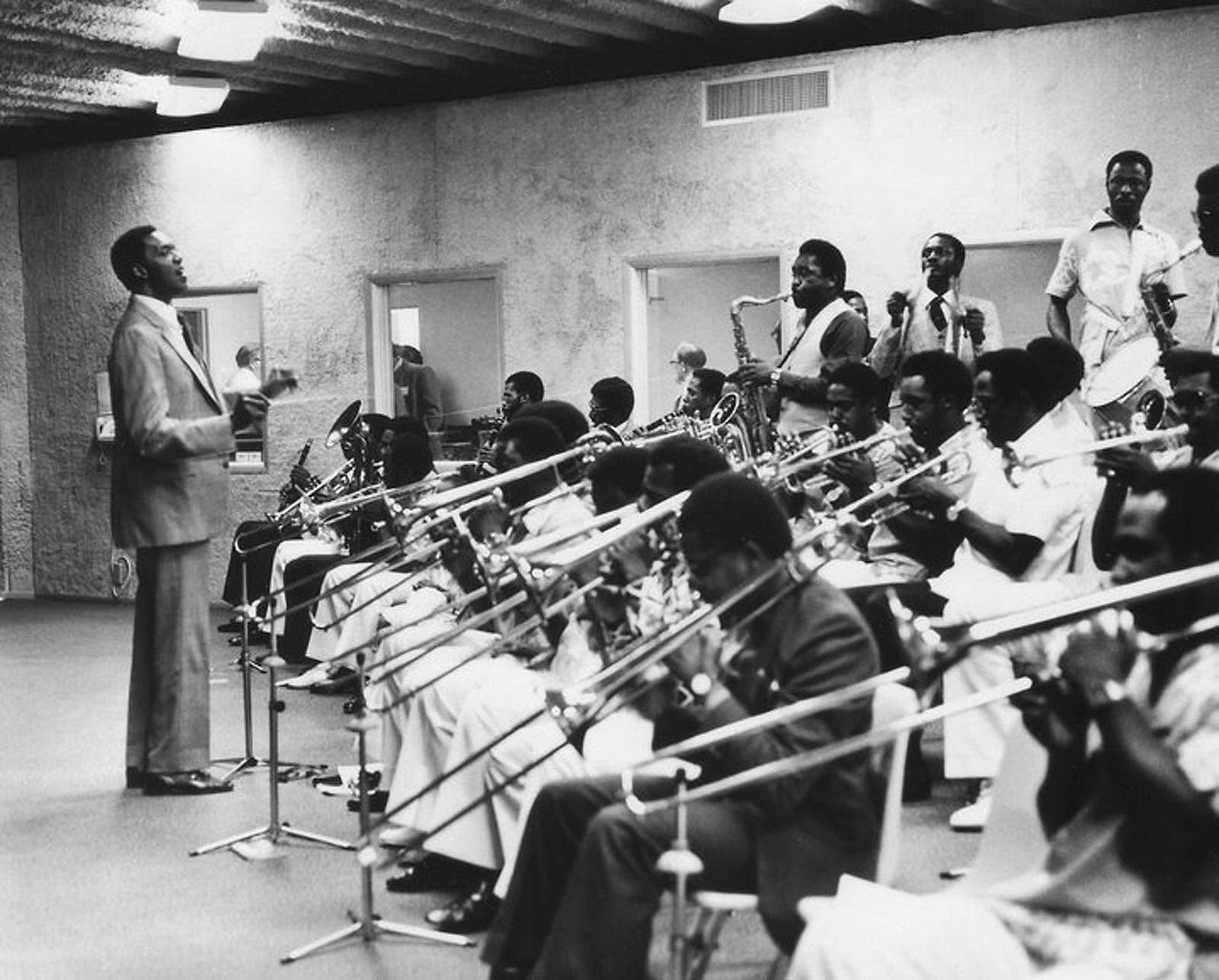 and honor Turks and Caicos men who helped establish and develop the institution in Grand Bahama.
According to the organizers, the Bahama Brass Band began in 1955 in Pine Ridge, Freeport, with Turks and Caicos Islanders, including the late Deacon Reuben Hall Sr. of Middle Caicos and Jenkins Williams and Mervin Hendfield of North Caicos, among those who helped build its foundation. The band eventually grew to more than 50 men.
The organizers also pointed to the participation of Turks and Caicos men in The Bahamas’ Independence celebrations on July 10, 1973, arguing that their contributions became part of Bahamian history while maintaining strong connections to their homeland.
Supporters say bringing the band home represents an opportunity to honor those pioneers, showcase their regional influence and expose younger generations to an important part of Turks and Caicos history.
However, concerns raised publicly described the invitation as potentially disrespectful to local culture and heritage. Organizers acknowledged those concerns, apologizing to anyone who felt overlooked or offended, while maintaining that no disrespect was intended.
The committee said the event should ultimately unite rather than divide, presenting the band’s history as evidence of the reach and resilience of Turks and Caicos heritage.
PHOTO CREDIT: Bahamas Brass Band
News
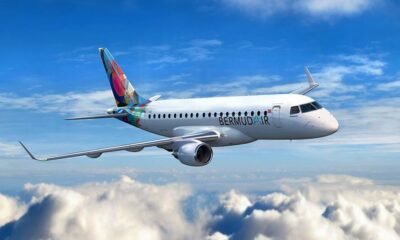
BermudAir Launches New York Area’s First Nonstop Service to South Caicos, Now Just a 3.5 Hour Flight from Newark
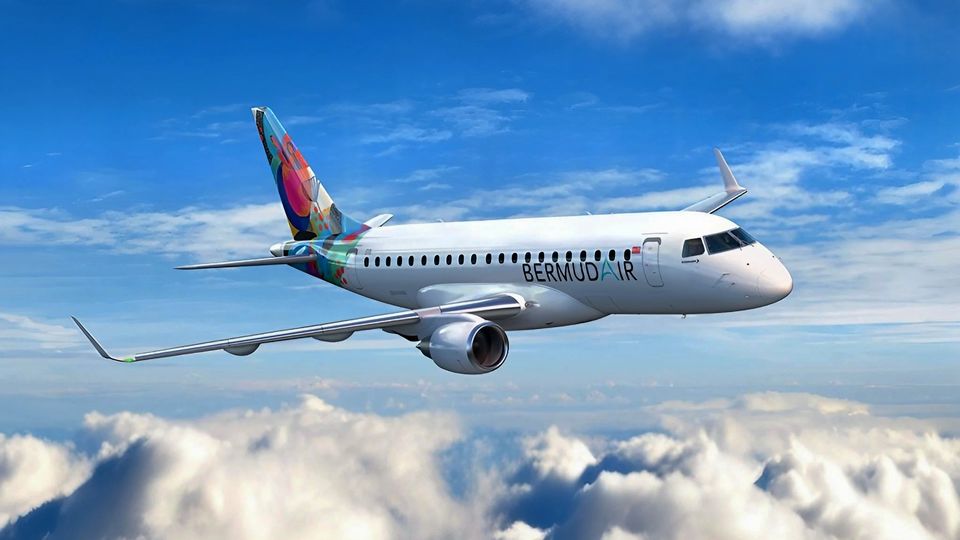
Twice-Weekly Nonstop Flights Begin December 20 with Fares from $347 One Way, Creating Direct Access to Salterra Resort & Spa
– New Route Expands BermudAir’s Winter Turks & Caicos Network –
[New York, NY – August 20, 2026] – BermudAir, the leading premium leisure carrier to Bermuda and the Caribbean, today announced it will introduce nonstop flights to South Caicos from Newark this winter. The route places one of the Caribbean’s most secluded island destinations just 3.5 hours from the New York area for the first time.
The new service starts on December 20, 2026, operating on Sundays and Thursdays, and will be the only nonstop service to the destination from the New York area. This seasonal service will operate through April 25, 2027. Fares start at $347 one way ($773 roundtrip) and go on sale today.
The new South Caicos route creates gives travelers two distinct luxury resort options, with direct access to Salterra, A Luxury Collection Resort & Spa, recently named the No. 1 resort in Turks and Caicos by Condé Nast Traveler.
Set across 85 beachfront acres with a 3,000-foot private white-sand beach, Salterra brings a full luxury resort experience to an island still defined by its historic salinas, pristine waters, bonefishing flats and uninhabited cays. Upon landing at South Caicos International Airport (XSC), guests are approximately 10 minutes from the resort.
While flights go on sale today, the airline’s BermudAir Holidays vacation-packaging division will offer curated travel to South Caicos from next month, featuring flights, hotels and authentic island experiences, with bundled discounts and value-added perks, making it even easier to explore the destination.
Previously BermudAir announced seven new routes to Providenciales in Turks and Caicos, from Newark (EWR), Boston (BOS), Baltimore-Washington (BWI), Raleigh-Durham (RDU), Fort Lauderdale (FLL), St Petersburg/Tampa (PIE) and Toronto (YYZ) which will all start in December except for Fort Lauderdale which begins October 26.
Expanded Winter Season
- To South Caicos:
- Twice-weekly nonstop from Newark (Sundays and Thursdays) from December 20 through April 25, 2027.
- To Turks and Caicos:
- Weekly nonstop from Newark (Saturdays) and one weekly direct service (Thursdays) from December 19 through April 29, 2027;
- Weekly nonstop service from Boston (Saturdays), from December 19 through May 1, 2027;
- Weekly nonstop service from Baltimore-Washington (Thursdays), from December 24 through April 29, 2027;
- Twice-weekly nonstop service from Raleigh-Durham (Thursdays and Sundays), from December 20 through May 2, 2027;
- Thrice-weekly service from Fort Lauderdale (Mondays, Wednesdays and Fridays), from October 26 through May 3, 2027;
- Twice-weekly nonstop service from St Petersburg/Tampa (Mondays and Thursdays), from December 21 through May 3, 2027; and
- Weekly nonstop service from Toronto (Saturdays), from December 19 through May 1, 2027.
“We’re thrilled to continue expanding our Caribbean network as the premium leisure carrier from North America,” said Adam Scott, Founder and CEO of BermudAir. “Now New Yorkers can fly nonstop to two distinct sides of the Turks and Caicos Islands — Providenciales and the secluded island of South Caicos, home to the exquisite Salterra and Sailrock South Caicos resorts.”
The airline consistently earns Net Promoter Scores of 70+, one of the highest ratings in the airline industry. All flights will be operated on comfortable Embraer E190 aircraft, offering passengers the airline’s signature warm service and authentic island hospitality.
“South Caicos has always felt worlds away, and that is part of its magic,” said Michael Tibbetts, Founder and CEO of Salterra. “Beginning this winter, guests can fly nonstop from Newark in 3.5 hours, land at one of the newest international airports in the region and be at Salterra minutes later. This route makes a long weekend escape and an extended stay to one of the Caribbean’s most unspoiled islands remarkably easy, without changing the sense of discovery that makes South Caicos so special.”
For more information or to book flights, visit www.flybermudair.com. Salterra will offer dedicated stay packages timed to BermudAir’s Thursday and Sunday nonstop service. To book a stay at Salterra, A Luxury Collection Resort & Spa, visit www.salterra.com
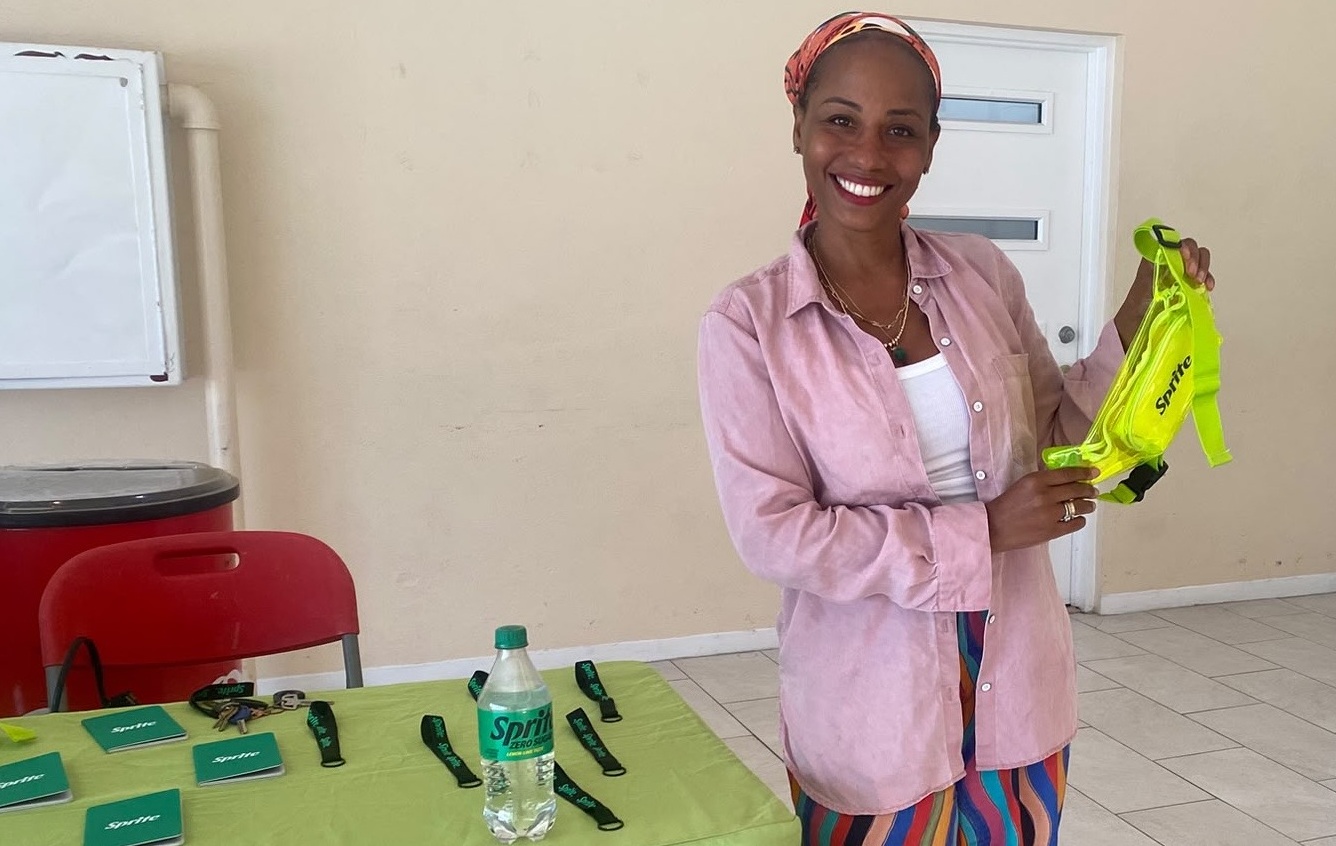
NASSAU, Bahamas — Caribbean Bottling Company (CBC), local producers of Dasani products, proudly sponsored the fifth annual, Caribbean Hoopfest.
The tournament brings together Bahamian high school basketball teams and visiting teams from the United States for a competitive showcase at the Kendal G. L. Isaacs Gymnasium. Following its inaugural year at the Kendal G. L. Isaacs gym and last year’s event at Loyola Hall, the tournament returned to the Kendal G. L. Isaacs gym this year.
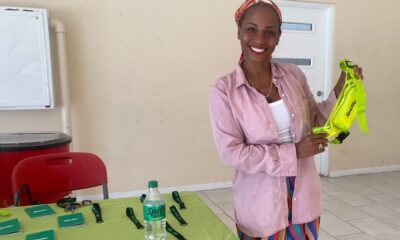
During the weekend tournament, CBC kept athletes well hydrated with in-kind donations of Dasani Water, Powerade and Minute Maid Juices.
During the tournament’s final day, CBC provided additional support by offering Sprite No Sugar samples and inviting attendees to participate in its Spin the Wheel for a chance to win exciting prizes.
CBC was proud to support this incredible event, which provides young Bahamian athletes with valuable exposure to U.S. basketball scouts and coaches. This opportunity gives them the chance to earn scholarships, continue their education, and pursue their basketball careers in the United States.
Event organizer, Donald Francois shared his appreciation for CBC’s support.
“I want to express our sincere appreciation for Caribbean Bottling Company, who has been a tremendous supporter and an important part of the success of our program. Without CBC’s support, Caribbean Hoop Fest would not be able to function at the level it does today. And without Caribbean Hoop Fest, we would not have been able to provide the opportunities that have helped young Bahamian athletes gain exposure and pursue educational opportunities in the United States,” he expressed.
Since the program’s inception, several Bahamian student-athletes have been selected for scholarship opportunities, highlighting the tournament’s growing impact on the development and advancement of young basketball talent in The Bahamas.
They are: Kelvin McDowells – Guard, Wodson Antoine – Power Forward, Justin Lafleur – Guard and Sean John – Guard.
After another successful edition of the tournament, Francois shared what he hopes he and Caribbean Bottling Company can achieve in the future.
“Our vision is bigger than basketball. We want to use the platform of Caribbean Hoop Fest to educate, develop, and create opportunities for young people and their families throughout the Bahamas. With individuals and organizations committed to our mission, we believe we can continue to grow the program and make an even greater impact,” Francois said.
For more details on community support, events and new products visit Caribbean Bottling Company at www.cbcbahamas.com today.





-
 News5 days ago
BermudAir Launches New York Area’s First Nonstop Service to South Caicos, Now Just a 3.5 Hour Flight from Newark
-

 News7 days ago
Salt Cay Water Shortage Unresolved as Residents Question Promised Relief
-

 Bahamas News4 days ago
Bahama Brass Band Invitation Sparks Heritage Debate Ahead of TCI Constitutional Holiday
-
 Bahamas News5 days ago
CBC Supports Opportunities for Young Bahamian Basketball Players
-
 Health7 days ago
Turks and Caicos Islands Hospital Celebrates Successful Completion of 2026 Summer READY Programme