
world news
RBC Royal Bank takes decisive action to help clients impacted by COVID-19


TORONTO (CANADA) – March 18, 2020 — Today, RBC Royal Bank (RY on TSX and NYSE) (“RBC”) announced plans to provide financial relief to its Caribbean clients impacted by the ongoing novel coronavirus (COVID-19) global pandemic.
Effective immediately, most RBC Personal banking clients in the Caribbean will benefit from an automatic three-month payment deferral on credit facilities. Business and Corporate banking clients are also eligible for the relief program, following individual eligibility assessments with an RBC representative. Automatic payment deferrals will be applied as of March 17, 2020 and remain in effect until June 30, 2020, or until further advised.
To be eligible for the program, Personal banking or Business and Corporate banking client accounts must be current and in good standing as of March 2, 2020. Clients who are already participating in RBC relief programs for other circumstances are excluded from this program.
The relief program is intended to provide flexible solutions and help clients manage through the impacts of COVID-19, such as pay disruption; childcare disruption due to school closures; or dealing with the COVID-19 illness itself.
These measures are an important first step and underscore the resilience of the financial system and the critical role banks play in the economy. RBC will continue to monitor COVID-19 and the evolving economic conditions in each country and territory where the bank operates. RBC may consider other relief measures, if necessary.
RBC has a long history of standing by Caribbean clients through challenging times and this commitment will continue throughout this crisis and beyond.



How Venezuelan farmers are learning to grow and live with a devastating plant disease
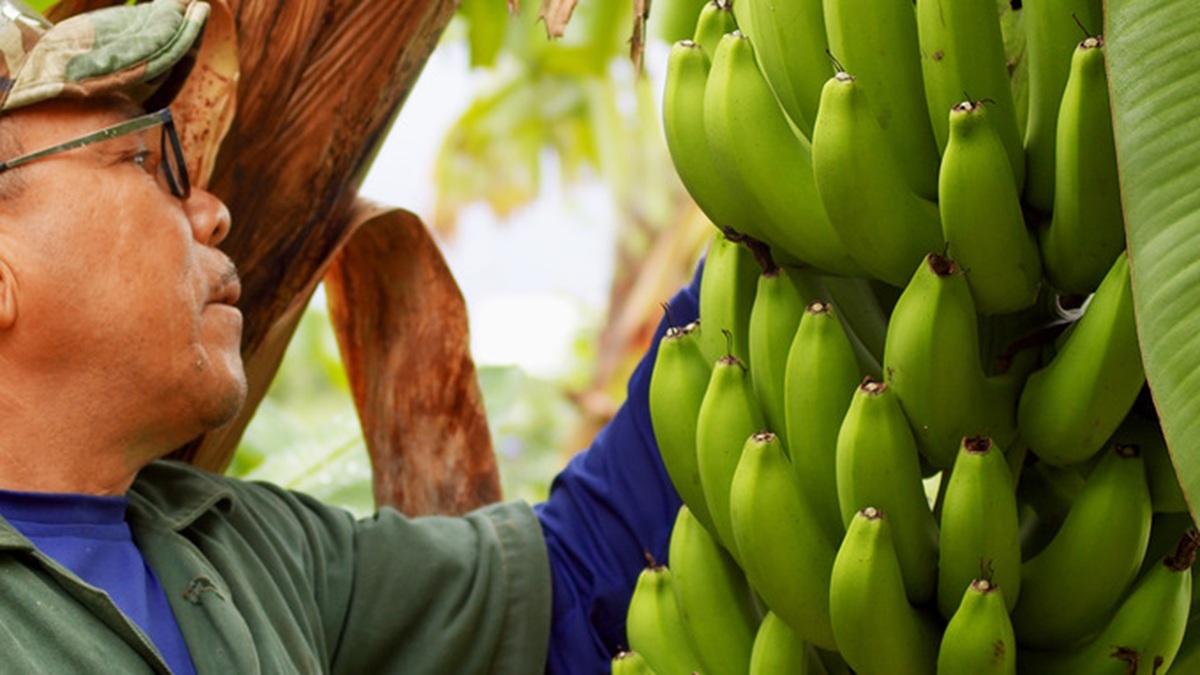
In the fields of Venezuela, where the banana has been for generations a symbol of sustenance and tradition, a shadow fell across the land. In 2023, Venezuela’s National Institute of Integral Agricultural Health (INSAI) declared a phytosanitary emergency: the fungus Fusarium Tropical Race 4 (TR4) (Fusarium oxysporum f. sp. cubense tropical race 4; syn. Fusarium odoratissimum) had arrived in producing areas in the states of Aragua, Carabobo and Cojedes.
This fungus, considered a devastating disease of banana and plantain (Musaceae) trees, can remain in the soil for more than two decades, threatening production and the lives of those who depend on it.
In the state of Aragua in the north of the country, the Renacer community had been growing bananas and plantains on 20 hectares since 2018. Then Fusarium arrived.
“When the disease hit, the entire plantation began to deteriorate. We refused to ‘die’ with the trees because that was our livelihood. The visits of INSAI confirmed that we had to chop down the banana trees. I cried a lot because I had worked with my banana trees for years,” recalls woman farmer, Lesbia Margarita García, with a broken voice.
In response, INSAI implemented measures to eliminate the affected plantations and improve the soil health by changing to other crops that allow agricultural production to recover. The Food and Agriculture Organization of the United Nations (FAO) offered assistance by providing corn seeds, tools, biosecurity inputs and training, with teams of experts helping farmers to start again.
“Planting corn, thanks to the INSAI-FAO programme, gave us a harvest that benefited everyone. We have been improving the soil,” says Lesbia Margarita with a smile. “Now we rotate crops, observe soil health and have learned how to use natural fertilizers. Expert assistance has been key.”
The pilot project works directly with affected producers in high-risk areas, promoting alternative crops such as cereals and vegetables, delivering inputs and tools to mitigate damage and applying biosecurity measures for safe and effective containment.
“Beyond the corn received, we have already planted cassava, chili peppers, beans and pumpkin. We hope that by the end of the year [2025] we will be diversified and that each season we will have something to sell. These lands do not give up,” says Lesbia Margarita with conviction.
The Renacer community is beginning to see fruits. Their products are reaching local markets, generating income and rebuilding their livelihoods.
Key actions to manage Fusarium TR4 are ongoing, including regular monitoring, continuous training, inter‑institutional coordination, updates to the national plan, information campaigns and producer impact assessments. INSAI is sustaining regulatory, surveillance measures and training —with FAO support—as part of a comprehensive long‑term strategy.
At the global level, FAO supports awareness raising, capacity building and international collaboration in the fight against Fusarium TR4 by facilitating the World Banana Forum and its Global Network on TR4.
“The objective is for countries to strengthen their operational and technical capacity, articulating actions between the public sector, the private sector and family farmers,” says Raixa Llauger, FAO Agriculture Officer in Mesoamerica. “FAO and local partners have promoted this approach in Venezuela.”
As an essential part of the activities, a comprehensive training programme was developed with activities that taught farmers how to identify the disease contain it and protect crops. In addition, FAO has distributed laboratory equipment, biosecurity tools and a multispectral drone to INSAI. Drones are an efficient and cost‑effective tool for phytosanitary surveillance, offering rapid, high‑resolution monitoring and early detection of plant pests and diseases.
Overall, the project strengthened biosecurity measures against the Fusarium fungus through the adoption of the National Action Plan and the establishment of partnerships with national and international institutions. In addition, the pilot initiative supporting smallholder farmers in key production areas and a nationwide awareness campaign with broad outreach improved surveillance, diagnosis and phytosanitary response capacities across the country.
March 18, 2026 – Twenty days after the latest Middle East conflict erupted, the United Nations is warning the war may no longer be contained, as fighting involving the United States, Israel, Iran and armed groups across Iraq, Lebanon and the Gulf continues to spread.
In a statement issued March 17, the spokesperson for the UN Secretary-General said the war must stop and urged all parties to respect Security Council Resolution 2817, which condemned attacks on Gulf countries and warned the escalation poses a serious threat to international peace and security.
The current round of fighting began on February 28 with joint U.S. and Israeli strikes on Iranian targets, followed by missile, drone and proxy attacks across the region, including strikes on Gulf states, shipping routes and military bases.
Death toll climbing across multiple fronts
Casualty figures remain incomplete, but international monitoring groups say the conflict has already killed more than 1,300 people in Iran alone, with some estimates placing the total regional death toll much higher.
U.S. officials confirm at least 13 American service members have been killed since the fighting began, while Israeli casualties have also been reported following missile and drone attacks, though no final number has been released.
Hundreds have also been killed in Lebanon during Israeli strikes linked to the widening conflict, and casualties have been reported in Gulf states after Iranian retaliation targeted military facilities and energy infrastructure.
In the latest escalation, Israeli strikes reportedly killed additional senior Iranian military leaders, signalling the conflict is moving deeper into direct confrontation rather than proxy fighting alone.
NATO allies staying out of the fight
While the United States continues military operations, several NATO countries including the United Kingdom, France, Germany, Canada and Italy have warned against further escalation and are not joining offensive action, instead calling for negotiations and de-escalation.
The lack of a unified Western coalition has raised concerns the war could become more unpredictable, with multiple actors involved but no clear diplomatic path to stop the fighting.
UN warns conflict spreading beyond original battlefield
The United Nations says the continued targeting of Gulf countries shows the crisis is no longer limited to one conflict zone and risks becoming a wider regional war if diplomacy fails.
The Secretary-General’s office again called for an immediate halt to hostilities, saying the situation is becoming increasingly dangerous as attacks continue across several countries at once.
For now, the warning from the UN is clear — the war has entered its third week, the death toll is rising, and the conflict may no longer be under control.
Angle by Deandrea Hamilton. Built with ChatGPT (AI). Magnetic Media — CAPTURING LIFE.

The world must work to restore harmony in a time of growing division, according to His Majesty King Charles III, who used his Commonwealth Day message to reflect on global conflict, shared sacrifice, and the enduring role of the Commonwealth in bringing nations together.
In his address as Head of the Commonwealth, the King said the association of nations remains one of the few places where countries of different sizes, cultures and histories can meet as equals.
“In these uncertain times, where it is all too easy to believe that our differences are problems instead of a source of strength… the Commonwealth’s remarkable collection of nations and peoples come together in the spirit of support and, crucially, friendship,” the King said.
This year’s observance carries special significance, marking the 80th anniversary of the end of World War II, a conflict in which more than one-and-a-half million men and women from across the Commonwealth served alongside the United Kingdom and its allies.
“On this special anniversary, we remember with particular pride and everlasting gratitude the untold sacrifice and selflessness of so many from around our Family of Nations who gave their lives in that dreadful conflict,” the King said.
Among those who served were thousands from the Caribbean, including volunteers from The Bahamas, Jamaica, Trinidad and Tobago, Barbados and other British West Indian territories. Historians estimate that around 20,000 Caribbean men and women joined the war effort, serving in the Royal Air Force, the Caribbean Regiment, the Merchant Navy and support units across Europe, Africa and the Middle East.
Their contribution, often overlooked in the wider history of the war, formed part of the Commonwealth effort that helped secure victory in 1945.
1945.
The King said the shared history of sacrifice remains a reminder of what can be achieved when nations work together, and warned that the same spirit is needed today as the world faces new pressures.
Leaders of Commonwealth countries, he noted, recently reaffirmed their commitment to cooperation on peace, human rights and the protection of the natural world, issues he said are critical to the future of younger generations.
“As we mark this Commonwealth Day together, there is no more important task than to restore the disrupted harmony of our entire planet,” the King said.
He added that the Commonwealth’s continued work toward cooperation and understanding will be essential in protecting the future of its people, particularly at a time when global tensions, environmental threats and economic uncertainty are again testing international unity.
For many across the Caribbean, the message also serves as a reminder that the region’s history is closely tied to that wider Commonwealth story — from the battlefields of World War II to the modern challenges of building peace, stability and opportunity in an uncertain world.





-

 Bahamas News1 week ago
Mother’s Pride Headlines Bahamian Takeover at Sixers-Heat Clash in Miami
-

 News3 days ago
GOLD & SILVER – Hall & Guerrier Fly High for Turks and Caicos at CARIFTA 2026
-

 Independent writer2 days ago
The Rise of Right-Wing Populism and What It Could Mean for the Turks and Caicos Islands
-
 News4 days ago
Beaches Turks & Caicos, FIU train next generation of hospitality leaders in Providenciales
-

 News3 days ago
CALL 649-338-4008 OR 649-338-2684 IF A CHILD IS AT RISK: TCI Confronts Alarming Reality During Child Abuse Prevention Month
-

 Bahamas News3 days ago
Fuel Pain at The Pump: Global Tensions Drive Prices Up as Bahamians Feel the Squeeze
-

 Bahamas News3 days ago
FNM’S $200 CHILD SUPPORT PLAN SPARKS DEBATE AS PLP QUESTIONS FUNDING AND SCOPE
-
 News3 days ago
COMING SOON: BORROWING TO MODERNISE