
Caribbean News
Sandals Responds to Misleading Reports

#MontegoBay, June 20, 2018 – Jamaica – Once more we have noticed attempts to spread misinformation and unsubstantiated claims about Sandals Resorts International, including a totally sensationalized headline regarding a recent statement by Barbadian Prime Minister Mia Mottley. However we are not and have never been deterred by fake news, rather we appreciate the opportunity it gives us to set the record straight.
First, we have, and have always had an amicable relationship with Prime Minister Mottley. The Prime Minister is aware that Sandals is completely open to working with her government – as we have worked with governments throughout the region – to help move Barbados into a better and brighter future, because that ultimately is what is best for all of us.
The fact is that Sandals has become a key economic player in Barbados in just three and a half short years. Not only are we the largest contributor of foreign exchange but we have provided employment and training for some 1,000 persons in Barbados. Within that short time period we have built two of the most-sought after resorts in the region, one of which opened just last December and which was built by Barbadian contractors in record time. Already we are adding an additional 50 suites at the new Sandals Royal Barbados which will be available from October.
We also intend to break ground on a new Beaches hotel in Saint Peter in January 2019, and that will more than double our economic footprint. Immediately that project creates 1,500 construction jobs and will create some 1,750 full time jobs upon completion. This means we will employ in  Barbados close to 3,000 of the most highly trained and potent hoteliers in the region.
As for these rumours that we don’t pay taxes, that is totally untrue, Sandals pays significant taxes in Barbados including Value Added Tax or VAT.
Indeed our negotiations on concessions have always been completely transparent and open, and it is because of these very same negotiations that many hoteliers have now been able to access concessions of their own for refurbishment and upgrades in what was a highly overtaxed sector. We have been assured that in the last two years more refurbishment and modernization has been done in Barbados than in the last decade. More than that, it is Sandals that has given the clearest signal to the world that it is good to invest in Destination Barbados at a time when many others are intent only on singing songs of gloom and doom.
As for claims that the all-inclusive model has not worked in Jamaica, let us state for the record that Jamaica is doing extremely well. A simple online search would show that the Jamaica Tourism Board reported record figures of 4.3 million visitors last year, due to increase this year. Tourism Minister Edmund Bartlett noted that Jamaica had earned US$2.56 billion dollars in 2016 which represented $500 million of extra earnings in a single year. It would be interesting to note that Sandals Resorts International is the largest financial contributor to Jamaica. Not only in terms of money, but in terms of people employed and in terms of the high level of training that we do. Sandals is unmatched for training and is the only company with an in-house Corporate University (SCU) through which a large number team members can earn top level professional qualification and certification. Our team members have a choice of some 150 different programmes ranging from hospitality courses to Bachelors’ and Masters’ degrees in a number of fields.
These are all recognized degrees, supported by leading academic institutions such as the University of the West Indies, the New England Culinary Institute, the American Hotel and Lodging Educational Institute, the Hotel School of the Hague and the English Guild of Professional Butlers. It is the same in Saint Lucia. Saint Lucia is also doing very well and recorded the highest growth in 2017 among Caribbean Tourism Organisation (CTO) member countries of 11%. Sandals contribution to GDP in that country is unmatched, and we are the largest employer in the sector. We have been the most significant investor in Saint Lucia in the past 25 years, and we have played a major role in the transition from a floundering banana-based economy to a vibrant tourism economy. Within the last few years we have trained over 1,300 Saint Lucians through our Hospitality Training Programme, and we certify them at no cost to the participants. Many of them even go on to find work at other hotels. We always boast that once someone is Sandals-trained, it opens doors for them to get a job at any hotel anywhere on the planet; because the global hospitality industry recognises that our standards are among the very best in the world. A Sandals trained hotelier is an employee of choice – just ask any of our competitors.
In Saint Lucia we are expanding further and have already broken ground on an amazing 400 key resort that will feature a dazzling array of suites, and one that will boast commanding views of Rodney Bay on one side and the Atlantic on the other.
This means our famous ‘Stay at One, Play at Three’ concept will now be expanded where you can stay at one hotel and enjoy the facilities of four. We even created history in Saint Lucia when we made it (along with Jamaica) among only a few choice destinations in the world where you can stay in an exotic over the water bungalow.
No one promotes the Caribbean the way we do. There are Sandals ads highlighting one of our beautiful islands that run on network TV in North America throughout the hour, every day. This is supported by extensive promotional campaigns throughout the world. Every country where we operate enjoys similar benefits including Antigua, Turks and Caicos, Grenada and the Bahamas.
Sandals has been voted the World’s Best All Inclusive Chain at the World Travel Awards for 23 consecutive years and if that is not performance, we would like to know what is. Bear in mind it all goes back to our exceptional team members who deliver on the high level of training to which they are exposed; to be the best, you need to have the world’s best staff. We bring that training to every country where we operate.
At a recent function to launch a new partnership between Beaches Resort and the Real Madrid Football Club, a person of no less stature than the Spanish Ambassador to Jamaica himself, Mr. Josep Maria Bosch Bessa, referred to Sandals as ‘the most important hotel chain in the Caribbean.’
 Sandals going to Tobago will be a windfall for all, most particularly the smaller hoteliers. The truth is they will be among the biggest beneficiaries of increased economic activity, global marketing of Tobago and an exponential increase in airlift. Not everyone who arrives on the flights we attract will stay at Sandals, indeed many will seek other options creating a significant increase in business for the smaller hotels.
And we would like to dismiss out of hand this fable that our guests remain on resort. Sandals guests go out into the community in droves. Through our partnership with Island Routes and our local tour operators on the islands, thousands of guests leave our resorts every day to go on tours, to go dining, shopping and to enjoy other attractions.
As for this fallacy that we import everything, the fact is that our purchasing arm ensures that as far as possible, local food and supplies are sourced from on island. Indeed our internal mandate is to always buy local where possible, and we are proud that Sandals has set the standard when it comes to engaging our local farmers, taxi drivers, entertainers, tour operators and small business persons, including those who make craft and clothing. In Jamaica for instance, 90% of the food we serve is bought locally. We make every effort to promote and utilize local ingredients in our restaurants. From fresh fruit and vegetables to rum, eggs, chicken and other meat, it is always sourced locally first.
It is because of these linkages many small enterprises have been able to flourish and have grown into successful businesses on their own, hiring additional staff and generating their own activity. Our downstream impact is significant. This applies to every territory where we operate. It’s no secret that there are challenges with the quantities we require and the quality, however we take it upon ourselves, as we did recently in Grenada, to work with local farmers to help them deliver produce that is of an acceptable quality. In fact our local purchases in Grenada and Saint Lucia have all increased significantly. Sandals is proud to say that we own each and every one of our hotels except for one in Jamaica, where we enjoy an outstanding partnership with Guardian Holdings. We are an indigenous company, and it is in our interest to see that our Caribbean people prosper and thrive. We have always been the first to step forward and support the communities around us, and through the Sandals Foundation, we have invested significantly in projects that elevate our educational institutions, our environment and our communities.
We were proud to have extended that support to the West Indies Cricket team as its principal sponsor, because we believe in a brighter, stronger and unified Caribbean, and with 15,000 team members from nearly every Caribbean island, we can openly boast that at Sandals you can see the true power of CARICOM at work.
Release: Sandals Resorts

By Deandrea Hamilton | Editor
September 28, 2026 – Wall Street initially flinched at the $3-billion handshake. But in a matter of days, it was smoother sailing.
Perhaps the bigger Caribbean business story is not what Sandals Resorts International is getting from the deal. It is who is writing the cheque — and what that says about what Gordon “Butch” Stewart built.
As reports of Royal Caribbean Group’s Sandals deal circulated Tuesday, RCL shares plunged 6.14 percent from Monday’s $250.25 close to $234.89, on sharply elevated trading.
When the agreement became official Wednesday — approximately $3 billion for a 50 percent equity interest in Sandals and Beaches Resorts — shares slipped another 1.95 percent to $230.30 and touched $222.22 intraday. Investors were digesting both the size of the investment and committed debt financing secured through Morgan Stanley.
But by Thursday, RCL rebounded 3.77 percent, with shares continuing their recovery Friday to finish the week around $243. Analysts were also looking ahead: JPMorgan reportedly raised its RCL price target from $345 to $394, while Citi placed the company on a 90-day positive catalyst watch.
And just who is RCL?
Royal Caribbean Group is a global vacation giant, publicly traded on the New York Stock Exchange with a market value of roughly $65 billion. Its portfolio includes Royal Caribbean International, Celebrity Cruises and Silversea, alongside private destinations and an expanding vacation platform.
So when a company of that scale commits $3 billion for only half of Sandals and Beaches Resorts, the transaction puts a striking financial marker on one of the Caribbean’s greatest home-grown hospitality success stories.
The deal, expected to close in early 2027, creates a 50-50 partnership with the Stewart family and takes Royal Caribbean deeper into the all-inclusive resort business.
Butch Stewart started Sandals in Jamaica in 1981 believing a Caribbean company could compete with the world’s best.
Forty-five years later, one of the world’s biggest vacation companies is prepared to pay $3 billion just to own half of what he built.
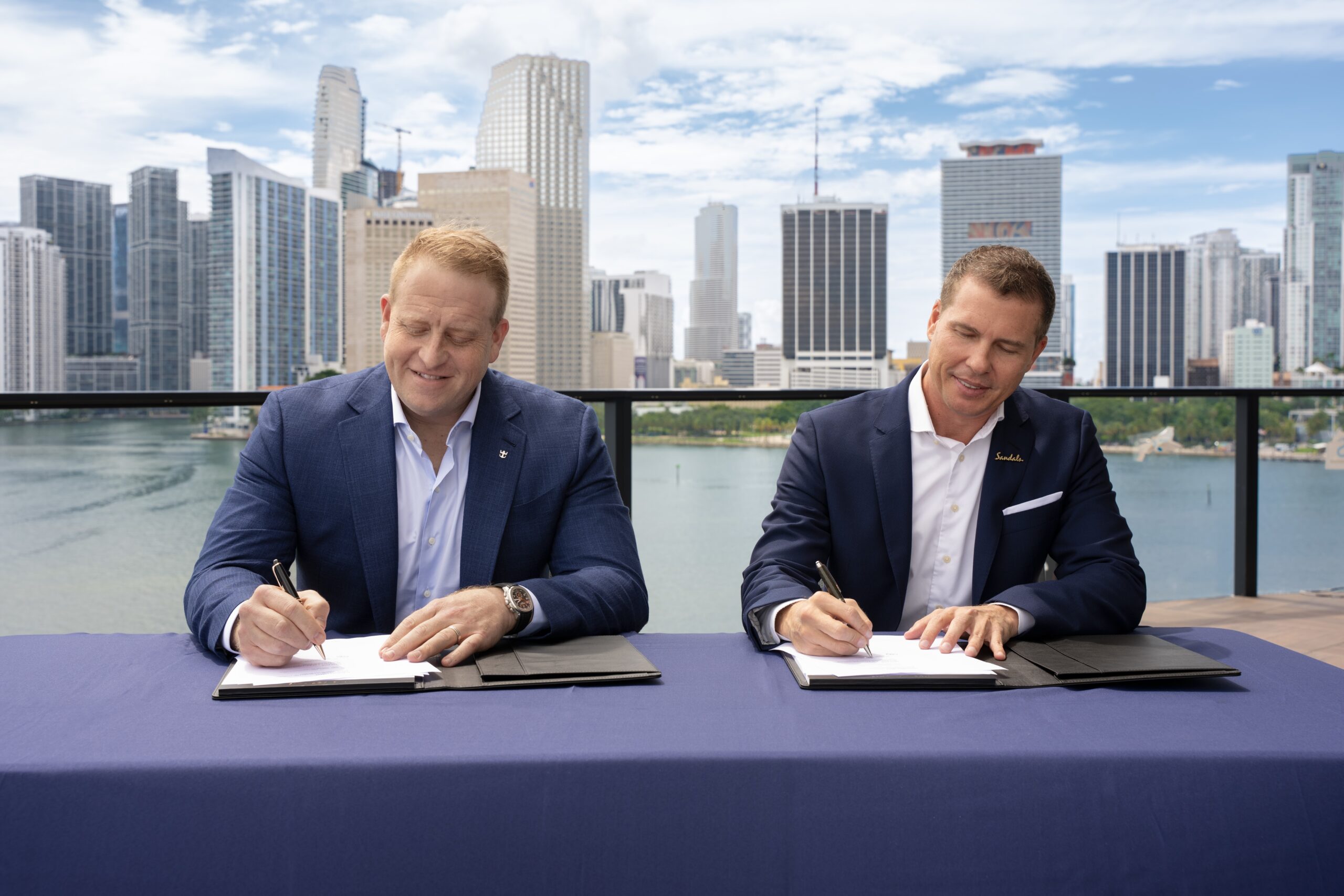
Now that’s the handshake that does more than seal a deal — it cements a legacy.
Caribbean News
Royal Caribbean Group and Sandals Resorts Announce Landmark Partnership to Accelerate Their Leading Vacation Experiences
Royal Caribbean Group Investment to Advance Sandals and Beaches’ Growth and Broaden the Group’s Vacation Portfolio
Montego Bay, Jamaica and Miami, September 24, 2026 – Royal Caribbean Group (NYSE: RCL) and Sandals Resorts today announced the signing of an agreement to form a partnership in the all-inclusive resort space with a 50% investment from Royal Caribbean Group. Building on Sandals and Beaches Resorts’ more than four decades of leadership in Caribbean hospitality, the joint venture will create new opportunities for continued resort growth while broadening the experiences across Royal Caribbean Group’s vacation platform.
The partnership brings together two of the travel industry’s most celebrated vacation companies, pairing Sandals and Beaches’ all-inclusive resort expertise with Royal Caribbean Group’s vacation platform, including industry-leading brands – Royal Caribbean, Celebrity Cruises and Silversea – a portfolio of private destinations, new river cruising offering, and an industry-first loyalty program. United in a shared history in the Caribbean and connected by a love for their communities, the companies will offer travelers an unparalleled collection of cruise, private destination and resort experiences, serving guests across more vacation occasions and establishing their undisputed leadership in Caribbean vacations.
The joint venture expands Royal Caribbean Group into an adjacent vacation category, growing its participation in the approximately $2 trillion global vacation market, and meets the growing global demand for Sandals and Beaches Resorts by accelerating their expansion. The partnership will include Sandals and Beaches’ collection of premier all-inclusive properties across the Caribbean, and the companies will explore opportunities to broaden distribution, deepen guest engagement, and make it easier for travelers to discover vacation experiences offered across both portfolios.
“For nearly 60 years, we’ve reimagined what a vacation can be, constantly expanding the ways we inspire our guests to explore, connect and create lifelong memories,” said Jason Liberty, Chairman and CEO, Royal Caribbean Group. “We have been building a vacation platform that brings joy to millions of people around the world and creates meaningful relationships that last with our guests. Our partnership with Sandals and Beaches Resorts is an important next step on that journey – bringing together two iconic leading vacation companies to further strengthen and grow one of the most admired resort portfolios in the world. The Stewart family has created powerful and beloved brands, and we are honored to build on that legacy. Together, we see tremendous opportunity to expand the reach of Sandals and Beaches Resorts and continue turning the vacation of a lifetime into a lifetime of vacations.”
“My father, Gordon ‘Butch’ Stewart, founded Sandals Resorts with the belief that a company built in the Caribbean could stand on the world stage alongside the most respected names in hospitality. Today is proof of how far that vision can go,” said Adam Stewart, Executive Chairman of Sandals Resorts and Beaches Resorts. “This partnership is the natural next step in building on that conviction. It gives us the ability to grow faster with a partner that shares our values of exceptional hospitality, long-term investment, and the power of enduring brands. Together, we will introduce more guests to Sandals and Beaches Resorts while creating even more extraordinary experiences for those who have made our resorts part of their lives for decades.” Stewart added, “As we continue to grow, we will remain true to what has always defined us: delivering authentic vacations that exceed expectations while creating opportunities for our team members, travel advisor partners and the communities we call home. The future has never been brighter, and I know this moment would make my father incredibly proud.”
The joint venture will be governed by a board under the shared leadership of Stewart and Liberty. Stewart will maintain a leadership role in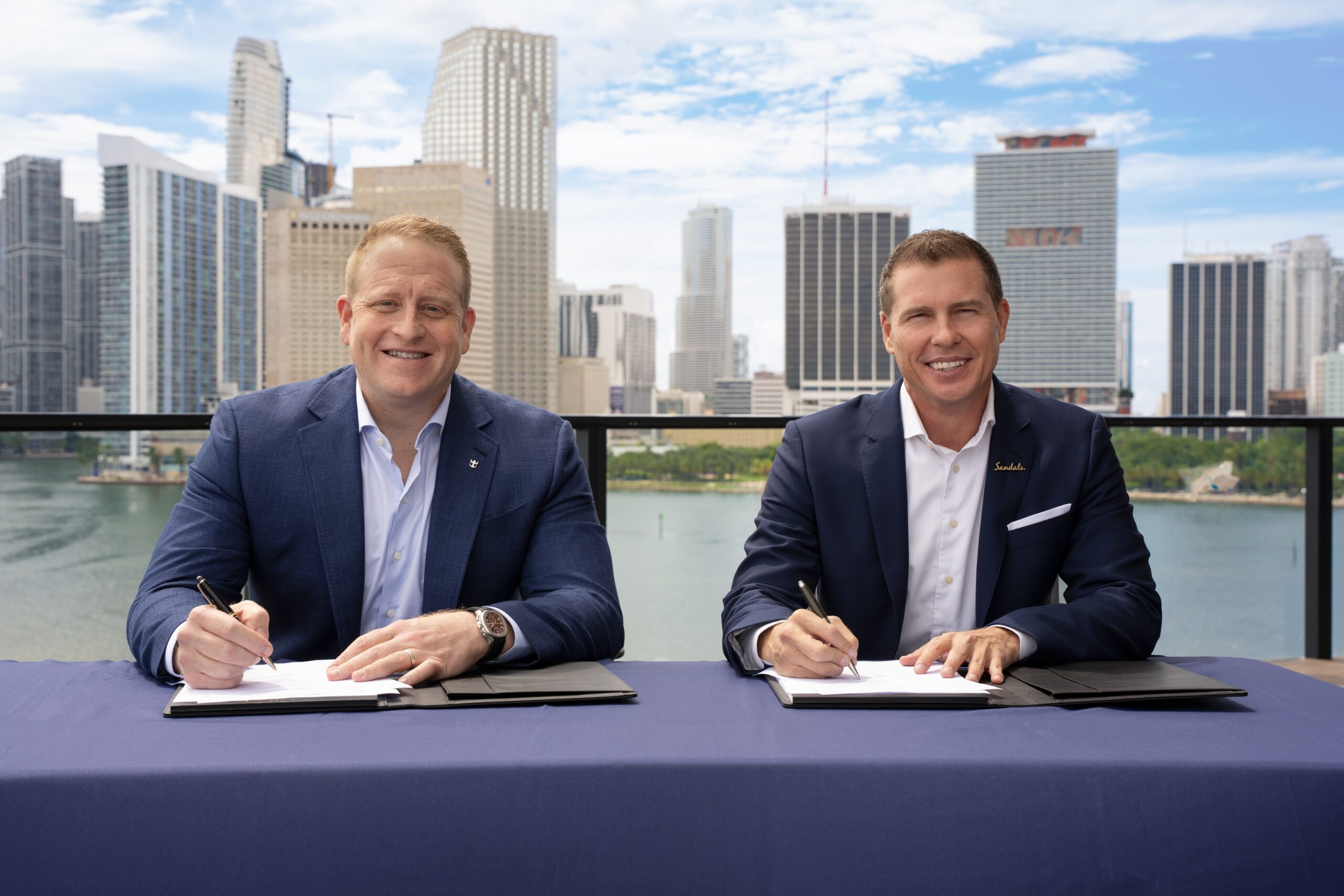 guiding the company’s long-term strategic growth as Executive Chairman of Sandals and Beaches Resorts. Existing reservations, loyalty programs, resort operations and cruise operations will continue as usual, with the partnership bringing additional resources to support future opportunities.
Under the terms of the agreement, Royal Caribbean Group will acquire a 50% equity interest in Sandals and Beaches Resorts for approximately $3 billion, representing a forward EBITDA multiple of approximately 10x. Royal Caribbean Group has secured committed debt financing from Morgan Stanley to fund the investment. The transaction is expected to close in early 2027, subject to customary approvals and closing conditions, and is expected to be accretive to earnings next year.
BofA Securities and PJT Partners acted as financial advisors, and Latham & Watkins and Jones Day acted as legal advisors to the Sandals Group. Perella Weinberg Partners and Morgan Stanley acted as financial advisors and Kirkland & Ellis LLP acted as legal advisor to Royal Caribbean Group.
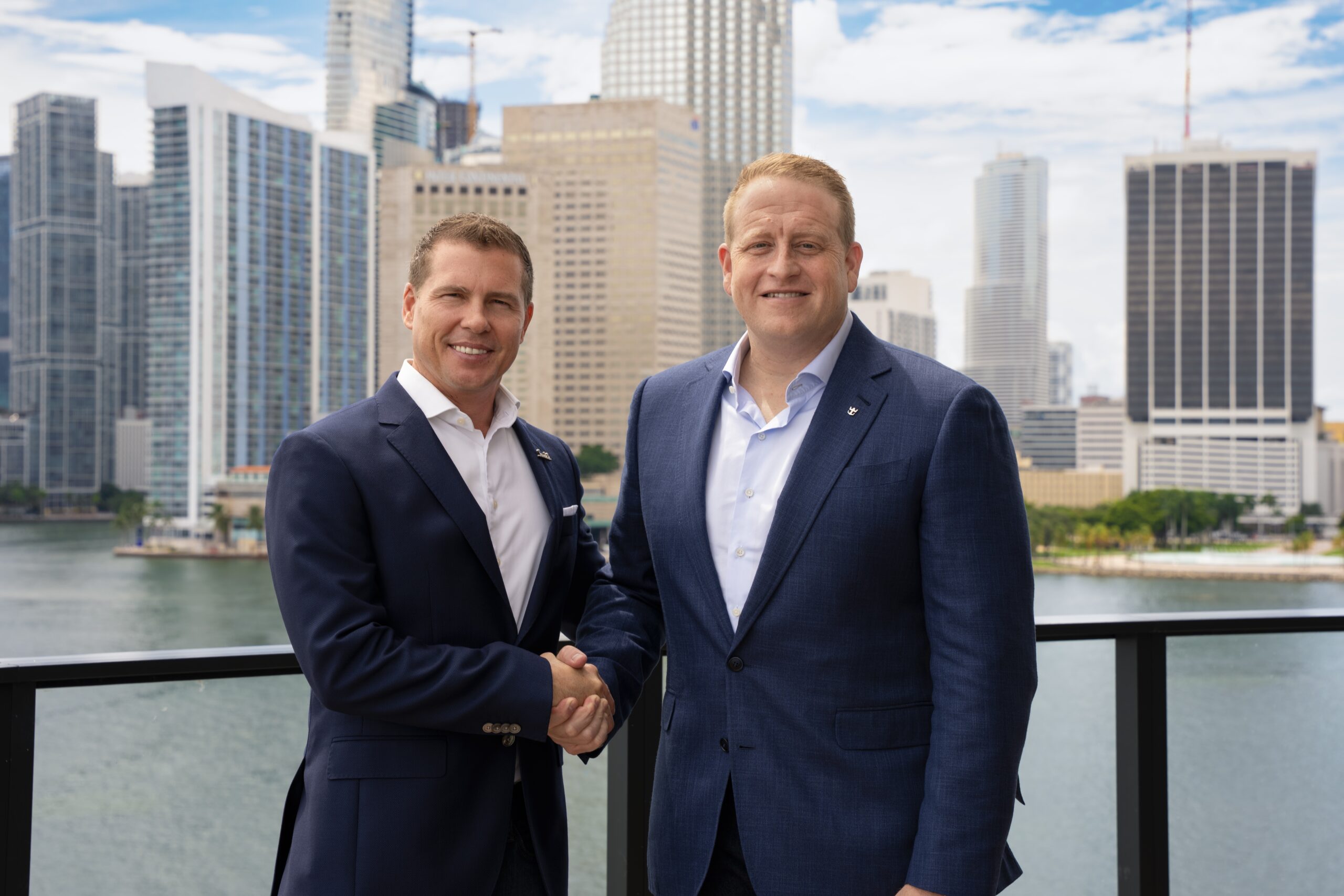
PHOTO CAPTION: Jason Liberty, Chairman and CEO of Royal Caribbean Group, and Adam Stewart, Executive Chairman of Sandals Resorts, mark the signing of an agreement to form a landmark partnership that expands Royal Caribbean Group into the all-inclusive resort space and supports the future growth of Sandals and Beaches Resorts. The signing took place at Royal Caribbean Group’s new headquarters in Miami, with the city’s skyline in the background.
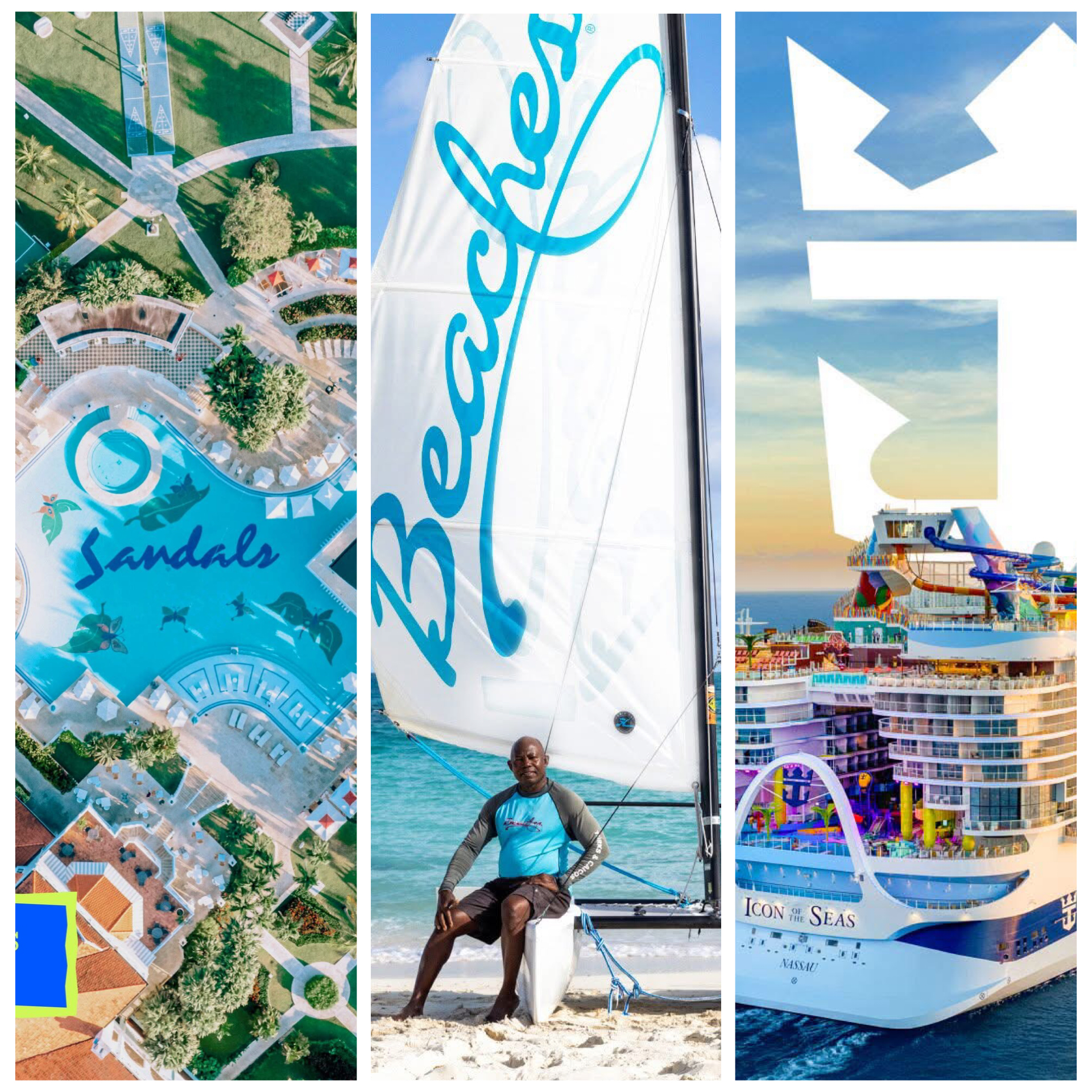
The Caribbean tourism deal first reported as a possibility on Tuesday is now a signed agreement. Royal Caribbean Group plans to pay approximately US$3 billion for a 50% stake in Sandals and Beaches Resorts, putting the value of the business at about US$6 billion. The purchase is expected to close in early 2027, subject to approvals.
Founded in Jamaica by the late Gordon “Butch” Stewart in 1981, the resort business has a presence across nine Caribbean destinations, including Jamaica, The Bahamas and Turks and Caicos. Sandals has described its workforce as nearly 20,000 people, most of them Caribbean nationals.
“My father, Gordon ‘Butch’ Stewart, founded Sandals Resorts with the belief that a company built in the Caribbean could stand on the world stage alongside the most respected names in hospitality,” said Adam Stewart in the announcement carried by PR Newswire. He will remain executive chairman, while the Stewart family retains a stake. The companies say existing reservations and resort operations will continue as usual.





-
 Independent writer1 week ago
Born Here, Raised Here, but Still Unable to Vote: Is this a Conundrum for TCI Electorate?
-
 Bahamas News5 days ago
Rosewood Exuma: A precedent-setting case for environmental law and future development in The Bahamas
-
 News4 days ago
Invest TCI Strengthens Regional Investment Connections at Caribbean Investment Forum 2026 in Barbados
-
 Bahamas News1 week ago
Monument Supports Hands for Hunger With Paradise Plates Debut
-
 Bahamas News4 days ago
Energy Minister Delivers Electrifying Keynote Opening Address at CAREC 2026
-
 Bahamas News1 week ago
Schweppes ‘the Art of Mixology’ Dazzles at Paradise Plates with Nemiroff Vodka
-

 Bahamas News9 hours ago
Bahamas Issues Cybersecurity Alert Over Akira Ransomware Threat
-

 News1 day ago
Crown Land Unit Leads Multi-Agency Enforcement Exercise in Five Cays